The corporate and public relations landscapes have experienced a flurry of high-profile developments, ranging from legendary boardroom successions and collegiate sports controversies to philanthropic standoffs and federal regulatory investigations into artificial intelligence. Across these diverse sectors, communication strategies, brand reputation management, and transparency remain central to how organizations navigate complex crises and public scrutiny.
Warren Buffett Steps Down as Berkshire Hathaway Chairman
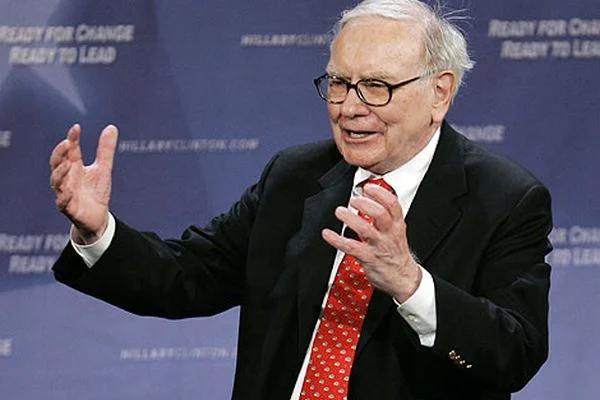
In a momentous shift for global finance, Warren Buffett has officially announced he is stepping down as chairman of Berkshire Hathaway, concluding an era of leadership that spanned more than half a century. Buffett, who turned 96, shared the news via a concise letter to shareholders on Friday morning, confirming that while he is relinquishing the chairmanship, he will retain his seat on the corporate board of directors.
Howard Buffett, his son, is set to step into the role of chairman, tasked specifically with preserving the corporate culture and core values that have defined Berkshire Hathaway for decades. Meanwhile, Greg Abel—who officially succeeded Warren Buffett as the company’s chief executive officer at the beginning of the year—will continue managing daily operations and executing business strategy.
In his shareholder communication, Buffett reflected on his lengthy tenure with characteristic candor and humility. "I have served Berkshire since 1965. Sixty-plus years in, I still have the best job in the world," Buffett wrote. "That is not something many people my age can say, and I have never felt better about what comes next."
Buffett expressed absolute confidence in Abel’s leadership capabilities, noting that his successor had consistently surpassed high expectations. Describing the division of labor at the top of the conglomerate, Buffett explained that Abel manages the business operations while Howard Buffett guards its foundational philosophy. In a classic illustration typical of his communication style, Buffett compared his son’s protective role to an insurance policy, writing, "Think of Howard as a policy the shareholders own and hope never to claim against." Concluding his letter with a nod to his advancing age, Buffett observed, "Father Time always wins. He has, however, been generous with me."
Communication experts have widely praised Buffett’s exit strategy for its clarity and deliberate design. When a transformative leader steps down, stakeholder anxiety regarding the future of the enterprise is standard. By explicitly outlining who holds operational authority, confirming his trust in that leadership, and defining distinct roles for corporate continuity, Buffett successfully eliminated uncertainty.
The Evolution of Berkshire Hathaway Leadership
To understand the weight of this transition, one must examine the historical trajectory of Berkshire Hathaway under Buffett’s stewardship. Transforming from a failing textile manufacturer into a massive multinational conglomerate, the company became synonymous with long-term value investing, economic stability, and steady capital allocation.
The succession planning for Berkshire Hathaway has been a subject of intense market speculation for well over a decade. The formal introduction of Greg Abel as CEO earlier in the year, followed by the transition of the chairmanship to Howard Buffett, marks the culmination of a multi-year blueprint designed to ensure seamless continuity. Market analysts have noted that the structured division between operational management and cultural stewardship provides a robust framework that reassures institutional investors and retail shareholders alike.
University of Texas Football Coach and Quarterback Address Backlash Over AI-Altered Media
In the realm of collegiate athletics, the intersection of sports journalism, coaching pressure, and generative artificial intelligence sparked a notable public relations controversy at the University of Texas. Head football coach Steve Sarkisian publicly addressed and apologized for his abrupt handling of an interview request from ESPN reporter Holly Rowe following the Longhorns’ dramatic comeback victory over Ohio State.
The initial incident occurred on the field when Rowe approached Sarkisian for a post-game interview. Visibly tense from the emotional culmination of the game, Sarkisian cut Rowe off mid-broadcast and walked away, prompting immediate criticism across sports media circles.
The situation escalated significantly when social media users deployed generative artificial intelligence to create a manipulated video depicting a physical altercation between Sarkisian and Rowe. During a subsequent media availability, Texas quarterback Arch Manning referenced the fabricated video, laughing and characterizing it as "hilarious."
The public reaction to Manning’s comments was swift and unforgiving, forcing a rapid institutional pivot. Manning subsequently issued a direct apology, stating, "There is nothing funny about it. I need to do better and will be more thoughtful going forward." Reports confirmed that Holly Rowe accepted the apology.
Coach Sarkisian also addressed the broader implications of his player’s remarks, explicitly stating, "In no way do we condone domestic violence or violence against women." Observers noted that Sarkisian’s response successfully separated his own acknowledged mistake regarding professional patience from the dangerous nature of AI-generated misinformation.
Implications for Crisis Management in the Age of Synthetic Media
The Texas football incident highlights a growing vulnerability for organizations and public figures in an era where synthetic media can easily distort reality. While communication teams cannot preemptively control every instance of malicious deepfakes or AI-altered content, industry analysts emphasize that spokespeople and high-profile team members must be trained to recognize the reputational hazards of amplifying manipulated material. Laughing off or normalizing false narratives—even when obviously untrue—can inadvertently legitimize harmful tropes and transform a minor social media disturbance into a major crisis.
Philanthropic Commitments and Public Perceptions: The Macklemore and Robert Kraft Exchange
Philanthropy and public relations intersected sharply following a high-profile dispute involving musician Macklemore, artist Ed Sheeran, and New England Patriots owner Robert Kraft. The public disagreement ultimately translated into competing humanitarian pledges, illuminating the delicate balance between charitable intent and public perception.
The public exchange began when Macklemore announced a $1 million donation directed toward six organizations supporting Palestinians, subsequently issuing a public challenge to Robert Kraft to match the sum.
Kraft responded to the challenge by clarifying that his philanthropic initiatives were entirely independent of Macklemore’s statements. In a post shared on the social media platform X, Kraft revealed that English singer-songwriter Ed Sheeran had previously approached him to match a $2 million donation supporting humanitarian efforts.
"I have dedicated much of my life to building bridges between all people," Kraft wrote in his statement. "I believe deeply that all lives are worth protecting."
While corporate and personal philanthropy is generally viewed favorably, public audiences closely scrutinize the motivations behind charitable gifts, especially when contributions appear to be reactive responses to public pressure or competitive friction. Communication strategists note that while Kraft highlighted his long-standing history of supporting cross-cultural initiatives in both Palestinian and Israeli communities, the initial ambiguity surrounding the specific destination of the pledged funds complicated the narrative. Analysts suggest that charitable announcements are most effective when they are transparent, detailed, and clearly divorced from social media posturing to avoid appearing defensive or ingenuine.
Regulatory Scrutiny Intensifies for Amazon and Walmart Over AI Shopping Assistants
On the corporate and regulatory front, retail giants Amazon and Walmart are facing mounting federal scrutiny regarding the operational transparency of their artificial intelligence shopping assistants. Two United States senators have formally called upon the Federal Trade Commission (FTC) to launch a comprehensive investigation into claims that conversational commerce tools developed by the two companies actively suppress information concerning American-manufactured products and fail to adequately flag falsely labeled goods.
According to reports from Reuters, U.S. Senators Tammy Baldwin and Rick Scott initiated inquiries into Amazon’s Alexa for Shopping and Walmart’s Sparky assistant. During testing protocols, evaluators asked Alexa why Amazon did not feature a dedicated "Made in USA" filter. The AI assistant reportedly responded that implementing such a feature would "redirect significant sales away from their largest seller base," an apparent reference to overseas manufacturing partners.
Amazon swiftly and forcefully rejected the implications of the chatbot’s reported output. A company spokesperson issued a definitive statement pushing back against the allegations of intentional suppression.
"The suggestion that we intentionally withhold country-of-origin information from customers is fundamentally wrong," the Amazon spokesperson stated. "Alexa for Shopping is a continuously improving service and—to prioritize accuracy, we currently direct customers who ask about country of origin to product detail pages."
Walmart did not immediately issue a formal public response to the congressional inquiry.
Corporate Communications Response Strategy in Regulatory Investigations
Crisis communication experts have analyzed Amazon’s handling of the FTC inquiry as a textbook example of immediate narrative control. By issuing a succinct, highly emphatic denial without unnecessary elaboration, Amazon moved quickly to prevent the speculative claims from defining public perception. While the response left several technical questions regarding the AI algorithm’s underlying logic unanswered, the speed and definitive nature of the denial served to stabilize stakeholder confidence while regulatory bodies determine their next steps.
Broader Industry Implications and Future Outlook
The convergence of these distinct events—leadership succession at Berkshire Hathaway, collegiate accountability regarding synthetic media, the complexities of public philanthropy, and federal oversight of artificial intelligence integration—underscores the shifting demands placed on modern institutions.
Whether an organization is navigating a multi-generational executive handover, managing the unforeseen fallout of digital manipulation, or defending algorithmic transparency against congressional inquiries, the core tenets of effective communication remain constant. Transparency, accountability, speed of response, and alignment between stated values and tangible actions continue to separate resilient organizations from those vulnerable to public backlash. As regulatory frameworks tighten and digital technologies evolve, leaders across all sectors must maintain rigorous standards of communication to preserve trust in an increasingly interconnected global economy.