The influencer marketing landscape is undergoing a fundamental structural shift as Noise, a burgeoning marketing platform, secures $5.5 million in seed funding to scale its unique model of performance-based creator partnerships. Led by Capital Midwest, M25, and Grishin Robotics, this latest capital injection brings the startup’s total funding to $7.2 million. The company aims to dismantle the traditional, high-cost agency model of influencer marketing by connecting brands with a massive, decentralized workforce of everyday users rather than relying exclusively on high-profile celebrities with significant existing followings.
The Evolution of the Creator Economy
The modern digital marketing ecosystem is defined by the tension between reach and cost. Historically, brands seeking to tap into social media audiences were forced to navigate complex, often opaque, relationships with top-tier influencers. These partnerships typically involved high flat-fee structures that provided no guarantee of conversion or tangible return on investment.
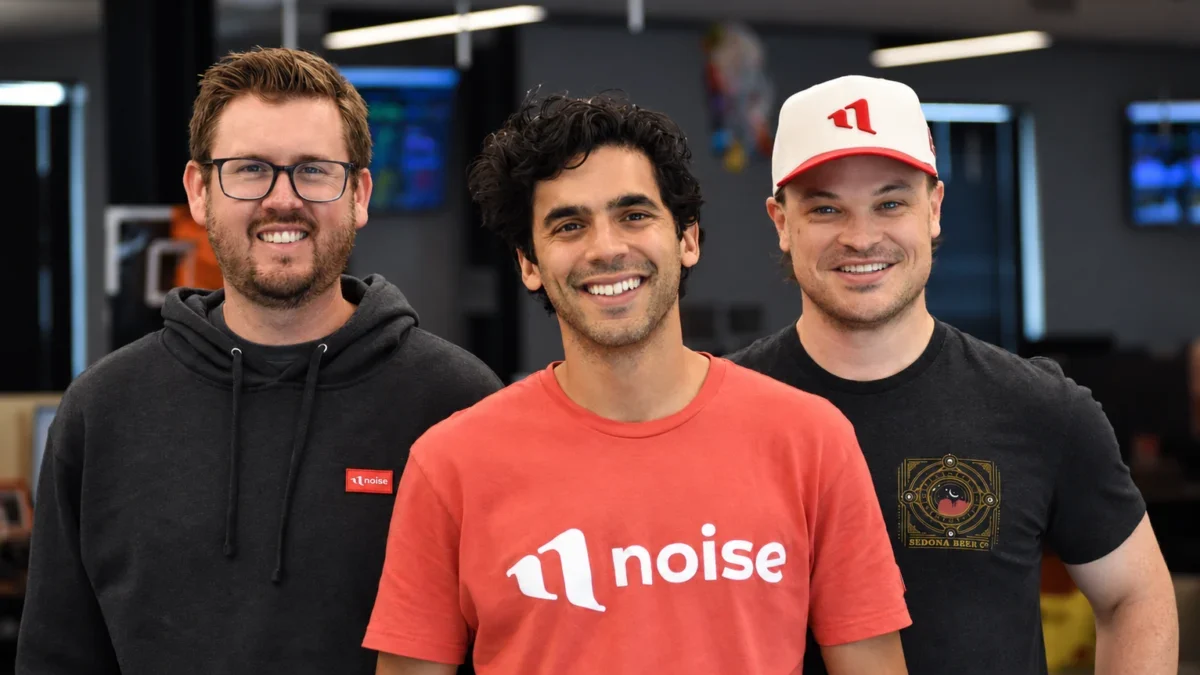
Noise, founded in 2025 by Diego Kafie, Stu Feldt, and Nic Weber, addresses this friction by turning the traditional influencer model on its head. The platform, which currently boasts a network of 1.5 million creators, allows anyone with a smartphone to sign up, regardless of their follower count. Brands provide their content briefs and budgetary constraints, and the platform automates the distribution of these tasks to thousands of creators simultaneously. Crucially, creators are compensated primarily on a per-view basis, aligning the incentives of the brand with the output of the creator.
This approach sits at the intersection of two major market trends: the democratization of content creation and the demand for performance-based marketing. As of 2024, data from CNBC suggests that over 57% of Generation Z and more than 40% of the broader U.S. adult population aspire to participate in the creator economy. Noise is positioning itself as the infrastructure layer for this massive, untapped labor force.
A Chronology of Innovation: From Playbite to Noise
The origins of Noise are rooted in the founders’ previous venture, Playbite, a mobile gaming app. During their two-year tenure building Playbite, Kafie, Feldt, and Weber faced the quintessential startup challenge: how to acquire users at scale without the prohibitive costs associated with traditional advertising.
The founders began experimenting with grassroots growth, recruiting their own gamers to produce social content that promoted the platform. What started as a small group of ten individuals grew to 100, then to a "small army" of advocates. By training these individuals—many of whom had no prior experience in content creation—to produce daily, authentic content for platforms like TikTok, the team observed an exponential increase in app installs.
This empirical evidence provided the blueprint for Noise. The founders realized that by teaching ordinary people the fundamentals of content creation, they could achieve a level of creative diversity and reach that was previously unattainable for companies without massive venture-backed marketing budgets. Following the success of this strategy at Playbite, the trio pivoted their focus to building the infrastructure that would allow other brands to replicate this "army of advocates" model.
Bridging the Gap: The Mechanics of the Platform
The Noise platform functions as an automated marketplace that reduces the operational overhead for brands. Managing relationships with hundreds or thousands of creators individually is a notoriously labor-intensive process, involving contract negotiations, payments, and quality control. Noise serves as the intermediary, handling the logistical heavy lifting so that brands can focus on strategy rather than administration.
Upon joining the platform, new creators are funneled through training modules designed to teach the nuances of effective brand storytelling. This gamified approach allows users to start with entry-level opportunities and graduate to higher-paying campaigns as they demonstrate proficiency and consistency. CEO Diego Kafie notes that the platform’s top performers are currently generating six-figure annual incomes, highlighting the viability of this model as a professional pursuit for non-traditional influencers.
The platform’s recent introduction of the "Organic-to-Ads" program represents a significant expansion of its capabilities. This initiative allows brands to take the high-performing videos generated by Noise creators and amplify them through paid advertising spend on Meta and TikTok. This creates a dual-layered marketing strategy: the organic reach provided by the creator’s post and the targeted, measurable reach provided by the paid ad spend.
Broader Implications for the Marketing Industry
The success of Noise and similar platforms like Billo and JoinBrands indicates a broader trend toward "micro-influencer" and "everyday influencer" marketing. As consumers grow increasingly skeptical of highly produced, celebrity-endorsed content, the demand for authentic, peer-to-peer recommendations has skyrocketed.
The implications for the industry are twofold. First, the cost-efficiency of this model poses a direct challenge to traditional marketing agencies. By charging brands based on performance—specifically views—Noise offers a risk-mitigation strategy that flat-fee agencies cannot match. For startups and mobile apps with constrained budgets, this creates a viable path to competition with established industry incumbents.
Second, the platform serves as an incubator for a new class of digital talent. By lowering the barrier to entry, Noise is effectively professionalizing the "everyday creator." This is particularly significant in an economic climate where the traditional paths to becoming an "influencer" are fraught with high costs, social media algorithm volatility, and intense competition.
However, the rise of such platforms also brings questions regarding the commoditization of creative labor. While Kafie emphasizes that brands set the rates and creators retain the autonomy to accept or reject work, the reliance on performance-based pay structures inherently shifts the risk from the brand to the creator. As the platform matures, its ability to maintain a balance between fair compensation for creators and affordability for brands will be the primary metric for its long-term viability.
Future Outlook and Expansion
With $7.2 million in total funding, the company is now set to enter a period of aggressive expansion. According to the leadership team, the fresh capital will be allocated toward two primary pillars: product development and human capital. The focus on product will likely involve enhancing the automated matching algorithms that pair brands with the most relevant creators, as well as refining the training modules to improve the quality of user-generated content.
The hiring initiative will likely focus on engineering and sales roles, as the company seeks to move beyond its current stronghold in the mobile app space and attract larger, more diverse enterprise clients. While the current client base is largely composed of startups, the stated goal is to integrate with companies of all sizes, providing a scalable solution for global brand awareness campaigns.
Industry analysts suggest that the trajectory of Noise will be influenced by how effectively it can maintain the "authenticity" that is core to its value proposition. As the number of creators grows, ensuring that the content remains genuine and resonant with audiences—rather than appearing as a manufactured, automated output—will be a critical hurdle.
Nevertheless, the rapid adoption of the platform, evidenced by its 1.5 million creators, underscores a fundamental truth in today’s digital economy: the most powerful marketing channel is no longer the curated feed of a celebrity, but the diverse, decentralized, and authentic voices of the general public. As Noise continues to refine its technology and expand its network, it is poised to play a central role in the next iteration of digital advertising, where scale and authenticity are no longer mutually exclusive.