Every Hispanic Heritage Month, the public relations and communications industry observes a familiar ritual: the publication of celebratory tributes, expressions of gratitude for cultural representation, and well-intentioned promises to improve diversity metrics in the coming year. Yet, these cyclical acknowledgments often skirt a more uncomfortable professional inquiry: whether the fundamental architecture of modern communications firms is actually designed to produce the high-impact, culturally resonant work that continues to dominate the global stage, or if the industry remains a passive observer of a cultural shift it is failing to facilitate.
This year, that inquiry requires a rigorous professional assessment rather than a sentimental nod. The most significant communication masterclass of the current era did not emerge from a boardroom, a crisis manual, or an agency’s creative deck. It emerged from the world’s largest stages, executed by an artist who bypassed the traditional marketing playbook entirely: Bad Bunny.
The Anatomy of a Cultural Case Study
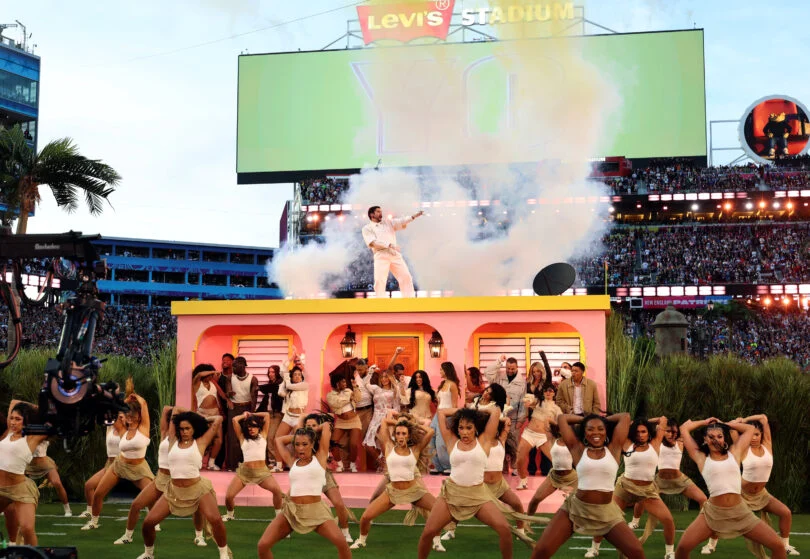
In February, the global music landscape shifted when Bad Bunny became the first artist in history to secure the Album of the Year at the Grammy Awards for a predominantly Spanish-language project. This historic milestone was swiftly followed by his headline performance at the Super Bowl halftime show—a spectacle conducted almost entirely in Spanish, marking a definitive rupture in the traditional programming logic of the event.
Industry analysts had been tracking these tectonic shifts for months. In October 2025, Nichimyo Rich of PRWeek identified the strategic implications of the booking, framing it as a litmus test for how multinational brands engage with multicultural audiences in a fragmented media environment. By February 2026, Forbes contributor Esther Choy analyzed the performance as a definitive case study in the alignment of business strategy with cultural authenticity.
The success of these moments did not stem from the standard, sanitized “audience research” that populates most agency RFPs. Instead, it relied on a level of cultural fluency that is rarely taught in business schools or agency training programs. It required the ability to distinguish between cultural pride and political provocation—a nuance that only comes from lived experience.
Consider the “El Apagón” segment of his performance, which featured replicas of electrical infrastructure that mirrored the deteriorating grid under Luma Energy in Puerto Rico. In less capable hands, this imagery might have been neutralized or ignored. Instead, framed by the familiar warmth of a casita porch and the communal act of playing dominoes, the performance transformed structural criticism into an intimate expression of home. This was not a pre-packaged talking point; it was an act of storytelling rooted in fluency, demonstrating the exact kind of high-stakes judgment that the communications profession claims to value but rarely cultivates at the decision-making level.
The Data Gap: Who is in the Room?
The disconnect between the industry’s desire for “authentic” outcomes and its internal hiring practices is statistically undeniable. According to the 2024 Race and Ethnicity in Communication Benchmark Report (Report No. 5), published in March 2026 by the Diversity Action Alliance (DAA) and managed by the Institute for Public Relations, the disparity is stark. Hispanic and Latino professionals represent only 8% of the total communications workforce among reporting organizations. Even more critically, they occupy just 5% of executive and senior leadership positions.
This demographic profile stands in sharp contrast to the U.S. Census Bureau’s most recent projections, which place the Hispanic and Latino population at approximately 20% of the total national demographic. The industry is essentially applauding the outcomes of a demographic group while simultaneously failing to fund or support the pipeline required to integrate those voices into the executive suite.
The implications of this gap are not static; they are compounding. As the industry grapples with economic headwinds, there is an observable trend toward retrenchment. The 2026 Global Communication Report, published in March by the USC Annenberg Center for Public Relations in partnership with IABC and Meltwater, revealed that 41% of PR professionals now view strategic silence as a legitimate defensive mechanism. Furthermore, the report identified Diversity, Equity, and Inclusion (DEI) as the single investment area most likely to face significant cuts over the next five years.
The Cost of Caution
This trend toward institutional caution and strategic vagueness occurs at the exact moment the market is signaling the opposite: that specific, confident, and culturally authentic voices are the primary drivers of commercial and cultural success. By pulling back on diversity initiatives, the industry risks entering a cycle of irrelevance, where the gap between the agency’s output and the public’s reality continues to widen.
Professional bodies and industry leaders are now facing pressure to move beyond the symbolic milestones of Heritage Months. The call to action is no longer about visibility, which is often passive, but about influence, which is structural. Influence requires a seat at the table where the strategy is drafted, not just the focus group where it is validated.
A Roadmap for Structural Change
Addressing this imbalance requires moving from broad advocacy to concrete accountability. Industry experts suggest several actionable steps for agencies and in-house teams:
- Benchmarking and Transparency: Organizations should immediately commit to reporting their demographic data to the Diversity Action Alliance. Transparency is the precursor to improvement; without a standardized measurement, systemic issues remain hidden.
- Targeted Recruitment and Retention: Agencies must set three-year, public-facing targets for the representation of Hispanic and Latino professionals specifically within senior strategist and leadership roles. The focus must shift from entry-level hiring to executive pipeline development.
- Active Participation in Affinity Networks: Professionals are encouraged to engage with established organizations such as the PRSA Hispanic-Latino Affinity Group and the Hispanic Public Relations Association (HPRA). These bodies provide the professional development and networking infrastructure necessary to break the "concrete ceiling" of the communications industry.
- Integrating Cultural Fluency into Strategy: Agency leadership should evaluate whether their current creative and strategic teams possess the necessary cultural competency to execute complex campaigns, or if they are reliant on external consultants for work that should be handled by an integrated, diverse team.
The Path Forward
The history of communications is littered with examples of campaigns that failed because they treated culture as an aesthetic to be borrowed rather than a lived reality to be understood. As the global marketplace becomes increasingly defined by the influence of Hispanic and Latino audiences, the industry must decide whether it will continue to observe from the sidelines or adapt its internal structures to reflect the world it serves.
Hispanic Heritage Month serves as an annual reminder that Latino voices have always been worth hearing. The challenge for the year ahead is ensuring that these voices are not just heard, but are fundamentally present in the rooms where the decisions are made. The industry has the data, the case studies, and the mandate; what remains is the necessity of institutional will. Without a fundamental shift in how leadership is composed and how strategy is conceived, the industry risks becoming an artifact of a bygone era, unable to capture the very cultural currents that drive modern commerce.
As the 2026 metrics indicate, the period of quiet adjustment is ending. The industry now stands at a crossroads: either embrace the structural changes necessary to foster authentic, high-level representation or accept a future of diminishing relevance in an increasingly diverse world.