The upcoming Children’s Health Defense (CHD) conference, marketed under the optimistic banner of a “pursuit of a more perfect future,” has become the focal point of a widening debate regarding the intersection of federal health policy and the anti-vaccine movement. Scheduled for September 17, with an opening reception slated for the preceding evening, the event is set to convene key figures who have long advocated for the dismantling of established public health mandates. The conference promises to dissect the current landscape for what organizers term the “health freedom movement,” a sector that has transitioned from the fringes of political discourse to a central role in contemporary administrative policy.
A High-Profile Agenda and Speaker List
The conference roster is notable for the inclusion of high-ranking political figures and media influencers who have historically challenged mainstream medical consensus. Among the scheduled speakers are Sen. Ron Johnson (R-Wisc.) and Sen. Rand Paul (R-Ky.), both of whom have utilized their platforms to scrutinize vaccine efficacy and federal health agency transparency. Their presence underscores a growing alignment between legislative bodies and organizations like CHD.
Other notable participants include Mark Gorton, the president of the MAHA Institute—an entity aligned with the Kennedy network—and Jan Jekielek, a senior editor at The Epoch Times. These speakers join a core group of CHD leadership, including CEO Mary Holland, who have steered the organization’s aggressive litigation and advocacy strategies for years. The event is clearly positioned as a summit for the movement’s most prominent voices to synchronize their messaging and policy goals.
The Economics of the Movement
The commercial success of the conference provides a tangible metric for the movement’s current momentum. According to the organization’s website, the primary in-person tickets, priced at $250, have reached sold-out status. To meet demand, the organizers have released limited “overflow” seating in the main conference hall for $125, alongside $100 livestream access for remote participants. This robust demand highlights a dedicated base of supporters who remain financially and ideologically committed to the CHD’s mission, despite the shifting political climate in Washington.
The Complicated Position of Robert F. Kennedy Jr.
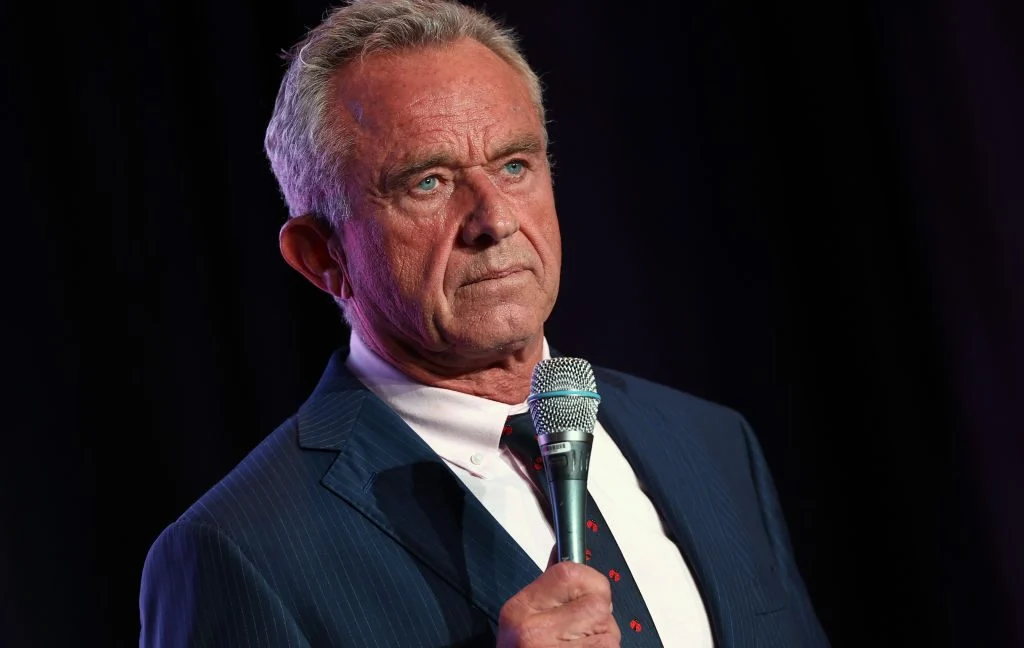
The participation of Robert F. Kennedy Jr. in the event marks a significant point of scrutiny, particularly given his recent transition into his role as health secretary at the start of 2025. During his confirmation hearings, Kennedy famously sought to distance himself from his decades-long history as a leading voice in the anti-vaccine movement, asserting on multiple occasions that he is “pro-vaccine.” This pivot was widely interpreted as an attempt to harmonize his long-standing personal views with the requirements of a high-level cabinet position.
However, his decision to headline an event organized by his former employer—a group synonymous with the anti-vaccine movement—presents a visible friction between his official mandate and his historical activism. The optics of this appearance suggest a recalibration of his public image. Rather than continuing to downplay his previous stances, Kennedy appears to be pivoting back toward the ideology that defined his career, potentially emboldened by the changing political winds.
Historical Context and Institutional Shifts
The rise of the health freedom movement can be traced back several years, but its integration into the federal government is a phenomenon of the mid-2020s. Before 2025, CHD functioned primarily as an external pressure group, filing lawsuits against federal health agencies and launching public information campaigns that frequently clashed with the guidance issued by the Centers for Disease Control and Prevention (CDC) and the World Health Organization (WHO).
The chronology of this shift is critical. In late 2024, the political landscape shifted, leading to the appointment of figures sympathetic to the skeptical view of public health institutions. By the summer of 2026, reports emerged suggesting that the executive branch, specifically President Trump, had expressed frustration that more aggressive actions—such as the withdrawal of specific vaccines or the formal investigation into long-debunked claims linking vaccines to autism—had not yet been achieved. This pressure from the highest levels of government has effectively created a runway for figures like Kennedy to lean into their original platforms, despite previous attempts at moderation.
Scientific Consensus vs. Political Advocacy
The core of the conflict surrounding the CHD conference remains the fundamental disagreement between the scientific community and the advocates represented at the event. Extensive, peer-reviewed clinical data, including large-scale longitudinal studies conducted globally, have consistently demonstrated the safety and efficacy of the current childhood and adult immunization schedules. Public health experts consistently warn that the rhetoric promoted by groups like CHD—specifically the persistent assertion that vaccines are linked to autism—has been thoroughly debunked by exhaustive research.
However, the effectiveness of this scientific consensus is being tested in an environment where political ideology increasingly supersedes data-driven health policy. The implication of this trend is significant: when political actors validate claims that lack scientific grounding, it creates a "prestige effect" that can diminish public trust in essential health services. Analysts note that when a health official of cabinet rank engages with groups that operate outside the boundaries of evidence-based medicine, it complicates the ability of agencies like the FDA and the CDC to effectively communicate health risks to the general population.
Reactions and Broader Implications
While the conference has been met with enthusiasm by its supporters, the broader medical and public health community has expressed deep concern. Public health officials, speaking on the condition of anonymity due to the sensitivity of current political tensions, note that the normalization of anti-vaccine discourse at the federal level could have long-term consequences for national health metrics.
“The concern is not just about a single conference,” one policy researcher noted. “It is about the institutionalization of doubt. When you have top-tier political leadership actively participating in forums that seek to dismantle the scientific consensus, you erode the foundational infrastructure of public health. This isn’t just about vaccines; it’s about how we define truth in the context of public safety.”
The conference also highlights the role of alternative media in shaping this discourse. The inclusion of figures from right-leaning media outlets like The Epoch Times suggests that the anti-vaccine movement has successfully built a self-sustaining media ecosystem. This ecosystem allows for the rapid dissemination of ideas that bypass traditional gatekeepers of medical information, making it increasingly difficult for scientific agencies to reach the public with corrected information.
Conclusion: A Turning Point in Policy
The September 17 conference represents more than a simple gathering of like-minded individuals; it serves as a litmus test for the future of American public health policy. By appearing at this event, Kennedy and his colleagues are signaling that the era of institutional moderation is ending, replaced by a more assertive, ideological approach to health governance.
As the event approaches, the focus remains on whether this shift will lead to measurable changes in federal vaccine policy or if it will remain a rhetorical exercise designed to solidify a political base. Regardless of the outcome, the event underscores a permanent shift in the relationship between public health agencies and the political figures tasked with overseeing them. The “pursuit of a more perfect future,” as defined by the organizers, is clearly one that challenges the core tenets of modern immunology and the role of the state in protecting public health. Whether this pursuit will yield the results its proponents seek, or whether it will lead to a crisis in healthcare infrastructure, remains the central question of the current political cycle.