The summer of 2026 will be remembered in Hollywood annals as a paradoxical triumph, a season where record-breaking revenue figures masked a deeper, more structural transformation in the theatrical exhibition industry. Between May 1 and Labor Day, cinemas across the United States and Canada generated a staggering $4.765 billion in ticket sales. According to data provided by the box-office analytics firm Rentrak, this figure officially eclipsed the previous all-time record set in 2013 by a slim margin of $9.3 million. Yet, beneath the headline-grabbing revenue, the industry is grappling with a significant reality: the audience is smaller, even if the individual expenditure is higher.
When adjusted for the erosive effects of inflation, the 2026 summer box office remains roughly 17% below the benchmarks set in 2019, the last full year of pre-pandemic cinema attendance. The most glaring metric is the volume of admissions; by mid-August, North American theaters had sold nearly 249 million fewer tickets than they had during the same period seven years prior. This discrepancy highlights an emerging business model—one that relies on "eventization," premium pricing, and high-margin concessions to sustain profitability in an era where streaming services have permanently altered the convenience landscape of entertainment.
A Chronology of the 2026 Summer Season
The 2026 summer movie season was characterized by an extended duration, spanning 130 days—a full week longer than the 2013 record-setting season. This additional time provided a wider window for blockbusters to accrue revenue, though it also required a steady stream of content to maintain momentum.
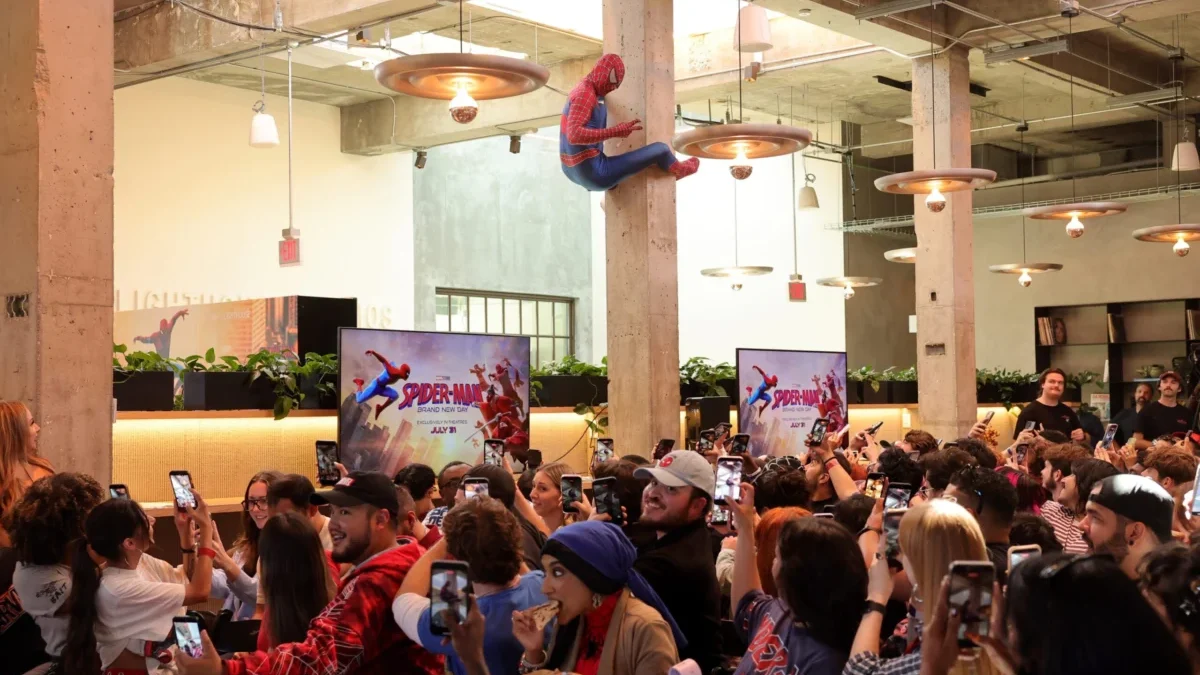
Early summer saw a flurry of activity as audiences sought out major tentpole releases. By late June, the success of titles like the highbrow epic The Odyssey and the massive spectacle Spider-Man proved that the public appetite for "cinematic fine dining" and "cinematic fast food" remained potent. These two films alone accounted for nearly one-third of the entire summer’s total box office.
By the time the industry reached the mid-summer point, the strategy of pivoting toward premium large-format (PLF) screens became clear. While the disappointment of mid-summer releases like The Mandalorian and Grogu caused brief concern, the surge in concession revenue and the sustained interest in IMAX and D-BOX experiences acted as a financial hedge for exhibitors. By the time of the Labor Day cutoff, year-to-date box-office revenue had climbed to $7.384 billion, a 20.8% increase over the previous year, suggesting that the industry’s recovery, while uneven in volume, is robust in fiscal yield.
The Mathematics of the Premium Shift
The transformation of the cinema business model is perhaps best illustrated by the financial reporting of major chains like Cinemark and AMC. For these companies, the path forward is no longer about maximizing the raw number of bodies in seats, but rather about maximizing the average revenue per patron.
Cinemark’s second-quarter results are instructive. Despite premium large-format screens representing only 6% of their total auditoriums, these screens accounted for nearly 15% of the company’s worldwide box office revenue. Furthermore, D-BOX motion-seat sales surged over 50% year-over-year. To support these margins, average ticket prices were adjusted upward by 4.2%, reaching $10.83. This was not an isolated strategy; AMC reported record-breaking per-patron spending on food and beverages, with total revenue reaching $1.6 billion in the second quarter alone.
When combined, the average moviegoer now spends approximately $19.53 per visit on a mix of tickets and concessions. This "premiumization" strategy effectively allows theaters to remain profitable even when total attendance numbers remain suppressed. Eric Wold, an equity analyst at Texas Capital Securities, notes that this model is mathematically sound. "By controlling operating expenses and focusing on high-value screenings, theaters are achieving greater profitability from a lower number of total tickets sold," Wold explained.
Societal Shifts and the Gen Z Audience
The resurgence of the theatrical experience is being fueled, in part, by a demographic shift that observers did not fully anticipate. Gen Z, a cohort increasingly identified as "drinking-averse," has begun to favor the cinema as a venue for social engagement. In an era where traditional nightlife options are increasingly expensive or unappealing, the movie theater has repositioned itself as a "wholesome" night out.
Paul Dergarabedian, the lead marketplace trends analyst at Rentrak, views this as a vital cultural development. He compares the evolution of Hollywood to the rise of vegetarianism in the culinary world. "Fifty years ago, there were no vegetarian options, and today, you see fewer hamburgers sold, but the market has diversified," Dergarabedian noted. The theater industry is undergoing a similar evolution; it is moving away from a high-volume, low-margin model toward a more curated, high-end experience that caters to specific audience tastes.
This shift is not occurring in a vacuum. It is a direct response to the saturation of streaming platforms. If audiences can watch standard-definition content at home for a monthly subscription fee, they require a compelling reason to leave their homes and pay $20 for a ticket. That reason is increasingly found in exclusive, high-tech environments like IMAX 70mm, which saw sold-out screenings for The Odyssey—including some at 3 a.m.—demonstrating that when the content is deemed "unreplicable" at home, consumers will prioritize the outing.
The "Doomsday" Outlook and Long-Term Viability
As the industry looks toward the end of 2026, the focus shifts to the December 18 releases of Avengers: Doomsday and Dune: Part Three. These films are positioned as the ultimate tests of the premium-pricing model. Both titles are heavily invested in large-format technology, with Dune: Part Three having been filmed specifically for IMAX cameras and Doomsday serving as the inaugural showcase for Disney’s new "Infinity Vision" immersive sound and projection standard.
Financial projections suggest that this strategy will yield strong results. If current trends hold, analysts at Texas Capital Securities project that the third-quarter domestic box office could reach $2.85 billion, potentially surpassing the $2.813 billion generated in the same period of 2019. If these estimates materialize, it would represent a landmark achievement for the industry, signaling that the theater is not dying, but rather evolving into a more specialized, luxury-oriented business.
However, the outlook for 2027 remains cautious. Industry experts acknowledge that 2026 will be a difficult "opening act" to follow. The reliance on a handful of massive, event-driven blockbusters creates a high degree of volatility; if one or two major films underperform, the lack of a "mid-tier" audience volume could leave theaters vulnerable.
Furthermore, the long-term sustainability of $20 tickets depends entirely on the willingness of studios to continue funding films that demand the theatrical experience. Should the supply of "cinematic fine dining" dwindle, the current recovery could prove to be a temporary spike rather than a sustainable trend.
Ultimately, the 2026 box office proves that while the era of mass-market cinema-going—where every week saw theaters packed with millions of casual viewers—may be receding into the past, a new, more refined model has taken its place. By capturing the loyalty of younger audiences through premium experiences and strategic pricing, Hollywood has secured a path toward profitability, even as the raw ticket count continues to languish. Whether this "premium plot twist" will hold the interest of the next generation of moviegoers remains the most critical question for the industry’s future. The theater experience has been recalibrated; the challenge now is to ensure that the audience remains willing to pay the premium required to keep the lights on.