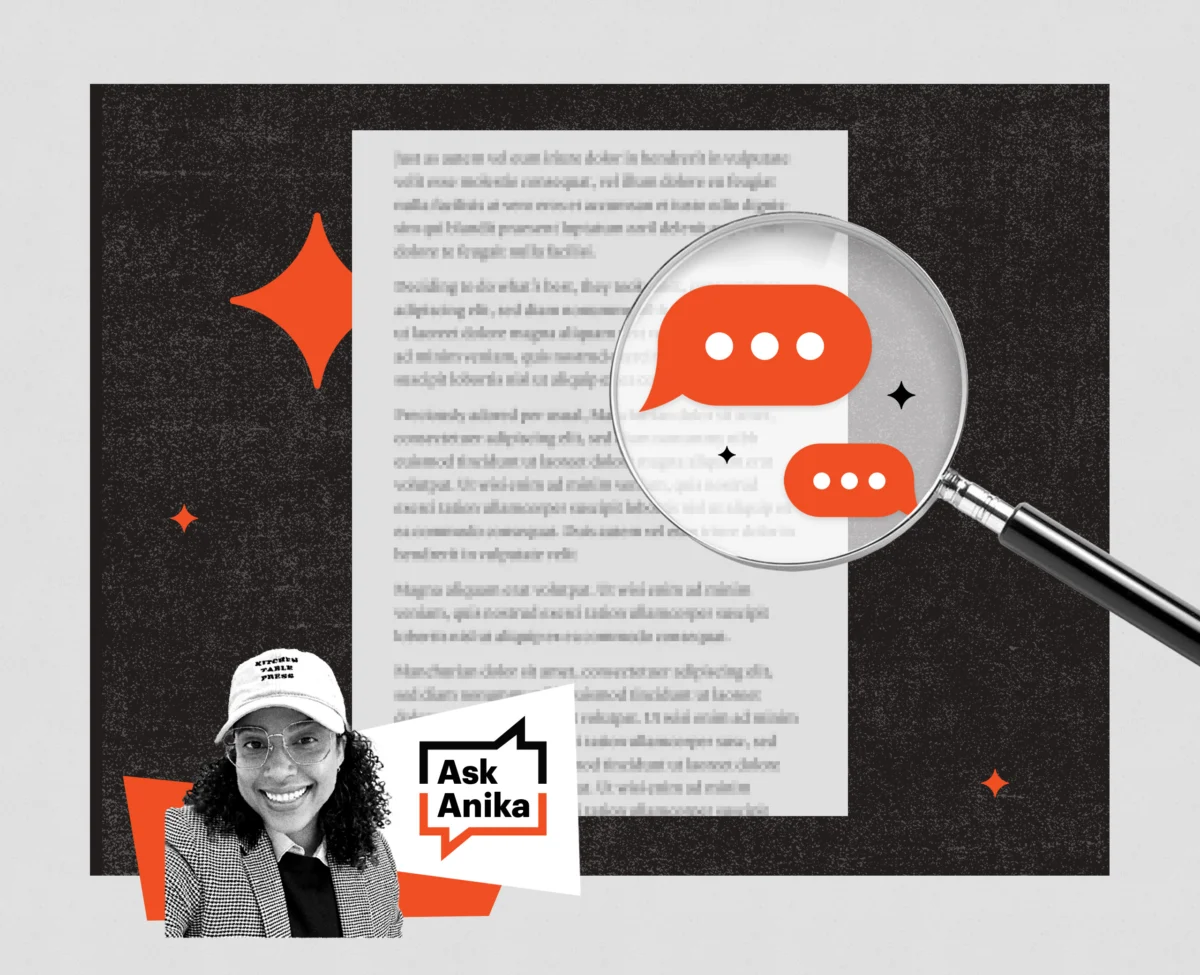
The burgeoning integration of artificial intelligence into newsrooms has ignited a crucial debate within the journalism industry: what constitutes genuine transparency when it comes to disclosing AI use? As generative AI tools become more sophisticated and accessible, journalists and news organizations are grappling with the ethical, legal, and practical implications of their adoption. This challenge is particularly acute in an era where public trust in media is fragile, and the provenance of information is under constant scrutiny. Anika Collier Navaroli, the Craig Newmark Assistant Professor of Professional Practice and director of the Craig Newmark Center for Journalism Ethics and Security at Columbia Journalism School, advocates for a "radical approach to transparency," setting a precedent by openly detailing her own use of AI tools in her "Ask Anika" column for the Columbia Journalism Review (CJR). Her pragmatic demonstration offers a tangible framework for newsrooms navigating this complex new landscape.
The Rapid Rise of AI and Journalism’s Ethical Reckoning
The landscape of media production underwent a seismic shift with the widespread public release of advanced generative AI models like OpenAI’s ChatGPT in late 2022 and Google’s Gemini in early 2023. These tools, capable of generating human-like text, images, and even video from simple prompts, quickly moved from the realm of science fiction to practical application. For journalism, an industry predicated on truth, accuracy, and human insight, this technological leap presented both immense opportunities and profound ethical quandaries. News organizations, eager to leverage AI for efficiency in tasks like transcription, summarization, and content generation, simultaneously confronted a host of concerns: the potential for AI "hallucinations" (generating false information), the inherent biases embedded in training data, intellectual property rights disputes over content used for AI training, and the existential threat of job displacement for human journalists.
Before the current wave, AI had already been quietly integrated into news operations for years, primarily in backend functions such as data analysis, content recommendation algorithms, and automated reporting for highly structured data (e.g., financial reports, sports scores). However, the advent of generative AI brought these tools much closer to the core journalistic functions of writing and reporting, making the question of disclosure unavoidable. The industry found itself at an inflection point, with major news outlets like the Associated Press, Gannett, and Axel Springer rushing to develop internal guidelines and public policies regarding AI use. The consensus began to coalesce around the principle of human oversight, but the specifics of how and when to disclose AI involvement remained a contentious point.
Anika Navaroli’s Model of Radical Transparency
Anika Collier Navaroli’s column serves as a crucial, real-world case study in her proposed "radical transparency." Instead of merely articulating a theoretical framework, she offers a granular account of her interactions with AI tools during the production of her own journalistic work. This approach goes beyond a simple disclaimer, providing readers with specific instances of AI engagement, its utility, and its limitations.
Navaroli details her AI use across several stages of her writing process:
-
Research and Fact-Checking: Her initial foray involved attempting to verify a recollection—that a tech journalist had trained a local Large Language Model (LLM) on their own blog—using Google’s AI Overview and then Gemini for sourcing. This experiment quickly highlighted a critical flaw: AI’s propensity for hallucination. Both AI tools "agreed" with her memory, but Gemini failed to provide any verifiable source. Consequently, Navaroli "ejected the falsehood" from her draft, underscoring the indispensable role of human verification and the unreliability of AI for definitive fact-checking. This example serves as a potent warning against overreliance on AI for factual accuracy, especially without cross-referencing with traditional, vetted sources.
-
The Writing Process (Assisted, Not Generated): Navaroli explicitly states that she has "not and will not ever ask an AI product to generate a column" for her, nor does she use comprehensive AI writing assistants like Grammarly. This distinction is crucial, drawing a line between AI as a creative partner and AI as a subservient tool. She acknowledges the subtle, often unavoidable presence of AI in modern writing environments, such as Google Docs’ autocomplete feature, which, in one instance, merely "reminded [her] how to spell ‘chagrin.’" This highlights the spectrum of AI integration, from passive assistance to active generation, and the need for journalists to be aware of even the seemingly innocuous forms. Her preference for "breaking grammar" like Toni Morrison, rather than conforming to AI-driven stylistic norms, further emphasizes the value of human authorial voice.
-
Thesaurus and Word Finding: This is where Navaroli found generative AI to be most genuinely useful, echoing Atlantic tech writer Will Oremus’s description of it as "a slightly smarter thesaurus." She utilized ChatGPT for specific lexical queries, such as "What is another word for ‘small group’?" or "What is a word for negligence that starts with an M?" or "What is another word for cringe?" This application positions AI as an advanced utility, augmenting a journalist’s existing vocabulary and precision, rather than replacing their intellectual effort. It demonstrates a practical, low-risk use case where AI can genuinely enhance the craft of writing without compromising integrity.
-
Social Media Assistance (A Cautionary Tale): Navaroli’s attempt to use ChatGPT for social media promotion, specifically generating a LinkedIn post for a previous column, resulted in an outcome she described as "so yikes… that I closed the tab without using any of the text the LLM generated." This experience underscores the current limitations of AI in capturing nuanced tone, professional voice, and effective audience engagement, particularly in brand-sensitive communications. It reinforces the idea that while AI can generate text, it often lacks the strategic understanding and emotional intelligence required for effective professional communication, leading Navaroli to conclude she’d "rather mortify [herself] in front of [her] professional network with [her] own words."
In essence, Navaroli’s practical application of AI is limited to being "a nimble thesaurus and fancy spellchecker—and not much else." This self-imposed constraint, coupled with rigorous disclosure, forms the bedrock of her radical transparency model.
The Rationale for Radical Transparency: Building and Maintaining Trust
Navaroli argues that such radical transparency is not merely an academic exercise but a fundamental requirement for maintaining journalistic integrity and public trust. Her reasoning is multi-faceted:
- Honesty and Accountability: Open disclosure keeps journalists honest and accountable for their methods, preventing "embarrassing after-the-fact disclosures" that erode credibility. In an environment where every claim can be scrutinized, pre-emptive transparency builds a stronger foundation of trust.
- Reader Empowerment: It allows readers to understand the origin and processing of information, enabling them to better evaluate the content. Knowing how AI was used (or wasn’t) empowers the audience to make informed judgments about the reliability of the news.
- Legitimacy and Trust: Explicit transparency instills a sense of legitimacy in the journalistic process. In a world awash with AI-generated content, clearly demarcating human-produced and AI-assisted work can become a crucial differentiator for trusted news sources. Research consistently shows that transparency about data collection and content creation methods significantly enhances public trust.
Navaroli suggests practical, scalable methods for newsrooms to implement this transparency, from including concise explanations of AI use (reasoning, specific products, prompts, how output was used/not used) in every article, to developing "fun icons" that link to detailed policy pages. These methods acknowledge that while a full essay on AI use isn’t always feasible, some form of accessible disclosure is essential.
Wider Industry Adoption and the Ethical Minefield
Navaroli’s call for transparency resonates with the broader industry’s ongoing efforts to formalize AI guidelines. Major news organizations have begun to publish their AI policies, though the level of detail and commitment to per-article disclosure varies.
- The Associated Press (AP): One of the earliest to adopt AI, the AP has a policy emphasizing human oversight, accuracy, and clear attribution for AI-generated content. They use AI for tasks like transcribing, summarizing, and translating, with a strict rule that AI-generated text cannot be published without human review and editing.
- Gannett: The largest newspaper publisher in the U.S. has outlined principles for AI use, focusing on ethical sourcing, avoiding bias, and ensuring content aligns with journalistic standards. They typically disclose AI use in general terms, often in their ethics policies rather than per article.
- Axel Springer (Germany): The publisher of Bild and Welt has been aggressive in its AI adoption, exploring tools for personalization and content creation, but also emphasizing the irreplaceable role of human journalists in investigative and opinion pieces.
- The New York Times: Has adopted a cautious approach, focusing on AI as a tool for efficiency and discovery, while maintaining strict editorial control. They have also been at the forefront of legal challenges, suing OpenAI and Microsoft for copyright infringement, arguing that their journalistic content was used without permission to train LLMs. This lawsuit underscores a major ethical and legal hurdle for the entire AI industry.
Key Ethical Concerns and Broader Implications:
Navaroli’s article touches upon several profound ethical concerns that extend far beyond individual disclosure:
- Intellectual Property Theft: She bluntly calls AI’s creation "a brazen theft of intellectual property." The training data for most LLMs includes vast amounts of copyrighted material scraped from the internet without explicit permission or compensation to creators. This issue is at the heart of numerous lawsuits and threatens to undermine the economic viability of original content creation, including journalism.
- The "Slippery Slope" and Trust Erosion: The ease with which AI can generate convincing but false narratives creates a "slippery slope" for truth. Without clear disclosure and robust ethical frameworks, AI-generated content could further blur the lines between fact and fiction, exacerbating the global misinformation crisis and eroding public trust in all media.
- Climate Impact: The computational power required to train and run large AI models is enormous, leading to significant energy consumption and carbon emissions. The environmental footprint of AI is a growing concern, raising questions about the sustainability of its widespread adoption, especially in an industry that often champions environmental stewardship.
- Job Displacement: The potential for AI to automate tasks traditionally performed by journalists, from writing basic reports to summarizing complex documents, raises fears of job losses across the industry. While many argue AI will augment human capabilities rather than replace them, the economic impact on journalistic employment remains a significant worry.
- Bias and Fairness: AI models are only as unbiased as the data they are trained on. If training data reflects societal biases (e.g., racial, gender, political), the AI’s output can perpetuate or amplify these biases, leading to unfair or inaccurate reporting. This poses a particular challenge for journalism, which strives for objectivity and equitable representation. A study by the Pew Research Center in 2023 found that a significant percentage of Americans are concerned about AI’s potential to generate biased content.
- The "Black Box" Problem: Understanding why an AI generates a particular output can be incredibly difficult, often referred to as the "black box" problem. This lack of interpretability complicates journalistic accountability, as it becomes harder to trace the origin of errors or biases within AI-generated content.
These concerns collectively underscore why transparency, as Navaroli advocates, is not merely a courtesy but an essential defense mechanism for journalistic integrity in the AI era.
The Enduring Value of Human Alchemy
Despite the undeniable power and utility of AI, Navaroli concludes with a powerful affirmation of the irreplaceable human element in journalism. Her anecdote about Betsy Morais, CJR’s editor in chief, who "always edits with a dictionary" while Navaroli "always write[s] with a thesaurus," beautifully illustrates the symbiotic relationship between human writers and editors. This "alchemy between word-loving humans" is where the best writing truly originates—a process of thought, craft, and human connection that AI, for all its sophistication, cannot replicate.
The ultimate value of journalism lies not just in the delivery of information, but in the unique perspective, critical thinking, ethical judgment, and creative spark that only humans can bring. AI can serve as a powerful tool, a "fancy spellchecker" or a "nimble thesaurus," but it lacks the capacity for genuine insight, empathy, and the nuanced understanding of the human condition that defines compelling storytelling. As newsrooms continue to experiment with AI, Anika Collier Navaroli’s radical transparency provides a critical compass, guiding the industry towards an ethical future where technological advancement enhances, rather than diminishes, the public’s trust in human-driven journalism. The ongoing dialogue, supported by institutions like the Craig Newmark Center for Journalism Ethics and Security, will be crucial in shaping these standards and ensuring that journalism’s core mission of informing and empowering the public remains paramount.