Samsung has officially unveiled its highly anticipated 2026 smartphone lineup, signaling a significant evolution in its foldable technology and further refining its flagship Galaxy S series. At the forefront of this year’s innovations is the entirely new Samsung Galaxy Z Fold 8, a device that, despite sharing its name with its predecessor, represents a radical departure in design and functionality. This new foldable flagship stands in stark contrast to the company’s conventional Galaxy S26, released earlier in the year. For consumers weighing their options for a premium smartphone experience in 2026, understanding the distinct propositions of these two devices is crucial before making a substantial investment.
Display Technology: A Tale of Two Experiences
The most immediate divergence between the Galaxy Z Fold 8 and the Galaxy S26 lies in their display architectures. The Galaxy S26 embraces a familiar and refined approach with a conventional 6.3-inch Dynamic AMOLED 2X display. This panel is engineered for a seamless, single-screen experience, offering vibrant colors, deep blacks, and exceptional clarity for everyday tasks and media consumption. In contrast, the Galaxy Z Fold 8 presents a dual-display configuration, a hallmark of its foldable design. It features a more compact 5.5-inch cover display, providing quick access to notifications, essential apps, and essential information without needing to unfold the device. When unfurled, the Z Fold 8 reveals a significantly larger 7.6-inch internal display, transforming the device into a pocket-sized tablet.
Both devices share a commitment to visual fluidity, boasting an adaptive refresh rate of up to 120Hz. This technology dynamically adjusts the screen’s refresh rate based on the on-screen content, ensuring buttery-smooth scrolling, responsive gaming, and efficient power management. However, the Z Fold 8’s expansive internal screen offers a considerably more immersive canvas for multitasking, content creation, and entertainment, effectively blurring the lines between a smartphone and a small tablet. The Galaxy S26, on the other hand, remains the quintessential choice for users prioritizing a more straightforward, compact, and easily manageable flagship experience. Its singular display is optimized for single-handed use and immediate access to core smartphone functionalities.
Design, Durability, and Ergonomics: Form Meets Functionality
The differences in design extend beyond the display, impacting the overall size, weight, and perceived robustness of each device. The Galaxy S26 embodies the sleek and minimalist ethos of modern flagship smartphones, measuring a mere 7.2mm in thickness and tipping the scales at a remarkably light 167 grams. This compact and lightweight profile makes it an ideal companion for users who value portability and ease of use.
The Galaxy Z Fold 8, by its very nature, presents a more complex ergonomic profile. When unfolded, it achieves an impressive thinness of just 4.5mm, showcasing Samsung’s engineering prowess in miniaturizing complex folding mechanisms. However, when folded, the device inevitably gains thickness, contributing to its heftier 201-gram weight. This trade-off is inherent to foldable technology, where the dual-screen setup and folding hinge necessitate a more substantial build.
Samsung has demonstrably prioritized addressing the long-standing durability concerns associated with foldable smartphones in the Z Fold 8. The 2026 iteration features a redesigned hinge mechanism, meticulously engineered for enhanced longevity and smoother operation. Furthermore, the device incorporates two layers of titanium beneath the folding display, providing structural reinforcement and increased resilience. The exterior is protected by Gorilla Glass Ceramic 3 on the front cover display, a material known for its exceptional scratch and drop resistance. The Z Fold 8 also boasts an IP48 rating, signifying protection against dust ingress and immersion in water up to 1 meter for 30 minutes. While this represents a significant leap in foldable durability, the Galaxy S26 maintains an advantage in elemental protection with its more robust IP68 rating, offering enhanced resistance to dust and submersion in water up to 1.5 meters for 30 minutes. This distinction underscores the S26’s positioning as the more rugged and worry-free option for users who frequently expose their devices to challenging environments.
Performance and Internals: Powering the Next Generation
Despite their contrasting form factors, the Galaxy Z Fold 8 and Galaxy S26 share a common foundation in cutting-edge performance. In the United States market, both devices are powered by Qualcomm’s formidable Snapdragon 8 Elite Gen 5 processor. This chipset represents the pinnacle of mobile processing power for 2026, delivering unparalleled speed, efficiency, and AI capabilities. This ensures that both the conventional flagship and the advanced foldable can handle demanding applications, complex multitasking, and graphically intensive games with ease.
Storage and memory configurations also highlight the distinct market positioning of each device. The Galaxy S26 is offered in two storage tiers: 256GB and 512GB. Both variants come equipped with a generous 12GB of RAM, providing ample capacity for app installations, media storage, and seamless multitasking. The Galaxy Z Fold 8, catering to users who require even more digital real estate and performance headroom, offers a broader spectrum of storage options. Consumers can choose from 256GB, 512GB, and a substantial 1TB internal storage configuration. The top-tier 1TB variant is further distinguished by an increased 16GB of RAM, ensuring that even the most demanding workflows and extensive multitasking sessions are handled with exceptional fluidity. The 256GB and 512GB versions of the Fold 8 are provisioned with 12GB of RAM, aligning with the Galaxy S26’s memory capacity.
Camera Systems: Versatility vs. Specialization
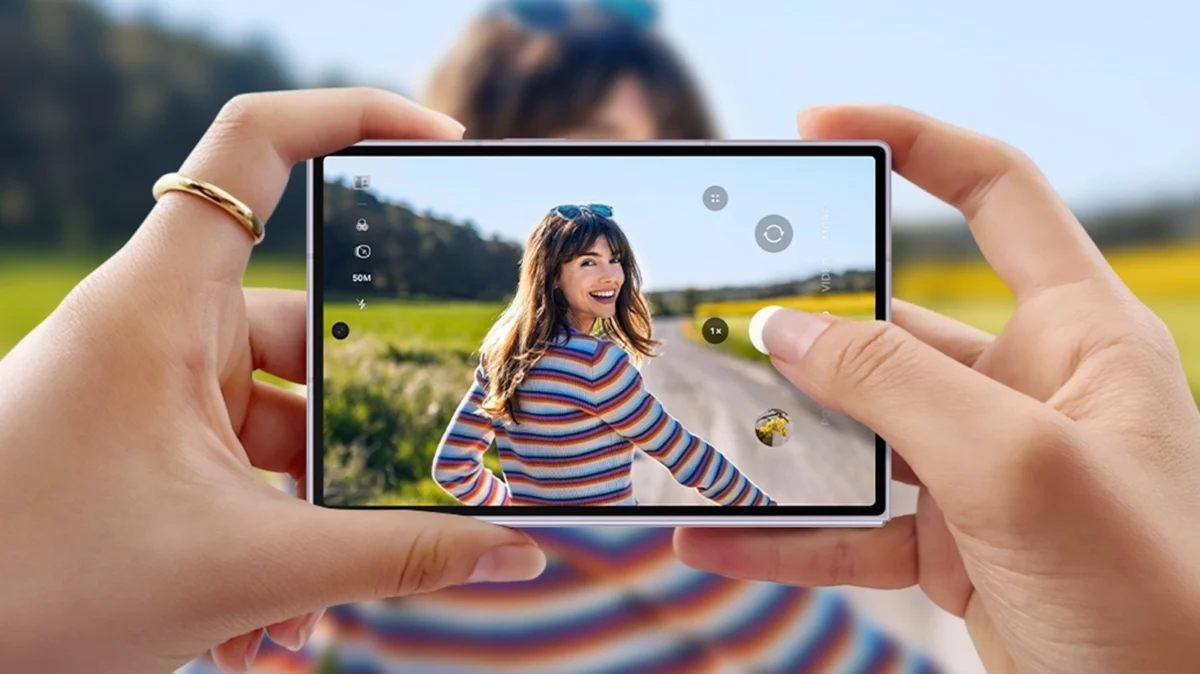
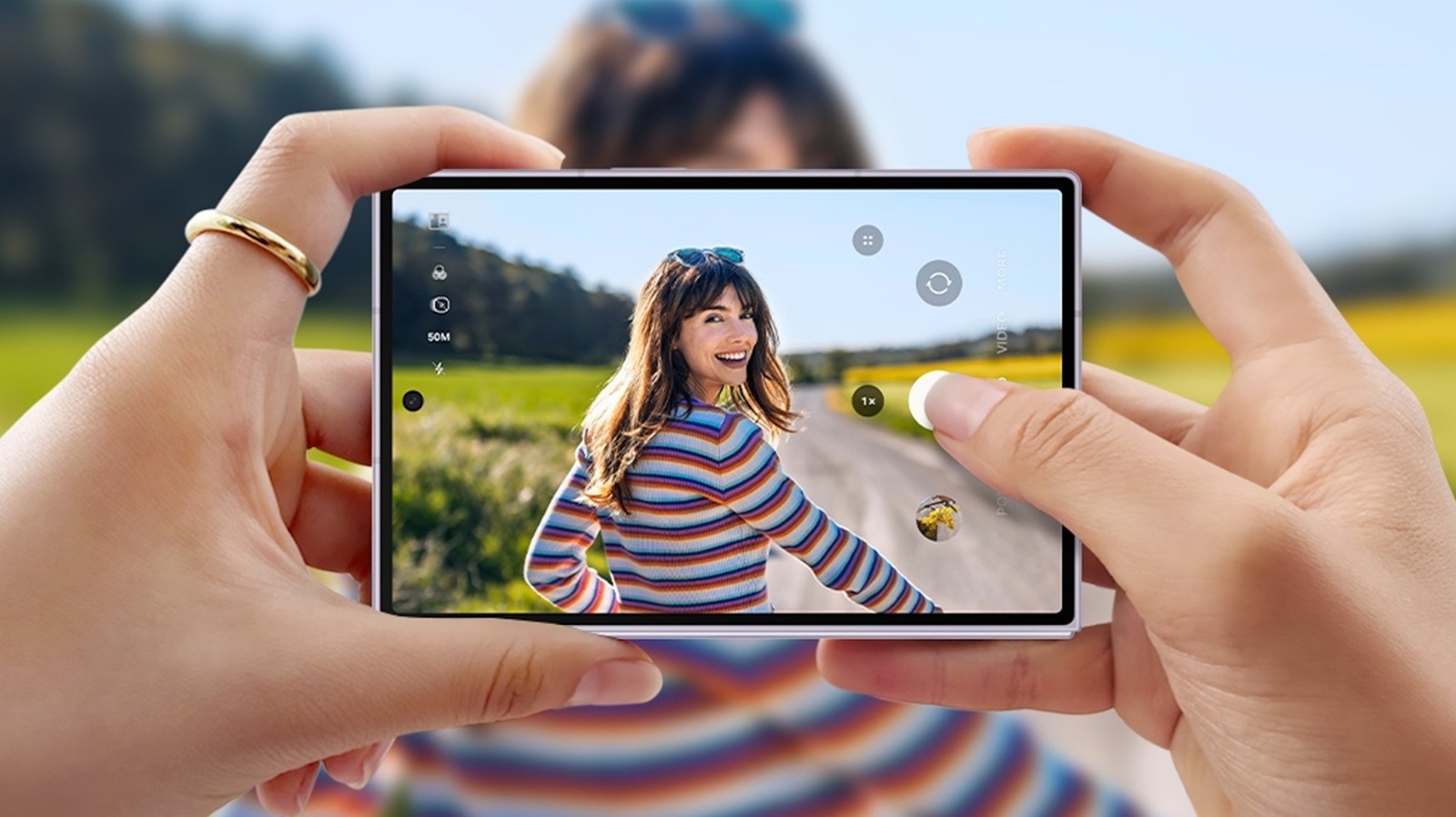
The camera hardware on the Galaxy Z Fold 8 and Galaxy S26 reflects their differing design philosophies and intended use cases. The Galaxy S26 features a traditional and highly versatile triple-camera setup. Its primary shooter is a potent 50MP sensor, complemented by a 12MP ultrawide lens for expansive landscape shots and group photos, and a dedicated 10MP telephoto lens offering 3x optical zoom. This optical zoom capability, coupled with Samsung’s advanced digital zoom algorithms, allows the S26 to achieve up to 30x digital zoom, making it a formidable tool for capturing distant subjects with remarkable clarity.
The Galaxy Z Fold 8’s camera system is designed with the foldable form factor in mind. It incorporates dual 50MP sensors for its main and ultrawide lenses, delivering excellent image quality for everyday photography. However, it notably omits a dedicated telephoto lens. Samsung advertises up to 10x digital zoom on the Fold 8. While this is sufficient for many scenarios, users who prioritize long-range zoom photography will find the S26’s optical zoom and superior digital zoom capabilities to be the more advantageous choice. The S26’s camera system is thus geared towards photographic versatility, while the Fold 8’s is optimized for integrated functionality within its unique design.
Battery Life and Charging: Endurance in Different Forms
Powering these sophisticated devices are substantial battery units, though their endurance and charging characteristics are influenced by their respective designs. The Samsung Galaxy Z Fold 8 is equipped with a larger 4,800mAh battery. This increased capacity is necessary to fuel its dual-display system, particularly the significantly larger internal folding screen. The Galaxy S26 features a 4,300mAh battery, which, given its conventional single-screen design, benefits from a more inherent power efficiency.
It is important to consider that the Fold 8’s battery must power two displays, one of which is considerably larger and more power-intensive. Therefore, the real-world battery life between the two devices may be closer than the raw mAh figures suggest. Samsung rates the Z Fold 8 for up to 26 hours of video playback, a testament to its optimizations. The S26, with its smaller screen and conventional form factor, often exhibits superior battery efficiency in typical usage scenarios, though this can vary significantly based on individual user habits and application usage. Both devices are expected to support rapid wired and wireless charging, though specific charging speeds and wattages are subject to regional configurations and final product specifications.
The $1,000 Question: Navigating the Purchase Decision
The most significant differentiator between the Galaxy Z Fold 8 and the Galaxy S26, beyond their technological nuances, is their price point. The feature-rich Galaxy S26 launched in the U.S. with a starting price of $899.99 for the 256GB model. This positions it as a premium, yet relatively accessible, flagship device, with potential for further price reductions through various retail channels and promotional offers.
In stark contrast, the base 256GB variant of the Galaxy Z Fold 8 commands a premium price of $1,899.99. This makes it precisely $1,000 more expensive than its S26 counterpart before any discounts, trade-in values, or carrier subsidies are applied. This substantial price gap is a critical factor for any prospective buyer. The 512GB version of the Fold 8 escalates to $2,099.99, and the top-tier 1TB model reaches a staggering $2,499.99.
For consumers prioritizing the best price-to-performance ratio, the Samsung Galaxy S26 emerges as a compelling choice. It offers the same cutting-edge Snapdragon 8 Elite Gen 5 processor and 12GB of RAM found in the Fold 8 within the U.S. market. Its camera system is arguably more versatile, and its lighter, more robust IP68-rated build comes at less than half the cost of the base Fold 8.
However, this does not diminish the unique appeal and functional advantages of the Galaxy Z Fold 8. Its foldable form factor is undeniably innovative and a significant conversation starter, offering a futuristic aesthetic. More importantly, the expansive internal display revolutionizes multitasking, making it exceptionally well-suited for working with documents, browsing complex websites, consuming video content, and running multiple applications side-by-side. Samsung has specifically optimized the larger screen for enhanced productivity, integrating features like Samsung DeX, which allows users to project their mobile interface onto an external display for a desktop-like experience. It is noteworthy that S-Pen support, a feature that has been a welcome addition to previous Fold models, remains absent in the Z Fold 8, a point of potential contention for power users who rely on stylus input.
In essence, for the vast majority of consumers, the Galaxy S26 represents the more pragmatic and financially sensible option. It delivers a flagship experience with top-tier performance, an excellent camera system, and robust build quality at a significantly more accessible price point. The Galaxy Z Fold 8, conversely, makes a strong case for users who specifically desire a device that can effectively bridge the gap between a conventional smartphone and a compact tablet. The decision hinges on whether the transformative foldable experience, with its enhanced multitasking capabilities and novel form factor, is worth the substantial $1,000 premium. This ultimately becomes a personal value judgment for each buyer to make, weighing the allure of cutting-edge innovation against practical considerations and budgetary constraints. The 2026 smartphone landscape, as defined by these two distinct offerings from Samsung, provides consumers with a clear choice between refined convention and ambitious evolution.