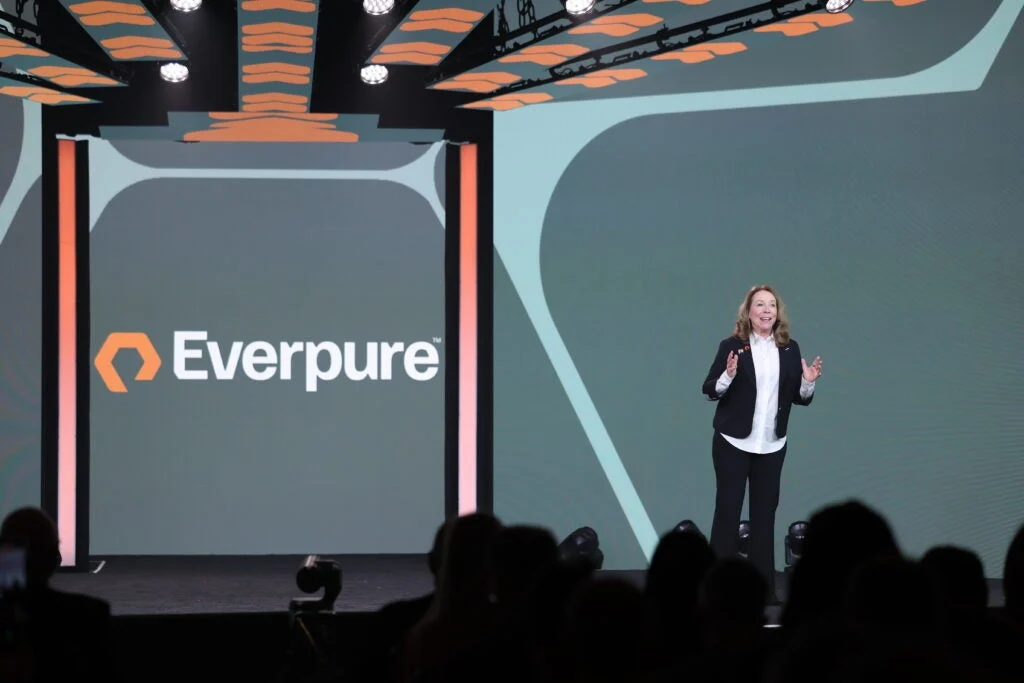
The transition of a publicly traded corporation’s identity is a complex undertaking that extends far beyond the aesthetic updates of a logo or a color palette. When Pure Storage, a long-standing leader in the enterprise flash storage market, officially rebranded to Everpure earlier this year, the move signaled a fundamental shift in the company’s core business philosophy. This transformation was the culmination of years of technical evolution, moving the company away from its roots in hardware-centric storage systems and toward a future defined by holistic data management, advanced intelligence, and artificial intelligence (AI) orchestration platforms. However, the most critical component of this transition was not the external marketing campaign or the updated ticker symbol; it was the meticulous internal communication strategy designed to align thousands of employees with a new corporate vision before a single word was uttered to the public.
Under the leadership of Chief Marketing Officer Lynn Lucas, Everpure treated its rebranding not as a top-down mandate, but as a comprehensive internal cultural movement. The strategy was built on the premise that employees are a company’s most vital brand ambassadors. If the workforce did not understand or believe in the new identity, the external market would likely follow suit with skepticism. By the time the name Everpure was revealed to investors and customers, the company’s internal teams had already spent months internalizing the "why" behind the change, ensuring that the rollout was seamless and authentic.
The Strategic Rationale From Storage to Data Orchestration
To understand the necessity of the rebrand, one must look at the trajectory of the data technology industry over the last decade. Founded in 2009, Pure Storage disrupted the market by championing all-flash storage at a time when mechanical disk drives were still the industry standard. For years, the name "Pure Storage" was synonymous with high-performance hardware. However, as the digital landscape shifted toward cloud-native architectures and generative AI, the requirements of B2B organizations evolved. Companies no longer needed just a place to store data; they required sophisticated platforms capable of managing, moving, and analyzing data across hybrid environments.
As Lynn Lucas explained, the company’s brand had begun to lag behind its actual capabilities. Over the last several years, Everpure—then still operating as Pure Storage—had integrated a suite of software-defined services, automated management tools, and AI-ready infrastructure. The word "storage" had become a linguistic anchor, tethering the company’s public perception to a hardware category that did not fully encompass its modern software and platform offerings. The decision to move to "Everpure" was intended to reflect a sense of continuity, purity of data, and an "evergreen" approach to technology that does not become obsolete.
The rebranding process was not a sudden decision but a year-long strategic initiative. It involved a dedicated task force of over 100 employees spanning various departments, including marketing, communications, human resources, finance, and legal. This cross-functional approach was essential because a name change for a public company involves rigorous regulatory compliance, intellectual property updates, and financial restructuring. By involving these departments early, the company ensured that the infrastructure for the new brand was as robust as the messaging itself.
Chronology of the Rebrand A Twelve-Month Internal Roadmap
The timeline for the Everpure transition provides a blueprint for large-scale corporate identity shifts. The process began more than 120 days before the public announcement with a series of high-level discussions between CMO Lynn Lucas, the CEO, and the company’s founders. The objective was to determine if the "Storage" moniker was truly a hindrance to growth. Once the decision to rebrand was finalized, the project moved into a "stealth" internal phase.
During the six months leading up to the launch, the internal communications team worked closely with HR to develop educational materials. The goal was to prevent the "rumor mill" from creating anxiety and instead build a sense of anticipation. The company recognized that for long-term employees, the "Pure Storage" name held significant emotional value. Acknowleging this heritage was a key part of the strategy; the rebrand was framed as an evolution of their legacy rather than a rejection of it.
Three months before the launch, the cross-functional team of 100 employees began the logistical heavy lifting. This included everything from updating digital assets and legal contracts to physical office renovations. One month before launch, the internal messaging intensified. Leadership began holding "town hall" previews where the business rationale was laid out in detail. This ensured that by the time "Day Zero" arrived, the workforce was not surprised but was instead ready to execute the final phase of the rollout.
Empowering the Workforce Through Education and Language
A central challenge in any B2B rebrand is ensuring that the sales and support teams can articulate the new value proposition to clients. To address this, Everpure’s HR and marketing teams developed a 12-minute learning module that was mandatory for all staff. This module was not merely a presentation on the new logo; it was a masterclass in the company’s new soundbites.
The module focused on answering the fundamental question: "Why Everpure?" It provided employees with a simplified narrative that they could use in various contexts—whether in a formal sales pitch, at a professional networking event, or even in casual conversation with friends and family. By providing "simple messaging," the company reduced the friction of the transition. Employees felt empowered because they had the right words to explain the change, which mitigated the risk of inconsistent or confusing messaging reaching the market.
This educational phase also served to reinforce the company’s shift toward AI orchestration. As B2B organizations grapple with the complexities of training large language models (LLMs), Everpure positioned itself as the underlying platform that makes such innovation possible. The internal training ensured that every employee, regardless of their role, understood how the rebrand aligned with the global AI boom.
Launch Day Global Participation and Social Advocacy
The actual launch day was designed to be a participatory global event. Rather than a dry corporate memo, Everpure utilized physical and digital engagement to foster a sense of community. The company shipped "mystery packages" containing new branded banners and materials to every one of its global offices. On the morning of the announcement, offices around the world held synchronized "reveal" events.
Employees were encouraged to film themselves unboxing the new brand materials and sharing those videos on internal Slack channels. This created a groundswell of organic excitement. By making the launch participatory, the company transformed employees from passive recipients of news into active participants in the company’s history.
Furthermore, the rollout extended to external social media platforms. The communications team provided employees with "tips and tricks" for updating their LinkedIn profiles and sharing their pride in the new brand. Executives led by example, posting personal reflections on the company’s journey. This coordinated social advocacy meant that when the public and the media first heard the name Everpure, they saw a united front of enthusiastic employees, which provided immediate social proof and credibility to the rebrand.
Supporting Data and Market Context
The move by Everpure mirrors a broader trend in the technology sector where companies are shedding hardware-specific names to reflect a "platform-as-a-service" (PaaS) or "software-as-a-service" (SaaS) model. Historical precedents include Apple Computer dropping "Computer" from its name in 2007 to reflect its expansion into consumer electronics, and more recently, various "storage" and "hardware" companies rebranding to emphasize "cloud" and "data."
Market data supports this strategic pivot. The global enterprise data management market was valued at approximately $92 billion in 2023 and is projected to grow at a compound annual growth rate (CAGR) of over 12% through 2030. In contrast, traditional hardware storage markets, while still massive, face increasing pressure to provide integrated software layers. By rebranding as a data platform, Everpure is positioning itself in a higher-growth category that typically commands higher price-to-earnings (P/E) multiples from investors.
Internal metrics from the Everpure launch also indicate success. According to the company, the internal engagement during the launch week was among the highest in the company’s history, with thousands of employee-generated social media posts reaching an estimated audience of several million potential customers and recruits.
Broader Impact and Long-Term Implications
The Everpure rebrand serves as a case study for the importance of internal public relations in the modern corporate era. In an age of transparency and social media, the "inside-out" approach to branding is no longer optional. When a company changes its identity, it is making a promise to the market. If the employees do not understand that promise, they cannot deliver on it.
For Everpure, the communication effort did not cease once the banners were hung. CMO Lynn Lucas emphasized that the company continues to reinforce the rebranding message every month through internal meetings and strategy sessions. This ongoing dialogue ensures that the "Everpure" identity remains tied to the company’s business performance and innovation pipeline.
The long-term implications of this move are significant. By successfully shedding the "storage" label, Everpure has cleared the path to compete directly with diversified tech giants in the AI and data management space. It has signaled to the talent market that it is a place for software engineers and AI specialists, not just hardware designers. Most importantly, it has demonstrated that a clear, well-communicated internal strategy can turn a potentially disruptive corporate change into a unifying moment of growth. As organizations continue to navigate the complexities of the AI era, the Everpure model suggests that the most successful transformations are those that begin by winning the hearts and minds of the people within the building.