Apple concluded 2025 with a significant surge in global smartphone shipments, decisively outperforming its long-standing rival, Samsung. This momentum has carried into the first quarter of 2026, marking a historic milestone for the tech giant as it captured the leading position in the global mobile industry for the first time. According to data released by Counterpoint Research, Apple secured a substantial 21 percent share of the global smartphone market in Q1 2026. This achievement underscores a broader industry shift and highlights Apple’s sustained appeal and strategic market positioning.
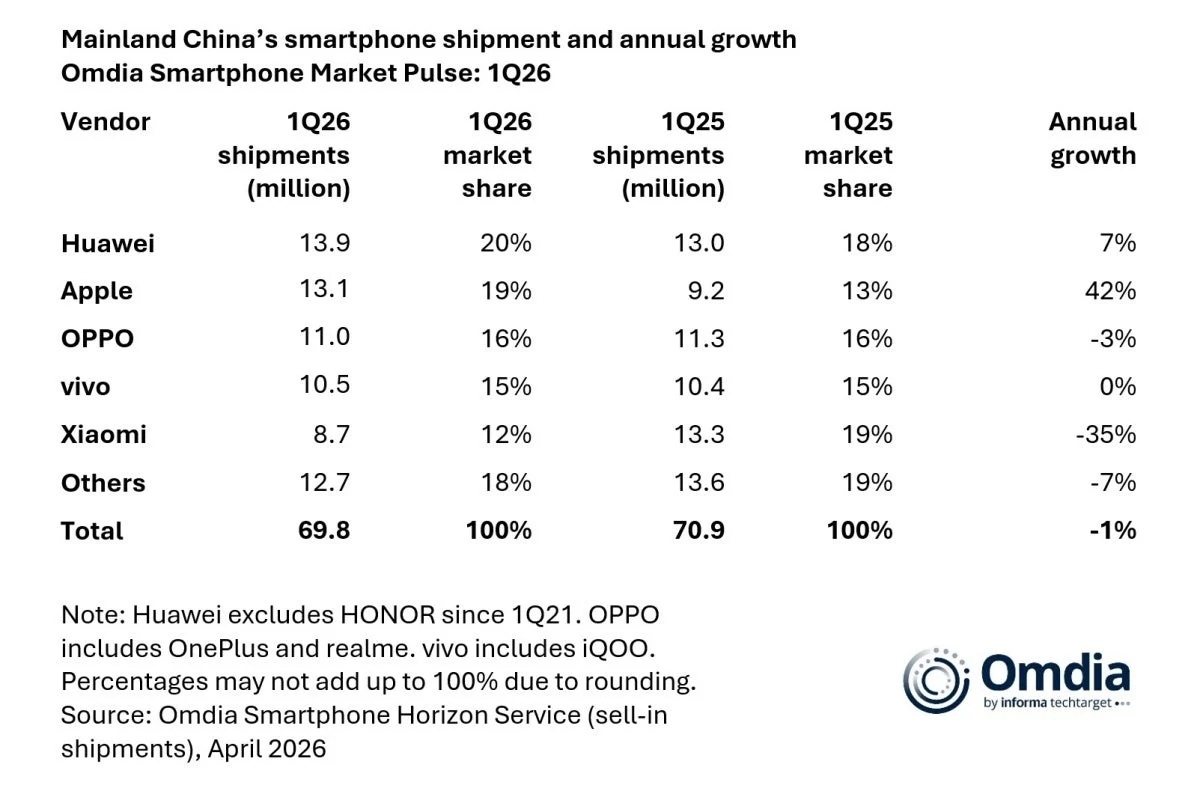
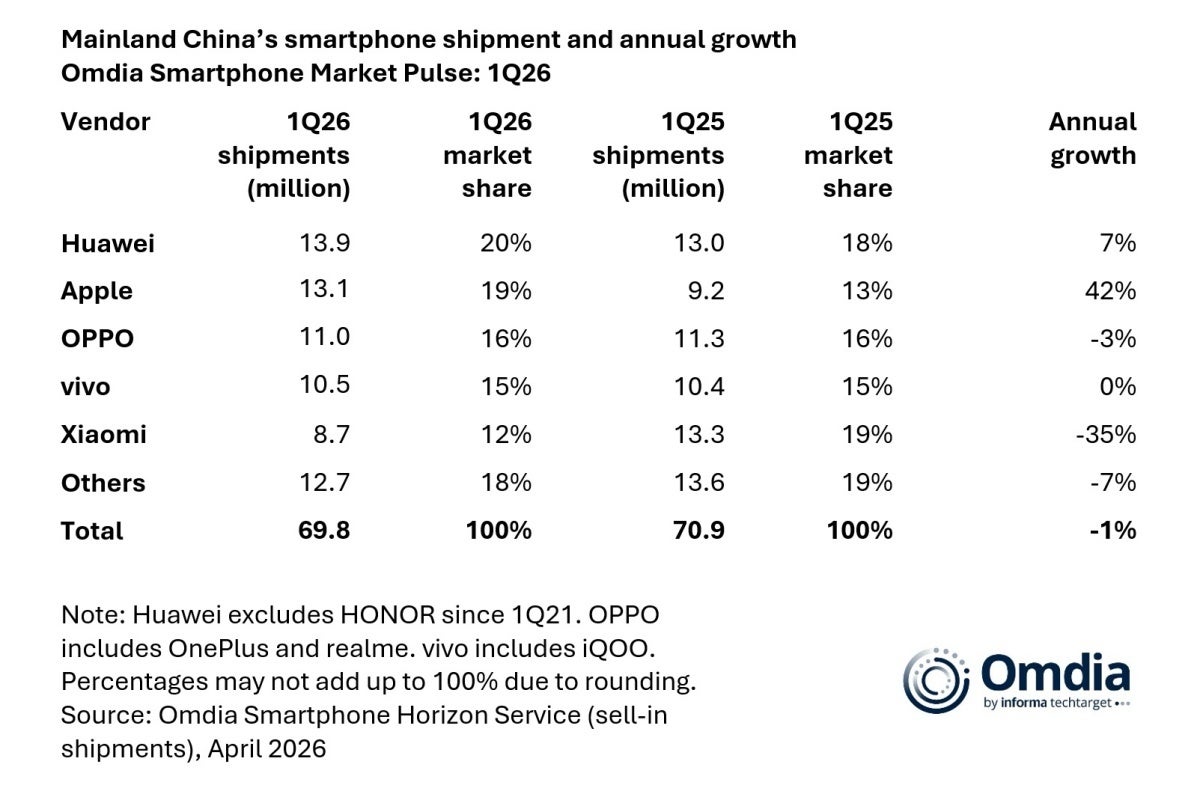
While Apple celebrates its global ascendancy, the landscape within China, the world’s largest smartphone market, presents a more nuanced picture. Huawei, a formidable player in its domestic territory, managed to retain its top position in Chinese smartphone shipments for Q1 2026. The company reported a modest yet significant year-on-year increase, shipping 13.9 million units, up from 13 million in the same period of the previous year. This growth translated to a bolstered regional market share, rising from 18 percent to 20 percent. However, this domestic supremacy is now under considerable pressure, primarily due to Apple’s aggressive expansion within the same market.
Apple’s performance in China during Q1 2026 was nothing short of spectacular. The company witnessed a dramatic surge in shipments, selling 13.1 million iPhones, a stark contrast to the 9.2 million units sold in Q1 2025. This represents an astounding 42 percent year-on-year increase, a figure that significantly outpaced the overall Chinese smartphone market, which experienced a slight contraction of 1 percent during the same period. The primary driver behind Apple’s remarkable growth in China appears to be its ability to largely absorb the rising costs of memory chips, a challenge that has led to broader price increases across many Android devices.
Apple’s Ascendancy in China: A Strategic Triumph
The competitive dynamics in the Chinese smartphone market reveal a fascinating narrative of shifting market shares. In Q1 2026, Apple’s impressive shipment volume of 13.1 million units propelled its market share to 19 percent, a significant leap from its 13 percent share in Q1 2025. This gain brought Apple perilously close to Huawei’s 20 percent share, with a mere one percentage point separating the two giants. Analysts suggest that this narrow margin, coupled with Apple’s historical strength in the fourth quarter, positions the company for a potential takeover of the top spot in China by the end of 2026.
The key differentiator for Apple’s success in China has been its pricing strategy. While competitors like Oppo, Vivo, Xiaomi, and Honor have seen their device prices increase due to rising component costs, particularly memory chips, Apple has largely managed to avoid broad price hikes for its iPhones in the region. This pricing stability has resonated with Chinese consumers, especially in the face of a fluctuating economic climate. If this trend persists, Apple is well-positioned to achieve its long-held ambition of becoming the leading smartphone vendor in China for the first time.
Huawei’s Domestic Dominance Under Threat
Huawei’s consistent performance in the Chinese market has been a cornerstone of its global strategy. The company’s ability to maintain its leadership in Q1 2026, despite Apple’s aggressive push, highlights the loyalty of its customer base and the strength of its product portfolio within China. The 7 percent year-on-year increase in shipments is a testament to Huawei’s resilience and its deep understanding of the domestic consumer preferences.
However, the data from Counterpoint Research paints a picture of intensifying competition. Huawei’s 20 percent market share, while significant, is no longer the commanding lead it once was. The proximity of Apple’s 19 percent share signifies a potential tipping point. Industry observers are closely monitoring how Huawei will respond to this heightened pressure, particularly in light of potential future price adjustments by Apple.
Broader Market Trends and Shifting Consumer Preferences
Beyond the top two contenders, the performance of other major players in the Chinese market reveals a consolidation of power among the leading brands. Xiaomi, once a strong contender, experienced a substantial decline in Q1 2026, with shipments plummeting by 35 percent from 13.3 million units to 8.7 million units. This resulted in its market share shrinking from 19 percent to 12 percent. Similarly, Oppo saw a 3 percent contraction in its shipments.
The combined market share of the top five vendors – Huawei, Apple, Xiaomi, Oppo, and Vivo – reached an impressive 94 percent in Q1 2026. This statistic underscores a growing trend of market concentration, where smaller and emerging brands are finding it increasingly difficult to gain traction. Consumers appear to be gravitating towards established brands, indicating a preference for reliability, brand recognition, and potentially perceived value, even in a challenging economic environment. Samsung, once a dominant global player, now finds itself relegated to the "smaller" category in China’s hyper-competitive smartphone arena.
The Chinese Smartphone Market: A Shrinking, Yet Vital, Arena
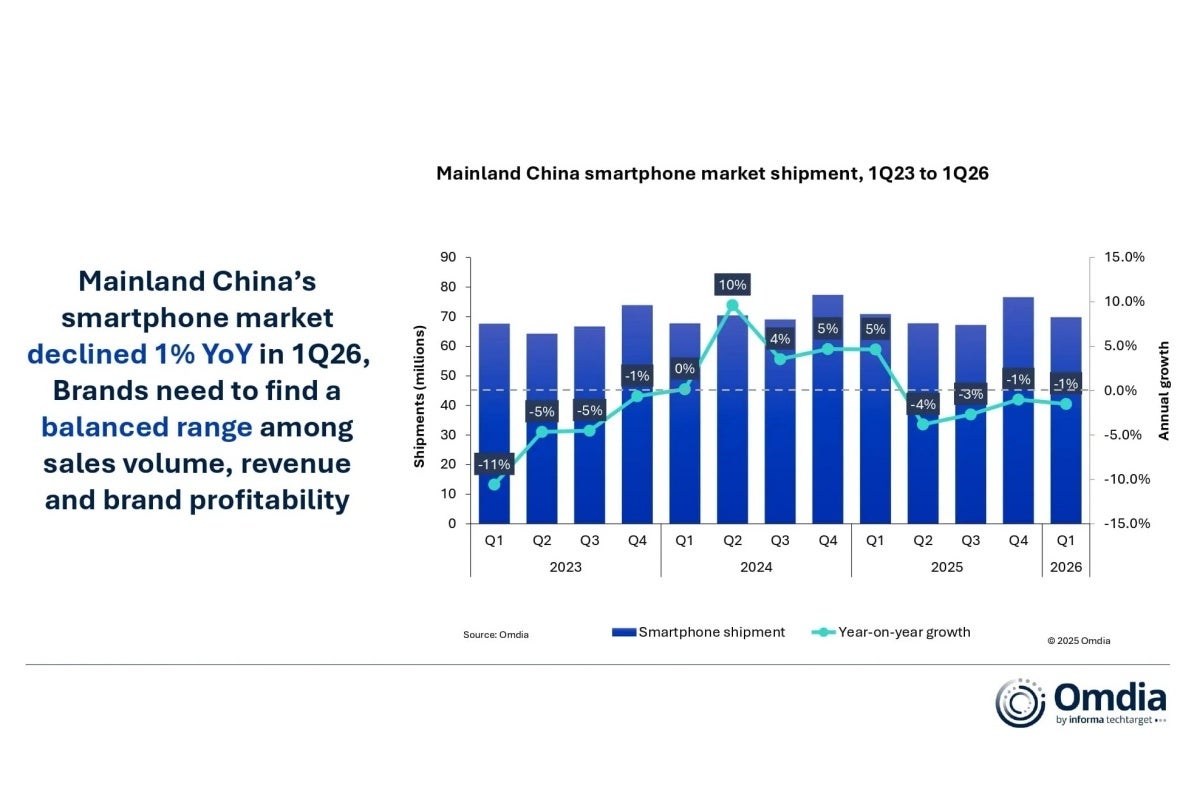
The overall health of the Chinese smartphone market in Q1 2026 was characterized by a slight contraction, with total shipments declining by 1 percent compared to the previous year. This marginal decrease, however, belies the significant contributions made by Apple’s robust growth. Without Apple’s substantial increase in shipments, the overall market decline would have been considerably steeper, underscoring the company’s role as a crucial stabilizing force in the region.
The implications of this market dynamic are far-reaching. For manufacturers, it signifies a need for strategic recalibration, focusing on differentiation, innovation, and price-sensitive offerings. The increasing market share held by the top players suggests that brand loyalty and ecosystem integration will become even more critical factors in consumer purchasing decisions.
Future Outlook: Navigating Price Hikes and Innovation
Looking ahead, analysts predict a further contraction of the Chinese smartphone market, with an expected overall decline of 10 percent in 2026 compared to 2025. This forecast is largely attributed to the persistent rise in memory chip prices, which are projected to continue their upward trajectory in the coming months. This trend poses a significant challenge for all smartphone manufacturers, including Apple, which may eventually be compelled to implement broader price increases across its product lines to maintain profitability.
The potential introduction of new form factors, such as foldable devices, could inject a new wave of excitement into the market. Speculation surrounding Apple’s potential entry into the foldable segment, with rumors of an "iPhone Fold" or "iPhone Ultra" slated for release in late 2026, could significantly influence market dynamics. Such a move, if executed successfully and if it meets initial global demand, could further bolster Apple’s market position and potentially reshape consumer expectations for premium smartphones.
A Look Back: The Evolution of China’s Smartphone Landscape
To fully appreciate the current market dynamics, it is beneficial to consider the recent historical context. From Q1 2023 to Q1 2026, the Chinese smartphone market has undergone significant transformations. Initial data from Omdia indicates that in Q1 2023, the market was characterized by a different distribution of power, with various players vying for market share. By Q1 2025, while Huawei and Samsung were strong contenders, Apple was already demonstrating its growing influence. The Q1 2026 data, however, clearly shows a pivotal shift, with Apple’s meteoric rise and Huawei’s sustained, albeit challenged, leadership.
The period between Q1 2024 and Q1 2026, as depicted in market analysis charts, further illustrates this evolution. We can observe the fluctuating fortunes of brands like Xiaomi and Oppo, alongside the steady climb of Apple. The dominance of the top five vendors has become increasingly pronounced, suggesting a maturing market where established players consolidate their positions.
Data-Driven Insights: Shipment Volumes and Market Share
The statistical data provided by Counterpoint Research offers a granular view of these shifts:
- Global Market: Apple secured 21% market share in Q1 2026, marking its first time leading the global mobile industry.
- China – Q1 2026:
- Huawei: 13.9 million units (20% market share), a 7% year-on-year increase.
- Apple: 13.1 million units (19% market share), a 42% year-on-year increase.
- Xiaomi: 8.7 million units (12% market share), a 35% year-on-year decrease.
- Oppo: Experienced a 3% contraction.
- China – Q1 2025:
- Huawei: 13 million units (18% market share).
- Apple: 9.2 million units (13% market share).
- Overall China Market: Contracted by 1% year-on-year in Q1 2026.
- Market Concentration: The top five vendors (Huawei, Apple, Xiaomi, Oppo, Vivo) collectively held 94% of the market share in Q1 2026.
- Future Projections: Analysts anticipate a 10% decline in Chinese smartphone sales for the full year 2026.
Strategic Implications and Competitive Landscape
The current market conditions in China suggest a strategic battleground where pricing, innovation, and brand loyalty will be paramount. Huawei’s challenge will be to maintain its domestic edge against Apple’s aggressive growth, potentially through continued product innovation and localized marketing efforts. Apple, on the other hand, will aim to leverage its consistent pricing strategy and strong brand appeal to capture a larger share of the Chinese market.
The decline of other Android manufacturers highlights the increasing bifurcation of the market. Consumers are increasingly making stark choices between the premium offerings of Apple and the competitive, albeit facing rising costs, options from established Android players. The ability of companies like Xiaomi and Oppo to rebound will depend on their capacity to innovate, manage supply chain costs, and perhaps introduce more aggressive pricing strategies in the mid-range and budget segments.
The "other" vendors category, which saw a 7% decline and a combined result lower than Apple’s solo sales, indicates a significant consolidation. This trend suggests that economies of scale and substantial R&D investments are becoming increasingly crucial for survival and growth in the smartphone industry.
The Road Ahead: A Dynamic and Evolving Market
The global smartphone market, and particularly the Chinese segment, is in a state of constant flux. While Apple’s recent performance is a significant achievement, the long-term outlook remains subject to various factors, including evolving consumer preferences, geopolitical influences, and the sustained impact of component cost fluctuations. The next few quarters will be critical in determining whether Apple can cement its global leadership and translate its momentum into sustained dominance in China. The company’s ability to navigate the challenges of rising costs while continuing to innovate will be key to its future success.
As the year progresses, the industry will be watching closely to see if Apple can indeed "obliterate" its lead over Huawei in China, as suggested by the narrow Q1 gap. The potential launch of new iPhone models, including speculative foldable devices, could further disrupt the market and redefine the competitive landscape. The resilience and adaptability of all major players will be tested as they strive to capture the attention and wallets of consumers in one of the world’s most dynamic and influential technology markets.