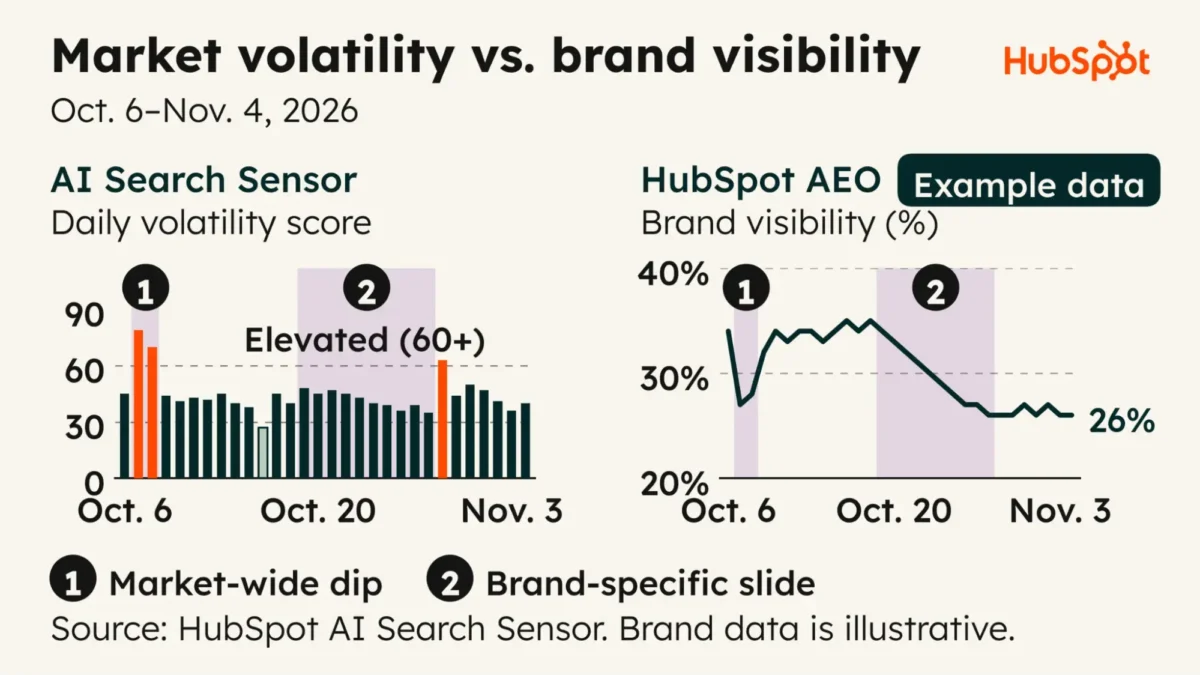
The digital marketing landscape has long been defined by the pursuit of search engine optimization (SEO) stability, with professionals accustomed to weathering unpredictable algorithm updates from industry giants like Google. However, the rapid proliferation of artificial intelligence search engines has introduced a fundamentally new dimension of complexity to digital visibility. According to data from HubSpot’s State of AEO report, 58% of marketers indicated that their organizations were actively optimizing content specifically for answer engines in the first quarter of 2026. This massive strategic pivot underscores a growing anxiety across corporate boardrooms: how to measure, manage, and report on the erratic behavior of generative AI systems.
Unlike traditional search engine result pages (SERPs), where webmasters can immediately consult rank trackers to pinpoint a page’s exact digital real estate following a core update, answer engines operate under a completely different paradigm. Platforms like OpenAI’s ChatGPT, Google’s Gemini, and Perplexity do not offer static ranking positions. Instead, a single model update can radically alter how many businesses an AI model chooses to reference, the specific types of content it favors, and whether it decides to pass along valuable referral traffic. Consequently, when an organization experiences a sudden slump in AI-referred traffic or brand visibility, executives are immediately forced to confront a difficult diagnostic question: was the decline caused by an internal misstep, or was it merely the result of an external algorithmic shift by the answer engine?
Defining AI Search Volatility and Its Core Mechanics
To properly address these operational challenges, digital strategists must first understand the precise nature of AI search volatility. Unlike general search instability—which encompasses everything from seasonal demand shifts to traditional Google ranking updates—AI search volatility specifically measures the fluctuations in which brands, pages, and sources answer engines choose to mention and cite from one prompt or day to the next.
A primary driver of this phenomenon lies in the foundational technology of large language models (LLMs): they are inherently non-deterministic. This means that generative AI platforms are fundamentally designed not to return an identical response to the exact same prompt on consecutive tries. Research conducted in late 2025 by SparkToro and Gumshoe.ai starkly illustrated this inherent inconsistency. When researchers repeatedly executed identical brand recommendation prompts, they discovered that ChatGPT and Google’s AI Overviews possessed less than a 1-in-100 chance of generating the exact same list of recommended brands twice.
Because this inherent randomness is baked into the architecture of conversational search engines, a sudden dip in a company’s visibility score does not automatically signify a degradation in content quality. To differentiate between everyday statistical noise and a substantive strategic decline, digital marketing teams require broader market context. Tools such as HubSpot’s AI Search Sensor have emerged to fill this void, offering an Answer Engine Volatility Tracker that calculates a daily score. This metric measures how far foundational signals—including mention rates, citation rates, citation types, and AI-referred traffic—have drifted from their rolling averages across major platforms like ChatGPT, Gemini, and Perplexity. By evaluating these scores, organizations can readily determine whether a visibility drop is isolated to their own domain or sweeping across the entire industry.

Contrasting Traditional Ranking Volatility with Answer Engine Fluctuations
The divergence between classic SEO metrics and Answer Engine Optimization (AEO) metrics represents a significant paradigm shift for modern marketing departments. Traditional SERP volatility tracking, exemplified by tools like the Semrush Sensor, scores day-to-day ranking shifts on a numerical scale using a fixed sample of keywords. While useful for monitoring Google organic visibility, these traditional trackers are structurally incapable of capturing what conversational models are communicating about a brand.
Nevertheless, traditional rankings and AI citations are not entirely mutually exclusive. Data from the 2026 State of AEO report indicates a strong positive correlation between traditional search performance and AI citations: pages that successfully ranked for a higher volume of Google search terms, and achieved top-tier positions, were statistically more likely to be referenced by answer engines. Furthermore, high-ranking pages demonstrated a notably higher propensity to be cited within Google’s AI Overviews than within alternative external answer engines.
Despite this correlation, holding a top ranking no longer guarantees sustained traffic. Research published by the Pew Research Center examining browsing data highlights a stark reality: when an AI summary appears in Google search results, users click through to traditional organic links in only 8% of visits, compared to 15% of visits when no AI summary is present. Consequently, a web page can successfully maintain its organic ranking while experiencing a severe contraction in incoming traffic. This disconnect explains why reliance on rank-based key performance indicators (KPIs) alone is wholly inadequate for diagnosing modern AEO performance.
Establishing a Rigorous Measurement Framework
Measuring AI search volatility accurately requires a disciplined, repeatable methodology. Marketing teams must consistently track prompts, scheduling them across identical answer engines at regular intervals, and subsequently comparing those outputs against market-wide benchmarks and internal analytics data.
To build an effective baseline, professionals must maintain strict consistency across four primary variables: the exact wording of the prompt, the specific answer engine utilized, the geographic location of the query, and the timing of execution. However, analysts must also remain mindful of the inherent limitations of this data. Because LLMs are non-deterministic, a single isolated response carries minimal statistical weight. Moreover, market-level volatility dashboards often aggregate anonymized data from broader customer bases, whereas brand-specific tools evaluate only custom-selected prompts. Therefore, analysts must focus on comparing overarching trend directions rather than fixating on raw, isolated numbers, allowing individual daily readings sufficient time—typically three to five days—to settle before reacting.

When structuring a comprehensive tracking dashboard, organizations should pair traditional visibility metrics—such as share of voice and brand mention frequency—with downstream business impact indicators. Essential metrics to monitor alongside AI visibility include brand-name direct traffic growth, assisted conversions within analytics platforms, and pipeline generation directly attributed to generative AI referrals.
Diagnosing Market-Wide Shifts Versus Internal Issues
A central responsibility for digital marketing leaders is determining whether an observed drop in visibility is part of a broader, market-wide phenomenon or an isolated internal failure. When an answer engine fundamentally alters its underlying parameters regarding how it names, cites, or routes traffic to commercial entities within an entire sector, the resulting volatility is considered market-wide.
To diagnose these events, marketing managers must cross-reference their proprietary AEO data with the daily volatility scores provided by industry benchmarks. The Answer Engine Volatility Tracker categorizes daily market conditions into distinct tiers: Calm (0 to 29), Moderate (30 to 59), Elevated (60 to 89), and Extreme (90 and above).
During periods classified as Calm, any negative movement in brand visibility is almost certainly a localized issue, signaling that teams should immediately audit their specific site architecture, content freshness, or tracking implementation. Conversely, during stretches of Elevated or Extreme volatility, industry experts strongly advise against hasty, reactionary optimization changes. Reacting prematurely to engine-level algorithmic updates frequently generates more operational disruption than the underlying platform shift itself. Teams are instead encouraged to consult model release notes—such as those tracking the deployment of major LLM updates like GPT-6 Astra—to verify whether a platform-wide update coincided with the observed metric fluctuations.
Reporting Volatility and Proving ROI to Executive Leadership
Perhaps the most formidable challenge facing digital leaders is communicating these complex digital shifts to executive management. In the 2026 State of AEO landscape, B2B marketers cited measuring program success as their primary operational hurdle (23%), while B2C marketers ranked it as their second-greatest challenge (26%). This widespread difficulty stems largely from legacy attribution tools, which have been slow to natively integrate generative AI referral pathways.

When presenting findings to the C-suite, marketing leaders should adopt a structured, five-part reporting framework that prioritizes business outcomes above technical metrics:
- Financial Impact Analysis: Immediately address whether the observed volatility impacted core business drivers, such as qualified leads, sales pipeline, or closed revenue.
- Market Context and Benchmarking: Present industry-wide volatility scores to establish whether traffic dips were experienced universally across competing brands or restricted solely to the company’s domain.
- Visibility and Citation Trends: Share longitudinal data illustrating how frequently the brand is being referenced and cited relative to historical baselines.
- Channel Attribution Insights: Highlight traffic and conversion data extracted from CRM properties—such as AI referral parameters captured within original and latest traffic source fields.
- Strategic Action Plan: Outline a clear, measured response strategy detailing whether immediate content adjustments are required or if patience is warranted while market conditions stabilize.
To capture nuanced attribution data that standard software might miss, organizations are increasingly deploying qualitative data-gathering mechanisms, such as adding "How did you hear about us?" open-text fields to primary conversion forms. This simple tactic successfully identifies prospective buyers who initially discovered the brand through a conversational AI answer but ultimately converted via direct navigation or branded search terms.
Strategic Implications and the Road Ahead
As artificial intelligence continues to mature as a primary discovery channel for consumers and business buyers alike, the operational frameworks governing digital visibility must evolve in tandem. AI search volatility is not a temporary anomaly to be patched over, but rather an ongoing, permanent characteristic of the modern information ecosystem.
By embracing sophisticated market benchmarking, maintaining rigorous and consistent measurement practices, and divorcing knee-jerk reactions from actual algorithmic shifts, forward-thinking organizations can successfully demystify answer engine fluctuations. Ultimately, those marketing teams that learn to contextualize internal performance against broader industry trends will be best positioned to secure sustained executive backing, optimize their digital presence, and capture high-intent audiences in the age of conversational artificial intelligence.