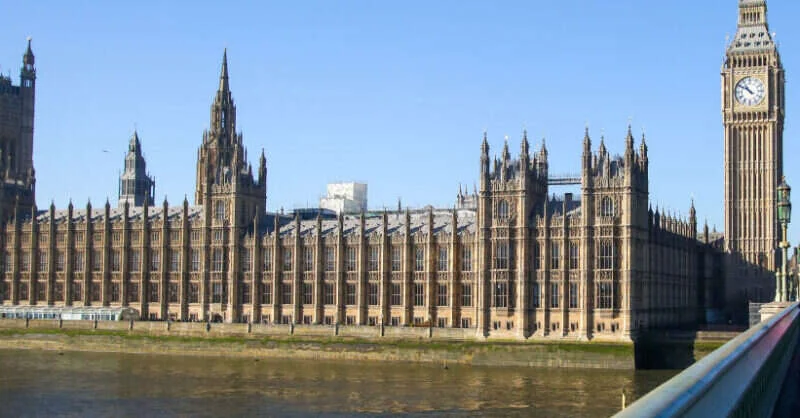
The United Kingdom is moving closer to enacting comprehensive anti-SLAPP legislation following a decisive intervention by the Labour government, which has thrown its full support behind a new Private Member’s Bill. Spearheaded by Conservative former Culture Secretary Sir John Whittingdale, the proposed legislation aims to decisively dismantle the architecture of "lawfare"—the deployment of oppressive, meritless legal actions designed primarily to financially exhaust, intimidate, and silence journalists, whistleblowers, and abuse survivors.
During a pivotal session in the House of Commons, Justice Minister Sarah Sackman confirmed the government’s backing for the measure. The proposed framework will radically expand existing legal defenses, moving far beyond current provisions that are narrowly restricted to cases linked strictly to economic crime. If successfully passed into law, the legislation will grant courts the explicit authority to summarily dismiss Strategic Lawsuits Against Public Participation (SLAPPs) whenever a legal challenge is recognized as an attempt to suppress information of vital public importance.
The Scope and Mechanism of the Proposed Legislation
For years, media freedom advocates, transparency campaigners, and legal experts have argued that the UK’s liberal defamation and privacy laws have been weaponized by wealthy elites, corrupt oligarchs, and powerful corporations. Under the current status quo, defendants targeted by deep-pocketed litigants face catastrophic financial risks, often forcing media outlets and independent authors to self-censor or abandon crucial public-interest investigations long before a case ever reaches a courtroom verdict.
Sir John Whittingdale’s newly tabled Bill seeks to alter this power dynamic by introducing an efficient early-dismissal mechanism. Under the proposed provisions, defendants will be empowered to petition the court to throw out a lawsuit at an early stage by demonstrating that the primary objective of the claimant is to muzzle legitimate public debate rather than seek genuine legal redress.
Crucially, the legislation extends protective shields to encompass all forms of public-interest reporting. This expansion closes a glaring loophole that previously left investigative journalists exposed unless their reporting touched directly upon financial crime or money laundering. By establishing an objective test for courts to evaluate the underlying motivations of a lawsuit, the Bill aims to deter abusive litigants while preserving legitimate access to justice for genuinely aggrieved parties.
Real-World Implications: From Mohamed Al Fayed to Russian Oligarchs
The debate in the House of Commons underscored the urgent real-world necessity of anti-SLAPP reform, with MPs highlighting high-profile cases where the threat of protracted litigation successfully suppressed damaging truths for decades.
Sir John drew explicit attention to the systemic silencing surrounding the late Mohamed Al Fayed, the former owner of Harrods and Fulham Football Club. Alleged victims of abuse at the hands of Al Fayed were repeatedly prevented from speaking out publicly due to the looming threat of aggressive legal action, illustrating how intimidation can operate as a powerful tool of suppression outside the courtroom.
Furthermore, the Commons debate recalled how Catherine Belton, an investigative journalist and author, was forced to alter her critically acclaimed book regarding Russian oligarchs and Kremlin influence following aggressive legal threats. In another stark example, Sir John previously denounced the "appalling" reality that the leader of the Russian-backed Wagner paramilitary group was able to initiate defamation proceedings against a British journalist despite being subjected to international UK sanctions.
These incidents, lawmakers argued, demonstrate that the chilling effect of SLAPPs extends far beyond formal judicial verdicts. Often, the mere dispatch of menacing legal correspondence—commonly referred to as "chilling letters" or "SLAPP letters" issued by high-priced London law firms—is sufficient to force targets into submission without a judge ever examining the merits of the case.
Government Response and Political Consensus
Speaking ahead of the formal parliamentary endorsement, Justice Minister Sarah Sackman delivered a sharp rebuke of those who exploit financial might to evade public accountability.
"No-one should be able to use their wealth or influence to silence legitimate scrutiny," Ms Sackman stated. "SLAPPs are designed to intimidate and can prevent victims of abuse, whistleblowers, campaigners and journalists from speaking out in the public interest. This Bill will strengthen protections against these abusive lawsuits while preserving access to justice for genuine claims, helping defend freedom of expression and support accountability."
The cross-party consensus achieved during the Bill’s reading marked a significant milestone for a reform movement that has spent years lobbying successive administrations. Representatives from across the political spectrum united in acknowledging that the UK’s international reputation as a bastion of a free press has been severely compromised by its vulnerability to wealthy litigants seeking a hospitable jurisdiction for forum shopping and reputation laundering.
Campaigner Reactions and Demands for Legislative Strengthening
While media freedom organizations and survivor advocacy groups have universally praised the government’s decision to support Sir John’s initiative, they have simultaneously sounded notes of caution. Stakeholders argue that unless the Bill undergoes rigorous amendment during its upcoming committee stages, it risks falling short of providing comprehensive protection.
Felicity Garvey, advocacy manager at Reporters Without Borders (RSF), expressed optimism tempered with pragmatism. Noting that the UK languishes at 18th place in RSF’s World Press Freedom Index—largely due to its historical lack of robust anti-SLAPP safeguards—she described the Bill as a "great first step."
"We’ve heard real cross-party support in the chamber today already," Ms Garvey said. "We now want to see that carried through to the committee stage and see this bill become a law with real teeth that can protect not just journalists, but everyone who benefits from important stories and abuses of power being brought into the public eye."
Simultaneously, survivor advocacy networks have raised concerns over the procedural hurdles embedded within the draft legislation. Isabella, a representative of the survivor-led advocacy group "No One Above," emphasized that the structural complexities of the proposed early-dismissal mechanism could inadvertently perpetuate the financial burdens the law seeks to eliminate.
"We welcome the Government’s support for this Bill, and its move to an objective test," Isabella noted. "But as drafted, anyone sued for speaking out, including survivors of abuse, must still clear three separate hurdles before the claim against them can even be treated as a SLAPP. The fight over those hurdles could itself run up the very costs the Bill is meant to prevent."
She added that in the case of Mohamed Al Fayed, legal threats that never even materialized inside a courtroom were instrumental in keeping systemic abuse hidden from the public eye for decades. Consequently, advocacy groups are urging parliamentarians to streamline the statutory tests and confront the predatory practices of specialist law firms that profit from facilitating abusive litigation.
Concerns Raised by Trade Unions and Backbench MPs
Labor and Conservative backbenchers echoed these warnings, pointing out that even the threat of litigation exerts a devastating psychological and economic toll on defendants.
Ian Lavery, Labour MP for Blyth and Ashington, brought forward concerns originating from the National Union of Journalists (NUJ). He argued that if the early-dismissal framework remains overly complex, journalists and small independent publishers will remain exposed to prolonged emotional and financial strain.
Similarly, Rachel Blake, Labour MP for the Cities of London and Westminster, cautioned against setting the judicial threshold too high. "If the threshold is set too high, defendants may still be forced through years of litigation before obtaining protection, and by that stage, much of the damage may already have been done," she warned.
Conservative MP Alicia Kearns emphasized that the legislation must proactively capture pre-litigation intimidation—the intimidating letters and arbitrary legal warnings that achieve the objective of censorship without ever triggering formal court proceedings. "The fear of these letters on their own does the work," she reminded the Commons.
Broader Economic and Democratic Implications
The advancement of the anti-SLAPP Bill arrives at a critical juncture for British democracy and the global integrity of the UK legal services sector. For decades, London has functioned as a global hub for transnational libel tourism, where international figures with tenuous connections to the UK could utilize English courts to silence foreign journalists and critics—a phenomenon heavily criticized by international watchdogs.
By introducing statutory mechanisms to penalize abusive litigation and streamline the dismissal of unmeritorious claims, the UK government signals a formal shift toward protecting democratic resilience over the commercial interests of litigious international elites.
As the Bill transitions from its initial reading into the rigorous scrutiny of the committee stage, lawmakers, legal scholars, and civil society organizations will engage in detailed negotiations to refine its thresholds, simplify its administrative hurdles, and ensure that the final statute delivers a definitive blow against the culture of impunity that has long characterized corporate and political lawfare in Britain.