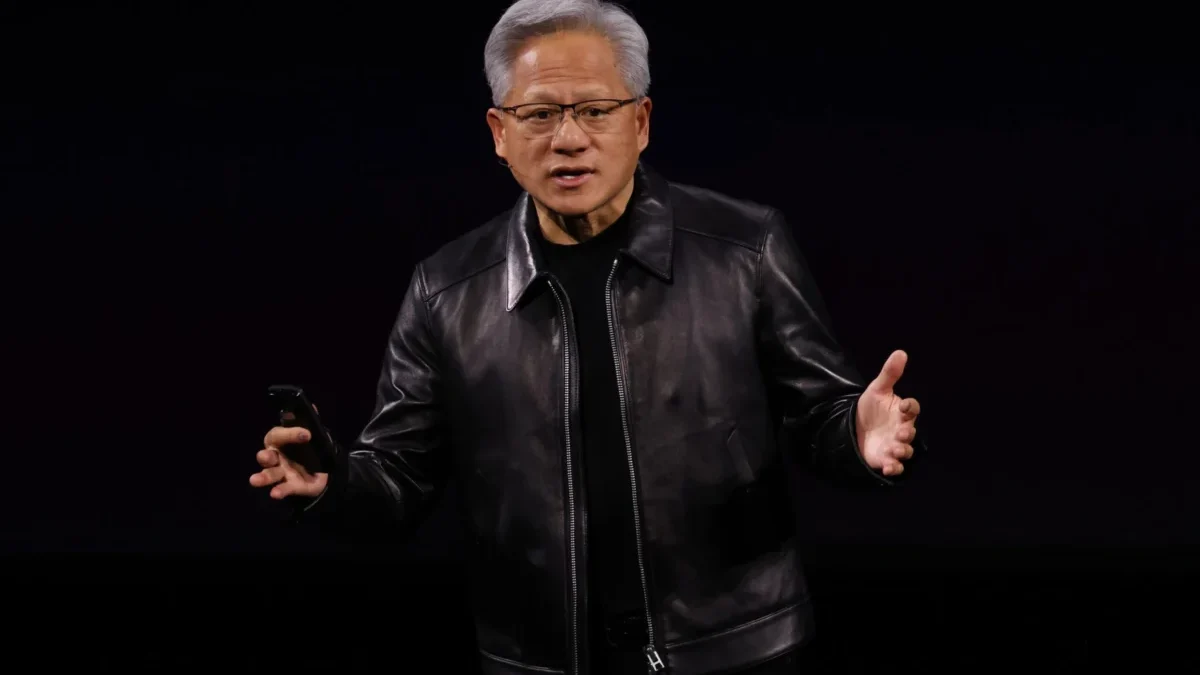
President Donald Trump has claimed direct responsibility for the rapid reinstatement of Jensen Huang as the chief executive of Nvidia, marking a rare intersection of presidential influence and corporate governance in the tech sector. Speaking to CNBC on November 23, 2026, the President asserted that he had personally facilitated the deal to return Huang to his position, just 11 days after the tech titan resigned amid a cascade of controversy. The board of directors at Nvidia, the world’s most valuable chipmaker, voted unanimously to bring Huang back following what the company described as "input from senior levels of the U.S. government."
The return of Huang, which triggered a 30% surge in Nvidia’s stock price—the largest single-day gain for the company since May 2003—has done little to quell the skepticism mounting on Capitol Hill. As Nvidia navigates the complexities of its role in the global AI infrastructure, the executive’s reinstatement has ignited a fierce debate regarding corporate accountability, the integrity of U.S. export controls, and the depth of ties between the private sector and the current administration.
A Chronology of the 11-Day Crisis
The volatility surrounding Nvidia’s leadership began earlier in November 2026, when reports surfaced detailing an extramarital affair between Jensen Huang and Alice Huang, a senior executive at the Singapore-based firm Megaspeed. While the two individuals are not related, the revelation carried significant geopolitical weight. U.S. intelligence agencies have long scrutinized Megaspeed, a major buyer of Nvidia’s high-end processors, due to allegations of potential ties to Chinese intelligence operations and the unauthorized diversion of advanced technology.
Following the initial fallout, Nvidia’s board, led by Harvey Jones, initially signaled that they did not intend to reinstate the CEO. However, the situation shifted rapidly as the White House became involved. According to disclosures and reporting, President Trump held multiple discussions with the board, both directly and through intermediaries. By November 23, the internal consensus had shifted entirely, leading to a unanimous vote for reinstatement.
The timeline of this reversal has become a focal point for legislative oversight committees. Critics argue that the speed and nature of the decision-making process suggest an external influence that bypasses standard corporate governance protocols, raising questions about whether national security interests were subordinated to the interests of a key corporate donor.
Financial Entanglements and the White House Ballroom Project
The tension between Congress and the White House has been exacerbated by the revelation that Nvidia contributed $25 million to a project intended for a White House ballroom. While the donation was made anonymously at the time of the request, Jensen Huang publicly acknowledged the contribution in October 2025 without confirming the specific dollar amount.
Senate Minority Leader Chuck Schumer has been among the most vocal critics, explicitly drawing a line between the $25 million gift and the administration’s handling of the intelligence allegations surrounding Huang. Legal experts and ethics watchdogs are currently debating whether this contribution violates any federal regulations, though the administration maintains that the gift was a philanthropic gesture unrelated to regulatory or trade policies.
Legislative Oversight and the Coming Hearings
The legislative branch is preparing to assert its oversight authority, with two major events scheduled for the first week of December 2026. On December 1, Jensen Huang is set to appear before a closed-door, transcribed interview with the House Intelligence, Foreign Affairs, and China select committees. This session will be critical in determining whether Huang can effectively address the specific security allegations that led to his brief departure.
Following the House sessions, Huang will face a public hearing before the Senate Banking Committee on December 3. Chairman Tim Scott, R-S.C., has emphasized that the primary objective of this hearing is to evaluate the integrity of U.S. export controls. The committee is expected to press Huang on how Nvidia monitors the final destination of its H200 AI chips and whether the company is sufficiently shielded from foreign intelligence influence.
"The public deserves to know whether the most critical company in the AI revolution is operating in alignment with American national security interests or if it has been compromised by its desire to maintain market access in China," said a senior aide to the Senate Banking Committee.
The Strategic Importance of Nvidia’s AI Hardware
At the center of this controversy is the sheer dominance of Nvidia in the artificial intelligence sector. As the 16th-largest company on the 2026 Fortune 500, Nvidia provides the foundational hardware for the global AI boom. The company’s H200 chip, in particular, has been a lightning rod for policy debates. In January 2026, the Trump administration authorized the sale of these chips to Chinese entities, provided they pass a third-party review process.
The frustration among national security officials, as noted by the Financial Times, stems from the perception that Huang’s lobbying efforts have consistently prioritized volume sales to China over the caution recommended by the intelligence community. Economists note that the semiconductor supply chain is uniquely rigid; according to a January 2025 Federal Reserve staff note, there is "extremely low substitutability" in the chipmaking value chain due to massive fixed costs and specialized talent.
This reality creates a strategic dilemma: if the U.S. enforces a total embargo on high-end chips to China, the potential for global supply chain shocks is significant. Conversely, if the U.S. continues to permit sales, it risks providing the foundational computing power that could accelerate China’s military and technological advancements.
Intelligence Assessments and the "Megaspeed" Question
The factual landscape regarding the relationship with Megaspeed remains murky. While the FBI has officially stated that it has no evidence identifying Alice Huang as a formal officer or asset of Chinese intelligence, other officials within the intelligence apparatus have expressed concerns over her contact with China’s Ministry of State Security.
Megaspeed, for its part, has consistently denied any wrongdoing, stating that its operations are in full compliance with international law and U.S. export restrictions. The company has faced prior scrutiny from short-sellers, such as Culper Research, which flagged Nvidia’s reliance on the firm months before the current scandal erupted. Whether these concerns represent a systemic breach or merely the risks inherent in doing business in a globalized economy will be a central theme of the upcoming Congressional inquiries.
The Broader Impact on U.S. AI Policy
The outcome of the December hearings will likely set the tone for U.S. trade policy regarding dual-use technologies for the remainder of the presidential term. Beyond the specific case of Jensen Huang, the hearings are expected to influence bipartisan legislation aimed at tightening tracking requirements for advanced chips after they have been exported.
Commerce Secretary Howard Lutnick is also expected to testify before the Senate, where he will be questioned on the efficacy of current licensing procedures. If the testimony reveals systemic failures in monitoring where these chips end up, Congress may move to strip the executive branch of some of its discretion in granting export licenses, moving toward a more rigid, legislative-mandated approval system.
Conclusion: The Test of Influence
Jensen Huang’s return to the helm of Nvidia is, in many ways, a test of the limits of corporate and executive power. By successfully navigating his way back to the CEO chair, Huang has proven the resilience of his position within the firm. However, the political cost of that return remains to be seen.
As Congress turns its attention to the intersection of the "AI billionaire" class and the U.S.-China technology war, the standard of scrutiny for industry leaders is rising. The hearings in early December will not merely be an investigation into an executive’s personal life or a board’s decision-making process; they will be an assessment of whether the United States can maintain its technological edge while ensuring that its most powerful corporate players remain firmly aligned with national security imperatives.
For now, the markets remain bullish, betting that Huang’s leadership is indispensable to the AI revolution. Whether the political establishment agrees—or whether they move to curtail his influence—will be the defining question of the final month of 2026.