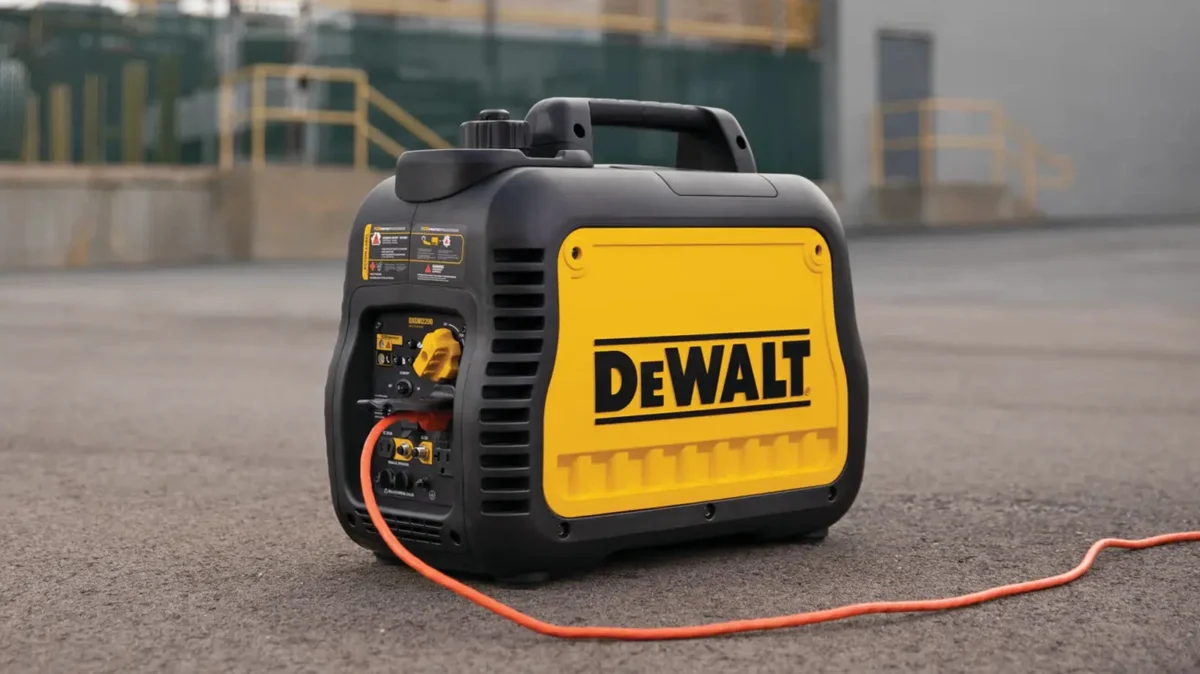
Portable generators serve as critical infrastructure for modern life, bridging the gap between total power failure and operational continuity. Whether sustaining essential household appliances during a storm-induced outage, powering heavy-duty machinery on a remote construction site, or providing creature comforts for recreational vehicle enthusiasts, the utility of a reliable generator is undeniable. However, the marketplace is saturated with manufacturers, and consumer reliance on familiar power-tool branding can often lead to suboptimal purchasing decisions. While industry giants like DeWalt command significant market presence in the cordless tool sector, their portable generator offerings frequently fail to meet the rigorous performance, efficiency, and reliability benchmarks set by specialized power-generation manufacturers.
The Landscape of Power Generation Reliability
For decades, the standard for assessing generator performance has been defined by durability, output consistency, and fuel efficiency. Industry analysts from organizations such as Consumer Reports (CR), Pro Tool Reviews, and Popular Mechanics maintain longitudinal studies on these machines, measuring factors like total harmonic distortion (THD), runtime at half-load, noise levels, and starting-to-running wattage ratios.
Historically, DeWalt’s entry into the portable generator market was met with moderate success. Their units are generally considered functional for basic construction site needs. However, a comparative analysis of independent testing reveals that these models often lack the advanced inverter technology or the high-tier component durability found in brands that focus exclusively on energy solutions. While DeWalt maintains a strong brand equity in the power tool space, they do not currently possess a model that earns a “CR Recommended” designation in the inverter category—a critical segment for those requiring stable power for sensitive electronics.
Champion: The Specialist’s Edge
Champion Power Equipment has established itself as a market leader by focusing almost exclusively on power generation and associated outdoor power equipment. Unlike multi-category conglomerates, Champion’s research and development cycles are dedicated to the nuances of internal combustion engines and electrical regulation.
The brand offers a vast portfolio, with running wattages ranging from 1,200 W to 13,500 W. The strength of the brand lies in its diversity of use-cases. For instance, the transition from gasoline to dual-fuel (propane and gasoline) technology has allowed Champion to cater to users prioritizing long-term storage and cleaner engine maintenance. Recent data from Pro Tool Reviews indicates that Champion frequently sweeps the top spots in categorical rankings for 2,000 W and 7,000 W units. This dominance is not centralized in a single product line; rather, it is a testament to the brand’s ability to maintain high quality across varying price points and technical specifications.
DuroMax: Power Density and Utility
DuroMax has carved out a significant niche by prioritizing high-output, dual-fuel, and tri-fuel systems. Their engineering philosophy centers on "power density"—providing the maximum possible wattage in a frame that remains portable enough for job site movement.
The DuroMax XP12000EH serves as a flagship case study for the brand. In testing environments, it is frequently highlighted for its ability to bridge the gap between heavy-duty industrial needs and emergency home backup. Industry experts note that the inclusion of carbon monoxide (CO) safety sensors and automatic low-oil shut-offs reflects a commitment to modern safety standards that some legacy brands have been slower to adopt. For professionals, the ability to switch to propane during long-term outages—mitigating the degradation associated with ethanol-heavy gasoline—provides a logistical advantage that has cemented DuroMax as a preferred choice for contractors and disaster preparedness planners alike.
Generac: Institutional Dominance
Few companies hold as much institutional weight in the power sector as Generac. With a historical foundation in standby home systems, the company has successfully translated that expertise into the portable market. Generac’s engineering focus is on the integration of smart-monitoring technology, allowing users to track fuel levels and power output through digital interfaces.
Consumer Reports data highlights Generac’s high rate of "Recommended" models, which currently encompasses more than one-third of their portable inventory. Their IQ3800DF model is widely cited for its superior performance in powering sensitive electronics, a feat achieved through a cleaner sine wave output compared to traditional portable units. By dominating both the 2,500-5,000 W and the 5,000-8,000 W segments, Generac has proven that its expertise in residential energy management scales effectively down to the portable level.
Honda: The Gold Standard of Reliability
Honda Power Equipment remains the benchmark against which all other portable generators are measured. While Honda is primarily known for its automotive engineering, its internal combustion engines—specifically the GXR120 series—are widely regarded as the most reliable in the industry.
The Honda EU2200i is frequently cited by Popular Mechanics and Bob Vila as the premier choice for portability and quiet operation. Its weight-to-power ratio is unmatched, making it the industry standard for camping and emergency power for medical devices. While the initial capital expenditure for a Honda unit is significantly higher than that of competitors—often exceeding $4,000 for their larger EU7000iS models—the long-term cost of ownership is often lower due to superior fuel economy and extended service intervals. For the professional or the homeowner who views a generator as a long-term insurance policy rather than a temporary tool, the Honda investment is consistently viewed as the most prudent financial choice.
Wen: Value-Driven Performance
In the budget-conscious segment, Wen has emerged as a disruptive force. The brand effectively challenges the notion that low-cost generators must sacrifice performance or safety. By utilizing advanced manufacturing techniques, Wen provides units that consistently outperform more expensive counterparts in independent, lab-based tests.
The Wen GN5602X is a prime example of this value proposition. It delivers 4,500 running watts at a price point that is often 50% lower than comparable models from legacy tool brands. The inclusion of low-THD power makes their inverter series, such as the DF360iX, viable options for powering modern home offices and entertainment systems. For the average consumer, Wen demonstrates that market-leading prices are not necessarily indicative of inferior quality, provided the manufacturer maintains strict quality control over its engine production.
Implications of Brand Misalignment
The prevailing trend of selecting generators based on the recognition of a parent company’s power tool brand is a consumer behavior that ignores the specialized nature of electrical power generation. As global weather patterns become more volatile and grid reliability faces increasing strain, the need for professional-grade, high-reliability equipment has never been higher.
The data suggests that while legacy tool brands offer convenience, the specialized generator manufacturers (Champion, DuroMax, Generac, Honda, and Wen) provide superior engineering, better safety features, and higher longevity. Moving forward, consumers are encouraged to shift their evaluation criteria from brand loyalty to specific performance metrics:
- Total Harmonic Distortion (THD): Essential for protecting computers and modern appliances.
- Fuel Flexibility: The capacity to run on propane or dual fuels is increasingly necessary for emergency preparedness.
- Engine Lifecycle: The expected hours of runtime before major maintenance is required.
- Regulatory Compliance: The presence of advanced CO-detection systems and EPA/CARB compliance.
In conclusion, the portable generator market is currently experiencing a bifurcation. On one side are the generalist power tool brands that satisfy the occasional, light-duty user; on the other are the specialized power equipment manufacturers that dominate the rankings of independent testing bodies. For those seeking reliability in mission-critical scenarios, the latter group consistently provides a higher return on investment and greater peace of mind. By prioritizing technical specifications and expert analysis over brand recognition, consumers can ensure that their backup power solution will perform when the grid fails.