As the American political landscape continues to evolve, the chasm between Democratic and Republican approaches to economic management has widened, according to new data from the Pew Research Center. A comprehensive analysis conducted in late August 2026 reveals that public opinion on fiscal policy, trade, and market regulation remains deeply polarized, reflecting broader ideological tensions that have defined the mid-decade legislative climate. Drawing on a survey of 5,166 U.S. adults, the research provides a granular look at how voters perceive the government’s role in the economy—a topic that has become increasingly central to the discourse surrounding national prosperity and individual financial stability.
The Methodology of the 2026 Economic Sentiment Survey
The Pew Research Center analysis is based on data collected between August 24 and August 30, 2026. Participants were drawn from the American Trends Panel, a nationally representative group of U.S. adults designed to provide an accurate snapshot of the country’s diverse demographic and ideological makeup. By utilizing this methodology, researchers were able to control for variables such as age, socioeconomic status, and geographic location, ensuring that the findings are not skewed by regional or niche-interest clusters.
The survey design was purposefully focused on high-stakes economic interventions. Respondents were asked to weigh in on specific policies that have occupied the agendas of both the executive and legislative branches over the past two years. The resulting datasets—including the topline responses and the detailed survey questionnaire—serve as a roadmap for understanding the friction points in current economic policymaking.
Chronology of Economic Policy Debates (2025–2026)
To understand the current state of public opinion, one must consider the trajectory of economic events that led to the late-summer 2026 sentiment analysis. Throughout 2025, the U.S. economy faced a series of headwinds characterized by stubborn inflationary pressure and shifting global supply chain dynamics.
In early 2025, federal policymakers introduced a series of initiatives aimed at curbing the cost of living, which included targeted subsidies and tax incentives for domestic manufacturers. By the fall of 2025, these measures began to produce mixed results, leading to a vocal debate in Congress regarding the efficacy of government-led economic intervention. Throughout the first half of 2026, the discussion shifted toward international trade, with proposed tariffs on imported goods sparking intense debate between protectionist advocates and proponents of free trade. The August 2026 survey served as a critical pulse-check at a moment when these policies were being debated in the context of impending budgetary cycles.
Partisan Divergence on Fiscal and Regulatory Policy
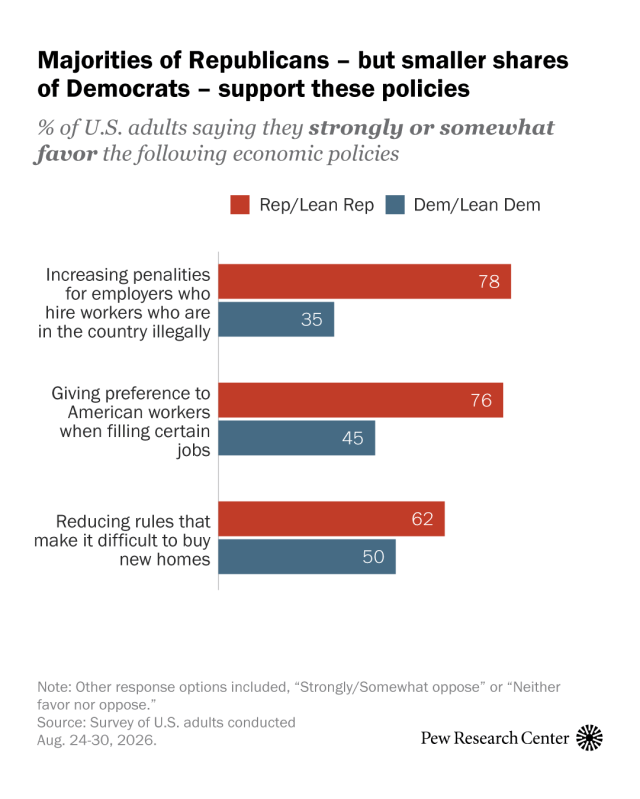
The data highlights a distinct trend: the "partisan sorting" of economic values. Democrats and Republicans increasingly view the government’s role in the economy through fundamentally different lenses.
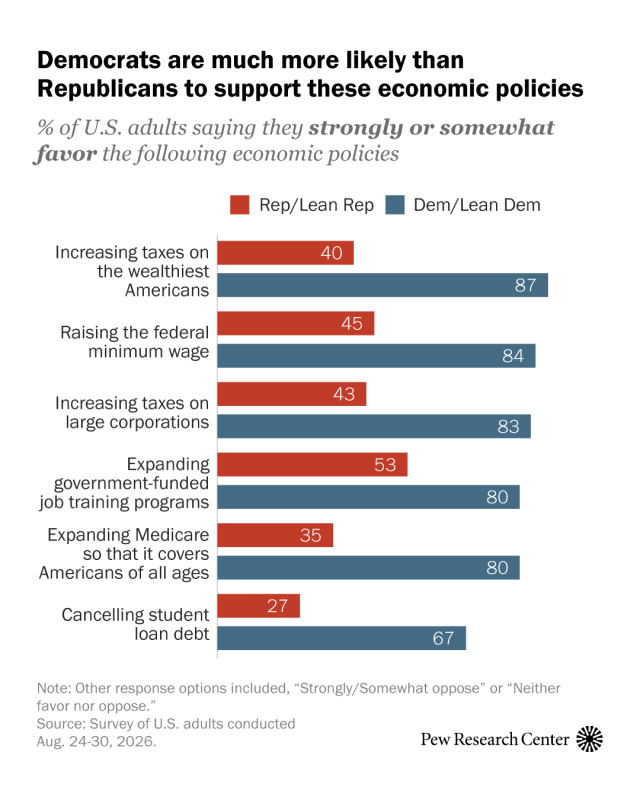
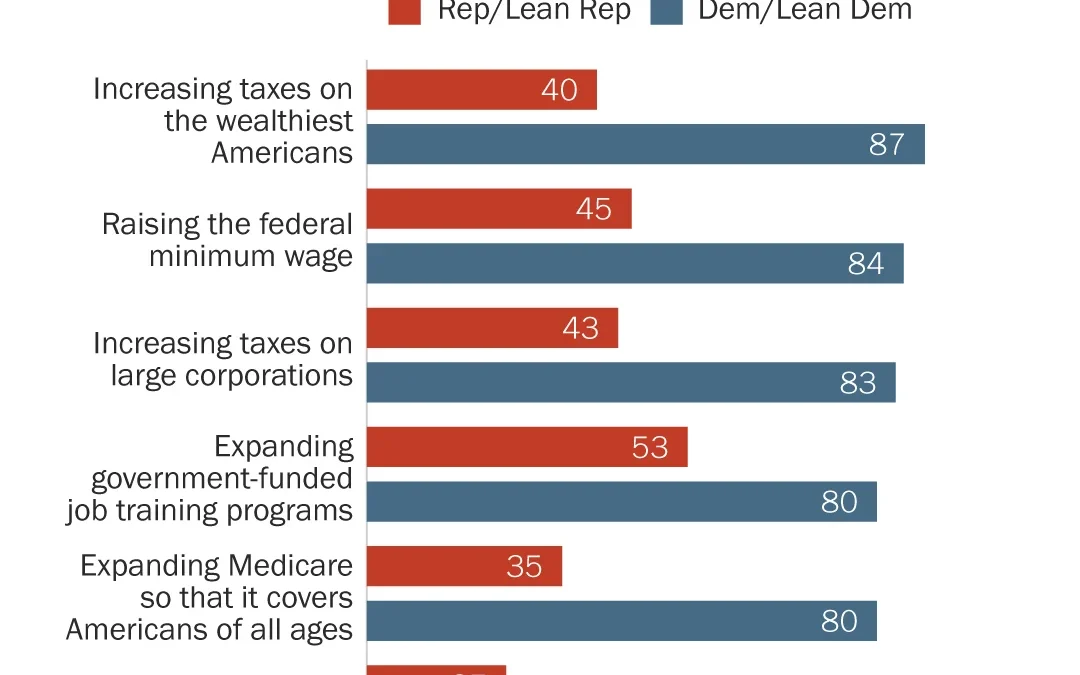
For instance, proposals involving direct government investment in green energy and social infrastructure received significantly higher support among self-identified Democrats. These respondents frequently pointed to the long-term benefits of structural investment, arguing that government spending acts as a necessary catalyst for growth in sectors where the private market may be hesitant to lead. Conversely, Republican respondents showed a stronger preference for deregulation and tax-burden reduction. For the GOP base, the primary driver of economic health is individual enterprise and the removal of bureaucratic barriers that supposedly stifle competition.
When examining specific policies, such as the regulation of digital assets and corporate tax reform, the divide remains stark. Democrats were more likely to favor increased oversight and higher corporate tax floors, while Republicans expressed a consistent desire for market-led solutions and the preservation of low-tax environments to attract investment.
The Complexity of Trade and Tariffs
Perhaps the most nuanced area of the report concerns trade policy. Unlike fiscal spending or social programs, where party lines are clearly drawn, the issue of increasing tariffs on imported goods creates a more complex political map.
The survey data suggests that while there is broad bipartisan skepticism regarding the wholesale expansion of tariffs, support for such measures is not uniform. Interestingly, neither party shows a majority preference for broad-based, across-the-board tariffs. Instead, the support is fragmented, with respondents often favoring targeted tariffs only when specific domestic industries—such as steel, semiconductors, or agriculture—are explicitly threatened by foreign competition. This indicates that while Americans may be wary of protectionist rhetoric in the abstract, their support becomes more tactical when framed as a matter of national security or domestic job protection.
Economic Implications for Decision-Makers
The implications of this research are significant for policymakers currently navigating a divided legislative environment. The findings suggest that any attempt at comprehensive economic reform will face substantial hurdles, as the public remains unconvinced by universal solutions.
Economists analyzing these results point out that the inability to build a bipartisan consensus on economic policy may lead to "stop-and-start" legislation, where policies are implemented in short-term bursts rather than as part of a long-term economic strategy. This uncertainty can discourage long-term corporate investment, as businesses wait for a more stable regulatory environment before committing to capital-intensive projects.
Furthermore, the data suggests that messaging matters as much as the policy itself. For policymakers, the challenge lies in framing economic interventions in a way that addresses the specific anxieties of their constituents. For Democrats, this means addressing the rising cost of living while maintaining investments in infrastructure. For Republicans, the challenge lies in balancing the desire for limited government with the growing demand from their base for protectionist trade policies that safeguard domestic manufacturing.
Perspectives from the Field: The Role of Personal Finance
The survey also touched upon the connection between individual financial health and political attitudes. Respondents who reported feeling financially insecure were generally more likely to support radical shifts in economic policy, regardless of their political affiliation. This suggests that the current partisan divide is not merely ideological; it is, in part, a reflection of deep-seated economic anxiety.
When families feel the weight of inflation or stagnant wage growth, their appetite for the status quo diminishes. The Pew Research Center data indicates that the "economic middle" is shrinking, with voters increasingly leaning toward candidates who promise to disrupt existing economic frameworks. This trend presents a challenge to political moderates who argue for incremental change, as the current electorate appears to be prioritizing immediate relief and structural transformation over gradualism.
Looking Ahead: The 2026–2027 Policy Outlook
As the United States moves into the final quarter of 2026, the findings from this analysis will likely inform the legislative strategy of both parties. With the midterm cycle approaching, the debate over economic policy is expected to dominate the political airwaves.
The data confirms that the American public is attentive to the mechanics of the economy, even if their understanding is filtered through a partisan lens. The challenge for both the Democratic and Republican leadership will be to move beyond the current impasse. If they fail to find common ground on issues like trade regulation, tax policy, and industrial support, the country may face continued volatility in the economic policy space.
In summary, the Pew Research Center’s latest analysis provides a sober reminder that economic policy is not just a matter of technical fiscal management, but a profound expression of societal values. The division in public opinion reflects a nation that is still grappling with the best way to ensure prosperity in an increasingly globalized and technologically advanced world. Whether the next legislative session produces a breakthrough or continued gridlock remains to be seen, but the data is clear: the American electorate is waiting for solutions that address the realities of their daily lives. By providing this objective, data-driven analysis, the Center enables both the public and policymakers to better grasp the dimensions of the debate that will define the American economy for years to come.