In the rapidly shifting landscape of digital publishing, traffic volume alone has ceased to be the definitive metric of success. As search algorithms evolve and user behavior fragments across diverse platforms, industry experts are shifting their focus toward engagement, audience loyalty, and the quality of the on-site user experience. To provide clarity in this complex environment, analyst Harry Clarkson-Bennett has unveiled a new series of publisher league tables, utilizing advanced data from Similarweb to track the competitive positioning of major media outlets across the United States and the United Kingdom.
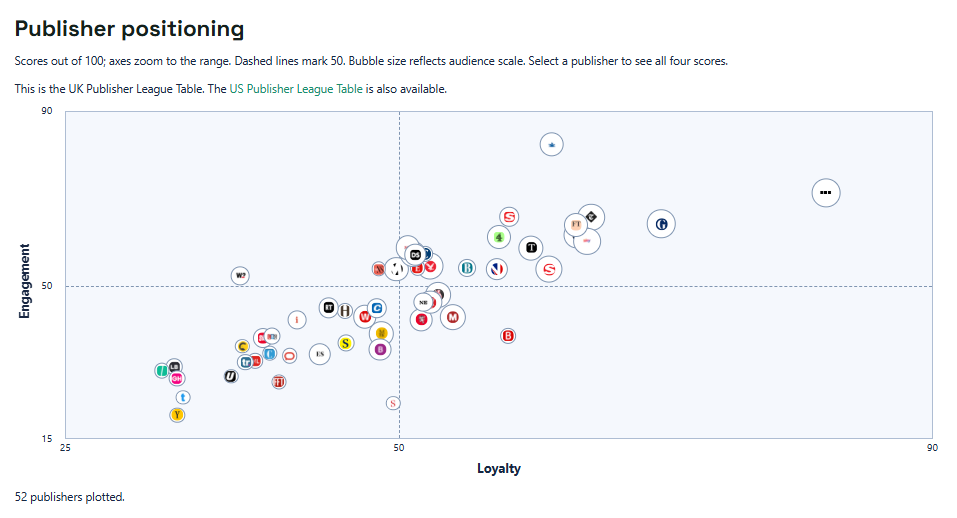
These rankings move beyond simple raw traffic counts, aiming to provide a more nuanced understanding of how digital publishers maintain relevance in an era where traditional Search Engine Optimization (SEO) is no longer sufficient to guarantee sustainable growth. By segmenting publishers into a quadrant-style graph and a traditional leaderboard, the project offers a multi-dimensional view of how major outlets compete for attention in a saturated digital economy.
The Shift from Volume to Value
The digital publishing industry has undergone a significant transition over the past twenty-four months. Historically, the pursuit of organic search traffic was the primary objective for publishers seeking to monetize content through advertising. However, the rise of AI-driven search results, generative answering engines, and the decline of the traditional "ten blue links" model have forced a strategic pivot.
According to industry analysts, "discoverability" is now a broader concept that encompasses active, passive, and owned traffic sources. Passive discovery—where users find content through search engines—is increasingly being supplemented or replaced by active discovery, where audiences return directly to trusted domains. The new league tables reflect this reality by prioritizing metrics that define high-value readership: session duration, repeat visits, and total audience scale.
By integrating these metrics, the new league tables provide a snapshot of the current media hierarchy. The quadrant-style visualization allows stakeholders to quickly identify which publishers are leaders in audience loyalty and which are still reliant on high-churn, high-volume traffic models. This is a critical distinction for advertisers and media planners who are increasingly focused on the quality of engagement rather than the sheer number of impressions.
Methodology and Data Provenance
The foundation of these league tables is data sourced from Similarweb, a platform widely respected for its digital intelligence and competitive benchmarking. The decision to formalize this data into a recurring report stems from a desire to bring "shadow" data into the light, providing the industry with a transparent view of the competitive landscape.

The current reporting covers the U.S. and U.K. markets, with plans for monthly updates. This cadence is intended to capture the volatility of the digital publishing sector, where traffic spikes and dips can occur rapidly due to algorithm updates, seasonal trends, or breaking news events.
The analytical framework is based on three primary pillars:
- Audience Scale: The total reach of the publisher, accounting for both unique visitors and total visits.
- Engagement Depth: Measured through metrics like pages per visit and average session duration, indicating the "stickiness" of the content.
- Loyalty: A metric derived from the percentage of returning visitors, which serves as a proxy for brand trust and habitual consumption.
As the project matures, the creator intends to integrate social data, reflecting the reality that modern discoverability often happens across a fragmented ecosystem of social media, newsletters, and direct notifications.
A Chronology of Digital Discovery
The necessity for these rankings is best understood by looking at the recent history of web publishing:
- 2022-2023: The Traffic Peak. Publishers reached a zenith of reliance on search-engine-referred traffic. During this period, technical SEO was the primary driver of corporate strategy for many media organizations.
- Late 2023: The AI Pivot. The introduction of Large Language Model (LLM) search interfaces began to disrupt the traditional referral model, leading to a noticeable decline in "easy" traffic for many high-volume publishers.
- 2024: The Quality Mandate. Search engines began explicitly prioritizing "human-first" content and site experience, putting a premium on domains that could demonstrate high engagement and user trust.
- Late 2026: The Current State. The launch of the new publisher league tables marks a new phase where industry leaders are moving toward data-backed transparency to evaluate their own performance against peer competitors in real-time.
Implications for the Publishing Industry
The introduction of these tables has immediate implications for content strategy. For publishers who find themselves trailing in the "loyalty" quadrant, the data acts as a diagnostic tool. It suggests that while their reach might be sufficient, their ability to convert one-time search visitors into a recurring, loyal audience is lacking. This often points to issues in user interface (UI) design, content depth, or the lack of a strong newsletter or subscription strategy.
Conversely, publishers who maintain high positions in both scale and loyalty represent the new gold standard of the industry. These outlets have successfully transitioned from being "search-reliant" to "brand-reliant," ensuring that they remain central to their readers’ digital habits regardless of changes in search engine algorithms.
For the marketing and advertising community, these tables provide a roadmap for media buying. Rather than distributing budgets based on vanity metrics, advertisers can now target publishers that exhibit high levels of reader engagement. This trend aligns with the broader industry movement toward "contextual advertising," where the environment in which an ad is served is as important as the person seeing it.
Future Expansion and Industry Feedback
The project is currently in its nascent stages, with the creator actively soliciting feedback from the broader SEO and publishing communities. The stated goal is to create a dynamic index that evolves alongside the web itself.
Industry experts have noted that the inclusion of social data will be the next major hurdle. Tracking "owned" traffic—such as direct visits, email referrals, and app usage—remains the "holy grail" for publishers, as this traffic is immune to the volatility of third-party platform algorithm changes. By bringing this data into the public discourse, the league tables encourage a shift toward more sustainable, long-term business models.
Furthermore, the integration of these tables into the professional lexicon of SEOs and content strategists suggests a maturing of the industry. It reflects a move away from the "growth at all costs" mentality that dominated the previous decade, favoring a more surgical approach to growth that prioritizes high-value interaction.
Conclusion
The release of these publisher league tables serves as a timely reminder that the digital publishing industry is in a state of constant flux. By shifting the focus from simple traffic counts to a more robust analysis of engagement and loyalty, these rankings offer a realistic assessment of what it takes to survive and thrive in the modern web ecosystem.
As the industry moves toward 2027 and beyond, the ability to synthesize this kind of data will be essential for any publisher aiming to maintain a competitive edge. Whether these rankings will eventually influence algorithmic weightings or serve as a barometer for media valuation remains to be seen, but they undoubtedly represent a significant step toward a more data-informed and transparent digital landscape. For publishers, the message is clear: traffic is no longer enough. The future belongs to those who can foster genuine, lasting connections with their audience.