The long-awaited release of Grand Theft Auto VI has sparked a global conversation about its depiction of Florida, but in an unconventional twist, journalists have shifted the focus from the game’s criminal themes to its environmental fidelity. Max Chesnes and Jack Prator, environment reporters for the Tampa Bay Times, recently conducted an unorthodox field study: they ventured into the game’s fictionalized version of Florida, known as Leonida, specifically to catalog the native bird species rendered by Rockstar Games. This project represents a departure from traditional reporting, utilizing interactive media as a lens to examine regional ecological accuracy.
The Genesis of a Virtual Expedition
The experiment began in the newsroom following discussions regarding the immense cultural impact of the game’s release. As the title, set in a meticulously detailed South Florida landscape, dominated social media and gaming discourse, the reporters sought a way to bridge the gap between their beat—the environment—and the digital phenomenon. After colleague Christopher Spata offered his console for use, Chesnes and Prator coordinated with an editor to conduct a "birding audit" of the game’s open-world environment.
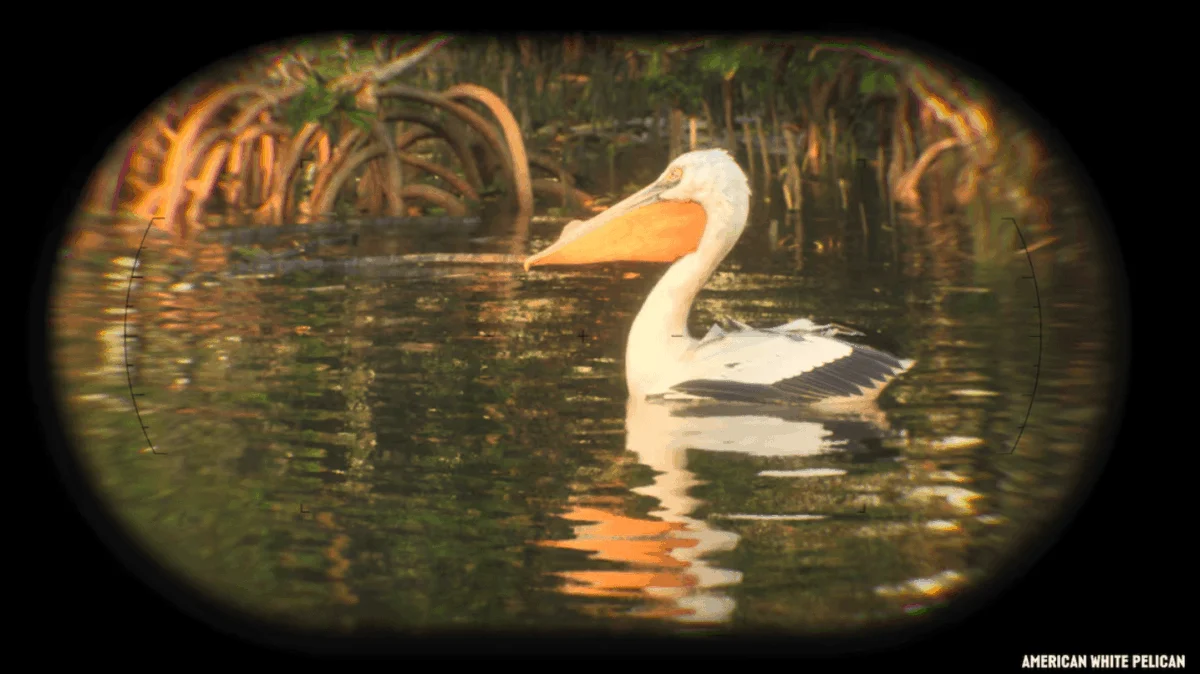
The methodology was simple yet rigorous: armed with a field guide borrowed from the local library, the pair spent two hours navigating the game’s marshes and swamp-adjacent regions. While one reporter managed the in-game navigation, the other acted as a spotter and recorder, identifying species based on visual representation and behavior. The objective was not to participate in the game’s core gameplay loop of criminal activity, but to evaluate the level of care and research invested by the developers in the game’s digital ecosystem.
A Taxonomy of Digital Wildlife
Over the course of their two-hour session, the reporters identified a dozen distinct species that reflect the actual biodiversity of the Sunshine State. The cataloged birds included:
- Whooping cranes
- Wood storks
- Northern gannets
- Great egrets
- Roseate spoonbills
- Herring and laughing gulls
- Caspian terns
- Mottled ducks
- Brown and American white pelicans
- Great blue herons
The reporters noted that the digital representations were not mere placeholders; they exhibited specific movements and aesthetic details consistent with their real-world counterparts. The endeavor was frequently interrupted by the game’s environmental hazards, including alligator encounters and airboat navigation, which added a layer of chaotic realism to their birding session.
Contextualizing the Digital Landscape
The release of Grand Theft Auto VI is perhaps the most significant cultural event in the gaming industry in over a decade. Since the first teaser trailer was released in late 2023, the game has been noted for its "hyper-real" depictions of Florida. This is not merely a superficial aesthetic choice; it is the result of years of development, archival research, and the creation of proprietary game engines capable of simulating complex natural phenomena, including fluid dynamics in water and the behavioral patterns of local fauna.
For local newsrooms, the challenge of covering such a massive cultural product lies in avoiding the pitfalls of "generational disconnect." By treating the game as a space that warrants critical, expert-led analysis—rather than just a product to be reviewed—the Tampa Bay Times has set a precedent for how legacy media can engage with modern interactive storytelling.
The Broader Implications for Environmental Journalism
This approach raises important questions about the role of media in digital spaces. As virtual environments become more sophisticated, they increasingly serve as proxies for real-world locations. For audiences who may never visit the Florida Everglades, the digital simulation in a game like this may be their only point of reference for the state’s natural history.
When developers invest this level of detail into their environments, it provides an opportunity for environmental experts to critique or validate the representation of local ecosystems. If a game’s "Florida" is accurate, it reinforces the state’s cultural and environmental identity. If it is inaccurate, it risks cementing misconceptions about local flora and fauna. By auditing these spaces, journalists are acting as stewards of that representation.
Media and Culture: A History of Engagement
The Tampa Bay Times has a documented history of unconventional reporting that treats pop culture as a vital component of the local experience. The newsroom has previously published investigative and feature work that explores regional identity through the lens of entertainment. Notable examples include:
- The Strip Club Economy: Investigative reporting by Gabrielle Calise into the history of the adult entertainment industry in Tampa, framing the debate around legal and societal shifts.
- Reality TV Recaps: A series by Christopher Spata that provided straightforward, analytical recaps of the program "Floribama Shore," treating the reality show as a cultural artifact of the region.
- Infrastructure in Miniature: A 2016 project that used Lego models to explain the complexities and failures of the Howard Frankland Bridge planning, demonstrating a willingness to use creative mediums to explain dense policy topics.
These projects underscore a newsroom culture that values accessibility. By "meeting people where they are," these journalists ensure that the paper remains relevant to a demographic that might otherwise tune out traditional, dry reporting.
Critical Reception and Industry Response
The reception to the "birding in GTA" report has been largely positive, with digital culture critics noting that it highlights a shift in how major titles are consumed. Gene Park, a digital culture critic for The Washington Post, has previously observed that the game "rewards so much human curiosity." The Tampa Bay Times experiment validates this claim by demonstrating that the game’s depth allows for non-violent, observational play.
However, the game remains controversial. Critics and policymakers have expressed concerns over the title’s depictions of violence, crime, and the satirical portrayal of Florida residents. Miami-Dade County officials entered into marketing agreements with the developers, a move that highlights the economic importance of the game to the state’s profile, even as it draws criticism from those who feel the game leans too heavily into negative regional stereotypes.
Conclusion: Beyond the Screen
The project by Chesnes and Prator serves as more than a quirky anecdote; it is a testament to the versatility of the modern journalist. By applying professional, objective observation to a virtual space, they were able to extract a story that was both educational and engaging.
In a world where the lines between physical reality and digital simulation continue to blur, the ability to analyze these spaces with the same rigor applied to any other beat will become increasingly important. Whether it is assessing the accuracy of a virtual national park or the behavior of a digital bird, the core mission remains the same: to observe, record, and interpret the world—even when that world is rendered in pixels.
Ultimately, the experiment suggests that as long as developers continue to build worlds with such intense detail, there will be a place for journalists to explore them, test their limits, and report back on what they find. For the Tampa Bay Times, it was a reminder that some of the best stories are found in the most unexpected of places, provided one has the curiosity to look for them.