The landscape of crisis communications has undergone a radical transformation over the past decade, shifting from manual media clipping services and basic social media metric tracking to complex, real-time ecosystems dominated by artificial intelligence, automated bot networks, and encrypted digital channels. Speaking recently at Ragan’s Communications and Measurement Virtual Conference, Sean Wilson, principal director of strategic communications at the Aerospace Corp., highlighted the stark contrast between historical crisis management methods and the technological realities modern communications teams face today.
While crisis monitoring ten years ago primarily involved measuring share of voice, tracking morning newspaper clips, and manually reviewing brand mentions on standard social media platforms, contemporary practitioners must navigate a vastly more intricate threat matrix. Modern crisis detection now incorporates the analysis of coordinated bot activity, monitoring of fast-moving dark web chatter, and the immediate evaluation of real-time stock market movements that can react to public sentiment within milliseconds.
This technological leap has inevitably introduced both unprecedented capabilities and considerable anxiety within corporate communications departments. As artificial intelligence integrates deeper into the daily workflows of public relations professionals, the industry finds itself at a critical crossroads regarding how to balance machine efficiency with human judgment.
The Modern Threat Matrix: From Manual Clips to Dark Web Monitoring
To fully understand the current reliance on artificial intelligence in crisis communications, it is necessary to examine how corporate vulnerabilities have evolved. In the early 2010s, public relations crises typically unfolded over hours or days, allowing communications teams ample time to draft press releases, coordinate holding statements, and brief executive leadership. Information flowed through relatively predictable channels: traditional news outlets, official corporate websites, and public forums.
Today, the velocity of information has accelerated exponentially. A localized operational failure or executive misstep can transform into a global reputational crisis in a matter of minutes, fueled by algorithmic amplification on social media platforms. Furthermore, bad actors increasingly deploy coordinated bot networks to artificially inflate negative narratives, spread disinformation, or manipulate public perception during vulnerable moments for an organization.
Compounding this challenge is the migration of public discourse away from open social media feeds toward closed, encrypted environments. Conversations that once occurred publicly on platforms like Twitter or Facebook now frequently take place within private groups on Telegram, WhatsApp, and Discord. These dark social channels are entirely invisible to traditional media monitoring tools, leaving significant blind spots for corporate communications teams attempting to gauge public sentiment or anticipate regulatory and consumer backlashes.
It is within this high-pressure, opaque environment that artificial intelligence has emerged not merely as an alternative tool, but as a operational necessity for large enterprises and government contractors alike.
What Artificial Intelligence Does Best in Crisis Scenarios
During his presentation at the Ragan virtual conference, Sean Wilson addressed the apprehension surrounding new technology by emphasizing that artificial intelligence should be viewed as an evolutionary expansion of the communicator’s toolkit rather than a replacement for human oversight. Change, Wilson noted, is inherently difficult and can initially feel intimidating for professionals accustomed to traditional workflows. However, the sheer volume of data generated during a modern crisis makes human-only monitoring mathematically impossible.
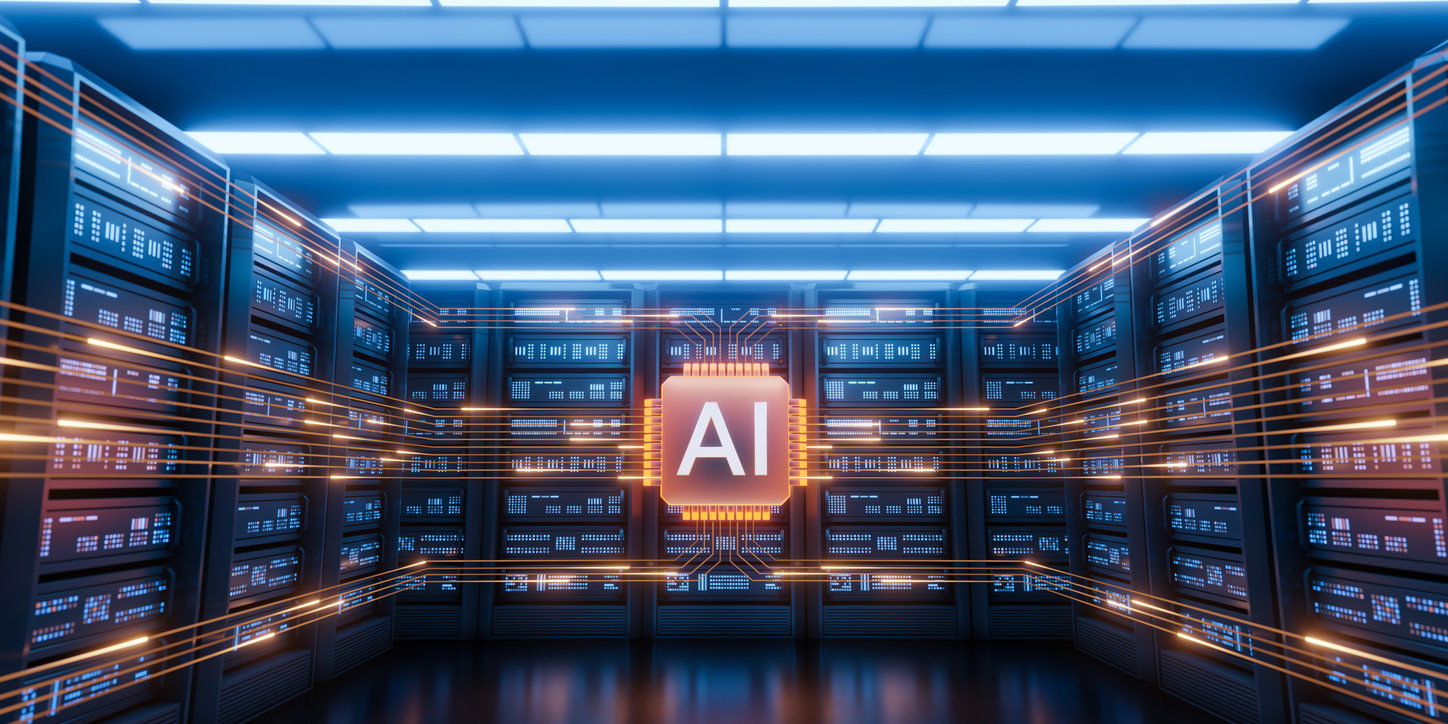
Wilson delineated three core areas where artificial intelligence monitoring tools currently excel, providing indispensable value to crisis management teams:
- Pattern Recognition Across Massive Datasets: AI algorithms can ingest and process millions of data points simultaneously, identifying subtle correlations and emergent trends across global news feeds, social platforms, and financial markets far faster than any human team could compile manually.
- Anomaly Detection and Bot Identification: Automated systems are uniquely equipped to spot sudden, unnatural spikes in traffic, hashtag velocity, or sentiment shifts. By distinguishing between organic public outrage and coordinated bot-driven attacks, AI helps communications teams avoid overreacting to manufactured controversies.
- Rapid Summarization: In the chaotic opening hours of a crisis, information overload is a primary hazard. AI tools can analyze thousands of disparate mentions, articles, and comments, distilling them into concise executive summaries in a matter of seconds, thereby accelerating decision-making processes.
Despite these formidable strengths, industry experts continually stress the limitations of automated systems. Artificial intelligence lacks contextual empathy, cultural nuance, and strategic intuition—qualities that are paramount when crafting messaging that directly impacts human stakeholders, employees, and customers.
Navigating the Blind Spots: Reaching Into Encrypted Spaces
One of the most persistent hurdles in contemporary crisis communications is monitoring conversations occurring in spaces that standard software cannot access. When rumors, leaks, or targeted disinformation campaigns originate within encrypted messaging apps like Telegram or closed WhatsApp groups, traditional listening tools register nothing until the narrative breaks into the mainstream.
To bridge this gap, many organizations now partner with specialized external agencies that possess advanced AI listening capabilities tailored for encrypted and decentralized networks. These third-party firms utilize sophisticated natural language processing models to track sentiment shifts and emerging narratives within hard-to-reach digital communities.
Nevertheless, Wilson cautioned against over-reliance on these advanced external insights. He emphasized that findings derived from opaque digital spaces should always be treated "as one more input into your judgment, not a machine that gives you the answer." The ultimate responsibility for strategic response, risk assessment, and stakeholder engagement remains firmly in the hands of trained human communications professionals.
The Broader Industry Implications and Future Outlook
The integration of artificial intelligence into crisis communications carries profound implications for the public relations industry at large. As algorithms become more adept at predicting vulnerabilities and synthesizing crisis data, the baseline expectations for corporate responsiveness are shifting upward. Stakeholders, investors, and consumers increasingly expect organizations to detect and address issues in real time, leaving virtually no margin for delayed internal communication.
This technological shift is also reshaping the skillset required of modern communicators. Proficiency in data literacy, prompt engineering, and algorithmic risk assessment is rapidly transitioning from a specialized niche to a core competency across corporate communications departments. Professionals must learn to interpret AI-generated analytics critically, understanding both the statistical validity and the potential algorithmic biases inherent in the data they review.
At the same time, the rise of AI-driven crisis monitoring raises important ethical and operational questions. As organizations deploy increasingly sophisticated surveillance tools to track public sentiment and digital chatter, concerns regarding privacy, data provenance, and the potential misuse of automated listening systems will inevitably draw closer scrutiny from regulators and civil liberties advocates.
Ultimately, the consensus among strategic communications leaders points toward a hybrid future. While artificial intelligence will continue to expand its footprint in data processing, pattern recognition, and early-warning detection, the heart of effective crisis management will remain deeply human. The ability to listen with empathy, exercise sound judgment, maintain organizational integrity, and communicate authentically with affected publics cannot be automated. As Sean Wilson and other industry leaders suggest, the true power of AI in a crisis lies not in outsourcing decision-making to machines, but in empowering human communicators to make more informed, timely, and strategic choices when the stakes are highest.