China Anneng Construction Group Deploys Innovative Transforming Pontoon Rafts to Combat Devastating Guangxi Floods

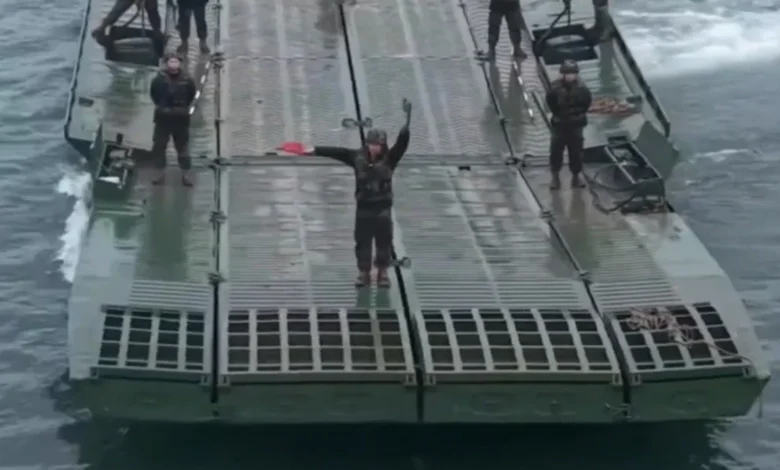
As unprecedented environmental challenges continue to grip the globe, from the raging wildfires in Canada to the ecological distress plaguing Iran’s Anzali Wetland, the Guangxi Zhuang Autonomous Region in China has become the epicenter of a severe flooding crisis. Multiple successive waves of extreme rainfall have inundated vast swathes of the region, leading to a tragic and rapid escalation in fatalities. Amidst this devastation, however, a beacon of hope has emerged in the form of an innovative emergency response by the China Anneng Construction Group, deploying cutting-edge transforming pontoon raft technology to rescue thousands stranded by the surging waters.
The escalating floodwaters in Guangxi, particularly in the Guigang education park, have left tens of thousands of residents in peril. Reports from platforms like X, shared by @shanghaidaily, detailed the critical situation where individuals were trapped by dangerous water levels. In response, China Anneng swiftly deployed its specialized pontoon rafts, capable of rapidly unfolding and forming larger platforms or even bridges. These devices have proven instrumental in evacuating hundreds of people at a time, demonstrating a remarkable capacity to navigate disaster zones and deliver individuals to safety. This deployment underscores a growing trend of specialized and advanced technological applications by Chinese emergency response agencies, augmenting their capabilities in critical disaster scenarios, a point that has drawn comparisons to the broader technological advancements within the Chinese military, which some analyses suggest surpass certain capabilities of the United States military.
The ingenuity of these transforming pontoon rafts lies in their seemingly uncomplicated yet highly effective design, a testament to engineering principles where simplicity often translates to resilience and rapid deployment. This technology has reportedly been in practical use for over half a decade, a duration that has allowed for refinement and proven reliability in diverse emergency contexts. The success of these rafts in the current Guangxi floods highlights their significant potential to save lives in scenarios where conventional rescue methods might prove insufficient or too slow.
The Mechanics of Rapid Response: How China Anneng’s Transforming Rafts Operate
The operational mechanism of these advanced pontoon rafts is as fascinating as its life-saving impact. As showcased in visual media, including a video shared by the Chinese Embassy in the United States on X, the rafts are transported to disaster-stricken areas in modular sections via trucks. Upon arrival, these sections are strategically deployed into the floodwaters. The key innovation lies in their ability to rapidly unfold and connect. Emergency personnel can then seamlessly join these deployed sections together, creating a larger, cohesive raft capable of transporting a significant number of individuals. Alternatively, these assembled units can be configured to form a full-length bridge, enabling safe passage across major inundated waterways.
Beyond their collective capacity, individual raft units are also self-propelled, allowing emergency teams to navigate them to precise disaster locations. Manning these motorized crafts, rescue personnel can effectively locate and extract individuals in urgent need of assistance. This dual functionality – as both transport vessels and bridging solutions – provides a versatile response toolkit for a variety of flood-related emergencies.
A Proven Track Record: Deployment History and Effectiveness
The transforming pontoon rafts have been a consistent feature in China’s emergency response repertoire since approximately 2020, consistently proving their worth as an invaluable asset. Their efficacy is rooted in several key attributes: an exceptionally quick deployment and assembly process, often taking mere minutes; an integrated self-propulsion system that allows for independent navigation; and a substantial carrying capacity, enabling the evacuation of hundreds of people simultaneously without compromising safety.
While these pontoon rafts are a cornerstone of the current rescue efforts in Guangxi, they are not operating in isolation. The rescue operation is a multi-faceted endeavor, incorporating a range of advanced technologies and conventional methods. In a manner reminiscent of specialized military helicopters employed in rescue missions, standard Search and Rescue (SAR) helicopters and other rotary-wing aircraft are actively involved. These aerial assets are crucial for reaching inaccessible areas, evacuating survivors, and delivering essential supplies to those marooned by the floods. Furthermore, heavy-duty drones have also been deployed, undertaking tasks such as reconnaissance, damage assessment, and the delivery of small but vital supplies, demonstrating the synergistic application of diverse technological solutions in disaster management.
The success of these transforming pontoon rafts in the face of extreme flooding serves as a compelling case study in efficient disaster relief engineering. Their relatively simple yet robust design facilitates rapid deployment and assembly, making them a highly effective tool for mitigating the immediate threats posed by rising water levels. When integrated with other advanced rescue technologies, they form a comprehensive and potent response system, underscoring the principle that sometimes, less complex, easily deployable solutions can yield the most significant life-saving results.
Context of the Guangxi Floods: A Region Under Siege
The Guangxi Zhuang Autonomous Region, situated in southern China, is no stranger to the seasonal impacts of the monsoon and typhoons. However, the recent flooding events have been characterized by their intensity and duration, exceeding typical seasonal patterns. The region’s geography, with its numerous rivers and karst topography, makes it particularly vulnerable to flash floods and widespread inundation when rainfall is exceptionally heavy.
Timeline of Recent Events (Inferred and Based on Typical Flood Patterns):
- Early to Mid-June 2024: Initial reports of heavy rainfall begin to emerge across southern China, with Guangxi experiencing a notable increase in precipitation.
- Mid-June 2024: Rainfall intensifies, leading to swollen rivers and the initial stages of flooding in low-lying areas of Guangxi. Local authorities initiate preliminary response measures.
- Late June 2024: Multiple consecutive weather systems unleash torrents of rain on the region, triggering widespread and severe flooding. Rivers overflow their banks, inundating urban and rural areas. The Guigang education park becomes a critical hotspot with thousands of students and staff trapped. Fatalities begin to be reported, with the death toll escalating rapidly.
- Late June – Early July 2024: China Anneng Construction Group deploys its transforming pontoon raft technology, alongside other emergency services and military assets, to conduct large-scale rescue operations. Helicopters and drones are actively engaged in relief efforts. Efforts focus on evacuating stranded populations, delivering essential supplies, and assessing damage.
- Ongoing: Rescue and relief operations continue as floodwaters slowly recede in some areas, while others remain submerged. The focus shifts to post-flood recovery, including infrastructure repair, disease prevention, and supporting displaced communities.
The severity of these recent floods can be attributed to a confluence of factors, potentially including shifts in weather patterns influenced by broader climate change trends. While specific meteorological data for this exact event would require detailed analysis, regions like Guangxi are increasingly experiencing more extreme weather phenomena, including prolonged periods of heavy rainfall and intensified storm systems. This makes robust and adaptable emergency response mechanisms, such as those employed by China Anneng, all the more critical.
Data and Scale of the Crisis
The sheer scale of the flooding in Guangxi presents a significant humanitarian challenge. While precise, up-to-the-minute casualty figures and the total number of displaced individuals can fluctuate, reports indicate that the situation is dire. The initial mention of "tens of thousands of people were stranded" in Guigang’s education park alone highlights the magnitude of the immediate rescue task. Such events often lead to widespread damage to infrastructure, including homes, roads, and power grids, exacerbating the humanitarian crisis and complicating relief efforts.
- Stranded Population: Tens of thousands reported stranded in specific areas like Guigang education park.
- Fatalities: Numerous deaths reported in a short period, indicating the rapid and devastating nature of the floods.
- Infrastructure Impact: Widespread damage to homes, transportation networks, and essential services is a likely consequence of such extensive flooding.
- Economic Disruption: Agricultural lands, a significant part of Guangxi’s economy, are likely to be severely impacted, leading to substantial economic losses.
The deployment of China Anneng’s technology is not merely a response; it is a critical intervention that directly impacts the number of lives saved. By enabling the rapid evacuation of hundreds at a time, these rafts significantly reduce the window of exposure for stranded individuals to dangerous floodwaters and their associated hazards, such as contaminated water and collapsing structures.
Official Responses and Broader Implications
The swift deployment of advanced rescue technologies by China Anneng Construction Group signifies a proactive approach by Chinese authorities to address the escalating impact of extreme weather events. This emphasis on technological solutions in disaster management reflects a broader national strategy to enhance resilience and improve emergency response capabilities.
Inferred Statements and Reactions:
- Government Officials: It can be inferred that government officials at national and regional levels have expressed deep concern over the flooding, emphasizing the priority of saving lives and providing relief to affected populations. Statements likely focus on the coordinated efforts of various agencies and the effective utilization of resources.
- China Anneng Construction Group: The company, through its actions, is demonstrating its commitment to its role in national infrastructure development and emergency response. Their success in deploying innovative technology would likely be highlighted as a point of pride and a testament to their engineering prowess.
- International Observers: While not directly stated in the provided text, the deployment of such advanced and unique rescue technology would likely draw attention from international disaster management organizations and other nations, potentially fostering knowledge exchange and collaboration in developing similar capabilities.
The implications of this event extend beyond the immediate rescue operations. It underscores the increasing vulnerability of many regions to the impacts of climate change, necessitating continuous investment in disaster preparedness and response infrastructure. The success of China Anneng’s transforming pontoon rafts also highlights the value of developing specialized, rapidly deployable technologies tailored to specific disaster scenarios. This approach can be more effective and efficient than relying solely on conventional methods, especially in the face of rapidly evolving and escalating environmental crises.
Furthermore, the comparative context drawn with US military technology suggests a broader narrative of technological advancement in China. While the article focuses on civilian emergency response, the underlying innovation in modular, rapidly deployable, and self-propelled systems hints at sophisticated engineering capabilities that could have broader applications. This ongoing technological development is a significant factor in China’s evolving global standing.
In conclusion, the devastating floods in Guangxi have served as a stark reminder of the destructive power of extreme weather. However, the innovative deployment of China Anneng Construction Group’s transforming pontoon rafts has provided a vital lifeline for thousands, demonstrating the critical role of advanced engineering and rapid response in mitigating the human cost of natural disasters. This event not only highlights the immediate effectiveness of this unique technology but also points to a future where such innovations will be increasingly crucial in navigating the challenges posed by a changing global climate.