American Public Opinion on China Shows Modest Warming Amidst Persistent Negativity

For nearly a decade, a predominant sentiment of negativity has characterized American public opinion towards China. While this overall unfavorable view largely persists, a recent survey by the Pew Research Center, conducted in March 2026, reveals a noteworthy shift: the proportion of Americans holding a favorable view of China has demonstrably ticked upwards. This development marks a modest but significant softening in what has been a consistently frosty public perception, occurring amidst a complex geopolitical landscape and on the eve of a pivotal summit between the leaders of the two global powers.
The latest findings indicate that 27% of American adults now express a positive opinion of China. This represents a 6-percentage-point increase since last year and a near doubling of favorable views since 2023, when only 14% held such a perspective. Conversely, the share of Americans with an unfavorable view has decreased to 71%, down from a high of 83% in 2023. This data, gathered from an extensive survey of 3,507 U.S. adults, suggests a nuanced evolution in public sentiment, moving away from the nadir of anti-China feeling observed in the early 2020s.
A Decade of Declining Trust: Historical Context
To fully appreciate the current shift, it is crucial to examine the historical trajectory of American views on China. The early 21st century saw periods where favorable opinions of China were relatively high, often exceeding unfavorable ones. For instance, in Spring 2006, 52% of Americans held a favorable view, compared to 29% unfavorable. This period was largely characterized by a U.S. foreign policy approach that emphasized engagement with China, seeking to integrate it into the global economic and political order, often underpinned by hopes for gradual political liberalization.
However, the late 2010s witnessed a dramatic deterioration in American public sentiment. A sharp decline began around 2018-2019, coinciding with the escalation of trade tensions under the Trump administration, increased scrutiny of China’s human rights record in Xinjiang and Hong Kong, and growing concerns about its military expansion in the South China Sea. The onset of the COVID-19 pandemic in early 2020 further exacerbated these negative views, with China facing widespread criticism over its initial handling of the outbreak. By Summer 2020, favorable views plummeted to a mere 22% in some surveys, while unfavorable opinions soared to 73%. This trend continued, reaching a low point in Spring 2023, where only 14% of Americans viewed China favorably. The current uptick, therefore, represents the first significant reversal of this long-term trend of increasing negativity.
The Partisan Divide: Democrats Lead the Warming Trend
A deeper dive into the data reveals that this modest increase in favorability is not uniformly distributed across the American political spectrum. The shift is predominantly driven by Democrats and Democratic-leaning independents. In March 2026, 34% of Democrats expressed a positive opinion of China, an 8-point increase from the previous year. This contrasts sharply with Republicans and Republican leaners, among whom favorable views remain largely stagnant at 18%.

Despite this persistent partisan gap, it is important to note that both parties have shown some degree of warming since the lows of 2023. While Republican favorability remains significantly lower than that of Democrats, even they have seen a slight increase from 10% in 2023 to 18% in 2026. This suggests that while core ideological differences in perceiving China persist, there might be a broader, albeit subtle, recalibration of views across the political landscape. The divergence could be attributed to differing approaches to foreign policy between the parties, with Democratic administrations potentially seeking more avenues for cooperation or de-escalation, even amidst competition.
Redefining the Relationship: From ‘Enemy’ to ‘Competitor’
Beyond general favorability, Americans’ perceptions of the fundamental nature of the U.S.-China relationship are also undergoing a significant re-evaluation. A separate Pew Research Center survey conducted in January 2026 indicates a discernible shift away from viewing China as an outright "enemy" towards seeing it more as a "competitor."
Currently, 28% of Americans identify China as an enemy of the United States. This marks a decrease from 33% in 2025 and a more substantial drop from 42% in 2024, when the "enemy" perception peaked. Concurrently, the proportion of Americans who characterize China as a "competitor" has risen to 60%, up from 56% in 2025. The designation of China as a "partner" has remained relatively stable, hovering around one-in-ten Americans in both years.

This shift from "enemy" to "competitor" is particularly pronounced among Democrats. Only 14% of Democrats now consider China an enemy, a notable decrease from 22% in 2025 and 28% in 2024. A substantial majority of Democrats (72%) consistently view China as a competitor, indicating a nuanced approach within the party that acknowledges rivalry without necessarily advocating for outright hostility. For Republicans, the "enemy" perception, while still higher than among Democrats, has also softened slightly, with 44% identifying China as an enemy in 2026, down from 45% in 2025 and 59% in 2024. This suggests a broader, albeit asymmetrical, de-escalation of rhetorical and perceived antagonism across the political spectrum.
Generational Gaps: Younger Americans More Amenable to China
Age continues to be a significant demographic factor influencing perceptions of China. Younger Americans consistently hold more positive views than their older counterparts. Approximately one-third of adults under 50 (34%) express a favorable opinion of China, nearly double the 19% recorded among those aged 50 and older.
This generational divide is even starker when considering whether China is viewed as an "enemy" of the U.S. Only 20% of Americans under 50 consider China an enemy, compared to a significantly higher 38% among those 50 and older. This difference is particularly pronounced within the Republican party. Among Republicans and Republican-leaning independents aged 18-49, 32% view China as an enemy, 57% as a competitor, and 10% as a partner. In stark contrast, among Republicans aged 50 and older, a majority (55%) classify China as an enemy, with 41% seeing it as a competitor and a mere 2% as a partner.

These generational differences could be attributed to a variety of factors. Younger Americans, often more exposed to diverse global cultures through digital media and less steeped in Cold War-era geopolitical narratives, may hold a more open or pragmatic view of China’s role in the world. Their economic realities, including potential involvement in globalized industries, might also influence a less confrontational stance. Older generations, having witnessed China’s rise from a different historical perspective, may harbor greater skepticism or apprehension.
Confidence in Leadership: Trump’s Slipping Grip, Xi’s Slight Gain
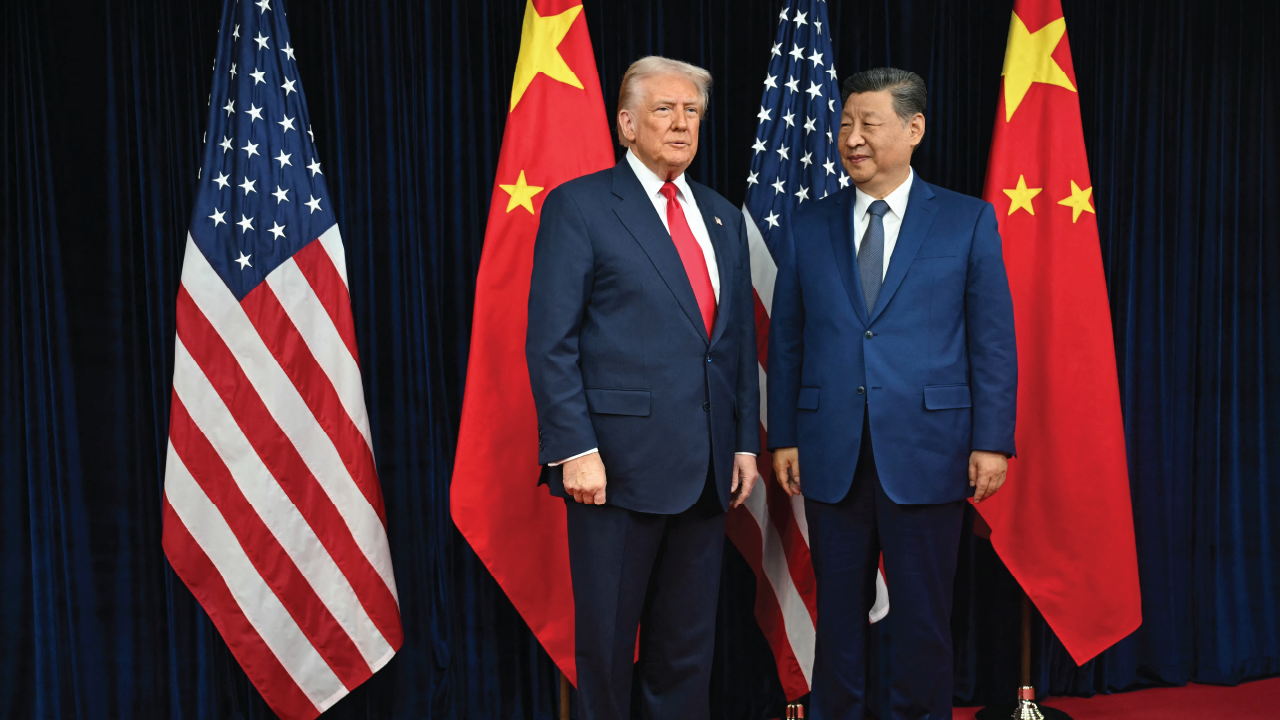
The evolving public sentiment towards China also extends to how Americans perceive the leadership of both nations in managing this critical bilateral relationship. With U.S. President Donald Trump and Chinese President Xi Jinping slated to meet for a high-stakes May summit, the survey data offers insights into public confidence in their respective abilities to navigate complex foreign affairs.
Confidence in President Trump’s ability to make sound policy decisions regarding China is currently experiencing a decline. Around four-in-ten Americans (39%) express confidence in Trump on this issue, a drop from 45% in August 2025. This declining confidence is, predictably, highly polarized along party lines. A substantial 71% of Republicans voice confidence in Trump’s China policy acumen, while only 11% of Democrats share this view. The decline in confidence is most pronounced among Republicans themselves, falling 7 points from previous surveys, while Democratic views remain largely stable. Age also plays a role, with younger adults exhibiting less confidence in Trump; among Republicans, 64% of those under 50 express confidence, compared to 78% of those 50 and older. This trend mirrors broader American views on Trump’s overall foreign policy capabilities, as detailed in a related Pew Research Center analysis.

Conversely, while overall confidence in Chinese President Xi Jinping to "do the right thing regarding world affairs" remains low, it has shown a subtle but consistent upward trend. In March 2026, 17% of Americans expressed "a lot" or "some" confidence in Xi, a 4-point increase over each of the last two years. This represents a noticeable rise from just 8% in 2023. Similar to overall views of China, Democrats and younger adults tend to express more confidence in Xi than their Republican and older counterparts. This slight increase in confidence, despite a generally negative view of China, could be interpreted as a grudging acknowledgment of China’s growing global influence and Xi’s firm leadership on the international stage, or perhaps a pragmatic recognition that engagement, even with a strong competitor, requires a degree of confidence in their decision-making.
Implications for U.S.-China Relations and Future Policy
The findings of this Pew Research Center survey carry significant implications for the future trajectory of U.S.-China relations. The modest softening of American public opinion, particularly the shift from "enemy" to "competitor" and the increasing favorability among Democrats and younger demographics, could signal a public desire for a less confrontational, more strategically nuanced approach.
For policymakers in Washington, this data presents both opportunities and challenges. A public less inclined towards outright hostility might provide greater latitude for diplomatic engagement, de-escalation of tensions, and finding areas of common interest, such as climate change or global health. However, the persistent partisan divide, especially among older Republicans who remain deeply skeptical, means that any significant shift in policy will likely face domestic political hurdles. The declining confidence in President Trump’s handling of China policy, particularly among his own party’s younger base, could also influence his administration’s strategy leading up to the May summit and beyond.

The re-framing of China as a "competitor" rather than an "enemy" is particularly noteworthy. While competition implies rivalry and strategic challenges, it also suggests the possibility of coexistence and even cooperation in certain domains, unlike the zero-sum nature often associated with an "enemy" designation. This semantic shift could pave the way for policies that prioritize managed competition, risk reduction, and the establishment of guardrails to prevent competition from spiraling into conflict.
Economically, a less hostile public sentiment might reduce pressure for complete decoupling and instead encourage targeted measures to ensure fair competition and protect national interests, rather than broad-stroke protectionism. Socially, a warming of views could potentially foster renewed interest in cultural exchange and tourism, which have suffered significantly amidst recent geopolitical tensions.
In conclusion, while the foundation of American public opinion towards China remains largely negative, the latest Pew Research Center survey illuminates a nuanced and evolving landscape. The observed uptick in favorable views and the growing preference for framing China as a competitor rather than an enemy suggest a potential public appetite for a more pragmatic and perhaps less confrontational approach. As the leaders of the two superpowers prepare to meet, understanding these shifts in public sentiment will be crucial for navigating the intricate and consequential relationship between the United States and China in the years to come.
Methodology Note: This analysis utilizes data from two distinct Pew Research Center surveys. The first, conducted from March 23-29, 2026, polled 3,507 U.S. adults. The second, conducted from January 20-26, 2026, surveyed 8,512 U.S. adults. All participants in these surveys are members of the Center’s American Trends Panel, ensuring representation of the full U.S. adult population. Detailed questionnaires, responses, and methodologies are publicly available from the Pew Research Center.