Trump’s Controversial Social Media Posts Ignite Debates on Mental Fitness, Religious Authority, and Political Strategy

In recent weeks, former President Donald Trump has once again commanded national attention through a series of incendiary posts on his social media platform, Truth Social. These pronouncements, ranging from explicit threats against a foreign nation to a public feud with the first American Pope and the sharing of a blasphemous image, have reignited long-standing debates about his mental fitness, the boundaries of presidential rhetoric, and the intersection of religion and politics. The rapid-fire succession of these controversial statements has left observers questioning their strategic intent, their political ramifications, and their broader societal impact.
Escalating Rhetoric: Threats Against Iran and International Law
The most alarming of Trump’s recent Truth Social posts emerged last week, when he issued a chilling threat directed at Iran. In a statement that quickly drew widespread condemnation, he wrote, “A whole civilization will die tonight, never to be brought back again.” This unequivocal declaration of intent to eradicate an entire nation immediately raised serious concerns among international legal experts and diplomats, who interpreted it as a direct threat of genocide – a crime against humanity under international law.
As reported by Katie Rogers in The New York Times, such a statement, delivered casually on Truth Social alongside advertisements for branded merchandise and gala dinners, represented a stark departure from conventional diplomatic discourse. International law strictly prohibits the use or threat of force against the territorial integrity or political independence of any state, with the exception of self-defense. A threat to "wipe out" a civilization, particularly without clear provocation that meets the criteria for self-defense, is universally understood as a violation of these principles and could constitute a war crime if acted upon. The implications for global stability, particularly in the volatile Middle East, were immediately apparent.
This particular threat was not an isolated incident. Just two days prior, Trump had posted another aggressively worded message related to geopolitical tensions, stating, “Open the F*** Strait, you crazy bastards, or you’ll be living in Hell – JUST WATCH! Praise be to Allah.” While less explicitly genocidal, this post underscored a pattern of employing coarse and confrontational language to address complex international issues, further blurring the lines between political commentary and official policy threats. The use of a religious invocation ("Praise be to Allah") within a profane threat also struck many as incongruous and potentially inflammatory.
The Papal Feud: Trump vs. Pope Leo XIV
Adding another layer of unprecedented controversy, Trump launched a scathing attack on Pope Leo XIV on Sunday. The target of his ire was particularly notable: the first American Pope in history. In a lengthy and vitriolic Truth Social post, Trump accused Pope Leo XIV of being “WEAK on crime.” He contrasted Leo with his brother, whom Trump praised as "MAGA" and someone who "gets it."
Trump’s criticism extended beyond policy to question the legitimacy of Pope Leo XIV’s ascension to the papacy. He wrote, “And I don’t want a Pope who criticizes the President of the United States because I’m doing exactly what I was elected, IN A LANDSLIDE, to do, setting Record Low Numbers in Crime, and creating the Greatest Stock Market in History. Leo should be thankful because, as everyone knows, he was a shocking surprise. He wasn’t on any list to be Pope, and was only put there by the Church because he was an American, and they thought that would be the best way to deal with President Donald J. Trump. If I wasn’t in the White House, Leo wouldn’t be in the Vatican.”
This personal attack against a sitting Pope, particularly one from the United States, is virtually unprecedented in modern history. Popes traditionally hold a unique moral authority on the global stage, often speaking out on issues of peace, human rights, and social justice. Pope Leo XIV had been notably critical of the ongoing conflict in Iran, declaring, “God does not bless any conflict.” This stance likely stemmed from comments made by Trump administration officials, such as Defense Secretary Pete Hegseth, who had framed the conflict as a "holy war," urging Americans to pray "every day, on bended knee" for a military victory "in the name of Jesus Christ." Pope Leo XIV had also explicitly called Trump’s earlier comments about wiping out an entire civilization “truly unacceptable.”
The audacity of Trump’s attack stunned many, including some of his staunchest critics and even segments of his own conservative base. Marco Politi, a veteran Vatican observer and author, remarked to The Washington Post’s Anthony Faiola and Karen Tumulty, “You have to jump back to the Middle Ages when kings and emperors were shouting against the pope in Rome and calling him false. There is just no other recent example like this.”
When pressed by reporters on Monday, Trump doubled down, refusing to apologize to Pope Leo XIV. He asserted, “Because Pope Leo said things that are wrong. He was very much against what I’m doing with regard to Iran, and you cannot have a nuclear Iran. Pope Leo would not be happy with the end result.”
Pope Leo XIV, however, remained resolute. Speaking to reporters on Monday, he declared, “I’m not afraid of the Trump administration or of speaking out loudly about the message of the Gospel, which is what the Church works for.” He emphasized the distinct roles of religious and political leaders: “We are not politicians. We do not look at foreign policy from the same perspective that he may have. I will continue to speak out strongly against war, seeking to promote peace, promoting dialogue and multilateralism among states to find solutions to problems. Too many people are suffering today, too many innocent people have been killed, and I believe someone must stand up and say that there is a better way.” In an interview with The Associated Press, Leo further articulated, “To put my message on the same plane as what the president has attempted to do here, I think is not understanding what the message of the Gospel is. And I’m sorry to hear that but I will continue on what I believe is the mission of the church in the world today.”
The timing of Trump’s attacks on the Pope also coincided with a “60 Minutes” segment featuring three American cardinals close to Leo, who had openly discussed the war in Iran. One of these cardinals had recently delivered a homily condemning the conflict as “immoral.” The confluence of these events suggested a direct response from Trump to perceived criticism from the highest echelons of the Catholic Church.
Political Fallout and Conservative Backlash
The political implications of Trump’s aggressive posts, particularly his assault on the Pope, are significant. As Faiola and Tumulty noted in The Washington Post, while the Catholic Church’s moral authority has faced challenges due to clerical abuse scandals, the political risk for Trump remains considerable. He is not only challenging the first American Pope but also potentially alienating a crucial demographic within the Republican Party: conservative White Catholics. This confrontation unfolds in a midterm congressional election year, making the potential for political blowback even greater.
The backlash was swift and extended beyond traditional Trump critics. Prominent conservative Catholic leaders, including Bishop Robert Barron, a member of Trump’s Religious Liberty Commission, publicly called on the president to apologize. Bishop Barron stated, “The statements made by President Trump on Truth Social regarding the Pope were entirely inappropriate and disrespectful.” Such criticism from within his own religious and political orbit underscored the gravity of his actions.
The "Jesus Image" Controversy: Blasphemy Accusations
If the attack on the Pope wasn’t enough to offend a broad spectrum of Christians, Trump’s subsequent Truth Social post further intensified the controversy. Shortly after his papal broadside, Trump shared an image depicting himself in a manner strikingly reminiscent of Jesus Christ. The image, which appeared to be AI-generated, showed Trump in a long white robe with a red cloak, holding a glowing orb, and placing his hand on a sick man’s forehead as if performing a healing miracle. Patriotic symbols like an eagle, fireworks, and the Statue of Liberty filled the background. The post was later removed after significant backlash.
Natalie Allison of The Washington Post detailed the visual elements, highlighting how Trump’s attire resembled clothing from Jesus’s era, not a modern doctor’s uniform, and noting the absence of any Red Cross insignia. The glowing orb in his hand further distinguished the image from any plausible medical depiction.
The image immediately drew accusations of blasphemy from across the religious spectrum, including many of Trump’s most fervent evangelical and conservative Christian supporters. Megan Basham, a prominent conservative Protestant Christian writer for The Daily Wire, tweeted, “I don’t know if the President thought he was being funny or if he is under the influence of some substance or what possible explanation he could have for this OUTRAGEOUS blasphemy. But he needs to take this down immediately and ask for forgiveness from the American people and then from God.” Conservative commentator Megyn Kelly echoed this sentiment, stating, “It is obviously him purporting to be God. That is what he’s doing. And it is blasphemous, by any definition of the word. It’s completely inappropriate and he knows it.”
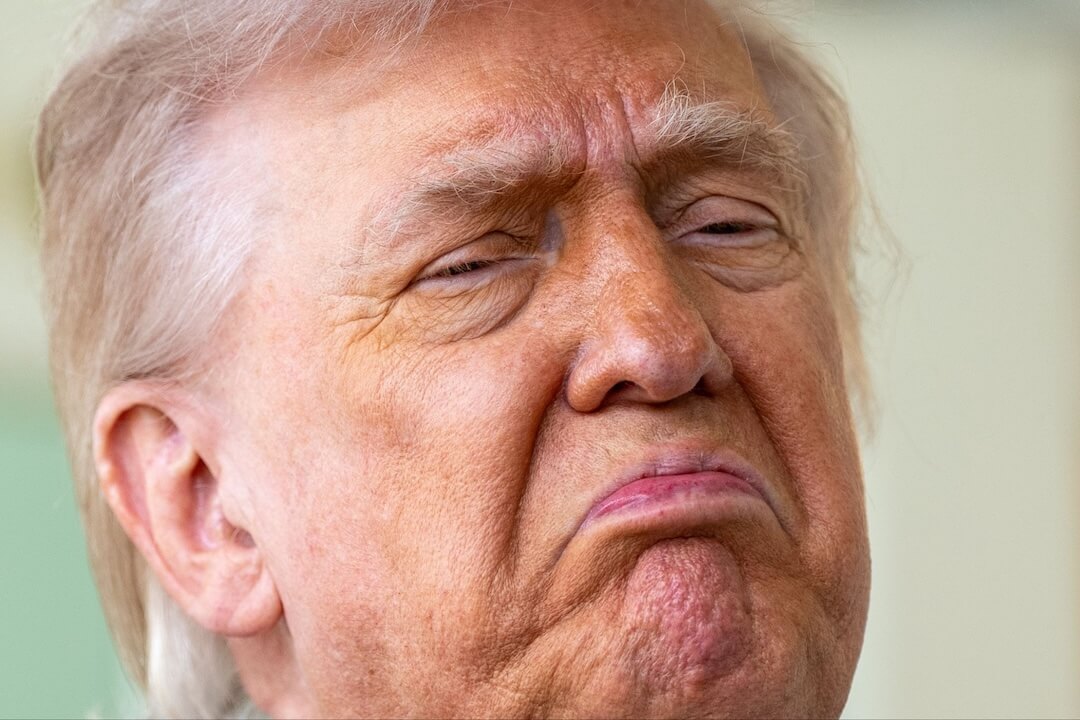
After approximately 12 hours, the controversial image was removed from Truth Social. When questioned by reporters on Monday, Trump offered an explanation that many found implausible. He claimed, “I thought it was me as a doctor, and had to do with Red Cross, as a Red Cross worker, which we support. … It’s supposed to be me as a doctor, making people better. And I do make people better. I make people a lot better.” He dismissed the idea that he was depicting Jesus as “fake news.” The obvious discrepancies between his explanation and the visual content of the image only added to the public’s incredulity.
Mounting Concerns Over Mental Fitness and Strategic Intent
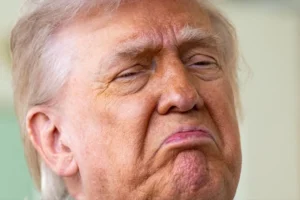
The confluence of these erratic and extreme posts has reignited a long-simmering public debate regarding Trump’s mental fitness and the motivations behind his unconventional communication style. Observers have questioned whether his stream-of-consciousness posts, unusual capitalization, aggressive threats, and often late-night timing are part of a calculated strategy, a means of trolling opponents, a tactic to divert attention, or simply a reflection of an insatiable desire for media attention.
Peter Baker’s provocative New York Times headline on Monday encapsulated these concerns: “Trump’s Erratic Behavior and Extreme Comments Revive Mental Health Debate.” Baker noted that these various erratic posts “have left many with the impression of a deranged autocrat mad with power.” He further elaborated on the unprecedented nature of the public discourse: “While the country has had presidents whose capacity came under question before, most recently the octogenarian Joseph R. Biden Jr. as he aged demonstrably before the public’s eyes, never in modern times has the stability of a president been so publicly and forensically debated – and with such profound consequences.”
Significantly, these questions are not confined to Democrats or traditional Trump critics. Individuals who once worked closely with him have also voiced concerns. Ty Cobb, a White House lawyer during Trump’s first term, told journalist Jim Acosta that Trump is “a man who is clearly insane.” Stephanie Grisham, a former White House press secretary, tweeted, “He’s clearly not well (I don’t enjoy saying that) & ur nowhere to b found. This isn’t ‘just Trump being Trump’ & u ALL know it.”
Despite these growing concerns, Trump continues to maintain strong support within his cabinet and among Republican members of Congress. Vice President JD Vance, for instance, defended the "Jesus image" post on Fox News, claiming the president was merely joking and removed it because “a lot of people weren’t understanding his humor.” Vance further defended Trump’s propensity to “mix it up on social media,” characterizing his unfiltered communication as a strength.
David A. Graham’s insightful piece in The Atlantic, titled “The Parable of the President. Donald Trump’s criticism of Pope Leo XIV reveals that to him, religion is primarily about power, not morality,” offered a deeper analysis of the underlying philosophy that might inform Trump’s religious pronouncements and actions. Graham argued that for Trump, religious figures and faith itself often serve as instruments for asserting dominance and control rather than embodying moral principles or spiritual guidance. This perspective provides a framework for understanding his willingness to challenge a global religious leader and to appropriate religious imagery for political purposes.
Legal Developments: Trump’s Defamation Suit Dismissed
Amidst the social media maelstrom, Trump also faced a legal setback on Monday when a federal judge dismissed his defamation lawsuit against The Wall Street Journal. Trump had sued the Journal’s publisher, Dow Jones, over a report detailing a lewd birthday message he allegedly sent to convicted sex offender Jeffrey Epstein.
U.S. District Judge Darrin P. Gayles in Florida ruled that Trump failed to demonstrate that he had been defamed. In defamation cases involving public figures, plaintiffs must meet a high legal bar known as the "actual malice" standard, established in New York Times v. Sullivan. This standard requires proving that the publisher either knowingly printed false information or acted with reckless disregard for the truth. Judge Gayles concluded that Trump "failed to show that the reporters acted with ill will and deliberately avoided investigating his claim that the letter was fake."
Corinne Ramey of The Wall Street Journal reported that Judge Gayles explicitly stated, “The complaint comes nowhere close to this standard. Quite the opposite.” The judge highlighted that the Journal had reached out to Trump, the Justice Department, and the FBI for comment before publishing the story, demonstrating an effort to investigate rather than a reckless disregard for the truth.
The dismissal, however, was "without prejudice," meaning Trump retains the option to refile the lawsuit with amendments. In a Truth Social post following the ruling, Trump indicated his intention to do so, writing, “Our powerful case against The Wall Street Journal, and other defendants, was asked to be re-filed by the Judge. It is not a termination, it is a suggested re-filing, and we will be, as per the Order, re-filing an updated lawsuit on or before April 27th.” Dow Jones expressed satisfaction with the judge’s decision, reaffirming its confidence in “the reliability, rigor and accuracy of The Wall Street Journal’s reporting.”
Hollywood Unites Against Media Merger
Beyond the political and legal spheres, another significant development unfolded in the media industry. More than 1,000 prominent actors, directors, and writers issued an open letter on Monday, vehemently opposing Paramount’s proposed acquisition of Warner Bros. Discovery. The signatories, a veritable who’s who of Hollywood talent, included A-listers such as Adam McKay, Alan Cumming, Bryan Cranston, David Fincher, Glenn Close, Jane Fonda, JJ Abrams, Jason Bateman, John Leguizamo, Lin-Manuel Miranda, Margaret Cho, Mark Ruffalo, Noah Wyle, Patti Lupone, Ramy Youssef, Rosario Dawson, Rosie O’Donnell, Ted Danson, Tiffany Haddish, Tig Notaro, Yorgos Lanthimos, and Yvette Nicole Brown.
The letter, published on the "Block the Merger" website, expressed deep concerns about further consolidation in an already concentrated media landscape. It argued that the transaction would reduce competition at a critical juncture for both the entertainment industry and its audiences. The signatories warned of severe consequences, including "fewer opportunities for creators, fewer jobs across the production ecosystem, higher costs, and less choice for audiences in the United States and around the world." Alarmingly, they noted that the merger would shrink the number of major U.S. film studios to just four, potentially stifling creative diversity and independent productions.
The letter highlighted the existing strains on the industry, attributing many of them to previous waves of consolidation. It stated, “We have witnessed a steep decline in the number of films produced and released, alongside a narrowing of the kinds of stories that are financed and distributed. Increasingly, a small number of powerful entities determine what gets made – and on what terms – leaving creators and independent businesses with fewer viable paths to sustain their work.”
Paramount’s deal to acquire Warner Bros. Discovery is anticipated to finalize by the end of the year, pending regulatory approval. Despite the widespread industry opposition, the deal is widely expected to receive approval from the Trump administration. A Paramount spokeswoman, in a statement reported by The New York Times’ Benjamin Mullin, acknowledged the concerns raised by "some in the creative community." However, she asserted that the deal would preserve “iconic brands with independent creative leadership – ensuring creators have more avenues for their work, not fewer.” The ultimate impact of this potential media giant on content creation, distribution, and employment within Hollywood remains a significant point of contention.
Sports World Rallies Behind Dick Vitale
In a separate development, beloved ESPN college basketball analyst Dick Vitale shared an update on his ongoing health battles. On Monday, the 86-year-old revealed on social media that he has been diagnosed with melanoma, a form of skin cancer, which has spread to his lungs and liver. Vitale announced he would soon begin immunotherapy treatments.
Vitale has been a public figure in his fight against various cancers over the past several years, including melanoma, lymphoma, vocal cord cancer, and lymph node cancer. His resilience and positive outlook have been a source of inspiration for many. In a post shared by ESPN, he expressed unwavering confidence, stating, “I’ve beaten melanoma. I’ve beaten lymphoma. I’ve beaten vocal cord cancer. I’ve beaten lymph node cancer. I’m four-for-four, and I’m fully confident I’m going to make it five-for-five.” Despite the serious diagnosis, Vitale maintained an optimistic tone, adding, “The best news I can share today is this: I feel fantastic.” The sports world has rallied around "Dickie V," sending an outpouring of support and well wishes to the legendary commentator.
In conclusion, the past week has been marked by a series of high-profile events, largely dominated by former President Trump’s provocative social media activity. His explicit threats against Iran, unprecedented feud with Pope Leo XIV, and controversial self-portrayal as a Christ-like figure have fueled intense national conversations about the appropriate limits of political rhetoric, the role of religious authority, and the mental state of public figures. These incidents, alongside significant developments in legal and media sectors, underscore a period of profound public discourse and challenge across multiple facets of American society.