Strategies for Enhanced Reader Engagement: An Examination of Eleven Proven Blog Post Opening Techniques

In an increasingly saturated digital landscape where attention is a scarce commodity, the initial impression of any written content dictates its ultimate success or failure. Content creators, from independent bloggers to multinational corporations, face the formidable challenge of capturing and sustaining reader interest within mere seconds. This critical juncture, often overlooked, resides in the opening lines of a blog post, acting as the gateway to deeper engagement and the ultimate fulfillment of content objectives. This analysis delves into eleven distinct strategies proven to transform fleeting glances into committed reads, underscoring their psychological underpinnings and practical application in the contemporary content sphere.
The Digital Content Landscape and the Imperative for Engagement
The modern internet hosts billions of web pages, with millions of blog posts published daily. This overwhelming volume of information means that readers are constantly bombarded with content, leading to a significant challenge for creators: diminished attention spans. Research suggests that the average human attention span online is now estimated to be as short as eight seconds, a figure often cited as being less than that of a goldfish. This brevity of focus makes the initial moments of engagement absolutely critical.
The immediate consequence of failing to capture attention is a high bounce rate, where visitors leave a page almost as quickly as they arrived. For content to be effective, it must quickly establish its relevance, pique curiosity, and promise value. Digital marketing strategists consistently emphasize that while a compelling title draws the initial click, a powerful opening line is essential to convert that click into sustained reading. It serves as the second critical gatekeeper in the reader’s journey, determining whether they proceed deeper into the article or navigate away.
The Anatomy of an Engaging Opening Line: Eleven Core Strategies
Mastering the art of the opening line requires a strategic approach, blending psychological insight with clear communication. Here are eleven effective strategies for crafting blog post openers that resonate with readers and foster deeper engagement.
1. Identifying a Reader’s Core Need
This strategy leverages the fundamental human drive to seek solutions to problems or fulfill desires. By directly addressing a pain point or aspiration from the outset, the content immediately establishes its relevance to the reader. It creates an immediate connection, signaling that the article understands the reader’s challenges and is poised to offer valuable insights or remedies. For instance, an opening like, "Are you struggling to maintain consistent website traffic despite publishing regularly?" directly speaks to a common blogger’s dilemma. Studies in user experience (UX) and content marketing show that problem-solution frameworks significantly increase perceived value and reader retention. A 2022 survey by the Content Marketing Institute indicated that content addressing specific audience pain points performed 40% better in engagement metrics, highlighting this technique’s foundational role in successful content creation.
2. Posing a Direct, Affirmative Question
This technique invites immediate reader participation by posing a question designed to elicit a "yes" response, thereby creating a sense of agreement and buy-in. It subtly guides the reader into acknowledging a relevant problem or desire, making them more receptive to the subsequent content that promises a solution. This internal affirmation strengthens their motivation to continue reading. An example might be, "Have you ever wondered how top bloggers consistently captivate their audience from the very first sentence?" Cognitive psychology research on "commitment and consistency" suggests that once individuals make a small, internal commitment (like agreeing to a question), they are more likely to follow through with larger actions (like reading the full article). Copywriting pioneers like David Ogilvy frequently employed this method, demonstrating its enduring effectiveness.
3. Cultivating Curiosity Through Intriguing Questions
Unlike the affirmative question, this method aims to spark curiosity by posing a question whose answer is not immediately obvious, compelling the reader to seek resolution within the article. It taps into the innate human desire for knowledge and resolution, creating a "knowledge gap" that the post promises to fill. Consider an opener such as, "What if the secret to viral content lies not in its topic, but in its very first paragraph?" Research on curiosity and information-seeking behavior indicates that presenting novel, complex, or ambiguous information triggers a psychological state of deprivation, motivating individuals to seek out answers. This "information gap theory" is a powerful driver for content consumption, positioning the content as a valuable source of enlightenment.
4. Employing Surprise and Personal Anecdote
This strategy uses an unexpected fact, a surprising statistic, or a personal, relatable anecdote to immediately disrupt the reader’s expectations and capture their attention. Personal stories, especially those with a twist or an unusual element, make content more human, memorable, and relatable. The unexpected nature "snaps" readers out of routine scanning, encouraging them to take a second look. For example, "My biggest career breakthrough came not from a grand strategy, but from a simple coffee shop encounter." Neuroscience shows that stories activate more brain regions than factual data alone, enhancing recall and emotional connection. Furthermore, novelty is a powerful attention grabber, as the brain is wired to notice deviations from the norm. This method builds rapport and authenticity, making the author and the content more approachable and trustworthy.
5. Weaving a Narrative or Analogy
Stories and analogies translate complex or abstract ideas into tangible, relatable experiences, making the content more engaging and easier to digest. By shifting from expository writing to narrative, this technique bypasses the reader’s "ho-hum" state, drawing them into a miniature world that illustrates the post’s core message. An opener like, "Imagine your blog post as a bustling marketplace. Your title is the vibrant banner, but your opening line is the captivating street vendor calling out to passersby," uses an analogy to explain a complex concept simply. Cognitive linguistics highlights the role of metaphor and analogy in understanding and learning. Educational studies demonstrate that information presented within a narrative context is often retained more effectively than purely factual presentations. This strategy is versatile, suitable for various topics, and particularly effective in fostering empathy and a deeper understanding.
6. Making a Definitive or Bold Claim
This technique involves starting with a strong assertion, a significant promise, or a bold statement of fact that immediately establishes the post’s value proposition or authority. It sets a high expectation, promising a significant takeaway or a definitive answer, thereby compelling readers to continue to validate or understand the claim. Examples include, "This single strategy will double your email subscriber list within 30 days," or "I achieved a 300% ROI on my last content campaign using this overlooked tactic." Marketing effectiveness research often points to clear value propositions as critical for conversion. When a bold claim is substantiated, it significantly boosts credibility and reader trust. However, unsubstantiated claims can lead to reader disengagement, emphasizing the necessity for content to deliver unequivocally on its promise.
7. Stirring Constructive Controversy
Introducing a controversial statement or a provocative opinion can immediately grab attention by challenging prevailing beliefs or sparking debate. It taps into human psychological responses to conflict and disagreement, motivating readers to understand the differing viewpoint or to affirm their own position. An opening such as, "The conventional wisdom on SEO is fundamentally flawed, and here’s why you’re wasting your efforts," immediately challenges assumptions. Studies on social psychology and online engagement show that content that elicits strong opinions or challenges norms tends to generate higher levels of interaction (comments, shares). However, the controversy must be handled responsibly and provide genuine insight, not merely shock value, to avoid alienating the audience.
8. Painting a Vivid Mental Picture
This technique encourages readers to visualize a scenario by engaging their senses and imagination, creating an highly immersive experience from the outset. It transports the reader into a specific situation, allowing them to mentally "experience" the problem or solution discussed in the post, thereby building emotional resonance. Consider, "Picture this: It’s 3 AM, and you’re staring at your laptop screen, a blank cursor mocking your inability to write a single compelling sentence." Cognitive neuroscience indicates that vivid imagery stimulates brain activity associated with real-world experiences, making the content more impactful and memorable. This sensory engagement helps forge a stronger emotional connection, making abstract concepts tangible and evoking emotions that drive action.
9. Highlighting Startling Statistics
Commencing with a surprising or impactful statistic immediately lends credibility to the content and underscores the significance of the topic. Quantitative data, especially when unexpected, can powerfully communicate the scale of a problem or the potential of a solution, forcing readers to re-evaluate their assumptions. For instance, "Did you know that 75% of online readers never scroll past the first paragraph of an article?" provides immediate context and urgency. Research on information processing suggests that concrete, quantifiable data is often perceived as more authoritative and persuasive than anecdotal evidence. Statistics provide immediate proof of relevance, making this strategy particularly effective for data-driven industries or topics where evidence-based arguments are highly valued.
10. Beginning with a Powerful Quote
A well-chosen, insightful quote from an authority figure or a profound statement can immediately set a thoughtful tone and resonate deeply with the reader. Quotes leverage borrowed authority and universal truths, providing a philosophical or inspirational anchor for the content that follows. They can also encapsulate the article’s core theme elegantly. An opening like, "As Maya Angelou once said, ‘Words mean more than what is set down on paper. It takes the human voice to infuse them with shades of deeper meaning,’ beautifully introduces a discussion on the power of communication." The use of authoritative quotes has long been a rhetorical device in persuasive writing, enhancing credibility and lending gravitas to arguments by connecting the article to a broader intellectual tradition.
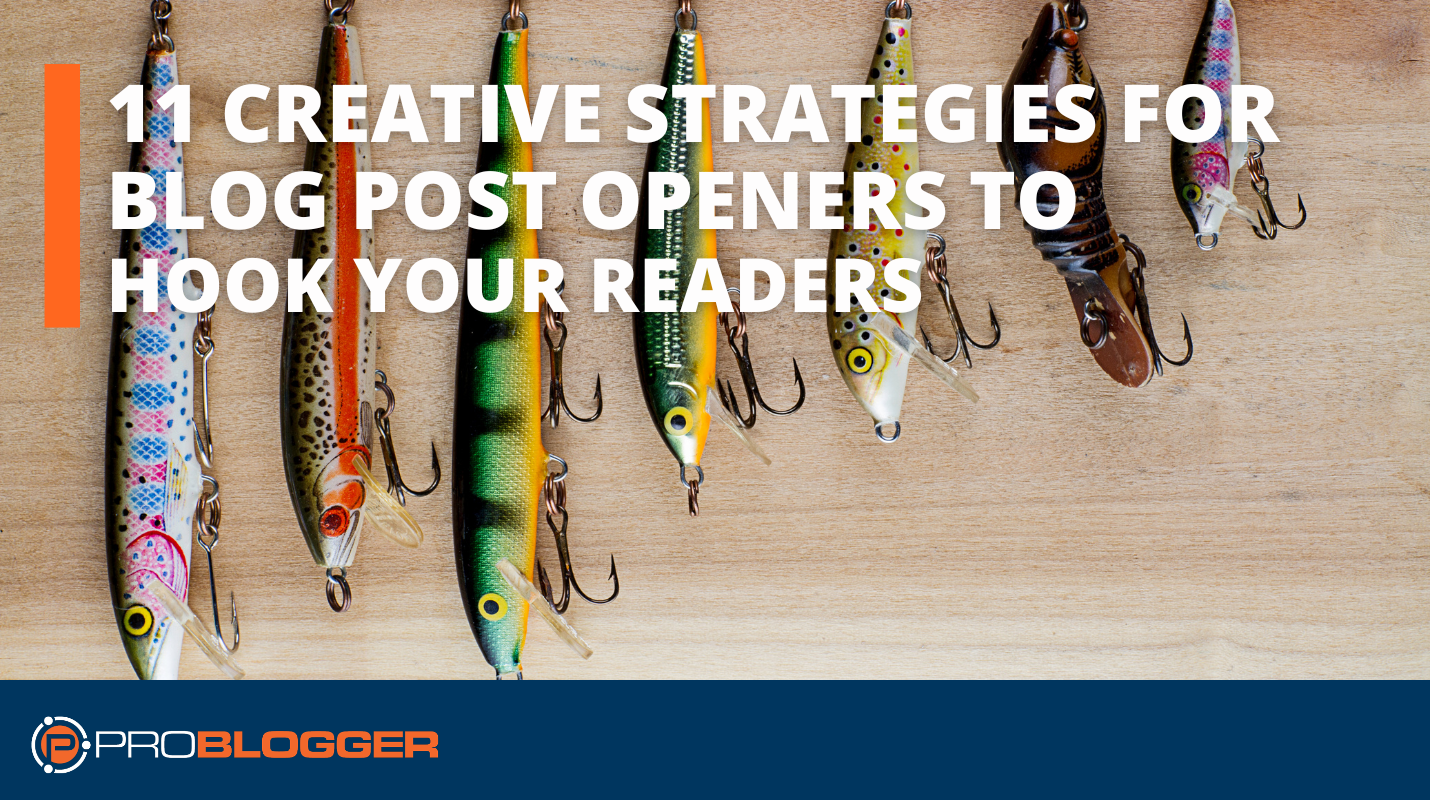
11. Leading with an Impactful Visual
In visually driven digital environments, a compelling image, infographic, or video clip placed at the very beginning of a post can be an incredibly potent hook. Visuals process much faster than text and can convey complex emotions or information instantaneously, drawing the eye and piquing interest before a single word is read. For example, a striking, high-resolution image depicting the emotional toll of digital burnout, accompanied by a concise caption, can immediately grab attention. Studies in multimedia learning confirm that relevant and high-quality visuals significantly improve comprehension, engagement, and retention. Eye-tracking studies show that images are often the first element readers interact with on a webpage. This strategy is crucial for visual content platforms and can dramatically enhance the aesthetic appeal and initial impact of any blog post.
Historical Context and Evolution of Engagement Techniques
Many of these engagement techniques are not recent inventions of the digital age but rather adaptations of established principles from traditional communication forms. Journalism, with its emphasis on strong lead paragraphs and the inverted pyramid structure, has long understood the need to immediately convey core information. Advertising and direct response copywriting have perfected the art of crafting persuasive headlines and openings to elicit specific actions. Public speaking relies heavily on anecdotes, rhetorical questions, and vivid imagery to connect with an audience. Even literature, through its narrative hooks, has always sought to draw readers into stories.
The digital environment, characterized by its rapid information flow, hyper-connectivity, and an unprecedented amount of choice, amplified the necessity for these techniques. The focus shifted from merely informing to actively engaging and retaining attention in a highly competitive space. Early blogging, often more personal and expressive, gradually evolved into a powerful marketing and informational tool. This evolution, particularly with the rise of content marketing, solidified the importance of reader engagement, with key performance indicators like time-on-page, bounce rate, and social shares directly tied to the effectiveness of initial hooks.
Broader Implications for Content Creators and Digital Strategy
Mastering the art of the opening line carries significant implications for content creators and their broader digital strategies.
Firstly, there are substantial SEO benefits. Engaging content, which often begins with a strong hook, leads to longer dwell times and lower bounce rates. These metrics signal to search engines that the content is valuable and relevant, potentially improving search rankings and organic visibility.
Secondly, consistent use of effective openers contributes to brand building. A distinctive brand voice and a reputation for producing high-quality, reader-centric content are cultivated when audiences consistently find themselves drawn into articles from the outset. This fosters trust and recognition.
Thirdly, by drawing readers deeper into content, these techniques significantly increase conversion rates. Whether the goal is subscribing to a newsletter, sharing content on social media, or making a purchase, a captivated reader is far more likely to engage with calls to action.
Fourthly, a consistently engaging reading experience fosters audience retention. Turning casual visitors into regular readers and active community members is a long-term goal for many content platforms, and the initial hook is paramount in establishing this relationship.
Finally, for content creators, mastering these techniques represents significant professional development. It enhances their overall writing prowess, their understanding of audience psychology, and their marketability in a competitive industry.
Conclusion
The opening lines of a blog post are far more than a mere introduction; they are the strategic gateway to reader engagement, content consumption, and ultimately, the achievement of communication objectives. The eleven strategies outlined herein – from identifying core needs and posing intriguing questions to leveraging startling statistics and impactful visuals – provide a comprehensive toolkit for content creators. The judicious and varied application of these techniques is crucial, as loyal readers can become accustomed to predictable patterns. As the digital landscape continues to evolve, the art and science of the opening line will remain a cornerstone of effective online communication, serving as the critical determinant in the battle for reader attention and sustained digital success.