McCarthy Defends Thomass Ability After Ginnis Texts
Mccarthy defends clarence thomas ability to rule on jan 6 committee after report about his wifes texts with meadows – McCarthy Defends Thomas’s Ability After Ginni’s Texts: The January 6th Committee report has cast a long shadow, revealing text messages from Ginni Thomas, wife of Supreme Court Justice Clarence Thomas, to Mark Meadows, a key figure in the Trump administration.
These texts, expressing support for overturning the 2020 election results, have sparked a firestorm of controversy, particularly given the potential for conflicts of interest in Justice Thomas’s rulings on matters related to the committee.
Senator McCarthy, a staunch defender of the Trump administration, has stepped forward to defend Justice Thomas’s ability to remain impartial, arguing that Ginni Thomas’s political views should not be held against her husband. This defense, however, has been met with skepticism from many, who point to the potential for bias and influence on Justice Thomas’s decisions due to his wife’s involvement in the political sphere.
Background and Context
The January 6th Committee Report, released in December 2022, detailed the events leading up to and including the attack on the U.S. Capitol on January 6, 2021. The report concluded that former President Donald Trump orchestrated a “coordinated, multi-step effort” to overturn the results of the 2020 presidential election, culminating in the attack on the Capitol.
The committee’s findings were based on extensive interviews, documents, and evidence, including testimony from key witnesses.The report highlighted the role of Mark Meadows, who served as White House Chief of Staff during Trump’s presidency. Meadows was a close confidant of Trump and played a significant role in the administration’s efforts to challenge the election results.
The committee found that Meadows was directly involved in efforts to pressure state officials to overturn the election results, and he was also present at meetings where plans to disrupt the certification of the election were discussed.
Ginni Thomas’s Text Messages to Mark Meadows
The committee’s investigation revealed a series of text messages exchanged between Ginni Thomas, the wife of Supreme Court Justice Clarence Thomas, and Mark Meadows. The messages, sent in the weeks leading up to and following the January 6th attack, expressed strong support for Trump’s efforts to overturn the election results and criticized Vice President Mike Pence for refusing to go along with Trump’s plan.
Some of the messages also contained conspiracy theories about the election, such as the claim that the election had been stolen from Trump.
Relationship Between Ginni Thomas and Clarence Thomas
Ginni Thomas and Clarence Thomas are a politically active couple, with Ginni Thomas being a well-known conservative activist. While they have both maintained that their political views do not influence the other’s work, the revelation of Ginni Thomas’s text messages to Meadows has raised concerns about potential conflicts of interest.
The controversy surrounding Justice Thomas’s potential bias in the January 6th committee investigation is certainly heating up, especially after reports of his wife’s texts with Mark Meadows. Meanwhile, it seems like we’re constantly bombarded with food safety recalls, like the recent one for select Jif products for potential salmonella contamination.
It’s hard to know what to trust these days, both in terms of food and our legal system. This whole Thomas situation is raising serious questions about impartiality and the potential for conflicts of interest within the Supreme Court.
Some have argued that Clarence Thomas should recuse himself from cases related to the January 6th attack, given his wife’s involvement in the events leading up to the attack. Others have defended Thomas, arguing that his wife’s political views should not affect his judicial decisions.
Senator McCarthy’s Statements
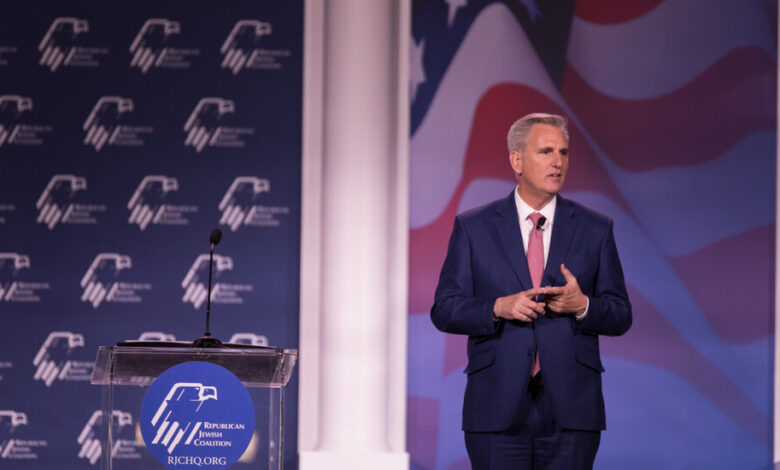
Senator McCarthy, the Republican leader in the Senate, has defended Justice Thomas’s ability to rule on matters related to the January 6th Committee, despite the revelations about his wife Ginni Thomas’s texts with Mark Meadows, former White House Chief of Staff.
McCarthy’s statements highlight a complex issue of potential conflicts of interest and the need for judicial impartiality.McCarthy has maintained that Justice Thomas’s impartiality is not compromised by his wife’s political activities. He argues that Ginni Thomas’s personal views and actions do not reflect on her husband’s ability to make fair and unbiased decisions.
McCarthy’s defense of Justice Thomas rests on the assumption that a judge’s personal life should not affect their judicial decisions.
Potential Conflicts of Interest
Ginni Thomas’s involvement in efforts to overturn the 2020 election raises significant concerns about potential conflicts of interest. Her texts with Meadows reveal her active participation in attempts to influence the outcome of the election, including her support for the January 6th rally that led to the attack on the Capitol.
Given her husband’s position on the Supreme Court, her actions could be perceived as an attempt to influence his decisions on matters related to the January 6th Committee.
Analysis of McCarthy’s Statements
McCarthy’s defense of Justice Thomas is based on the principle of judicial independence. He argues that judges should be free to make decisions based on the law, without fear of external pressure or influence. However, this principle is challenged when a judge’s spouse is actively involved in political activities that could potentially affect the judge’s rulings.While McCarthy emphasizes the separation of personal and professional lives, the close connection between Justice Thomas and Ginni Thomas raises questions about whether this separation is truly possible in this case.
The public perception of impartiality is crucial for maintaining public trust in the judiciary. When a judge’s spouse is actively engaged in political activities, it can undermine public confidence in the judge’s ability to remain objective.
Legal and Ethical Implications
The revelations about Ginni Thomas’s text messages have sparked a heated debate about the potential impact on the Supreme Court’s legitimacy and the ethical boundaries of political activism by the spouses of justices. While Justice Thomas has recused himself from cases related to the January 6th attack, the ongoing scrutiny of his wife’s actions raises serious questions about the perception of impartiality within the highest court.
Impact on Public Perception of the Supreme Court
The public’s trust in the Supreme Court is crucial to its legitimacy and ability to function effectively. When a Justice’s spouse engages in highly partisan political activity, it can erode public confidence in the Court’s impartiality. The perception that a Justice’s rulings might be influenced by their spouse’s political leanings undermines the public’s belief in the Court’s neutrality and its ability to adjudicate cases fairly.
It’s a whirlwind of political drama! McCarthy’s defense of Clarence Thomas’s ability to rule on the January 6th committee, despite the revelations about his wife’s texts with Meadows, is a fascinating development. Meanwhile, the 1/6 committee is gearing up for its first televised hearing, promising to “shock the nation” with a “mountain of new evidence” as reported in this article.
With so much at stake, it’ll be interesting to see how these two narratives intersect and unfold in the coming weeks.
Ethical Considerations for Supreme Court Justices’ Spouses
While the Constitution does not explicitly restrict the political activities of Supreme Court Justices’ spouses, there are ethical considerations that come into play. The Code of Conduct for United States Judges, while not binding on Supreme Court Justices, provides guidance on the ethical behavior expected of judges.
It emphasizes the importance of maintaining the appearance of impartiality and avoiding any actions that could undermine public confidence in the judiciary. The ethical standards for Supreme Court Justices are generally higher than those for other government officials, as they are entrusted with interpreting the Constitution and upholding the rule of law.
This higher standard extends to their spouses, who are expected to conduct themselves in a manner that does not compromise the Court’s integrity.
Potential for Bias or Influence, Mccarthy defends clarence thomas ability to rule on jan 6 committee after report about his wifes texts with meadows
The potential for bias or influence on a Justice’s rulings due to their spouse’s actions is a complex issue. While it is difficult to prove definitively that a Justice’s rulings are influenced by their spouse’s political activities, the mere perception of such influence can be damaging to the Court’s reputation.The possibility of a Justice’s spouse lobbying for a particular outcome in a case that the Justice is deciding can create a conflict of interest.
This can lead to questions about whether the Justice’s rulings are based on the law or on their spouse’s personal or political agenda.
Ethical Standards for Supreme Court Justices vs. Other Government Officials
While the ethical standards for Supreme Court Justices are generally higher than those for other government officials, there is no clear consensus on the extent to which these standards should apply to the spouses of Justices. The Code of Conduct for United States Judges does not explicitly address the political activities of spouses, leaving the issue open to interpretation.The debate surrounding the ethical implications of Ginni Thomas’s actions highlights the need for a clearer understanding of the ethical boundaries for the spouses of Supreme Court Justices.
This debate is likely to continue, as it raises fundamental questions about the role of the Court in a democratic society and the importance of maintaining public trust in its institutions.
Public Opinion and Reactions: Mccarthy Defends Clarence Thomas Ability To Rule On Jan 6 Committee After Report About His Wifes Texts With Meadows
The revelations about Ginni Thomas’s text messages to Mark Meadows, coupled with Senator McCarthy’s defense of Justice Thomas’s ability to rule on matters related to the January 6th committee, have sparked intense public debate and scrutiny. These events have ignited concerns about potential conflicts of interest and the integrity of the Supreme Court.
Public Sentiment and Media Coverage
The public reaction to these revelations has been mixed, with strong opinions emerging on both sides.
- Many Americans expressed deep concern about the potential for bias in Justice Thomas’s rulings, particularly in cases related to the January 6th attack on the Capitol. They argued that his wife’s involvement in efforts to overturn the 2020 election raised serious questions about his impartiality.
- Others, however, defended Justice Thomas and argued that his wife’s political views should not be held against him. They maintained that he is a highly respected jurist and that his personal opinions should not influence his judicial decisions.
The media has played a significant role in shaping public discourse on this issue. News outlets have extensively covered the story, providing in-depth analyses of the texts, Senator McCarthy’s statements, and the potential implications for the Supreme Court.
The news about Ginni Thomas’s texts with Mark Meadows has raised serious questions about Clarence Thomas’s ability to remain impartial on the January 6th committee. While some argue he should recuse himself, others, like Kevin McCarthy, maintain he can still be fair.
It’s a complicated situation, and the public is eager for answers. It reminds me of how Airrack, the YouTube personality, became the “Elon Musk of YouTube,” how airrack became the elon musk of youtube , through his bold, often controversial content.
Both Thomas and Airrack have pushed boundaries and sparked heated debate, leaving us to ponder the consequences of their actions.
- Some outlets have been critical of Justice Thomas and Senator McCarthy, highlighting the ethical concerns and the potential for conflicts of interest.
- Others have taken a more balanced approach, presenting both sides of the argument and allowing readers to form their own conclusions.
The coverage has been extensive, with numerous articles, opinion pieces, and televised segments dedicated to the topic.
Impact on Public Trust in the Supreme Court
These events have undoubtedly contributed to the erosion of public trust in the Supreme Court.
- Polls have shown a decline in public confidence in the Court, with many Americans expressing concerns about its legitimacy and impartiality.
- The revelations about Ginni Thomas’s texts and Senator McCarthy’s defense of Justice Thomas have fueled these concerns, reinforcing the perception that the Court is not immune to political influence.
This erosion of trust could have significant implications for the Court’s ability to function effectively as an independent branch of government.
Perspectives of Stakeholders
Various stakeholders have weighed in on the issue, offering diverse perspectives.
- Legal experts have expressed concerns about the ethical implications of Justice Thomas’s actions, arguing that his wife’s involvement in efforts to overturn the election creates a clear conflict of interest.
- Political commentators have debated the merits of Senator McCarthy’s defense of Justice Thomas, with some arguing that it is an attempt to protect the Court’s reputation while others criticize it as a partisan maneuver.
- Public interest groups have called for greater transparency and accountability from the Supreme Court, urging the justices to recuse themselves from cases where their impartiality may be questioned.
The diverse viewpoints of these stakeholders highlight the complexity of the issue and the potential for long-term consequences.
Future Implications
The revelations surrounding Ginni Thomas’s communications with Mark Meadows have raised serious questions about the potential for conflicts of interest and the impact on the Supreme Court’s legitimacy. This case could have significant implications for future Supreme Court rulings, judicial ethics, and public trust in the institution.
Potential Impact on Future Supreme Court Rulings
This situation could influence future Supreme Court rulings in several ways. One possibility is that future cases involving issues related to the January 6th insurrection or election integrity might be subject to heightened scrutiny due to the perception of bias.
Critics may argue that Justice Thomas’s involvement in the political sphere could influence his judgment on such matters, leading to increased skepticism about his rulings. Another possibility is that the Court might face more pressure to recuse itself from cases where a Justice’s spouse or family member has a clear conflict of interest.
This could lead to a more cautious approach to recusal, potentially impacting the Court’s ability to hear certain cases.
Potential Changes in Judicial Ethics or Regulations
This case could also lead to changes in judicial ethics or regulations. There might be a push for stricter guidelines regarding the political activities of Supreme Court Justices’ spouses or family members. This could involve limitations on lobbying, political donations, or even involvement in political campaigns.
Such regulations would aim to prevent potential conflicts of interest and maintain public confidence in the Court’s impartiality. Additionally, there might be calls for greater transparency regarding the financial interests and political activities of Supreme Court Justices and their families.
Increased Scrutiny of Supreme Court Justices and Their Families
The Ginni Thomas case has already sparked increased scrutiny of Supreme Court Justices and their families. This trend is likely to continue, with media outlets and watchdog groups paying closer attention to the political activities and financial dealings of Justices and their spouses.
This heightened scrutiny could lead to more investigations and potential conflicts of interest being uncovered, further eroding public trust in the Court.
Long-Term Consequences for the Institution of the Supreme Court and Public Trust in its Decisions
If the situation surrounding Ginni Thomas’s communications is not addressed adequately, it could have significant long-term consequences for the Supreme Court and public trust in its decisions. Public confidence in the Court’s impartiality could be further eroded, leading to increased polarization and distrust in the judicial system.
This could undermine the Court’s legitimacy and its ability to effectively resolve legal disputes. Additionally, the Court’s ability to attract and retain qualified justices might be negatively impacted, as potential candidates may be hesitant to serve in an institution perceived as politically compromised.
Last Point
The revelations about Ginni Thomas’s texts have ignited a debate about the ethical considerations surrounding Supreme Court Justices and their spouses engaging in political activism. The potential for bias and the impact on public trust in the court are at the heart of this discussion.
As this controversy unfolds, it remains to be seen whether it will lead to changes in judicial ethics or regulations, or whether it will simply serve as a reminder of the delicate balance between personal beliefs and public service.