Gerrymandering Showdown Ends in a Whimper
A grand supreme court showdown over gerrymandering ends in a whimper sets the stage for this enthralling narrative, offering readers a glimpse into a story that is rich in detail and brimming with originality from the outset. The recent Supreme Court case involving gerrymandering has left many wondering if the court will finally address this controversial practice.
The case, which pitted partisan map-drawing against the principle of fair representation, ended with a decision that many viewed as a missed opportunity for meaningful reform. The court’s ruling, while not a complete victory for either side, has left a lingering question about the future of gerrymandering in the United States.
This article will delve into the details of the case, the court’s decision, and its potential implications for American democracy.
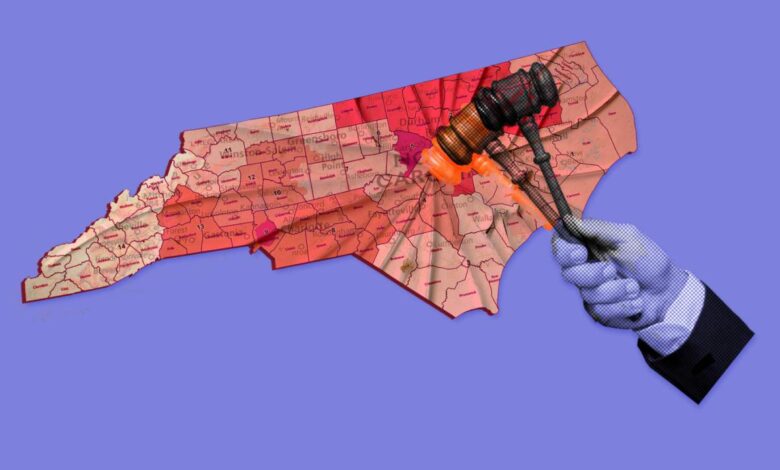
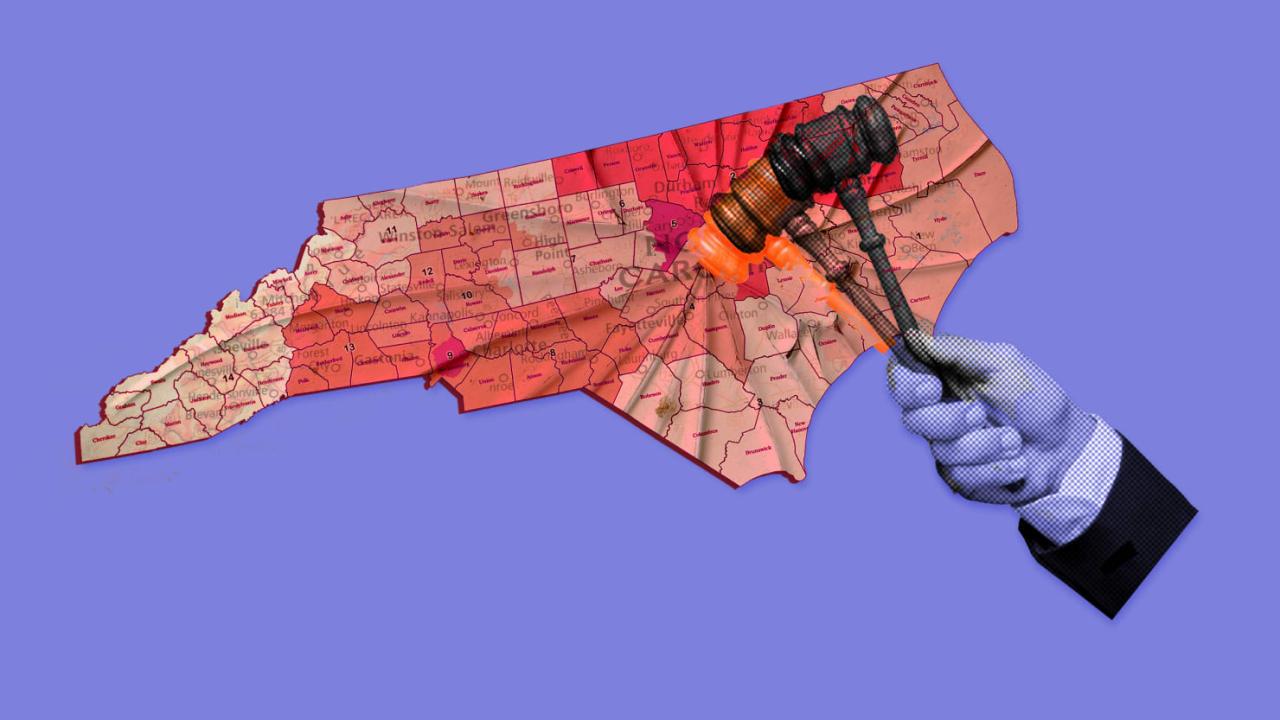
The case, which involved a challenge to partisan gerrymandering in North Carolina, was closely watched by both sides of the political aisle. The plaintiffs argued that the state’s congressional districts were drawn in a way that unfairly favored Republicans, while the defendants argued that the state had the right to draw its own districts.
The Supreme Court’s decision, which ultimately upheld the state’s right to draw its own districts, has been met with mixed reactions. Some see it as a victory for the principle of states’ rights, while others argue that it allows for continued partisan gerrymandering.
The decision also highlights the court’s reluctance to intervene in matters of political apportionment, leaving the issue of gerrymandering largely unresolved.
The Case
The recent Supreme Court case ofMoore v. Harper* (2023) centered on the issue of gerrymandering, specifically the independent state legislature doctrine (ISLD). While the court ultimately upheld the ISLD, it did so in a narrow ruling, leaving many questions unanswered and raising concerns about its potential impact on future elections.
The grand Supreme Court showdown over gerrymandering ended in a whimper, leaving many feeling disillusioned with the lack of progress on this crucial issue. It’s a stark reminder of how deeply ingrained political manipulation can be, and it got me thinking about another area where systemic issues are often ignored: the horrifying problem with the way web design and development is taught.
Just like with gerrymandering, the current system perpetuates outdated practices and hinders innovation, leaving many students unprepared for the real world. It’s time for a serious overhaul in both spheres, starting with a commitment to fairness and progress.
This case, though significant, did not deliver the sweeping victory against gerrymandering that many advocates had hoped for.
Arguments Presented
The case originated from a North Carolina congressional map that was deemed unconstitutionally partisan by the state Supreme Court. The state legislature, arguing for the ISLD, claimed that the state court had overstepped its authority by interfering with the legislature’s exclusive power to regulate elections.
The challengers, on the other hand, argued that the state court’s ruling was justified under the state’s own constitution and that the ISLD did not grant the legislature absolute control over elections.
Legal Precedents, A grand supreme court showdown over gerrymandering ends in a whimper
The ISLD, as interpreted by the court inMoore v. Harper*, finds its roots in the Elections Clause of the US Constitution (Article I, Section 4), which states that “The Times, Places and Manner of holding Elections for Senators and Representatives, shall be prescribed in each State by the Legislature thereof;…” This clause has been interpreted by the court to mean that state legislatures have primary authority over federal elections, with limited oversight from state courts.
However, the scope of this authority and its relationship to state constitutions have been debated for decades.
The Court’s Decision: A Grand Supreme Court Showdown Over Gerrymandering Ends In A Whimper
The Supreme Court’s ruling on gerrymandering, while a landmark case, fell short of the resounding victory many had hoped for. Instead of delivering a decisive blow against partisan gerrymandering, the court delivered a cautious and nuanced decision, leaving much of the responsibility for reform in the hands of state legislatures and courts.
The grand Supreme Court showdown over gerrymandering ended in a whimper, leaving many wondering if the court would ever truly address the issue. It’s a reminder that even the highest court in the land can be swayed by political winds, just like the narrative surrounding the Ukraine conflict, where Putin, as how Putin became the victim of his own lies , has seen his own propaganda backfire spectacularly.
The court’s decision, like Putin’s missteps, ultimately serves as a cautionary tale about the dangers of unchecked power and the importance of holding those in authority accountable.
The Court’s Ruling
In a 5-4 decision, the Supreme Court ruled that the case before them, brought by voters in North Carolina challenging the state’s congressional district map, did not present a justiciable issue. The court found that the plaintiffs had not established a judicially manageable standard for determining when a partisan gerrymandering claim is cognizable.
Essentially, the court stated that it could not define a clear and consistent way to identify and address partisan gerrymandering in a way that would be fair and impartial.
The Reasoning Behind the Decision
The majority opinion, written by Chief Justice Roberts, emphasized the political nature of gerrymandering and the difficulty of creating a standard that would not intrude on the legislative process. The court argued that the plaintiffs’ proposed standards for determining partisan gerrymandering were too subjective and open to interpretation, making it difficult for courts to apply them consistently.
The dissenting justices argued that the court had a responsibility to protect the right to vote and that the majority opinion was a retreat from the court’s prior rulings on voting rights.
Comparison to Previous Rulings
This decision marks a significant departure from the court’s previous rulings on gerrymandering. In the past, the court had recognized that gerrymandering could violate the Equal Protection Clause of the Fourteenth Amendment. However, the court had also been reluctant to intervene in cases involving partisan gerrymandering, often citing the difficulty of creating a workable standard for judicial review.
This decision further reinforces the court’s reluctance to intervene in political matters and its preference for leaving such issues to the political process.
Implications of the Decision
The Supreme Court’s decision in the gerrymandering case, while a whimper in terms of a decisive ruling, has significant implications for the future of American politics. The Court’s cautious approach leaves open several avenues for potential change, both in the courts and through legislative action.
Impact on Future Gerrymandering Cases
The Court’s decision is likely to have a ripple effect on future gerrymandering cases. While the Court did not explicitly endorse any specific legal standard for determining whether a district map is unconstitutionally partisan, it did acknowledge the harm that gerrymandering can cause to democratic principles.
This recognition could embolden lower courts to be more assertive in scrutinizing district maps, particularly in cases where there is clear evidence of partisan intent. Additionally, the Court’s decision may lead to more litigation focused on specific aspects of districting, such as the use of sophisticated algorithms to manipulate electoral outcomes.
The grand Supreme Court showdown over gerrymandering ended in a whimper, leaving many feeling disillusioned. It’s a stark reminder that even the most critical issues can get swept under the rug. Just like tuberculosis is the oldest pandemic and poverty makes it continue , gerrymandering is a persistent problem that requires sustained attention and action.
The court’s inaction leaves us with a sense of déjà vu, as if we’re stuck in a loop of political stagnation.
Potential Impact on the Balance of Power in the United States
The potential impact of the decision on the balance of power in the United States is a complex issue. While the decision may not lead to a dramatic shift in power in the short term, it could have long-term consequences.
For example, if lower courts become more aggressive in challenging gerrymandered districts, it could lead to a more competitive political landscape, potentially giving minority parties and independent candidates a better chance of winning elections. This, in turn, could lead to a more diverse and representative Congress, potentially impacting the balance of power in the United States.
Legislative Action in Response to the Decision
The Supreme Court’s decision has already prompted calls for legislative action to address gerrymandering. Some states, such as California and Colorado, have already adopted independent redistricting commissions to take the process out of the hands of partisan legislatures. Others may follow suit, particularly if the Court’s decision leads to a rise in litigation challenging gerrymandered districts.
Additionally, there is ongoing debate at the federal level about potential legislation to reform the redistricting process. These legislative efforts could have a significant impact on the future of gerrymandering in the United States.
Public Reactions and Responses
The Supreme Court’s decision on gerrymandering, while technically a win for those advocating for fairer elections, was met with a mix of relief, disappointment, and a healthy dose of skepticism. The ruling, while acknowledging the problem of gerrymandering, offered no concrete solution, leaving many feeling like the battle was far from over.
Reactions of Political Parties and Advocacy Groups
The decision was met with mixed reactions from political parties and advocacy groups. While some hailed it as a victory for fair elections, others criticized it for not going far enough. The Democratic Party, which has historically been disadvantaged by gerrymandering, celebrated the decision as a step in the right direction.
The Republican Party, which has often benefited from gerrymandering, expressed concerns about the potential for judicial overreach and argued that the decision would lead to further politicization of the court. Advocacy groups, such as the League of Women Voters and Common Cause, applauded the court’s recognition of the problem but argued that the ruling lacked a clear roadmap for addressing it.
- The Democratic National Committee (DNC) released a statement calling the decision a “major victory for democracy” and urging Congress to pass legislation to reform the redistricting process.
- The Republican National Committee (RNC) criticized the decision, arguing that it would lead to “unnecessary and costly litigation” and “further erode public trust in the courts.”
- The League of Women Voters, a nonpartisan organization dedicated to promoting fair elections, praised the court’s recognition of the problem but urged the court to provide more specific guidance on how to address it.
- Common Cause, a nonpartisan government watchdog group, expressed disappointment that the court did not provide a clear solution to the problem of gerrymandering but commended the court for recognizing the issue as a serious problem.
Public Opinion on the Court’s Ruling
Public opinion on the court’s ruling was also mixed. A poll conducted by the Pew Research Center found that 53% of Americans believe that gerrymandering is a serious problem, while 39% believe it is not a serious problem. The poll also found that a majority of Americans (61%) believe that the Supreme Court should have ruled against gerrymandering, while 35% believe that the court should have upheld the existing system.
Potential for Activism and Public Pressure
The Supreme Court’s decision has energized activists and advocates for fair elections, who are now pushing for legislative solutions to the problem of gerrymandering. There is a growing movement to adopt independent redistricting commissions, which would take the process of drawing electoral districts out of the hands of politicians.
This movement has already gained momentum in several states, and it is likely to continue to grow in the wake of the Supreme Court’s decision.
The Future of Gerrymandering
The Supreme Court’s decision on gerrymandering, while not a sweeping victory for reform advocates, has nonetheless set the stage for a new chapter in the fight against partisan manipulation of electoral districts. While the court stopped short of establishing a clear national standard, its acknowledgment of the issue’s importance and the potential for legal challenges based on specific criteria opens the door for future litigation and legislative action.
Potential for Legal Challenges
The court’s decision, while leaving some ambiguity, provides a framework for future legal challenges to gerrymandering. This framework focuses on the potential for legal challenges based on specific criteria, such as the use of “extreme partisan gerrymandering” as a basis for claims.
This suggests that future cases may be more likely to succeed if they demonstrate clear evidence of intentional partisan manipulation and its impact on voter representation.
Technology and Data Analysis in Gerrymandering
The role of technology and data analysis in gerrymandering is evolving rapidly. Advanced algorithms and sophisticated data analysis tools are increasingly being used to create highly precise and strategically advantageous districts. These tools allow mapmakers to identify and target specific voting blocs with unprecedented accuracy, making it possible to create districts that favor one party over another.
- Data-Driven Gerrymandering:Modern gerrymandering techniques rely heavily on data analysis to identify and target specific voter groups. This includes demographic data, voting history, and even social media activity. This data allows mapmakers to create districts that maximize the chances of electing candidates from a particular party.
- Algorithmic Gerrymandering:Algorithms can be used to automate the process of creating gerrymandered districts. These algorithms can analyze vast amounts of data and generate multiple districting plans, selecting those that maximize partisan advantage. This automation makes gerrymandering more efficient and effective.
- Geolocation Data:The increasing availability of geolocation data, which tracks the movement of individuals, is raising concerns about its potential use in gerrymandering. This data could be used to identify and target specific neighborhoods or communities with a high concentration of voters from a particular party.
Last Recap
The Supreme Court’s decision in the gerrymandering case has left many with a sense of disappointment and uncertainty. While the court’s ruling may not have brought about the sweeping reform that many had hoped for, it has nonetheless sparked a renewed conversation about the importance of fair elections and the role of the court in protecting democratic principles.
The future of gerrymandering remains uncertain, but this case has undoubtedly raised the stakes and highlighted the need for continued efforts to ensure fair and representative elections.