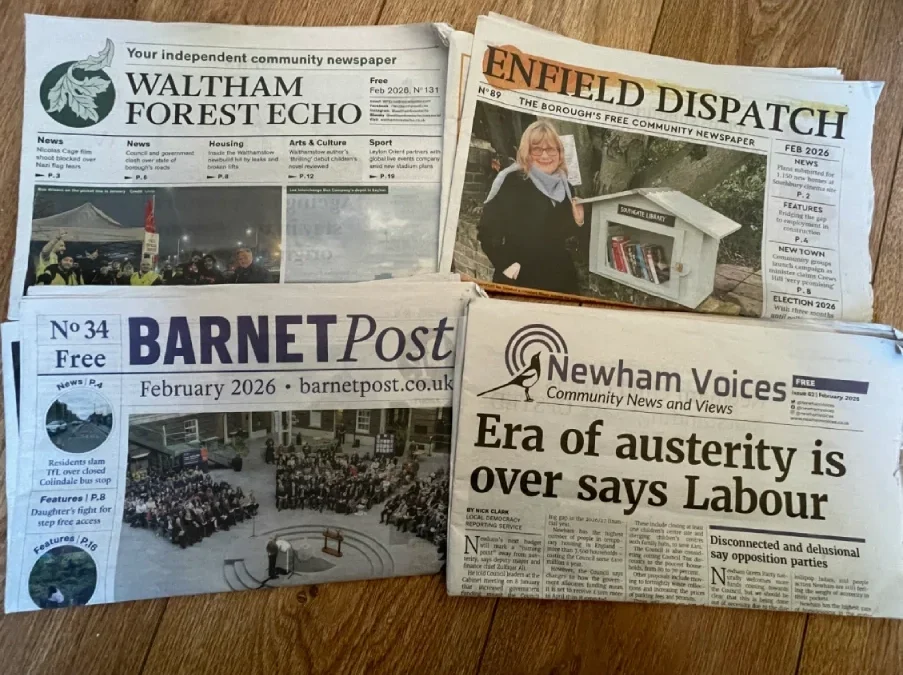
The landscape of regional and community journalism in the United Kingdom is undergoing a critical transformation following a major government intervention designed to secure the long-term viability of local reporting. Approximately 50 local news publishers across England and Wales have been awarded grants of up to £125,000 each as part of a sweeping national initiative to combat the proliferation of information-poor regions, commonly referred to as "news deserts."
This financial injection forms the core of the Department for Culture, Media and Sport (DCMS) Local Media Strategy. The two-year program is backed by a £12 million funding pool aimed at stabilizing regional reporting, which has faced severe structural decline over the past two decades due to the collapse of traditional print advertising models and the dominance of major global tech platforms.
While the majority of the resources are directed toward print, digital-native news outlets, and independent local broadcasters, the distribution strategy reflects a careful balancing act between immediate newsroom support and broader infrastructural overhaul. Prominent beneficiaries of the grant scheme include independent digital outlets and hyperlocals such as Mill Media, Byline Times, the Leicester Gazette, NN Journal, and the Island Echo.
Notably, hyperlocals like Stand Up For Southport have also been selected for funding. Observers note that this inclusion was driven in part by a distinct lack of traditional local reporting infrastructure in the area—a vulnerability that was acutely exposed during the 2024 Southport riots, where a vacuum of verified local news allowed misinformation to spread rapidly across social media platforms.
The rollout of these grants highlights an escalating race to digitize regional media, build sustainable revenue streams, and re-engage younger audiences who consume news almost exclusively through non-traditional channels.
A Structured Approach to Distribution and Industry Infrastructure
The £12 million financial package is not distributed uniformly. Only nine publishers qualified for the maximum individual award of £125,000, reflecting rigorous vetting procedures applied to the hundreds of applicants. Furthermore, the broader initiative allocates £6 million specifically toward foundational industry infrastructure. Seven organizations, including software developers, technology enterprises, and sector support bodies, received larger grants of up to £275,000 to build scalable tools that benefit the wider regional press ecosystem.
The National Council for the Training of Journalists (NCTJ) is among the notable infrastructure recipients, securing £191,880. The organization plans to channel these funds into a specialized initiative titled Responsible AI for Trusted Local Journalism. This project aims to design a comprehensive "responsible AI standards framework," alongside model newsroom policies and practical implementation toolkits designed to guide newsrooms safely through the era of automation.
Joanne Forbes, chief executive of the NCTJ, emphasized the delicate balance required when introducing emerging technologies into cash-strapped newsrooms. Local journalism, she noted, holds power to account and tells vital stories that would otherwise remain untold. While artificial intelligence offers significant efficiency gains for newsrooms struggling with limited resources, Forbes stressed that safeguarding the quality and trust upon which good journalism depends remains paramount.
Voices from Government and Independent Oversight
The strategic direction of the funding initiative has been subject to intense scrutiny, particularly regarding government interference in editorial independence. Media Minister Ian Murray defended the governance of the grant scheme, emphasizing that the selection process was insulated from political bias.
Speaking to industry press, Murray explained that the core objective of the fund is to foster an innovative, adaptive local news landscape capable of surviving and thriving in a digitized global market. He underscored that local publishers require state-backed assistance to compete effectively against social media monopolies and to complement promotional efforts driven by the BBC Charter.
Crucially, Murray highlighted that the selection of grant recipients was placed entirely in the hands of an independent steering group composed of external industry experts. "I don’t know why people got the funding that they did, and others didn’t," Murray stated. "The steering group of external industry experts made those decisions, and I think that’s the right thing to do."
Despite the rigorous evaluation process, the sheer volume of demand exposed underlying tensions within the sector. Approximately 200 publishers applied for the grants, and rejections inevitably sparked frustration. Among the unsuccessful applicants was Nub News, which publicly voiced its disappointment after being turned down without a detailed explanation.
Immediate Impact on the Ground: Case Studies from Recipients
For successful applicants, the grants represent a lifeline that enables immediate operational expansion rather than mere survival.
The Leicester Gazette, one of six outlets in the East Midlands to secure funding, received £81,999. Emma Guy, the publication’s membership editor, revealed that the financial boost has already allowed the Gazette to hire five part-time team members. The capital is also funding a comprehensive website redesign, a newsletter relaunch, three public community-listening workshops, an audience survey, and a major print expansion. Set to appear in Leicestershire supermarkets for the first time this December, the Gazette’s print run is slated to expand to 10,000 copies.
On the Isle of Wight, the Island Echo secured £80,000. Darren Toogood, editor and publisher of the outlet, explained that the funding directly relieves the administrative burdens that frequently pull small teams away from core investigative reporting.
"Every hour spent on routine administration is an hour that could otherwise be spent attending court, following up a tip-off, investigating an issue or simply getting out into the community," Toogood said. The grant not only validates the publication’s operational model as it approaches its 15th anniversary in 2027, but it also unlocks a series of ambitious developmental milestones designed to strengthen grassroots coverage.
Broader Industry Response and Union Monitoring
The union and trade association response to the government’s Local Media Strategy has been cautiously optimistic, mixed with persistent warnings regarding the fragility of the media ecosystem.
Laura Davison, general secretary of the National Union of Journalists (NUJ), noted that the government program aligns closely with the union’s long-standing advocacy for state-backed support to preserve regional media. However, Davison sounded a note of caution regarding the integration of automated technologies, confirming that the union will closely monitor the deployment and impact of grants dedicated to artificial intelligence.
"While we’re excited to see what difference the funding makes, many of our members remain deeply worried about their livelihoods and the state of the industry," Davison observed. "The level of interest in the Fund demonstrates just how much the sector has been crying out for support. We hope to see further government investment to really turn the tide."
Theo Bamber, chief executive of the News Media Association (NMA), pointed to the broader socio-political context of the funding rollout. As legislative power continues to devolve away from Westminster, Bamber argued, the watchdog role of local news media becomes increasingly critical to democratic accountability. Initiatives that educate younger generations on the viability and importance of a career in local journalism, he suggested, are essential to safeguarding civic health across the UK.
Chronology and Context of the Crisis
The announcement of the DCMS grants coincides deliberately with Journalism Matters Week, an annual national event dedicated to celebrating the fundamental role that reliable reporting plays in public life.
To complement the financial injections for publishers, the National Committee for the Safety of Journalists used the occasion to convene and discuss a refreshed National Action Plan. Originally launched in 2021, the plan aims to offer robust legal and practical protection to reporters facing escalating threats of violence, harassment, and digital intimidation while performing their duties in local communities.
The decline of regional journalism over the past twenty years is well-documented. Research indicates that hundreds of local titles have closed across the UK, leaving vast geographic areas reliant on fragmented social media groups or entirely devoid of original reporting. This vacuum has accelerated concerns over democratic accountability, local civic engagement, and the unchecked spread of online disinformation.
Implications and the Road Ahead
The distribution of the £12 million DCMS fund marks a crucial turning point in how the British state engages with the structural crisis in regional media. By shifting from indirect interventions to targeted capital grants managed by independent industry experts, the government has attempted to inject dynamism into a risk-averse sector.
However, industry analysts emphasize that while £12 million provides a vital cushion, it represents a fraction of the capital required to permanently reverse the structural challenges facing local newsrooms. The ultimate success of the strategy will depend on whether recipient outlets can leverage these grants to build robust, self-sustaining digital business models capable of surviving long after the two-year funding window closes.
As newsrooms across England and Wales begin deploying their awards toward digital tools, audience outreach, and investigative reporting, the eyes of the wider media industry remain fixed on whether this intervention can successfully stem the tide of news deserts in the digital age.