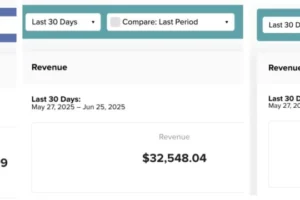
The affiliate marketing industry is currently facing a silent, existential threat that remains largely unaddressed in boardrooms and strategy sessions. As performance marketers eagerly adopt generative AI agents to optimize campaigns, track conversions, and analyze audience behavior, they are inadvertently fueling the very systems that threaten to bypass them entirely. By uploading proprietary campaign metrics and high-value conversion data into third-party AI platforms, marketers are effectively training their own replacements. This dynamic represents a fundamental shift in the digital economy: the transition from marketing as a service-based ecosystem to a model where AI platforms act as the ultimate intermediary, extracting the value from affiliate data to build autonomous, self-sustaining commerce loops.
The Evolution of the Intelligence Economy
To understand the scale of this disruption, one must look at how data monetization has evolved over the last decade. Research from McKinsey & Company highlights a widening chasm between business tiers: top-performing organizations now attribute roughly 11 percent of their total revenue to data monetization—a figure five times higher than their lower-performing competitors. This gap is not merely a result of better sales; it is the result of integrating artificial intelligence into core workflows.
The current trend follows a blueprint established by industry giants like Walmart, whose "Scintilla" platform serves as the gold standard for modern data utilization. By leveraging granular shopper behavior data, the retailer achieved 173 percent year-over-year customer growth and maintained a 100 percent renewal rate in 2024. The strategy is clear: collect proprietary first-party data, apply advanced machine learning layers to generate actionable intelligence, and then sell that intelligence back to the market. In the affiliate ecosystem, networks and publishers possess the "fuel" for this model—conversion rates, Earnings Per Click (EPC) trends, and competitive offer intelligence. When this data is fed into generalized AI tools like ChatGPT or specialized marketing agents, it is no longer the property of the marketer; it becomes the training set for the platform.
The Amazon Basics Paradigm Shift
The risk of "algorithmic cannibalization" is not theoretical; it is a scaled version of the "Amazon Basics" controversy. For years, Amazon was accused of utilizing internal seller data to identify high-margin product categories, only to launch private-label versions of those products at lower prices, effectively out-competing the very sellers who provided the market intelligence.
In the AI era, this process occurs at machine speed. OpenAI, which now processes over 2.5 billion prompts daily for 800 million weekly active users, has made its intentions clear. With 92 percent of Fortune 500 companies already integrating ChatGPT into their business workflows, the company is moving toward a future where AI agents manage the entire advertising lifecycle. According to industry insiders and statements from OpenAI’s monetization leads, the goal is to create autonomous agents that can test bids, allocate budgets, and refine strategies without human intervention. If an AI can perform these tasks using the collective data of thousands of affiliate marketers, the affiliate network itself becomes redundant. The system does not need the marketer; it needs the marketer’s historical performance data to optimize its own internal engine.
The Erosion of the Attribution Model
The rise of the "zero-click economy" serves as the final nail in the coffin for traditional performance tracking. According to data from Similarweb, zero-click searches—queries where the search engine provides the answer directly on the results page—now account for approximately 83 percent of all digital searches.
For the affiliate marketer, the math is increasingly unfavorable. When an AI platform scrapes approximately 1,500 pages to synthesize a single answer for a user, it effectively captures the commercial intent of that user before they ever click through to a merchant’s site. Because the conversion occurs within the AI’s ecosystem or is preempted by a "wisdom-layer" response, the affiliate’s tracking pixels and attribution models are left blind. The marketer is no longer the gateway to the sale; they are merely the anonymous source of the training data used to refine the AI’s ability to capture that sale in the future.
Chronology of a Data Crisis
- 2018–2020: The industry shifts toward automated bidding and AI-driven optimization, with marketers welcoming these tools for their time-saving capabilities.
- 2022: The public release of GPT-4 triggers an "AI Gold Rush" in marketing. Networks and agencies rush to integrate LLMs into their dashboards to remain competitive.
- 2023: Early reports surface regarding data leakage in enterprise AI tools, leading to the first waves of "data governance" policies among Fortune 500 firms.
- 2024: The emergence of "agentic workflows"—AI systems that can execute multi-step tasks independently—begins to mirror the internal operations of affiliate networks, sparking alarm regarding intellectual property and data sovereignty.
Strategic Imperatives for Modern Operators
The temptation to leverage AI for rapid optimization is understandable, but the long-term cost is becoming impossible to ignore. Smart operators must shift their strategy from blind adoption to cautious, protected innovation.
First, performance data must be reclassified as a high-value strategic asset rather than a utility input. Every data point uploaded to a public AI model is a permanent contribution to a competitor’s intellectual property. Companies should prioritize the use of local, private AI models (such as Llama 3 or Mistral running on internal servers) where the data never leaves the organization’s firewall.
Second, the industry must demand transparency regarding data provenance. When engaging with affiliate networks or SaaS platforms that offer "AI-powered insights," operators must demand clear answers to the following questions:
- Is my campaign data used to train the platform’s foundational models?
- Is this data shared with third-party model providers?
- What are the contractual protections in place to prevent the platform from using my performance data to build competing services?
If a platform cannot provide a clear, legally binding answer, the assumption should be that the data is being harvested.
Broader Implications and Industry Future
The industry is currently splitting into two distinct camps. The first consists of platforms that monetize through traditional advertising models, where affiliates retain a role as traffic providers. The second consists of platforms that monetize through "intelligence services," where the AI acts as the final decision-maker. In the latter, the affiliate is essentially a raw material provider whose relevance is diminishing by the day.
The competitive moat that affiliate networks built over the last two decades—a moat constructed from proprietary performance data and attribution intelligence—is rapidly eroding. If that intelligence is extracted and productized by a platform with broader distribution and deeper capital, the original data provider becomes entirely dispensable.
Ultimately, the survival of the affiliate industry depends on its ability to protect its data moat. Those who prioritize short-term dashboard efficiency over long-term data sovereignty risk waking up to a market where the machines have already optimized them out of existence. The transition to an AI-driven economy is inevitable, but the surrender of the industry’s intellectual property is not. The companies that thrive will be those that view their data not as a fuel for the machines, but as the foundation of their future independence.