As artificial intelligence fundamentally reshapes the global digital discovery landscape, traditional search engine optimization (SEO) is no longer sufficient to guarantee brand visibility. The proliferation of generative artificial intelligence answer engines—including OpenAI’s ChatGPT, Google’s Gemini, and Perplexity—has transformed how prospective buyers find, evaluate, and purchase products and services. In this new era, marketers are facing a critical blind spot if they rely solely on conventional keyword rankings. To bridge this divide, industry strategists are increasingly adopting Answer Engine Optimization (AEO) keyword gap analyses to secure vital citations and prevent competitors from capturing lucrative market share before a buyer ever visits a traditional corporate website.
The Structural Shift from SEO to AEO

Traditional SEO has long revolved around ranking for specific search terms, capturing clicks, and driving traffic to destination web pages via a list of organic blue links. However, the behavioral patterns of modern consumers are migrating rapidly toward conversational, prompt-based inquiries. When a procurement officer or a software buyer asks an AI-powered answer engine to recommend a solution, they are rarely presented with a traditional results page. Instead, the system synthesizes a direct response, delivering a paraphrased summary and a curated shortlist of recommended vendors.
Recent empirical data underscores the urgency of this transition. Comprehensive research examining customer relationship management (CRM) software purchase decision-makers reveals that 42% of software buyers now incorporate AI-driven search into their primary evaluation workflows. Furthermore, digital analytics indicate that referral traffic originating from large language models (LLMs) has tripled over a rolling twelve-month period, demonstrating sustained, compounding growth in consumer adoption.
Crucially, industry analyses—such as those conducted by digital marketing research groups—demonstrate that an SEO keyword gap and an AEO keyword gap tell entirely different stories. A brand can comfortably maintain a top-ten ranking on page one of Google for a specific query while remaining entirely invisible to an AI-generated answer for that exact same topic. Data tracking AI Overviews indicates that only a small fraction of sources cited by artificial intelligence engines simultaneously rank within the top organic search results. This divergence proves that optimizing strictly for traditional keywords leaves a massive blind spot, as algorithms prioritize different markers, such as direct answerability, structured data, and contextual entity recognition, over raw domain authority and keyword density.

Anatomy of an AEO Keyword Gap
An AEO keywords gap is defined as the discrepancy between the complex prompts and questions answered by AI engines and the specific queries a brand addresses with enough clarity to earn a citation. Unlike traditional keyword gaps, which measure the terms a competitor ranks for that a brand does not, an AEO gap encompasses a multidimensional evaluation of questions, entities, structural formats, and citation potential.
When an AI engine constructs a response, it pulls from sources that explicitly answer the user’s implicit or explicit intent. If a brand’s website discusses a topic broadly or "talks around" a subject without providing a concise, extractable definition or direct answer, the algorithm will bypass the page in favor of a cleaner, more structured third-party source—such as a Reddit thread, an industry review site, or a competitor’s comparison page.

Methodology for Auditing the AEO Gap
To systematically identify and close these visibility gaps, digital marketing teams must execute a rigorous, four-step audit process designed to unearth hidden opportunities and restructure existing content assets.
-
Inspecting Search Console and SERP Patterns
While Google Search Console (GSC) is fundamentally an SEO tool, its impression and click data provide a reliable foundation for evaluating potential AEO and Generative Engine Optimization (GEO) performance. By exporting query data and analyzing linguistic patterns—such as counting word lengths or identifying long-tail questions regarding specific business challenges—marketers can pinpoint exact pain points that mirror how consumers prompt AI engines. Observing the layout of the corresponding Search Engine Results Pages (SERPs) also reveals whether featured snippets, video carousels, or third-party aggregators dominate the visibility landscape.
-
Collecting First-Party Customer Questions
Direct insights from sales call transcripts, customer support ticketing systems, and community forums offer an unvarnished look at the exact phraseology buyers use when encountering operational roadblocks. These real-world questions frequently match the natural language structure of AI prompts. Analyzing these repositories uncovers high-value gaps that traditional keyword research tools and automated competitor crawlers routinely miss. -
Studying Competitor AI Coverage
The primary competitors in an AI-driven search ecosystem frequently differ from those dominating traditional SERPs. Marketers must actively input category-level discovery prompts—such as queries used prior to vendor selection—into ChatGPT, Gemini, and Perplexity. By logging the resulting domains, citation frequencies, and content formats (such as head-to-head comparisons, pricing tables, or pros-and-cons lists), teams can map out exactly which entities and publishing structures control the narrative in their sector. -
Reviewing and Restructuring Current Content
An internal inventory of existing web pages must be evaluated against the core topics a brand intends to dominate. Marketers must determine whether current pages directly answer specific questions or merely skim the surface. If a page lacks a clear, upfront statement that an algorithm can easily parse and cite, it requires immediate content optimization.
Prioritizing Gaps for Maximum Revenue Impact
Because resources are finite, not every identified gap warrants immediate remediation. Strategic prioritization must align directly with a company’s Ideal Customer Profile (ICP) and revenue generation goals. Queries that attract high-volume traffic outside of a company’s target market should be deprioritized in favor of prompts that directly influence high-intent buyers.
To establish an objective baseline, brands frequently utilize specialized diagnostic instruments, such as AI search grading utilities, to measure their market presence, brand recognition, and share of voice across major answer engines. Comparing these internal metrics against industry benchmarks allows organizations to separate broader market shifts from localized strategy deficiencies.

Transforming Gaps into Answer-Ready Content
Once a high-value gap is confirmed and prioritized, content creation must shift from traditional keyword stuffing to crafting answer-ready assets. This approach relies on strict structural protocols designed to facilitate machine extraction:
- Selecting the Appropriate Format: Different queries demand distinct formats, whether they require a comprehensive comparison guide, an authoritative definitional page, or a targeted FAQ repository.
- Leading with the Direct Answer: Immediately following a relevant heading, the opening sentence must directly address the core question using natural, prompt-aligned language, reserving supporting nuances and caveats for subsequent paragraphs.
- Building Supporting Clusters: Expanding primary answers with related secondary questions under structured subheadings enables a single piece of content to capture an entire cluster of associated AI prompts.
- Establishing Strategic Internal Links: Connecting optimized pages to authoritative supporting assets, such as case studies, technical specifications, and primary data sources, reinforces contextual authority.
Measurement and Ongoing Optimization

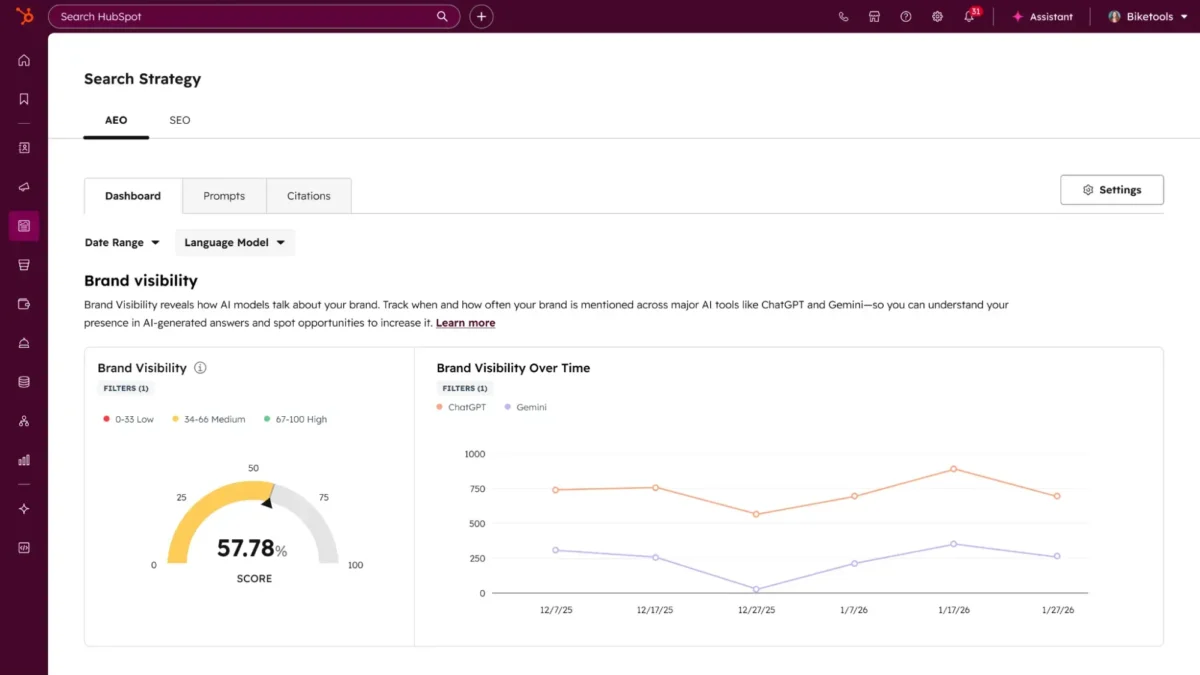
Evaluating the success of an AEO strategy requires continuous tracking of leading indicators rather than relying solely on lagging financial metrics. Key performance indicators include monitoring upward trends in brand visibility scores, tracking the frequency and authority of direct citations, and regularly updating the tracked prompt set to reflect shifts in buyer terminology. Ultimately, aligning these visibility metrics with attributed pipeline and closed revenue
transforms AEO from an experimental marketing tactic into a measurable, predictable driver of enterprise growth.