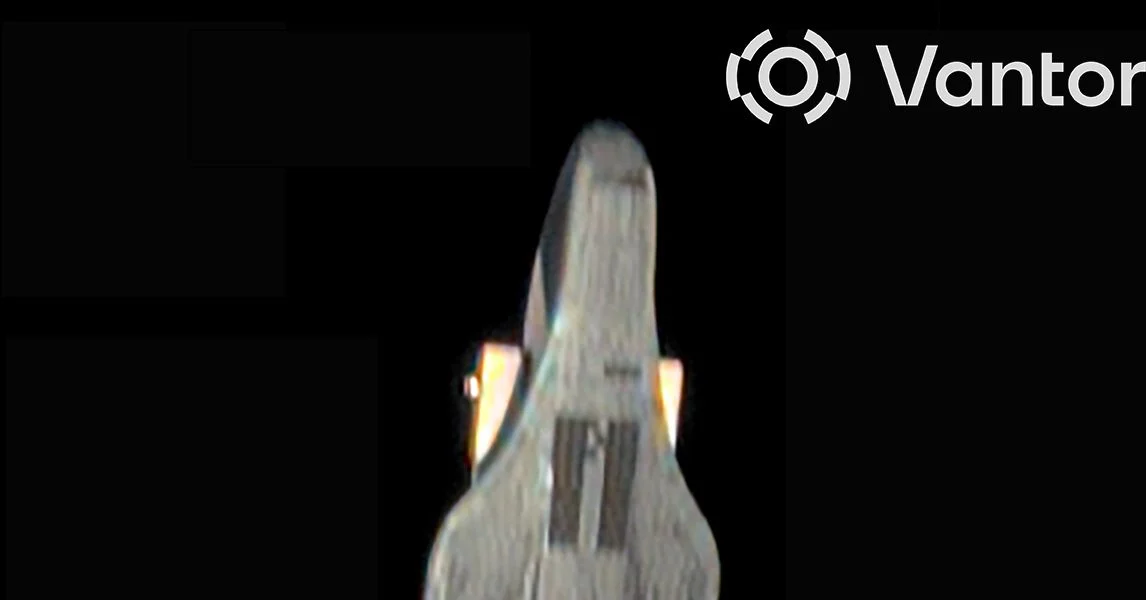
The veil of secrecy surrounding China’s advanced aerospace programs has suffered a significant breach, thanks to a rare combination of commercial technological innovation and military intelligence reporting. A winged, highly maneuverable Chinese spacecraft—bearing a striking resemblance to the United States Space Force’s clandestine X-37B spaceplane—was captured in sharp detail while in low-Earth orbit by a passing commercial imaging satellite. The photograph, long rumored within defense circles after being briefly referenced at a South Korean defense conference, was officially published by the Pentagon’s Defense Intelligence Agency (DIA) in an unclassified assessment examining escalating security challenges in the space domain.
For years, Beijing’s reusable experimental spacecraft has operated behind a wall of ambiguity, designated by state media only by its literal translation: Chongfu Shiyong Shiyan Hangtian Qi, or CSSHQ. While Western aviation analysts and intelligence observers frequently associate it with the historical moniker "Shenlong" stemming from early 2000s research initiatives, the physical realities of the vehicle have remained closely guarded. The newly unclassified Maxar (now Vantor) image definitively confirms what engineers and defense analysts long suspected: the structural configuration of the Chinese craft, complete with delta wings, dark thermal protection tiles, payload bay doors, and a rear-mounted solar array service module, closely mirrors the aerodynamic layout engineered by Boeing for the United States military.
The publication of this imagery marks a critical turning point in orbital transparency, shedding light on a secretive vessel that has completed multiple extended missions without public schedules or explicit mission profiles. As the global space race accelerates into an era characterized by proximity operations, counterspace technologies, and orbital militarization, the capabilities demonstrated by both Beijing and Washington underscore a fundamental shift in how nations project power beyond the stratosphere.
Anatomy of an Orbital Double: Design and Operational Parallels
The visual similarities between the Chinese spaceplane and the American X-37B are not merely superficial; they point toward a convergence of tactical requirements for reusable orbital platforms. Both vehicles are encapsulated inside the payload fairings of conventional launch vehicles, ascending vertically into the cosmos before operating as autonomous satellites. Upon the completion of their respective missions, both craft re-enter Earth’s atmosphere, utilizing their delta wings to glide through the upper layers before executing automated, runway-style horizontal landings.
Despite these foundational architectural similarities, notable operational differences define how the two nations utilize their respective spaceplanes. The U.S. Space Force currently maintains a rotational fleet of two X-37B vehicles managed by Boeing. These American craft have pushed the boundaries of endurance, with mission durations scaling upward. The longest continuous flight of an X-37B spanned an unprecedented two and a half years in orbit, during which it performed classified technology demonstrations, tested advanced materials, and even ventured into high-eccentricity orbits exceeding 24,000 miles before utilizing atmospheric aerobraking techniques to decelerate and return home.
Conversely, China’s spaceplane has thus far maintained a strict operational footprint within low-Earth orbit (LEO), typically cruising at altitudes of a few hundred miles. Since inaugurating the program in 2020, Beijing has launched four distinct missions, with durations progressively increasing from a few days to several months. The fourth known mission launched in February and remains actively deployed, continuing a pattern of rigorous testing that has captivated international space trackers and intelligence agencies alike.
What elevates the Chinese spaceplane from a simple reusable transport vehicle to a subject of intense geopolitical scrutiny is its demonstrated capacity for active orbital manipulation. According to meticulous open-source orbital tracking data compiled by astrophysicist Jonathan McDowell, the spacecraft currently in orbit executed a series of sophisticated proximity operations. Specifically, the vehicle released a sub-satellite payload in June, successfully recaptured or docked with it in July, and repeated the cycle in August and September. This capability—strongly implying the use of an onboard robotic manipulator arm or specialized grappling mechanism—demonstrates a level of dexterity in orbit that goes far beyond standard satellite deployment.
The Rise of Non-Earth Imaging and Commercial Intelligence
The acquisition of the high-resolution photograph by a commercial satellite highlights a revolutionary transition in national security and space domain awareness: non-Earth imaging (NEI). Traditionally, tracking orbital assets relied heavily on ground-based radar networks, optical telescopes peering upward from the surface, and heavily classified military reconnaissance payloads. Today, commercial entities operating high-resolution Earth-observation constellations are increasingly pivoting their powerful optics upward to capture imagery of objects crossing paths in the vacuum of space.
Vantor, formerly Maxar, operates a fleet of commercial imaging satellites designed primarily to survey terrain, infrastructure, and maritime activity across the globe for commercial clients as well as the U.S. military and intelligence community. However, the optical systems affixed to these satellites possess the clarity and tracking fidelity required to photograph passing spacecraft at extreme relative velocities. These encounters occur during fleeting, high-speed orbital intersections, demanding precise telemetry and rapid response times.
The DIA did not publicly disclose the precise parameters of the Maxar observation, such as the exact distance, timing, or orbital geometry involved. Nevertheless, the integration of commercial NEI into official intelligence assessments signifies a vital evolution in transparency. By leveraging commercial providers, defense analysts can corroborate state-sponsored intelligence without relying exclusively on classified national security payloads, democratizing space situational awareness and creating an unclassified evidentiary record of foreign space activities.
This commercial surveillance capability stands in stark contrast to active military interdiction tactics, such as those exhibited by Russian orbital assets. Earlier this month, Russian satellite Kosmos 2612 and a fleet of companion spacecraft colloquially tracked as "stalker satellites" engaged in deliberate proximity maneuvers, closing to distances of mere "tens of meters" from a commercial radar remote-sensing satellite owned by ICEYE, which provides crucial tactical reconnaissance to Ukraine. While Russian maneuvers represent active, intentional intercept operations, commercial NEI captures the passive, observational reality of modern orbital tracking.
Counterspace Technologies and the Specter of Orbital Warfare
The revelation of the Chinese spaceplane’s capabilities arrives as part of a broader, highly sobering assessment published in the DIA’s latest unclassified report on challenges to security in space. The document paints a comprehensive picture of an increasingly congested, contested, and weaponized orbital environment, wherein space is no longer viewed merely as a sanctuary for communication and scientific observation, but as a warfighting domain.
A central pillar of the DIA’s concern involves China’s methodical development of counterspace technologies designed to neutralize adversary assets. Among these, directed-energy weapons (DEWs) have emerged as a primary focus of Beijing’s military modernization. The intelligence assessment concludes that Chinese military planners view lasers as ideal counterspace systems because they offer the flexibility of either temporarily blinding or permanently disabling critical satellite infrastructure.
According to the DIA, China currently operates multiple ground-based laser installations of varying power outputs capable of disrupting, degrading, or damaging satellites operating in low-Earth orbit. More alarmingly, the intelligence community projects that by the late 2020s, Beijing could field space-based directed-energy systems alongside higher-powered ground infrastructure capable of projecting kinetic or optical threats into medium-Earth and geosynchronous orbits.
These directed-energy programs complement a long-standing kinetic testing portfolio. Over the past decade, China has demonstrated ground-based anti-satellite missile capabilities and achieved a historic milestone last year by conducting an orbital refueling operation in geosynchronous orbit—some 22,000 miles above the equator—a feat accomplished by no other nation outside of low-Earth orbit. Coupled with the experimental spaceplane’s grappling and deployment tests, these advancements point toward a formidable, multifaceted offensive and maintenance architecture in space.
The Global Arms Race in Space: U.S. and Russian Posture
As Beijing expands its operational scope, the United States and Russia are aggressively scaling their own orbital combat and inspection capabilities, effectively redrawing the strategic balance of power.
The United States military has taken unprecedented steps to institutionalize its defensive and offensive postures in orbit. Last month, Air Force Secretary Troy Meink officially confirmed that the Pentagon has deployed operational weapons in space, making the United States the first nation to publicly acknowledge possessing armed orbital capabilities. This move builds upon the Space Force’s ongoing deployment of inspector satellites in geosynchronous orbit—spacecraft designed to monitor, shadow, and evaluate foreign assets—alongside recent procurements of refuelable architectures intended to bypass the historic fuel constraints that once limited satellite maneuverability.
Meanwhile, Russian military programs continue to pursue aggressive counterspace doctrines. Beyond proximity-stalking operations targeting commercial assets like the ICEYE radar satellites, Moscow maintains the Nivelir program—a kinetic weapons system designed to launch projectiles from one satellite to deliberately impact and destroy another, a capability successfully simulated during a 2003 and subsequent 2020 orbital tests. Furthermore, U.S. intelligence agencies have raised persistent alarms regarding Russian ambitions to deploy a nuclear weapon in space, a move that would represent a catastrophic violation of the 1967 Outer Space Treaty and fundamentally destabilize global strategic stability.
Implications for the Future of International Space Law
The convergence of reusable spaceplanes, commercial espionage imaging, directed-energy weapons, and the explicit deployment of orbital armaments highlights a systemic failure of international legal frameworks to keep pace with technological reality. The Outer Space Treaty of 1967 prohibits the placement of weapons of mass destruction in orbit, but it remains remarkably silent on conventional weapons, proximity operations, robotic grapplers, and laser-dazzling systems.
As vehicles like China’s CSSHQ spaceplane and America’s X-37B continue to blur the line between civilian research and military utility, the potential for miscalculation grows exponentially. When an unannounced spacecraft can quietly ascend to low-Earth orbit, deploy sub-satellites, capture them with robotic arms, and evade detailed public tracking until commercial satellites happen to cross its path, the traditional metrics of deterrence and transparency are shattered.
The publication of the high-resolution Maxar photograph by the Defense Intelligence Agency is ultimately both a technological triumph and a warning. It demonstrates that in the modern era of space exploration, absolute stealth in low-Earth orbit is rapidly becoming an impossibility. Yet, as the heavens transform from a peaceful scientific frontier into an active theater of geopolitical rivalry, the visibility provided by commercial satellites serves as a stark reminder of the fragile peace currently governing the final frontier.