The widespread implementation of artificial intelligence within modern enterprise environments is increasingly being characterized by a disconnect between executive expectations and operational reality. Much like the digital transformation wave of the mid-2010s, organizations are currently treating AI as a technological procurement challenge rather than a fundamental organizational shift. Historical data from the previous decade suggests that this approach—prioritizing software deployment over cultural integration—leads to diminished return on investment, employee burnout, and the rise of unmonitored "shadow" technology systems.
A Decade of Déjà Vu: The Digital Adaptation Context
Between 2010 and 2015, the business world was defined by the mandate for "digital transformation." Companies raced to replace legacy infrastructure with cloud-based CRM systems, mobile-first web applications, and internal content management systems. However, a 2016 report by McKinsey & Company revealed that nearly 70% of digital transformation initiatives failed to achieve their stated goals. The primary cited reason was not technical failure, but the inability of organizations to foster internal adoption and cultural alignment.
Paul Boag, in his 2014 treatise Digital Adaptation, identified that the core failure of this era was the "technological-first" mindset. Organizations deployed sophisticated tools without considering the procedural knowledge of their workforce. Today, the rollout of generative AI tools—such as Microsoft’s Copilot Studio or custom LLM integrations—follows an identical trajectory. Senior management frequently views the purchase of enterprise-wide licenses as the completion of the transition, neglecting the necessary human-centric training and incentive structures required for successful integration.
The Human Capital Paradox: Why Employees Resist AI
The friction in AI adoption is exacerbated by a fundamental misalignment of incentives. For senior leadership, the primary value proposition of AI is efficiency and productivity gains—the ability to produce more output with the same headcount. From the perspective of the average employee, however, this efficiency gain is often perceived as an existential threat.
In a climate of widespread news regarding job displacement due to automation, staff members are understandably cautious about embracing tools that may facilitate their own obsolescence. Unlike previous technological shifts, where new tools served as force multipliers for existing roles, AI is perceived as a substitute. Without a clear narrative from leadership regarding how AI will enhance, rather than replace, human labor, the workforce remains in a defensive posture.
Data from recent workplace surveys indicates that when employees view technology as a threat to their job security, the rate of "malicious compliance" or total rejection increases. To counter this, organizational psychologists suggest that companies must frame AI adoption as an opportunity to offload repetitive, high-friction tasks, thereby freeing up time for high-value creative and strategic work. Yet, few organizations have established formal incentive programs—such as adjusted performance KPIs or skill-based compensation increases—to reward the adoption of these new workflows.
The Rise of Shadow AI: A Symptom of Institutional Rigidity
The history of corporate IT is littered with the remnants of restrictive policies that failed to suppress user demand. During the digital transformation era, the "Shadow IT" phenomenon—where employees bypassed official channels to use tools like Dropbox or unauthorized communication apps—became a major security and compliance concern.
The current landscape mirrors this precisely. When corporate-approved AI tools are constrained by overly rigid governance frameworks or lack the specific functionality required for specialized roles, employees turn to personal, unvetted AI accounts. This "Shadow AI" creates significant enterprise risk. Sensitive corporate data, proprietary code, and confidential strategy documents are frequently uploaded to public-facing LLMs that do not have enterprise-grade data privacy protections.
Security analysts argue that the impulse to block these tools is fundamentally flawed. Instead of restricting access, leading organizations are beginning to view the usage patterns of Shadow AI as a roadmap for what employees actually need. If a department is consistently utilizing a third-party AI tool to perform a specific research task, it indicates a gap in the official technology stack that the enterprise should address by providing a secure, internal equivalent.
Chronology of Corporate AI Implementation
- 2022 (Late): The public release of ChatGPT triggers a global interest in generative AI for business.
- 2023 (Mid): Large enterprises rush to sign enterprise licensing agreements with major AI vendors, prioritizing speed over integration strategy.
- 2024 (Early): The "Implementation Gap" emerges. IT departments report low utilization rates despite widespread software deployment.
- 2024 (Late): Increased focus on "AI Governance" and the rise of internal AI steering committees, which frequently act as bottlenecks for innovation.
Rethinking Governance: The "Safe to Fail" Environment
The most significant barrier to AI adoption remains the culture of fear surrounding failure. Traditional corporate environments often penalize mistakes in annual performance reviews. However, the nature of AI—which is probabilistic rather than deterministic—guarantees that errors will occur as staff learn to write effective prompts and verify outputs.
If a company mandates AI use but maintains zero-tolerance policies for errors, employees will default to manual, legacy processes to protect their professional standing. To bridge this gap, organizations require a shift in governance. Rather than the exhaustive, thousand-page policy manuals that characterized the early web-compliance era, modern digital policy should be distilled into a concise set of principles.

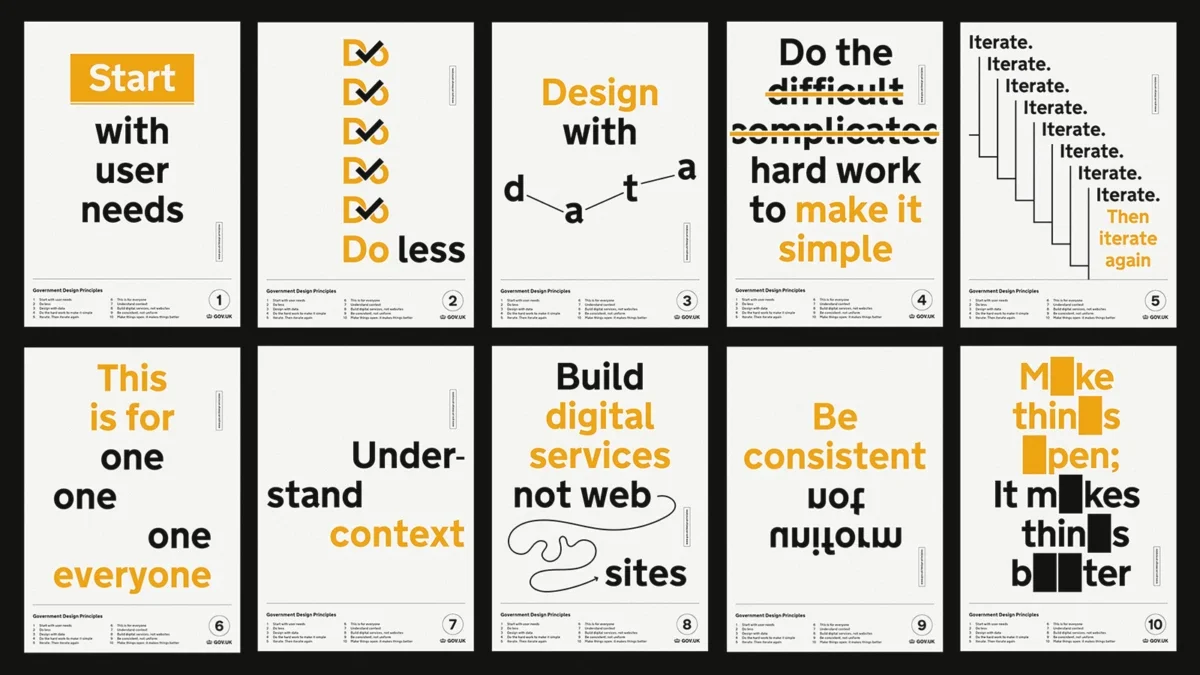
Following the example of the UK government’s "Design Principles," organizations are finding success by focusing on outcomes rather than rigid process control. By fostering a "safe to fail" environment—where employees are encouraged to share their experimental findings, including what went wrong—companies can build a community of practice.
The Path Forward: Enthusiasm over Mandates
The most effective strategy for widespread AI adoption is social proof. Data consistently shows that employees are more likely to adopt a new technology if they see a peer in a similar role using it effectively. Organizations that identify their internal "AI enthusiasts"—those who are already experimenting with the technology—and provide them with a platform to demonstrate their workflows to the rest of the company, see significantly higher adoption rates than those that rely on top-down, memo-based directives.
This peer-to-peer approach mimics the internal conferences and "hackathons" that proved successful in the late 2010s. By decentralizing the learning process and allowing for a period of controlled chaos, organizations can discover the most practical, high-impact use cases for their specific industry.
Broader Implications and Strategic Analysis
The failure to adequately manage the transition to AI will result in more than just wasted software licensing fees. Organizations that fail to integrate AI effectively will face a "competitiveness deficit." As the cost of intelligence decreases, companies that have successfully integrated AI into their internal workflows will achieve significantly higher operational margins and faster time-to-market compared to those mired in legacy processes.
Ultimately, the lesson of the past two decades is clear: technology is a facilitator, not a strategy. The companies that emerge as leaders in the AI era will be those that view the technology as a catalyst for a broader, human-centered organizational evolution. By prioritizing transparency, incentivizing experimentation, and replacing rigid oversight with trust-based governance, firms can move beyond the current farce of AI adoption and into a new era of genuine, sustainable innovation.