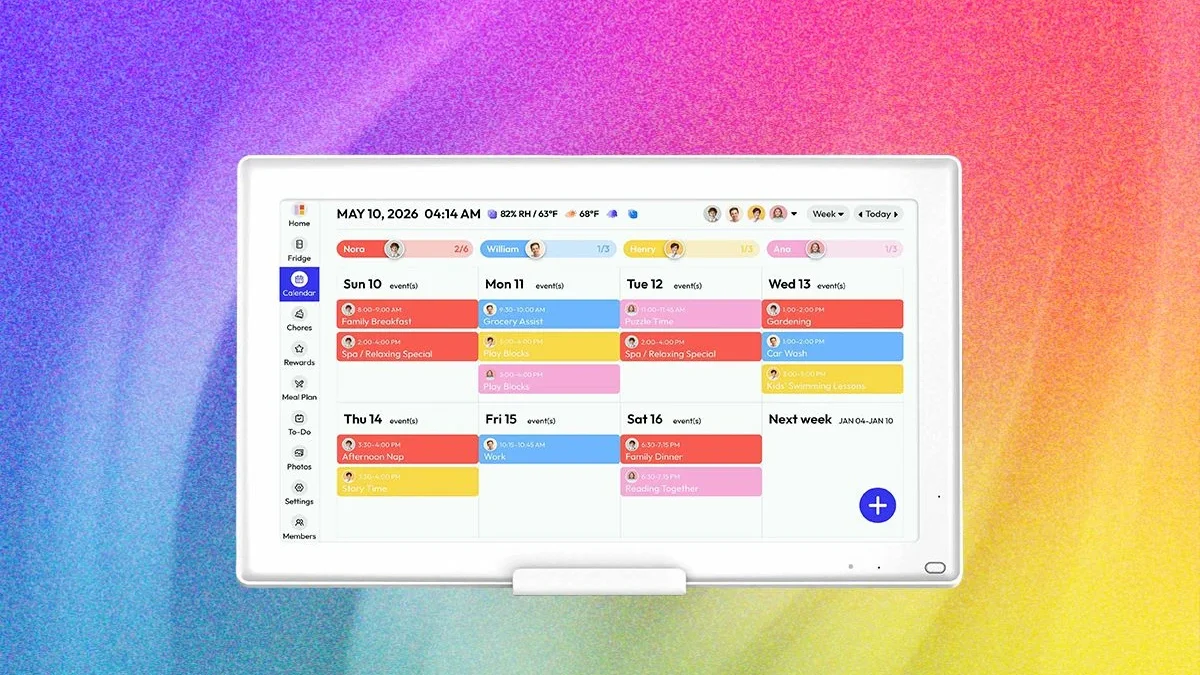
As modern households increasingly transition from traditional paper planners to digital organizational ecosystems, the market for smart home hardware has expanded rapidly. Among the latest innovations gaining traction among consumers and tech reviewers alike are large-screen digital wall calendars. These devices consolidate multiple disparate scheduling platforms—such as Google Calendar, Apple’s iCal, and Microsoft Outlook—into a single, centralized physical display. While early iterations of these connected screens often relied on ongoing subscription fees to unlock premium features, recent market shifts and hardware releases have introduced competitive, subscription-free alternatives that are drawing significant attention from consumers seeking to streamline family logistics without incurring recurring operational costs.
The Evolution and Utility of Connected Family Dashboards
The proliferation of digital calendars marks a distinct evolution from standard smart displays, such as Amazon Echo Shows or Google Nest Hubs. While general-purpose smart displays prioritize multimedia streaming, video calling, and voice-activated queries, dedicated digital calendars are purpose-built for comprehensive household administration. By synchronizing multiple accounts across family members, these hardware solutions provide an overarching view of complex schedules—ranging from professional commitments and school semesters to specialized tracking for extracurricular activities and medical milestones.
Beyond chronological visualization, contemporary digital calendars frequently double as multifaceted family hubs. Integrated software packages often include modular tools for chore management, task assignment, reward tracking, and meal planning. Certain advanced models even link completed household chores directly to digital allowances or point systems, gamifying domestic responsibilities for children. Consequently, these hardware units have transformed from simple passive displays into active command centers designed to mitigate the mental load associated with modern family life.
Market Dynamics and the Subscription Model Debate
Despite the clear utility of centralized scheduling displays, market segmentation has largely been driven by software monetization strategies. Established industry leaders, such as the Skylight Calendar, have captured substantial market share by offering polished user interfaces and robust companion mobile applications. However, certain high-value features—including dynamic photo screensavers and advanced meal-planning tools—are frequently locked behind recurring monthly or annual paywalls. For budget-conscious consumers, these ongoing subscription fees can significantly increase the total cost of ownership over the lifespan of the device.
In response to consumer demand for cost-predictability, alternative hardware manufacturers have entered the market with hardware-as-a-product models that eschew mandatory subscriptions. Brands like Everblog have positioned themselves as direct competitors by offering comparable software ecosystems—including cross-platform calendar synchronization, family profile management, and chore tracking—entirely free of recurring fees. Although some trade-offs exist, such as slightly less streamlined media uploading processes through companion apps, the elimination of subscription requirements represents a significant value proposition for households looking to minimize monthly expenses.
Product Spotlight: The Everblog HomeCal 21.5-Inch Display
A prominent example of this subscription-free shift is the Everblog HomeCal 21.5-inch calendar, which has recently seen notable retail discounting. Featuring a high-definition touchscreen display comparable in size and resolution to industry benchmarks, the HomeCal integrates standard calendar applications alongside dedicated tabs for to-do lists, task management, and meal preparation.
Setup is facilitated through a centralized mobile application that allows administrators to configure individual user profiles and sync external calendars effortlessly. While reviewers have noted minor friction points—such as the application’s single-image upload restriction for photo screensavers compared to batch-upload competitors—the absence of a paywall for core features has resonated strongly within the consumer tech sector.
Physical installation versatility further enhances the device’s market appeal. The HomeCal is shipped with standard wall-mounting hardware and features a flat-bottomed chassis designed to support tabletop placement. To address stability concerns inherent to large-format displays, manufacturers offer dedicated accessories, including sturdy desktop stands and customizable wooden frames designed to integrate the technology seamlessly into varied home interior aesthetics. Recent promotional pricing—reducing the hardware cost by up to $100 on major e-commerce platforms—has further amplified consumer interest ahead of peak holiday shopping periods.
Industry Implications and Future Outlook
The growing popularity of subscription-free smart home hardware highlights a broader consumer fatigue regarding recurring software service fees across the technology sector. As households grapple with subscription models for streaming services, software suites, and cloud storage, hardware manufacturers that offer complete, out-of-the-box functionality without ongoing overhead are finding a receptive audience.
Industry analysts suggest that the success of subscription-free digital calendars may compel legacy brands to reevaluate their pricing architectures. If consumer preference continues to tilt toward upfront purchasing models over continuous software monetization, established market leaders may be forced to unbundle premium features or introduce lower-tier pricing models to remain competitive.
At the same time, ongoing technological developments in the sector point toward further integration of artificial intelligence and voice-recognition capabilities. While current-generation digital calendars largely rely on manual touchscreen navigation or smartphone application controls due to hardware constraints and privacy considerations, future iterations are expected to incorporate more sophisticated natural language processing tools. As these devices continue to evolve, their role within the connected home ecosystem is expected to expand, solidifying their status as essential infrastructure for domestic organization and time management.