Berlin-headquartered software infrastructure startup Restate has successfully closed a $20 million Series A funding round, bringing its total capital raised to $27 million since its inception. The latest financing was spearheaded by prominent European venture capital firm Singular, with strategic participation from US-based Redpoint Ventures and Capital One Ventures. The fresh capital infusion is earmarked for accelerating product development, scaling engineering operations, and driving aggressive market expansion into the United States, which includes the establishment of a new commercial hub in San Francisco.
Restate operates in the deeply technical, often invisible layer of software development that industry insiders refer to as backend "plumbing." Founded in 2024 by a team of veteran systems architects and distributed computing experts, the company addresses one of the most persistent and costly bottlenecks in modern software engineering: system fragility. Specifically, Restate provides a durable execution framework designed to ensure that modern distributed applications, backend services, and the rapidly expanding ecosystem of artificial intelligence (AI) agents can execute complex workflows without crashing, failing, or losing state.
The Evolution of Distributed Backend Infrastructure
To understand the significance of Restate’s technology, one must examine the fundamental evolution of enterprise software architecture over the past two decades. Traditional software applications were largely monolithic, running on single servers where state management was relatively straightforward. If a process failed, recovery mechanisms were localized and predictable.
However, the rapid migration to cloud computing, microservices, and distributed architectures fundamentally transformed how applications are built. Modern enterprise systems are composed of hundreds—sometimes thousands—of disparate services communicating over networks, processing real-time data streams, and interacting with external Application Programming Interfaces (APIs). While this modular approach offers unprecedented scalability and agility, it introduces massive complexity regarding reliability.
When a network blips, a server restarts, or an external API times out mid-transaction, distributed systems frequently fail in unpredictable ways. Processes hang, data becomes corrupted, and state is lost, requiring complex, custom-built error-handling code written by developers. This defensive programming consumes countless engineering hours that could otherwise be spent on core product features.
The advent of generative AI and autonomous AI agents has exacerbated this architectural challenge exponentially. Unlike traditional software routines that execute linear, deterministic paths, AI agents are inherently stochastic. They make decisions dynamically, invoke multiple tools, execute multi-step reasoning workflows, and interact continuously with external environments over extended periods. If an AI agent crashes halfway through a complex multi-step data retrieval and synthesis task, recovering its exact state and resuming execution without duplicating actions or corrupting data is an immensely difficult engineering feat.
Restate’s core value proposition is to automate this reliability layer, making durability an inherent property of the underlying infrastructure rather than an afterthought handled by application developers.
Founders with Deep Open-Source Pedigree
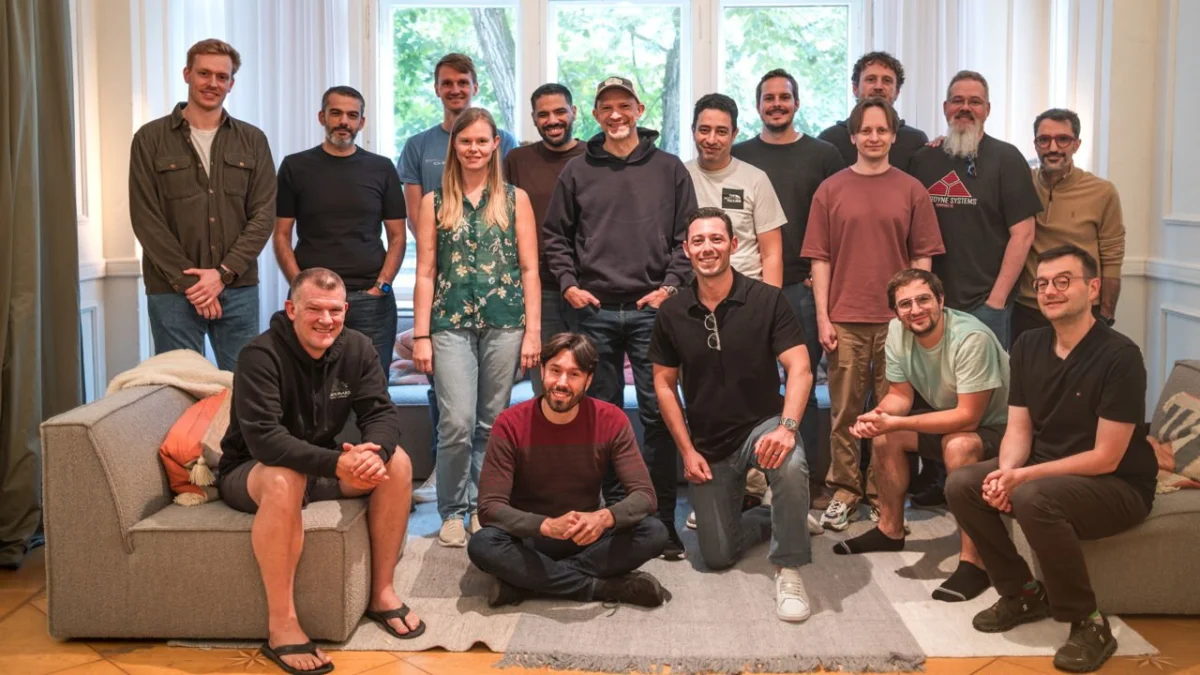
Restate does not emerge from a vacuum; its founding team possesses a distinguished pedigree in distributed systems engineering. The company was founded in 2024 by Stephan Ewen, who serves as Chief Executive Officer, alongside co-founders Igal Shilman, Till Rohrmann, and Ahmed Forghal.
Ewen, Shilman, and Rohrmann are widely recognized in the enterprise technology community as the principal creators of Apache Flink, a globally renowned, open-source stream-processing framework. Originally developed out of academic research at the Technische Universität Berlin, Apache Flink became a foundational technology underpinning real-time data processing across the global banking sector, high-frequency financial trading platforms, telecommunications networks, streaming media giants like Netflix, and massive software-as-a-service (SaaS) enterprises. Flink’s ability to process massive volumes of data with low latency and high fault tolerance set a gold standard in stream processing.
Joining these distributed systems pioneers is Ahmed Forghal, a seasoned executive with operational leadership experience scaling hyper-growth technology companies, including prominent roles at Stripe and Meta. This unique blend of deep-tech systems research and commercial scaling expertise has positioned Restate to capture significant enterprise attention rapidly. Despite being founded only recently, the company reports that its software is already deployed by hundreds of organizations, including Fortune 500 enterprises that rely on its framework for mission-critical operations.
Addressing the Pain Points of AI Agents and Enterprise Workflows
The rapid enterprise adoption of AI agents has created an urgent demand for infrastructure that can handle the unique failure modes of autonomous software. Enterprises are moving beyond simple chatbot interfaces toward autonomous agents capable of executing complex business workflows—such as automated customer onboarding, supply chain re-routing, financial reconciliation, and dynamic fraud investigation.
These workflows often span minutes, hours, or even days, requiring persistent state management across multiple third-party service calls. If a downstream database drops a connection while an AI agent is orchestrating a multi-step financial transaction, the consequences can range from minor user frustration to severe financial and regulatory compliance failures.
Stephan Ewen, CEO and co-founder of Restate, articulated the philosophical shift required in modern software engineering during the announcement of the Series A funding.
"Durable execution solved an important problem: it made individual processes reliable," Ewen explained. "But software is increasingly made up of services, agents, workflows, and state that all need to stay reliable as they interact. We believe durability has to become a property of the infrastructure itself."
By embedding durability directly into the execution layer, Restate allows developers to write code as if failures do not happen, while the runtime environment automatically handles retries, state persistence, checkpointing, and failure recovery behind the scenes. This architectural approach drastically simplifies codebases, reduces technical debt, and accelerates time-to-market for engineering teams building complex backend systems and AI-driven applications.
Strategic Allocation of Capital and US Expansion
The newly secured $20 million in Series A funding will be deployed strategically across two primary vectors: intensive product research and development, and geographic expansion into the North American market.
While Restate maintains its foundational roots in Berlin, Germany—tapping into Europe’s robust pool of deep-tech engineering talent—the United States remains the primary epicenter for enterprise AI adoption and software infrastructure innovation. To capitalize on this dynamic, the company is establishing a dedicated commercial hub in San Francisco. This strategic presence will allow Restate to work closely with major US technology enterprises, foster deeper integration with cloud providers and AI ecosystem partners, and recruit top-tier sales, marketing, and developer relations talent.
The investor syndicate backing the round brings significant strategic value alongside capital. Singular, the lead European venture capital firm that spearheaded the Series A, is well-known for backing category-defining enterprise software and deep-tech companies across Europe. Meanwhile, the inclusion of Redpoint Ventures—a premier Silicon Valley venture capital firm with a long history of investing in foundational infrastructure and developer tooling—provides Restate with deep US market connections and operational guidance.
Furthermore, the participation of Capital One Ventures highlights the immense relevance of Restate’s technology to heavily regulated, data-intensive industries such as financial services. Banks and financial institutions operate under strict regulatory mandates regarding data integrity, system uptime, and transaction reliability. Technologies that guarantee deterministic state recovery in distributed environments are of paramount importance to financial institutions modernizing their legacy infrastructures to support real-time payments and AI-driven automation.
Market Implications and the Future of Backend Infrastructure
The success of Restate’s funding round reflects a broader macroeconomic and technological shift within the venture capital and enterprise software landscapes. Following a period of market correction in 2022 and 2023, venture capitalists have increasingly focused funding on foundational infrastructure plays that solve critical, undeniable enterprise pain points, rather than speculative consumer applications or superficial wrapper software.
As artificial intelligence transitions from experimental proof-of-concept phases into core production deployments across global enterprises, the fragility of underlying software plumbing has emerged as a primary bottleneck. Organizations are discovering that deploying an AI model is relatively easy; ensuring that the model operates reliably within a complex, distributed corporate IT ecosystem without causing silent data corruption or cascading system failures is exceptionally difficult.
Infrastructure startups like Restate are positioning themselves as the picks-and-shovels providers of the generative AI gold rush. By abstracting away the immense complexity of state management, fault tolerance, and asynchronous messaging, Restate enables developers to focus entirely on business logic and agentic capabilities.
Industry analysts suggest that over the next several years, durable execution frameworks will transition from specialized developer tools into standard components of modern cloud-native architecture. As microservices multiply and autonomous AI agents become standard corporate employees handling sensitive digital workflows, the demand for infrastructure that guarantees absolute state consistency and crash-resilience will only accelerate.
With $27 million in total funding, an elite founding team possessing a proven track record in open-source infrastructure creation, and strong validation from both European and American investors, Restate is exceptionally well-positioned to navigate this market transition. As the company scales its engineering output and establishes its San Francisco footprint, the broader software development community will be watching closely to see how effectively durable execution infrastructure can tame the wild frontier of autonomous AI agents and distributed backend systems.