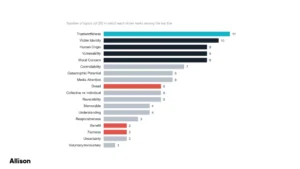
The rapid integration of generative AI into search engines and consumer behavior has fundamentally altered the digital landscape, yet contrary to predictions of its demise, professional content marketing is currently undergoing a structural evolution that demands higher standards of quality and integration. As AI answer engines begin to serve as the primary intermediary between corporate messaging and target audiences, the traditional silos of marketing—owned, earned, shared, and paid media—are collapsing into a singular, interconnected ecosystem. To remain relevant in an era dominated by large language models (LLMs), organizations are increasingly pivoting toward a strategy of visibility engineering, where the primary objective is to earn the trust of both human readers and algorithmic gatekeepers.
The emergence of AI-driven search has effectively ended the era of volume-based content production. In the early stages of the generative AI boom, which spanned from late 2022 through 2024, many organizations utilized automated tools to flood the internet with low-quality, predictable, and often inaccurate content. This phase, often characterized by a desperate attempt to maintain search engine rankings through sheer output, has largely concluded. As consumers and search algorithms alike have grown more adept at identifying generic content, the market is shifting toward a second phase defined by authority, corroboration, and structural clarity.
The Evolution of Digital Trust: The PESO Model in the Age of AI
The foundational challenge for modern brands is no longer just attracting human attention, but providing the necessary data architecture for AI agents to determine brand reliability. According to the PESO Model—a framework developed by Gini Dietrich that categorizes communication into Paid, Earned, Shared, and Owned channels—credibility is established through cross-channel consistency.
AI agents do not "read" websites in the traditional sense of browsing; they ingest vast datasets to construct probabilistic answers. When a brand’s website, press releases, social media presence, and paid advertisements convey conflicting information, AI agents flag these discrepancies as noise, effectively discounting the brand’s authority. This technical reality has necessitated a return to fundamental storytelling, where the "who, what, and why" of a brand must be articulated with absolute precision across every touchpoint.
Strategic Pillars for AI-Compatible Content
To navigate this new environment, organizations are restructuring their content operations around four core pillars designed to satisfy the rigorous verification processes of modern LLMs.
1. Precision Copywriting and Anchor Hubs
The efficacy of an organization’s content is now measured by its "answer-first" capability. AI search engines prioritize content that directly addresses user queries within the first few sentences of a page. This requires the development of "anchor hubs"—centralized, high-authority web pages that serve as the definitive source of truth for a specific topic or service. These hubs must be engineered for discoverability, providing clear, concise definitions and solutions that allow AI crawlers to index the information with high confidence.
2. The Renaissance of Earned Media
Earned media—coverage by third-party journalists and reputable industry publications—has reclaimed its position as the most critical signal of brand trust. While internal content provides the primary data, earned media provides the corroboration that AI systems require to validate that data. Data from recent industry reports suggest that LLMs are increasingly prioritizing information corroborated by niche trade publications over generalist news sites. By securing coverage in industry-specific outlets, brands provide AI agents with the external verification needed to rank them as a primary source for specialized information.
3. Shared Media as an Indexing Signal
Social media platforms are no longer merely channels for engagement; they are vital nodes for AI data collection. The performance of a brand on social media—measured by the depth of conversation and the authority of those participating in the discourse—serves as a proxy for relevance. To optimize for AI, brands must move beyond superficial metrics like vanity likes and focus on driving substantial discussions that provide context to their core brand stories.
4. Integrated Paid Media Strategies
The traditional approach of bidding on keywords to circumvent organic search results is facing diminishing returns. As AI search interfaces increasingly summarize answers without directing traffic to specific landing pages, the role of paid media has shifted. Paid campaigns are no longer solely about driving clicks; they are now essential for signaling brand presence and reinforcing the narratives established through owned and earned channels. An integrated approach ensures that when an AI system encounters a paid ad, the information presented aligns seamlessly with the brand’s broader ecosystem, thereby reinforcing trust rather than appearing as a disparate or intrusive promotion.
Data and Market Implications
The industry shift is reflected in the labor market. Recent data from the Wall Street Journal indicates a surge in demand for professional storytellers—marketers who possess the capability to synthesize complex brand identities into clear, consistent, and narrative-driven content. This trend suggests that the technical aspect of SEO is becoming secondary to the communicative quality of the brand’s narrative.
Furthermore, the risk of "inconsistency penalties" has become a major concern for global enterprises. In a decentralized marketing department, it is common for the website, the corporate blog, and the social media team to utilize slightly different messaging architectures. In the pre-AI era, this variation was considered standard brand expression. In the current environment, it is a liability. AI agents interpret these inconsistencies as a lack of organizational stability, which leads to lower visibility in generative search results.
Moving Toward a Unified Communication Standard
The implications for the future of marketing are clear: brands that fail to unify their messaging will be excluded from the "answer" phase of the customer journey. As AI continues to act as a gatekeeper between the content and the consumer, the competitive advantage will lie with those organizations that can successfully translate their value propositions into a language that AI systems can parse, verify, and ultimately trust.
This transition marks the end of "automated content" as a viable strategy and the beginning of a era where human-led storytelling is more valuable than ever. To succeed, marketers must treat every piece of content—from a 300-word blog post to a major news release—as a foundational element of a larger, verifiable identity.
The task ahead is not merely to create more content, but to create better, more synchronized content. For organizations, this means conducting regular audits of their digital footprint to ensure that the message delivered on an owned blog is identical in spirit and fact to the message corroborated by a trade publication and amplified on social platforms. As AI continues to refine its ability to act as a curator of human knowledge, the brands that win will be those that provide the clearest, most consistent, and most trustworthy answers to the questions their customers are asking. The "monkey in the middle"—the AI agent—has effectively raised the bar for professional communication, forcing the industry to return to the foundational principles of clarity, authority, and narrative integrity.