The contemporary American media landscape is navigating a turbulent period defined by intense political friction, sweeping corporate consolidation, and evolving journalistic storytelling formats. Recent developments have highlighted the fragility of institutional protections for reporters, the ongoing debate over editorial independence in massive media conglomerates, and the complex ethical responsibilities behind true-crime investigative journalism. Across multiple fronts, news organizations, legal bodies, and individual reporters are grappling with systemic challenges that threaten to reshape how news is gathered, vetted, and presented to the public.
White House Press Corps Unity and the Battle for Access
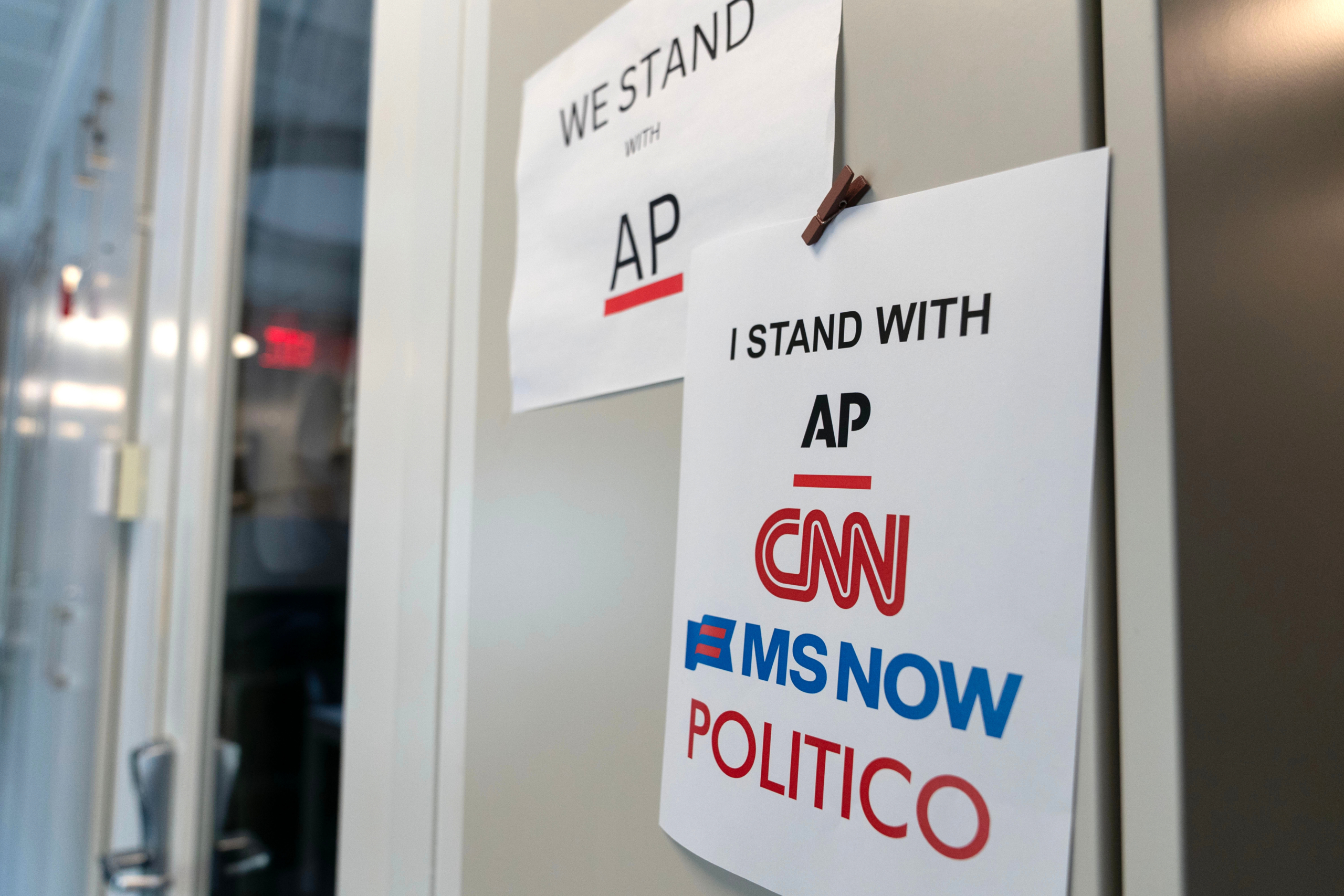
The relationship between the executive branch and the White House press corps reached a critical inflection point following an aggressive series of actions by the Trump administration targeting specific news organizations. The tensions escalated when President Trump officially banned CNN, MS Now, and Politico from entering the White House complex, citing deep objections to their coverage.
In response to the administration’s actions, the White House Correspondents’ Association (WHCA) issued a robust defense of press freedoms. Jacqui Heinrich, a Fox News correspondent and president of the WHCA, emphasized the constitutional protections governing the press, stating that the government cannot interfere with independent reporting.
The institutional pushback extended far beyond statements. In an unprecedented display of professional solidarity, network television pool members—including ABC, CBS, Fox News, and NBC—collectively declined to backfill CNN’s position in the reporting rotation, effectively suspending standard television coverage of White House daily operations and presidential travel. Historical accounts from veteran journalists underscore the magnitude of the decision; Peter Baker, chief White House correspondent for the New York Times, noted that for the first time in his thirty-year career covering the executive branch, a sitting president’s daily actions would not be tracked by a regular network television camera crew.
Additional outlets quickly mobilized in support. National Public Radio (NPR) announced the suspension of its use of audio from White House events, while major print publications, including the New York Times and the Washington Post, joined prominent photo agencies in withholding event photographs. A unified open letter organized by the Committee to Protect Journalists and endorsed by twenty-eight major newsrooms further condemned any government attempts to restrict journalistic access.
Legal challenges moved in parallel with the newsroom blackouts. The affected networks filed a federal lawsuit challenging the constitutionality of the ban, drawing support from an amicus brief signed by forty-nine separate media organizations. Following a court hearing, a federal judge issued a temporary restraining order mandating the restoration of press credentials within a fourteen-day window, signaling that the administration’s restrictions likely violated the First Amendment. Despite temporary chaos at the White House gates as officials initially resisted compliance, reporters eventually regained entry, though certain restrictions on high-profile evening events persisted. Legal experts anticipate prolonged appeals as the administration continues to contest the judicial ruling.
Corporate Consolidation and the Future of CNN
While political battles over press access unfold in Washington, profound structural changes are reshaping the business side of journalism. The regulatory landscape shifted significantly following the finalization of a settlement between state attorneys general—led by California’s Rob Bonta—and Paramount regarding a high-stakes antitrust lawsuit. The resulting merger agreement cleared the path for a massive corporate consolidation, placing a broad portfolio of major entertainment and news properties, including CNN and CBS, under the control of a single corporate entity managed by the Ellison family.
The merger has triggered widespread alarm among press advocates, media analysts, and newsroom insiders over the potential erosion of editorial independence. Concerns are amplified by the Ellison family’s reported political alignments and observed managerial shifts at CBS News following previous acquisitions. During the litigation process, several state attorneys general voiced frustration with the ultimate terms of the settlement. Connecticut Attorney General William Tong publicly stated that he had pushed for a completely independent spin-off of CNN, completely untethered from the broader corporate parent, expressing strong reservations about how the Ellisons have historically managed network news operations.
To mitigate criticism, the merger framework includes provisions for an "Editorial Independence Board." Composed of five established journalists, each possessing at least ten years of industry experience, the board is tasked with resolving disputes concerning alleged reporting bias or failures to meet fairness standards. The structural guidelines specify that no more than two members may share political party affiliations. However, governance skeptics have immediately challenged the board’s credibility, noting that its members will be appointed directly by the combined Paramount-Warner Bros. board of directors, chaired by Chief Executive David Ellison.
Industry leaders and journalists have sharply criticized the oversight mechanism as performative rather than protective. Prominent media figures, including CNN contributor Kara Swisher and Free Press co-chief executive Jessica J. González, publicly denounced the arrangement, warning that a corporate-appointed board cannot effectively shield newsrooms from political and commercial pressure. Internal staff memos and anonymous disclosures from CNN and CBS newsrooms describe a pervasive atmosphere of unease, particularly regarding speculation over future leadership structures and the potential integration of editorial oversight methods that critics argue have already compromised rigorous investigative journalism elsewhere in the corporate portfolio.
The Ethics and Evolution of True-Crime Investigative Journalism

Away from the pressures of corporate boardrooms and political press briefings, long-form investigative journalism continues to drive significant legal and cultural revelations. A notable example is explored in the HBO documentary series A Killer Story, which chronicles the multi-year investigative efforts surrounding the wrongful conviction of Dana Chandler. Chandler had been convicted in 2002 for the double homicide of her ex-husband and his girlfriend in Topeka, Kansas, before the Kansas Supreme Court unanimously overturned the conviction.
The investigative journey began in 2017 when Joe Sexton, then a reporter for ProPublica, received an unsolicited email tip from Eileen Umbehr, a Kansas resident and true-crime researcher who had dedicated years to examining the case files alongside her husband, Keen. Initially dismissing the correspondence, Sexton reconsidered after receiving notification of the state supreme court’s unanimous decision to vacate the conviction due to deep-seated judicial and investigative flaws.
The ensuing collaboration resulted in a six-year reporting project that culminated in a three-part documentary series. Beyond highlighting the specific miscarriage of justice in the Chandler case, the project serves as a broader commentary on the modern public obsession with true-crime narratives. In interviews reflecting on the project, Sexton noted the complex ethical landscape surrounding the genre, questioning whether society’s insatiable appetite for true-crime media stems from a healthy pursuit of accountability or an exploitative consumption of tragedy. The series stands as a testament to the tenacity of dedicated local advocates and the vital role that rigorous, patient investigative journalism plays in correcting systemic failures within the American criminal justice system.
Implications for the Broader Media Ecosystem
The convergence of these events underscores a critical juncture for the Fourth Estate. From the physical preservation of press access at the White House to the preservation of editorial integrity amid massive corporate consolidation, journalists and media institutions face existential challenges on multiple fronts. At the same time, the enduring power of investigative reporting to rectify systemic injustices demonstrates the irreplaceable value of independent journalism in holding power to account. As legal appeals proceed, corporate restructuring takes effect, and storytelling formats evolve, the resilience of the global news ecosystem will depend heavily on collective solidarity, institutional vigilance, and an unwavering commitment to factual accuracy.