For the modern high-achieving student, the traditional value proposition of higher education has entered a period of unprecedented scrutiny. With tuition costs at elite private institutions approaching half a million dollars for a four-year degree, coupled with the rapid disruption of entry-level career paths by artificial intelligence, the conventional academic pipeline is facing a crisis of confidence. In the technology sector—the industry currently driving global economic innovation—a cultural shift is taking hold that prioritizes tangible output and "proof of work" over the prestige of a diploma. On Tuesday, Andreessen Horowitz (a16z), the powerhouse venture capital firm, signaled a significant escalation in this shift by unveiling the A16z Academy, a for-profit educational initiative designed to serve as an alternative to the traditional university experience.
The launch of the Academy represents more than just a boutique training program; it is an attempt to disrupt a $2 trillion higher education sector by applying the lean, high-velocity principles of Silicon Valley. Backed by $42 million in funding from a16z and a consortium of individual investors, the program is positioned to identify and cultivate what co-founder Gagan Biyani calls "pre-idea founders."
The Genesis of the A16z Academy
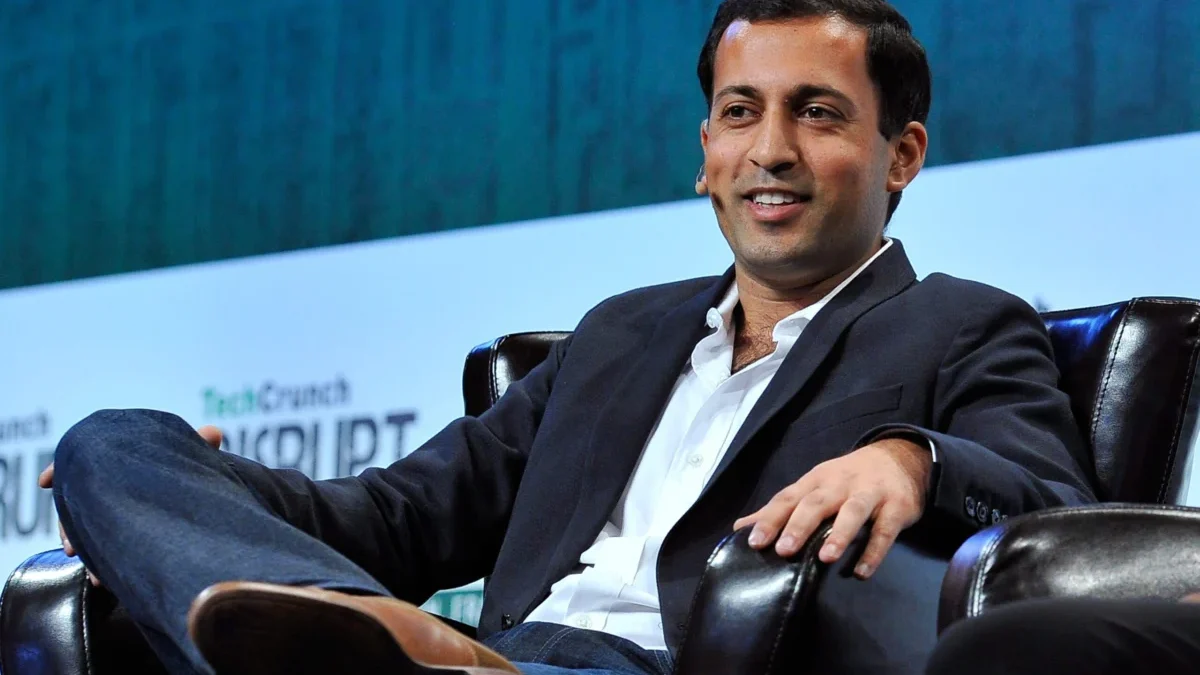
Gagan Biyani, a veteran of the ed-tech space who previously co-founded the $3.2 billion unicorn Udemy, serves as the architect of this new venture. According to Biyani, the objective is to provide a "future-forward" education that bypasses the bureaucratic inertia of traditional academia. The Academy, structured as a separate for-profit entity from the venture capital firm, is explicitly designed to operate outside the current accredited university framework.
The inaugural class, scheduled to begin in September 2027, will consist of approximately 50 students. In a move designed to attract top-tier talent, the program will be tuition-free, with each participant receiving $50,000 in compute credits and a $5,000 travel stipend. However, the operational model is intended to evolve rapidly. The leadership team is already preparing to seek regulatory approval for a two-year curriculum beginning in 2028. Should the expansion proceed, the Academy intends to implement a tuition structure modeled after elite private universities, with projected annual costs ranging from $60,000 to $90,000.
Curriculum, Mentorship, and the "Proof of Work" Philosophy
The pedagogical philosophy at the Academy rejects the notion that 18-year-olds are merely vessels for future startup ideas. Instead, the curriculum focuses on practical application and industry immersion. The academic year is divided into three distinct segments: a foundational period from September to April spent on a San Francisco-based campus, a month of international travel in May, and a summer "co-op" phase from June to August.
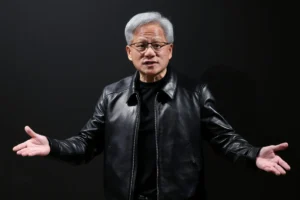
The program’s faculty and guest speaker roster reads like a "who’s who" of modern technology leadership. The Academy has confirmed that students will engage with figures such as Sam Altman, Jensen Huang, Satya Nadella, Mira Murati, Fei-Fei Li, and Travis Kalanick. While many of these luminaries will participate in fireside chats, a second tier of committed faculty—including Instacart co-founder Max Mullen and former Windows president Steven Sinofsky—will lead multi-session courses.
The coursework itself reflects a pivot toward the technical and the tactical. Modules such as "AI Inference Engineering," "The Craft of Selling," and "Origins and Innovations in Digital Computing 1940–2025" illustrate a curriculum tailored to the immediate needs of the tech economy. Notably, the Academy does not grant degrees, nor does it participate in federal student aid programs. Admissions are determined by "proof of work," favoring applicants who have already demonstrated entrepreneurial initiative, such as teenagers with successful AI ventures or significant digital footprints.
Industry Partnerships and the Co-op Ecosystem
The Academy’s value proposition relies heavily on its integration with the broader Silicon Valley ecosystem. The institution has established partnerships with ten founding firms, including giants such as Anthropic, Coinbase, Google, Meta, Nvidia, OpenAI, Palantir, Replit, and Stripe. These partners provide various resources, ranging from hardware and compute credits to curriculum advisory.
While the program creates a direct pipeline for students to enter the workforce, Biyani clarified that these partnerships do not constitute a formal hiring guarantee. Instead, the focus is on providing students with the opportunity to interview and build professional relationships. For students, this "co-op" model is designed to facilitate real-world experience, though the financial compensation for these positions remains a variable rather than a guarantee.
Expert Skepticism and the Structural Challenges of Higher Ed
Despite the ambition of the project, the broader academic and economic community remains divided on whether the A16z Academy can truly scale or serve as a viable template for the future of education. Bryan Caplan, an economist at George Mason University and author of The Case Against Education, suggests that the Academy may find success as a niche institution for an elite few, but cautions that the model lacks the durability of traditional universities.
"Something that can work for 50 handpicked people isn’t going to work even for the top 5,000," Caplan noted. He argues that part of the value of a traditional degree is its ability to signal conformity and reliability to employers—a benefit that a non-accredited program may struggle to replicate unless it maintains an extremely high barrier to entry. "MIT is going to last for centuries. Don’t worry about it," Caplan added.
Furthermore, Ryan Craig, managing director at Achieve Partners, highlights the immense difficulty of competing with the incumbent university model. Craig, who has spent years analyzing apprenticeship and workforce development programs, points out that the transition from a specialized bootcamp to a full-scale college is fraught with regulatory and financial hurdles. "It’s a bootcamp with a plan to be a college, but I’d say not a realistic plan to be a college," Craig remarked. He notes that many previous attempts to launch "innovative" universities without federal aid have ultimately faltered because they cannot compete with the heavily subsidized nature of traditional higher education.
Implications for the Future of Work
The launch of the Academy serves as a barometer for the changing relationship between education and the technology sector. As AI continues to automate routine intellectual tasks, the demand for "knowledge workers" who possess foundational technical intuition and the ability to adapt to rapid shifts in tooling is expected to rise.
The Academy is effectively testing a hypothesis: that the modern elite student, burdened by debt and disillusioned with the slow pace of traditional academia, will choose a high-risk, high-reward, industry-adjacent path over a traditional credential. If the program succeeds in producing a cohort of graduates who are immediately employable and capable of launching high-growth ventures, it could force a significant recalibration in how private industry approaches talent acquisition.
However, the path forward is complex. The Academy must navigate the transition from a donor-funded experiment to a self-sustaining institution, all while maintaining the "prestige" required to attract the top 0.1% of high school graduates. The decision to forgo accreditation and federal funding is a double-edged sword: it offers the agility to innovate rapidly, but it also isolates the program from the financial infrastructure that has allowed universities to remain stable for generations.
As the September 2027 start date approaches, the eyes of both the tech world and the higher education establishment will be fixed on San Francisco. Whether the A16z Academy represents the first step toward a new era of vocational excellence or a transient experiment in disruption remains to be seen. For now, it stands as a bold, provocative challenge to the status quo, demanding that the world reconsider what constitutes a "real" education in the age of artificial intelligence.