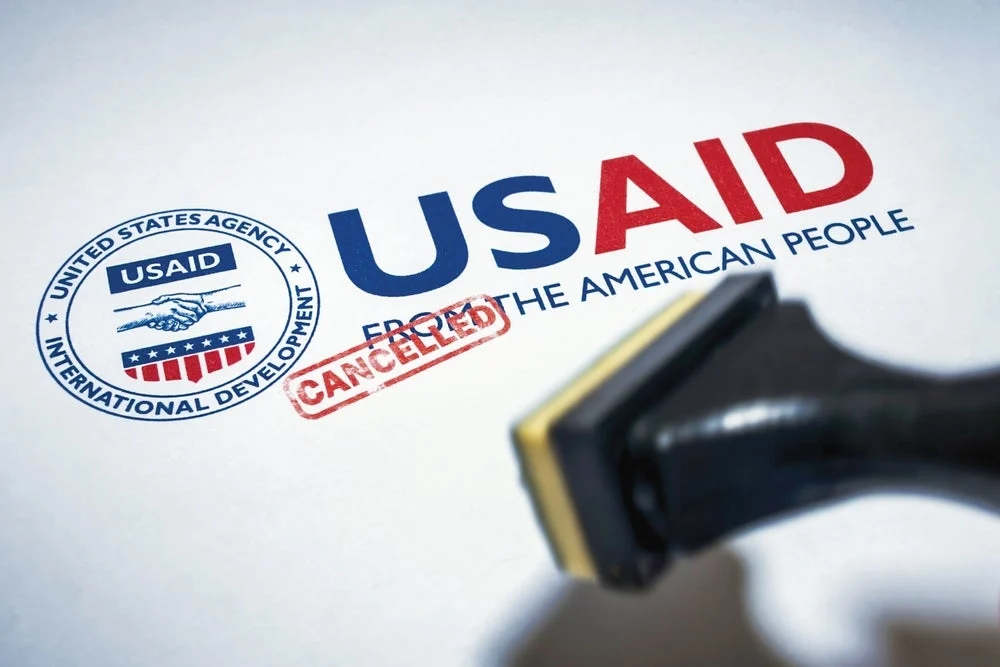
The global humanitarian and international development landscape is undergoing a profound structural transformation, forcing non-profit organizations to fundamentally rethink how they communicate, engage audiences, and secure financial sustainability. At the center of this seismic shift is the dismantling of the United States Agency for International Development (USAID), which has historically functioned as the single largest institutional source of global humanitarian and development funding. For decades, international non-governmental organizations (INGOs) relied heavily on government grants and institutional backing to finance large-scale health initiatives, poverty reduction programs, and emergency relief operations. Today, the sudden contraction of these public-sector pipelines has thrust these organizations into a fiercely competitive philanthropic marketplace, where they must aggressively court individual donors, private foundations, and corporate partners to stay afloat.
This transition from institutional funding to a decentralized, donor-dependent model is far more complicated than simply launching new digital fundraising campaigns or increasing direct-mail solicitations. Industry experts note that before prospective donors feel emotionally or intellectually inspired to contribute their hard-earned money, they must first comprehend the systemic problems at hand, forge a deep empathetic connection with the affected populations, and clearly visualize how their financial contribution translates into tangible, life-changing solutions. For many global health charities, closing this psychological and educational distance between the donor and the cause has proven to be the most formidable hurdle in modern non-profit management.
The Anatomy of a Disconnect: Awareness Versus Understanding
A common misconception among marketing professionals is that public apathy stems from a simple lack of awareness regarding global crises. However, recent empirical research suggests otherwise. According to comprehensive polling data published by Oxfam, approximately 95% of surveyed individuals in the United States firmly believe that their government should maintain or even increase expenditures on international humanitarian relief and global health assistance. This overwhelming majority indicates that the general public is fundamentally sympathetic to global causes and possesses a baseline awareness that poverty, disease, and suffering exist beyond national borders.
The true operational bottleneck, however, lies not in a lack of compassion, but in a profound misunderstanding of the actual scope, nature, and urgency of the specific challenges being addressed. When charities ask constituents to support complex, highly specialized interventions without first dismantling preconceived notions, no amount of traditional marketing flair or high-pressure fundraising techniques can bridge the gap. Communications leaders across the global health sector are increasingly realizing a foundational truth: organizations must actively challenge and reshape public perceptions before they can successfully change donor behaviors. Perception is not merely a byproduct of communication; it is the absolute precondition for every other element of a fundraising strategy to function effectively.
The Cultural Stigma of Specialized Care: A Case Study in Reconstructive Surgery
To understand how perception gaps manifest in the real world, one can examine the challenges faced by ReSurge International, a prominent global health non-profit specializing in plastic and reconstructive surgical care for vulnerable populations in low-income countries. When the organization conducted qualitative and quantitative research to evaluate how the general public understood its core mission, a stark and alarming disconnect emerged.
In high-income countries, the term "plastic surgery" has become culturally and commercially synonymous with elective cosmetic enhancements, anti-aging procedures, and vanity treatments. Consequently, the average donor rarely associates the phrase with impoverished patients in developing regions suffering from severe burn injuries, traumatic physical accidents, untreated tumors, or debilitating congenital conditions like cleft lips and palates. In these underserved contexts, reconstructive surgery is not a luxury; it is a life-saving, dignity-restoring medical necessity that enables individuals to eat, speak, work, and reintegrate into their local communities.
This linguistic and cultural barrier creates an acute challenge. Globally, an estimated five billion people currently lack access to safe, timely, and affordable surgical care—a staggering statistic that represents one of the greatest unaddressed crises in modern global health. Yet, because the public views the terminology through a lens of privilege and aesthetics, the true urgency of the crisis remains obscured. Similar perception gaps plague other sectors of healthcare and social welfare; for instance, many members of the public associate hospice care and "palliative" medicine exclusively with giving up hope, failing to recognize that palliative care is fundamentally designed to help patients manage chronic pain and live well for as long as possible.
The Genesis of a Movement: The Closing the Gap Campaign

Recognizing that traditional awareness campaigns were failing to move the needle, leadership at ReSurge International concluded that a radical communications pivot was necessary. Rather than doubling down on conventional donation appeals, the organization decided to confront pre-existing public misconceptions directly, using transparent storytelling that centered on real patient narratives and lived experiences.
Partnering with prominent creative agencies on a pro bono basis—specifically Ogilvy Health and Papaya Films—the organization developed a targeted multimedia initiative titled the Closing the Gap campaign. The core objective of the campaign was to dismantle the superficial associations tied to plastic surgery and reframe reconstructive procedures as an essential pillar of global human rights and public health infrastructure. By highlighting the harrowing realities faced by burn victims and trauma survivors in low-income nations, the campaign successfully educated the public on the transformative power of reconstructive medicine.
The quantitative impact of this perception-first strategy exceeded all internal projections. During the active run of the Closing the Gap campaign, ReSurge International recorded a remarkable 227% increase in the acquisition of new donors. Even more impressively, new donor revenue surged by 490% over the same period. In the quarters following the campaign, the organization’s ongoing new donor growth rate more than quadrupled compared to historical baselines. Furthermore, the industry impact of the initiative was validated by major creative and strategic accolades, earning prestigious honors at both the Effie Awards and the Clio Awards for marketing effectiveness.
Strategic Implications for the Broader Non-Profit Sector
The success achieved by ReSurge International offers vital lessons for the broader non-profit and global health community, particularly as organizations scramble to diversify their revenue streams in the wake of USAID’s restructuring. Industry analysts emphasize that organizations do not necessarily require multi-million-dollar advertising budgets or elite agency partnerships to reshape public perception. Instead, the primary takeaway is the absolute necessity of auditing the existing perception gap between an organization’s target audience and the specific behavioral action the brand desires.
Communication leaders are advised to conduct rigorous internal and external audits to answer fundamental questions: What is the public’s current baseline understanding of our issue? What specific misconceptions, biases, or cultural assumptions do they hold? And how do these mental barriers prevent them from recognizing the gravity of the problem? If prospective donors do not fundamentally comprehend why an issue matters on a human level, simply ramping up the frequency and volume of fundraising requests will yield diminishing returns.
Moreover, marketing experts within the humanitarian sector argue that organizations must recalibrate how they measure communications success. Traditional metrics often rely heavily on surface-level indicators such as digital impressions, web traffic, and social media reach. While these metrics confirm visibility, they fail to reveal whether the audience experienced a genuine shift in perspective or cared deeply enough to take meaningful action. True strategic communication requires measuring long-term behavioral changes rather than transient awareness.
The Road Ahead: Institutionalizing Perception Work
As the global health sector continues to navigate an uncertain financial future defined by the loss of foundational institutional grants, the pressures placed on non-profit marketing departments will only intensify. INGO executives are frequently pressured to demonstrate immediate, short-term financial returns on extremely limited operating budgets, often forcing long-term perception and educational work to the bottom of the organizational priority list. Unlike a direct-response donation link, the return on investment for perception-shifting communications is notoriously difficult to quantify in the short term and requires considerable patience.
However, industry leaders argue that neglecting this foundational work is a perilous strategic error. When systemic misunderstanding and cultural bias stand as a wall between a mission-driven organization and the individual supporters it desperately needs to reach, investing in perception is no longer a luxury—it is an existential requirement. For global health organizations attempting to chart a sustainable course through a radically altered funding landscape, mastering the art of perception shift may well prove to be the most vital investment they make in their own survival and long-term impact.