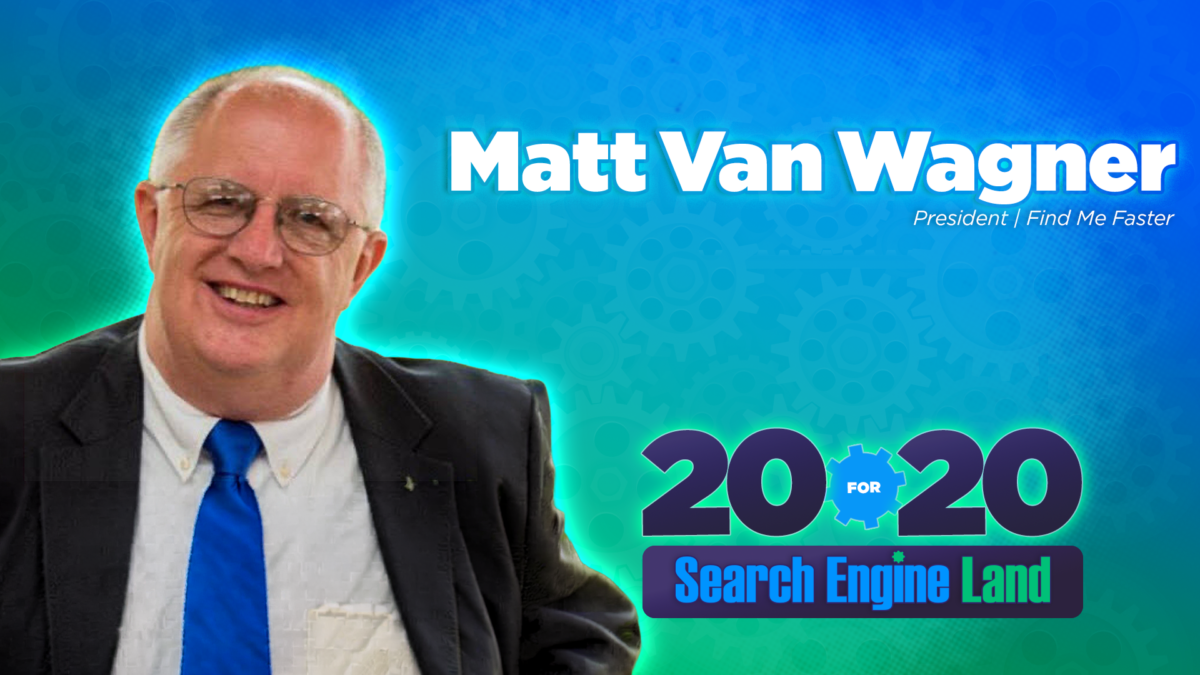
The search marketing industry has evolved from an entrepreneurial, high-growth "gold rush" into a highly automated, consolidated ecosystem dominated by a handful of tech giants. This digital transformation has reshaped how brands acquire customers, how agencies operate, and how algorithms dictate the flow of advertising dollars. Looking back over two decades of rapid industry shifts, paid search veteran and agency founder Matt Van Wagner recently reflected on the formative years of Google Ads, the birth of independent trade journalism through platforms like Search Engine Land, the tactical strategies that thankfully faded into obsolescence, and why modern advertisers must maintain a healthy skepticism toward platform-provided recommendations.
Van Wagner’s entry into the search marketing sector occurred in the early 2000s, a period marked by a mass migration away from traditional B2B marketing channels. Prior to entering search, he worked in technology sales and marketing, where conventional pillars of customer acquisition—such as print trade publications, industry conferences, and direct mail campaigns—were yielding diminishing returns. Seeking more measurable and direct channels, he attended an early search marketing conference. The contrast between traditional marketing and the burgeoning search sector was immediate. The event was packed with entrepreneurial energy, offering a first look at an entirely new medium for consumer engagement. This experience served as a catalyst, prompting him to exit his established career and launch a specialized search advertising agency during a time when corporate America was still struggling to understand what a search advertising agency actually did.
The early years of Google Ads were characterized by abundant demand and a starkly different economic landscape. According to Van Wagner, once prospective clients grasped the fundamental utility of paid search, convincing them to allocate budgets required minimal sales friction. The market was expanding so rapidly that early agencies operated in a largely collaborative environment, with plenty of demand to sustain multiple players. However, looking back on those foundational years, Van Wagner notes that the most common strategic misstep among early practitioners was not a failure of execution, but rather an undervaluation of services. Many agencies simply failed to charge fees that reflected the true return on investment they were generating for clients.
As the industry expanded, the need for sophisticated education became paramount. Early search conferences frequently suffered from repetitive agendas and recycled presentations. The launch of Search Engine Land and the SMX (Search Marketing Expo) conference series marked a turning point, helping the industry mature. SMX Advanced, in particular, disrupted the conference circuit by bypassing basic fundamentals and immediately diving into intermediate and advanced tactical discussions. This curriculum attracted a higher caliber of practitioner, fostering an environment where informal networking during coffee breaks, dinners, and evening receptions yielded insights nearly as valuable as the formal stage presentations. Furthermore, as conference circuits threatened to become insular, Van Wagner and other industry leaders implemented blind evaluation processes for speaker submissions—stripping away names, genders, and company affiliations to judge proposals purely on the merit of the underlying ideas. This initiative lowered barriers to entry for emerging voices in an increasingly competitive landscape.
Tactically, early pay-per-click (PPC) advertising looks remarkably complex and granular compared to today’s streamlined workflows. In the 2000s, search engine marketing relied heavily on micro-management: single-keyword ad groups (SKAGs), intricate match-type layering, and massive, exhaustive negative-keyword architectures designed to artificially sculpt traffic patterns. Today, the rise of machine learning and automated bidding has rendered many of these manual maneuvers obsolete. Yet, this shift toward automation has introduced a new tension between advertisers and platform providers, particularly regarding data transparency and control.
One of the defining characteristics of the early search ecosystem was its accessibility. In the industry’s formative years, Google maintained an open dialogue with the search engine optimization (SEO) and PPC communities. Events like the Google Dance brought marketers directly onto Google’s campus to interact with engineers and product managers, while public figures like Matt Cutts acted as a bridge between the search engine and practitioners. This openness was partly structural: Google itself was still actively defining the boundaries of search, meaning engines, agencies, and brands were exploring the digital frontier simultaneously.
That collaborative spirit was tested by pivotal algorithm shifts, most notably Google’s infamous Florida update in late 2003. Striking just before the crucial holiday retail season, the Florida update wiped out organic search rankings overnight for countless businesses and agencies reliant on traditional, aggressive SEO tactics. The event exposed the inherent vulnerability of relying exclusively on organic visibility and served as a stark reminder of how quickly platform rules could change. For many marketers, including Van Wagner, the turbulence of the Florida update cemented paid search as an essential "insurance policy," ensuring continuous traffic and revenue generation regardless of organic volatility.
As the search landscape matured, the relationship between platform operators and advertisers shifted. While Google introduced product innovations that captured mainstream attention—such as Google Instant in 2010, which predicted search queries dynamically as users typed—competitors like Microsoft sought to capture market share. Recognizing that users rarely changed their default search habits, Microsoft strategically engineered its advertising platform to mirror the structure of Google Ads, successfully reducing administrative friction for multi-platform marketers.
In contemporary search marketing, however, the central friction point is no longer inter-platform competition, but the growing divide between algorithmic goals and business-specific key performance indicators (KPIs). Van Wagner argues that advertisers must constantly evaluate platform recommendations through a pragmatic lens, remembering that Google’s overarching commercial imperative—maximizing ad spend—is not automatically identical to an advertiser’s objective of driving profitable, incremental sales.
This divergence is frequently illustrated by default platform settings, such as Google’s heavy reliance on broad match keywords. Inexperienced advertisers routinely spend substantial marketing budgets teaching automated bidding systems foundational lessons that the business has already mastered. While automation is irreversible and advertisers will not regain manual control over every auction variable, Van Wagner contends that artificial intelligence should be designed to incorporate existing advertiser knowledge rather than forcing brands to waste capital rediscovering known constraints.
Despite these systemic frustrations, industry advocacy has played a vital role in bridging the gap between corporate directives and practitioner realities. Van Wagner highlights the contributions of figures like Ginny Marvin, the Google Ads Liaison. Having spent years on the agency and advertiser side of the ecosystem before joining Google, Marvin has maintained credibility by acknowledging industry pain points and advocating for marketers within the halls of the tech giant.
Ultimately, the evolution of paid search offers a cautionary tale alongside its commercial successes. Early PPC campaigns were frequently plagued by vanity metrics, such as the expensive misconception that securing the number-one ad position justified inflated cost-per-click (CPC) bids. Similarly, modern practitioners are prone to administrative errors, such as misapplied negative keywords that can exhaust thousands of dollars in hours—mistakes that Van Wagner notes are best addressed through rapid accountability rather than shifting blame.
As the industry enters a fully automated future defined by machine learning, generative AI, and consolidated platform management, the core lesson of the past two decades remains unchanged. Independent journalism, critical thinking, and a healthy skepticism toward platform-supplied directives are more critical than ever. Advertisers must accept that while platforms like Google provide powerful tools, they do not inherently share an advertiser’s balance sheet—making independent strategic oversight the ultimate safeguard for digital marketing success.