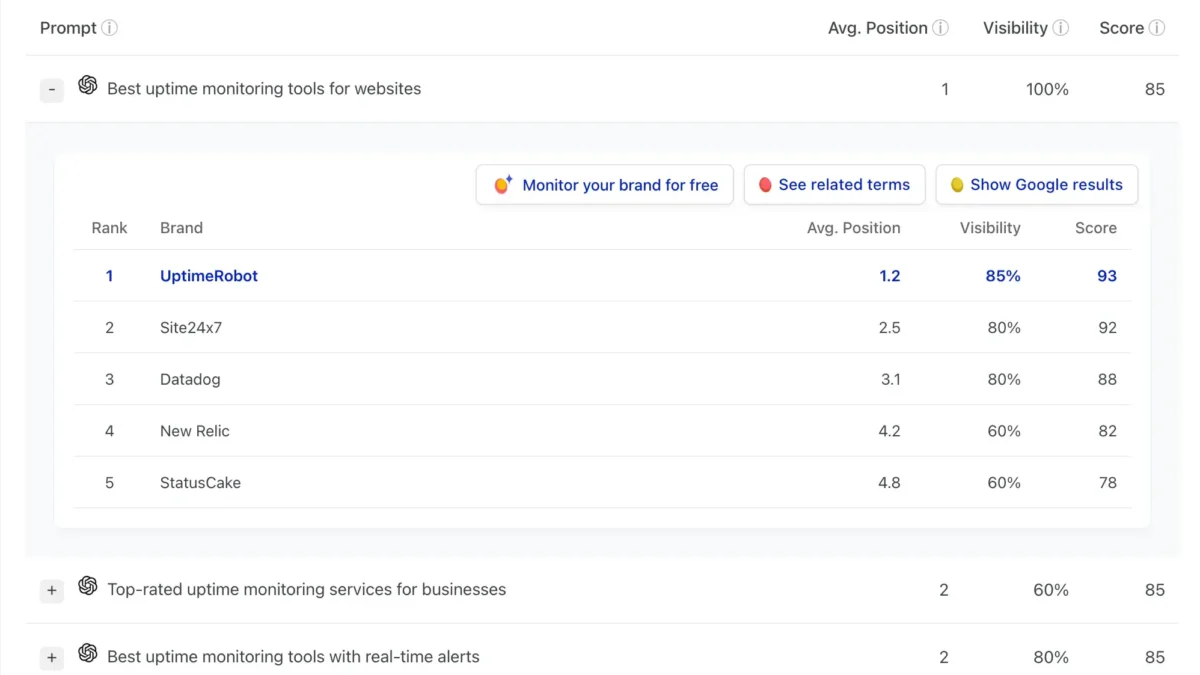
The paradigm of digital discovery is undergoing a seismic shift. According to G2’s 2026 Answer Economy research, 51 percent of business-to-business (B2B) software buyers now initiate their research using artificial intelligence chatbots more frequently than traditional search engines like Google. Furthermore, the same report indicates that 71 percent of B2B software buyers rely on AI chatbots at some point during their overall evaluation process. This fundamental transformation in consumer behavior has rendered legacy search engine optimization (SEO) metrics insufficient on their own. Marketing teams are no longer tasked solely with tracking keyword rankings and organic click-through rates; they must also monitor how conversational AI assistants, answer engines, and large language models (LLMs) perceive, cite, and recommend their brands.
As brands rush to secure visibility within generative search engines such as ChatGPT, Perplexity, and Gemini, the demand for sophisticated Answer Engine Optimization (AEO) tracking tools has surged. While established SEO platforms like Ahrefs have introduced features like Brand Radar to monitor brand mentions across conversational platforms, many marketing departments require alternative solutions tailored to their specific needs regarding model coverage, prompt-level granularity, data integration, and budget constraints. This comprehensive analysis explores the shifting landscape of AI visibility tracking, examines why marketing leaders are seeking alternatives to Ahrefs Brand Radar, and provides an in-depth review of the leading platforms available in the market today.
The Evolution of Search and the Rise of AEO
For decades, digital marketing strategies were anchored in the mechanics of traditional search engines. Keywords, backlinks, site audits, and meta tags formed the holy trinity of web visibility. However, the commercial rollout of generative AI conversational interfaces fundamentally altered the user journey. Instead of presenting a list of blue links for the user to sift through, modern answer engines synthesize information, evaluate competing products, and present direct recommendations accompanied by source citations.
This architectural change introduced a new discipline: Answer Engine Optimization. Unlike traditional SEO, which focuses on outranking competitors for high-volume keywords, AEO focuses on influencing how algorithms synthesize qualitative data about a brand. Securing a recommendation from an AI chatbot often depends on the presence of authoritative citations, third-party reviews, and structured context distributed across the broader web ecosystem. Consequently, marketing executives face a pressing need for dedicated tools that can audit, track, and measure these conversational interactions over time.
Why Marketing Teams Are Exploring Alternatives to Ahrefs Brand Radar
Ahrefs is widely recognized as an industry titan for backlink analysis, keyword research, and comprehensive site audits. Its Brand Radar feature tracks brand mentions and citations across major AI answer engines and supports custom prompt monitoring. Nevertheless, many marketing teams have begun evaluating alternative AI visibility tools to better align with specific operational workflows, cost structures, and data requirements.
Granular Data and Customization Needs
In specialized industries, broad visibility scores often fail to provide the actionable insights required by enterprise marketing teams. Alexandra Novikava, a marketer at Truck1, noted that her organization initially utilized Ahrefs Brand Radar to observe baseline references from AI engines before transitioning toward custom API tracking and alternative SEO intelligence tools. According to Novikava, her team required deeper granularity regarding the exact queries where competitors gained visibility, alongside greater flexibility in data collection workflows. Although Ahrefs has since expanded its custom prompt tracking capabilities, her experience illustrates how specialized market demands drive teams toward dedicated solutions.

The Value of High-Intent Prompt Tracking
In complex B2B sectors, generic brand mentions carry far less weight than targeted recommendations for high-intent queries. Colleen Barry, head of marketing at Ketch, highlighted this distinction, observing that in B2B commerce, a single mention in the right context outweighs multiple generic references. While Ketch initially adopted Brand Radar in early 2025 to establish an initial visibility baseline, the team subsequently sought tighter control over industry-specific prompt libraries. This allowed them to evaluate how conversational engines handled nuanced privacy and compliance queries and to measure the direct impact of thought-leadership content on those responses.
Budgetary Considerations and Pricing Structures
Pricing and product packaging often serve as decisive factors when marketing departments select software solutions. Ashot Nanayan, founder and CEO of B2BSEO, encountered this challenge during Brand Radar’s open beta phase. Nanayan estimated that the combined subscription and AI-monitoring add-ons required for his team would have totaled approximately $800 per month, while he also sought localized prompt customization and broader model coverage. Ahrefs has since adjusted its pricing structure—offering standalone Brand Radar starting at $199 per month for a single platform, with separate custom-prompt packages beginning at $50 per month. Nonetheless, many organizations continue to evaluate dedicated AI visibility platforms that offer alternative feature sets and cost efficiencies tailored to niche use cases.
Connecting Visibility to Revenue and Customer Actions
Perhaps the most critical challenge facing modern marketers is the disconnect between visibility metrics and actual business growth. Matthew Kinneman, founder of Bully Max, emphasized that AI visibility holds little intrinsic value unless it can be directly correlated with customer actions, website traffic, engagement, and conversions. Kinneman cautioned against optimizing for metrics that appear favorable on a dashboard but fail to drive measurable revenue. Consequently, Bully Max transitioned toward a multi-source measurement approach that evaluates AI-driven discovery alongside traditional search performance and customer behavior throughout the entire buyer journey. This holistic requirement underscores why many organizations prioritize AI visibility tools that integrate seamlessly with customer relationship management (CRM) systems, marketing attribution models, and pipeline reporting.
Comprehensive Overview of Leading Ahrefs Brand Radar Alternatives
To navigate the expanding market of AI visibility platforms, marketing teams must evaluate solutions based on model coverage, data freshness, evidence quality, integrations, and pricing. Below is an analysis of six prominent alternatives designed to measure and improve Answer Engine Optimization performance.
- HubSpot AEO
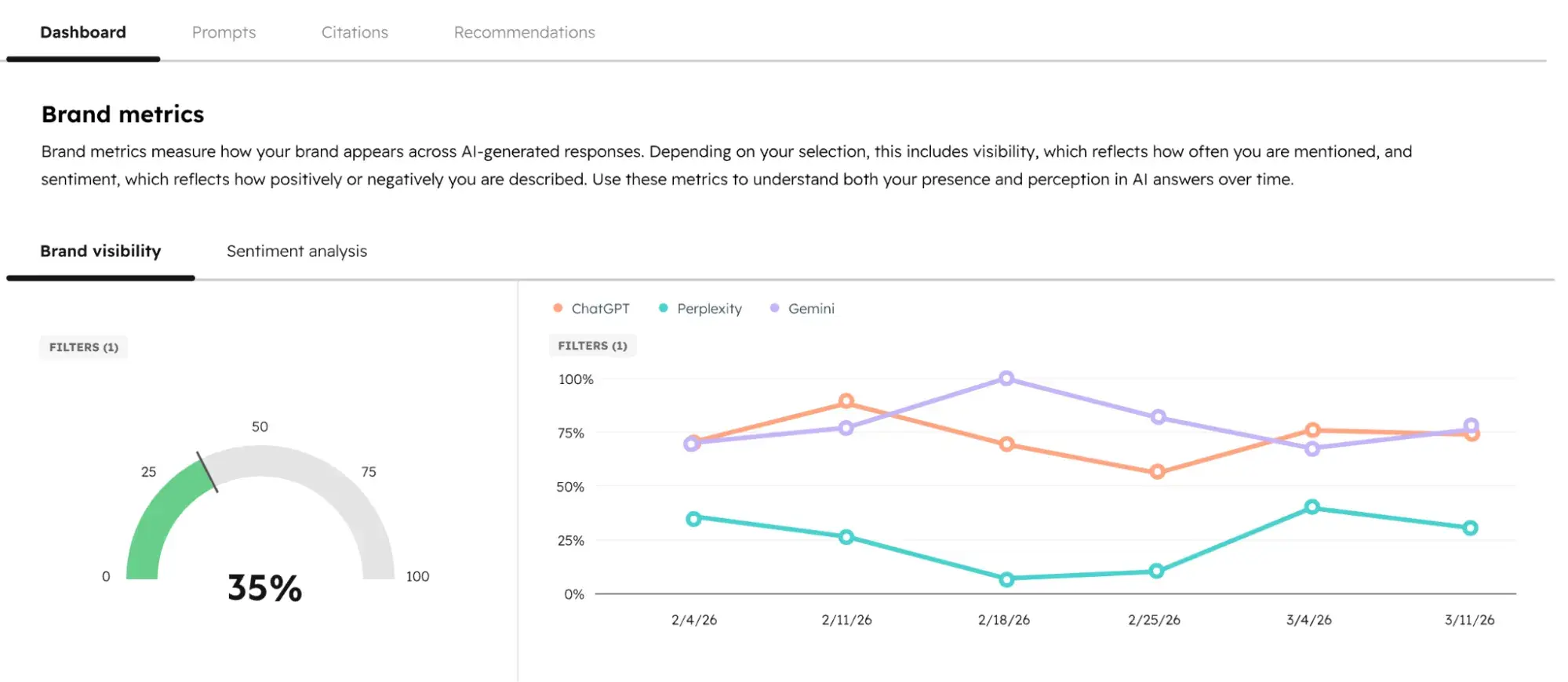
HubSpot AEO is an advanced AI visibility platform engineered to monitor how brands are represented across major generative engines, including ChatGPT, Perplexity, and Gemini. The tool tracks real-time visibility and sentiment, analyzes competitor share of voice, identifies cited sources, and transforms identified visibility gaps into prioritized, actionable recommendations.
Key Operational Features:
- Multi-Model Tracking: Simultaneous monitoring across ChatGPT, Perplexity, and Gemini.
- Sentiment and Share of Voice Analysis: Evaluates how favorably a brand is portrayed relative to competitors.
- Citation Mapping: Identifies the exact domains and URLs referenced by AI engines when formulating answers.
- Actionable Recommendations: Translates visibility shortcomings into concrete content and SEO strategies.
Pricing and Accessibility: Standalone HubSpot AEO is available independently of a core HubSpot subscription, priced at $50 per month for 25 prompts across the three supported models (or $45 per month with annual billing). Furthermore, HubSpot’s Marketing Hub Professional and Enterprise tiers integrate AEO directly, leveraging CRM data to refine prompt suggestions and connect AI visibility metrics directly to pipeline and revenue generation.
- Profound
Profound is a robust AEO platform tailored for larger enterprises and agencies that require comprehensive visibility analysis paired with deep execution workflows. Its Answer Engine Insights product monitors brand and competitor performance across multiple AI platforms, while supplementary modules—including Agents, Agent Analytics, and Prompt Volumes—extend the platform’s utility into automated content generation, AI-sourced traffic analysis, and advanced prompt research.
Key Operational Features:
- Comprehensive Answer Engine Coverage: Monitors up to nine distinct AI platforms depending on the selected plan.
- AI-Sourced Traffic Analysis: Measures how chatbot citations translate into actual referral traffic to web properties.
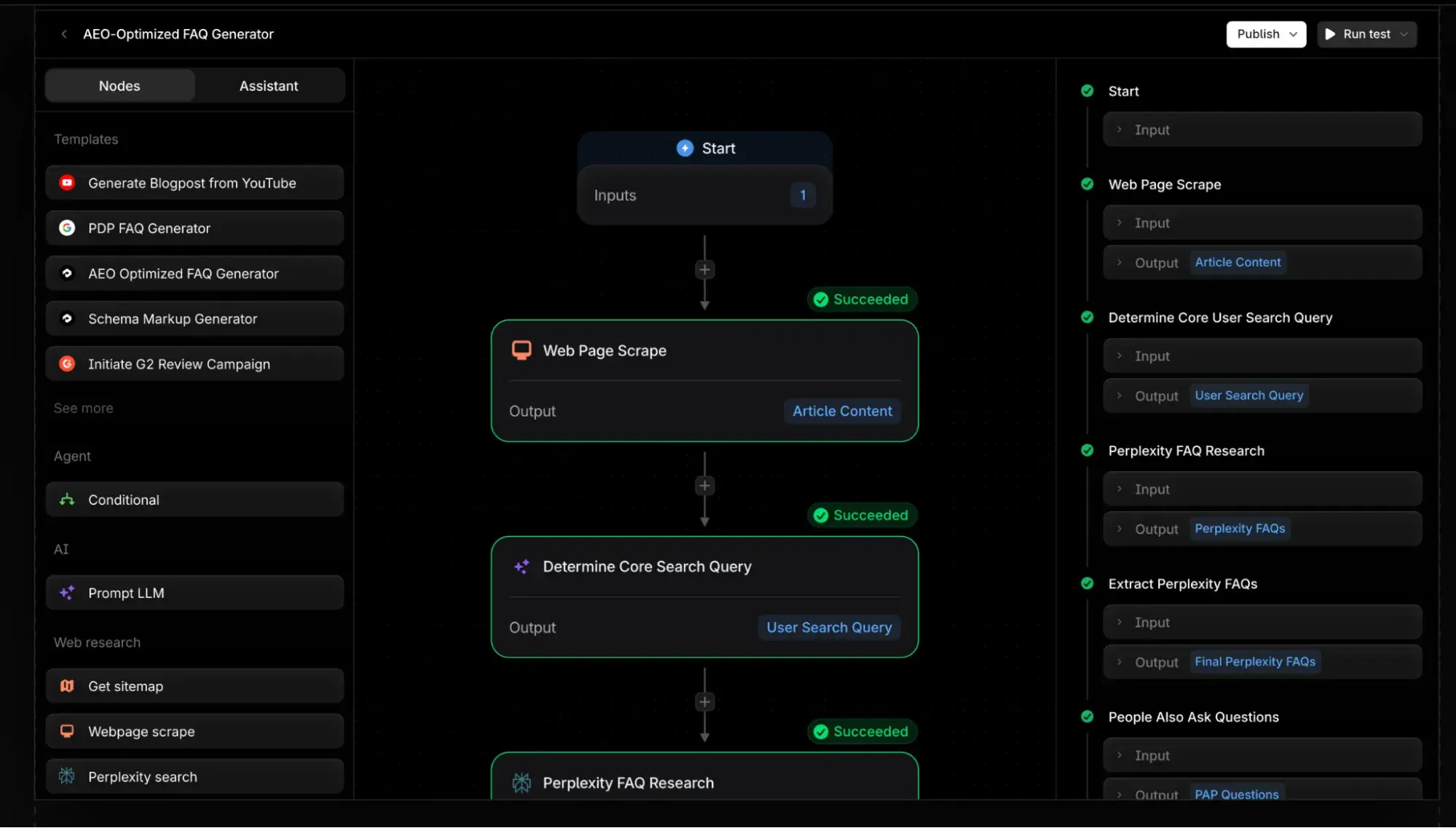
- Automated FAQ Generation: Utilizes webpage research and Perplexity data to generate optimized content structures.
Pricing: Profound pricing starts at $99 per month (billed annually) for ChatGPT tracking and 50 prompts. The Growth tier is priced at $399 per month (billed annually) for three answer engines and 100 prompts, while Enterprise plans utilize custom pricing to accommodate up to nine engines.
- Peec AI
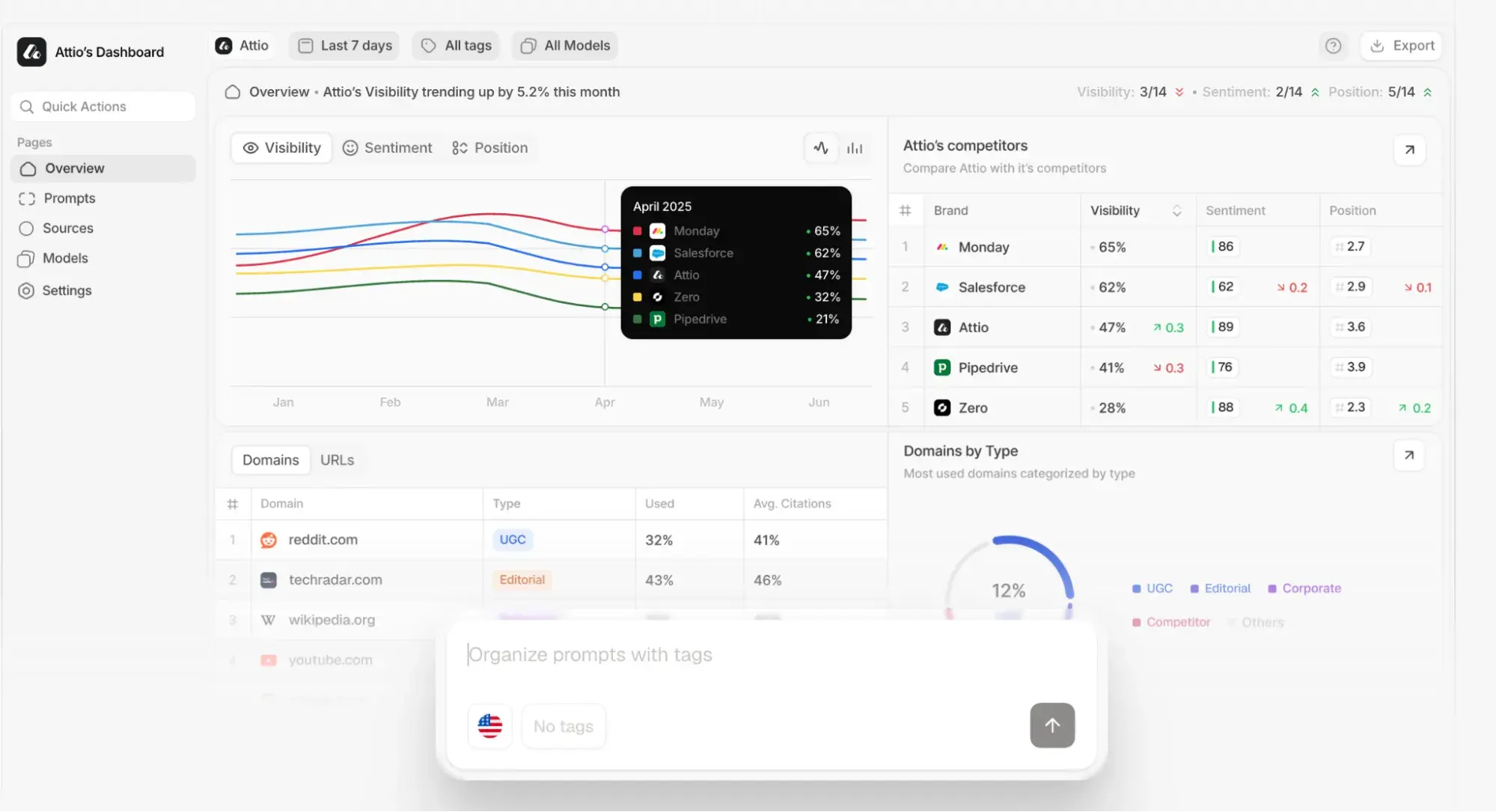
Peec AI is a dedicated AI search analytics platform designed to track brand visibility, competitive positioning, citations, and specific prompt performance across a wide array of LLMs. The platform enables users to organize prompts by project, analyze performance trajectories over time, and inspect the specific domains featured in generated answers.
Key Operational Features:
- Project-Based Organization: Facilitates the segmentation of tracking efforts across distinct product lines or campaigns.
- Historical Trend Analysis: Preserves data over time to measure the long-term impact of content and PR initiatives.
- Unlimited User Access: Public plans do not charge per seat, allowing cross-functional collaboration across SEO, content, and executive teams.
Pricing: Peec AI starts at $95 per month for the Starter tier, which includes 50 prompts and one project. The Pro plan costs $245 per month for 150 prompts and two projects, while the Advanced tier is priced at $495 per month for 350 prompts and five projects. Enterprise options are available via custom quote.
- Xofu
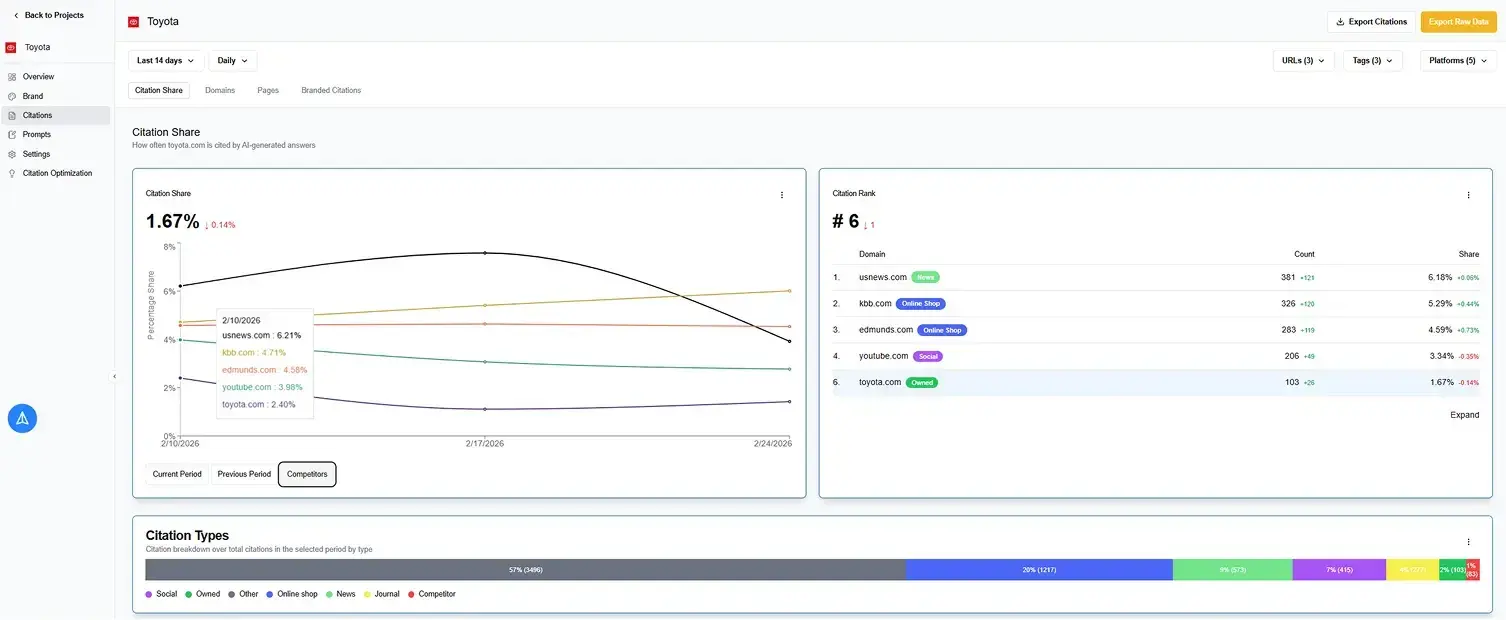
Xofu adopts a specialized approach by concentrating primarily on bottom-of-the-funnel and purchase-intent prompts—the exact queries prospective buyers use to evaluate solutions, compare vendors, and compile shortlists. Rather than tracking every possible brand mention, Xofu focuses exclusively on commercial-intent interactions.
Key Operational Features:
- Purchase-Intent Focus: Prioritizes commercial queries that directly influence vendor selection.
- Citation Gap Analysis: Identifies missing references and compares competitor recommendation frequencies.
- Flexible Reporting Cadences: Offers weekly or daily tracking depending on the chosen service tier.
Pricing: Xofu provides a free tier limited to 50 prompts per model with weekly reporting. Paid tiers include the Consultant plan at $99 per month (200 prompts per model), the Agency Weekly plan at $499 per month (500 prompts per model), and the Agency Daily plan at $999 per month (200 prompts per model with daily updates).
- Mangools AI Search Grader
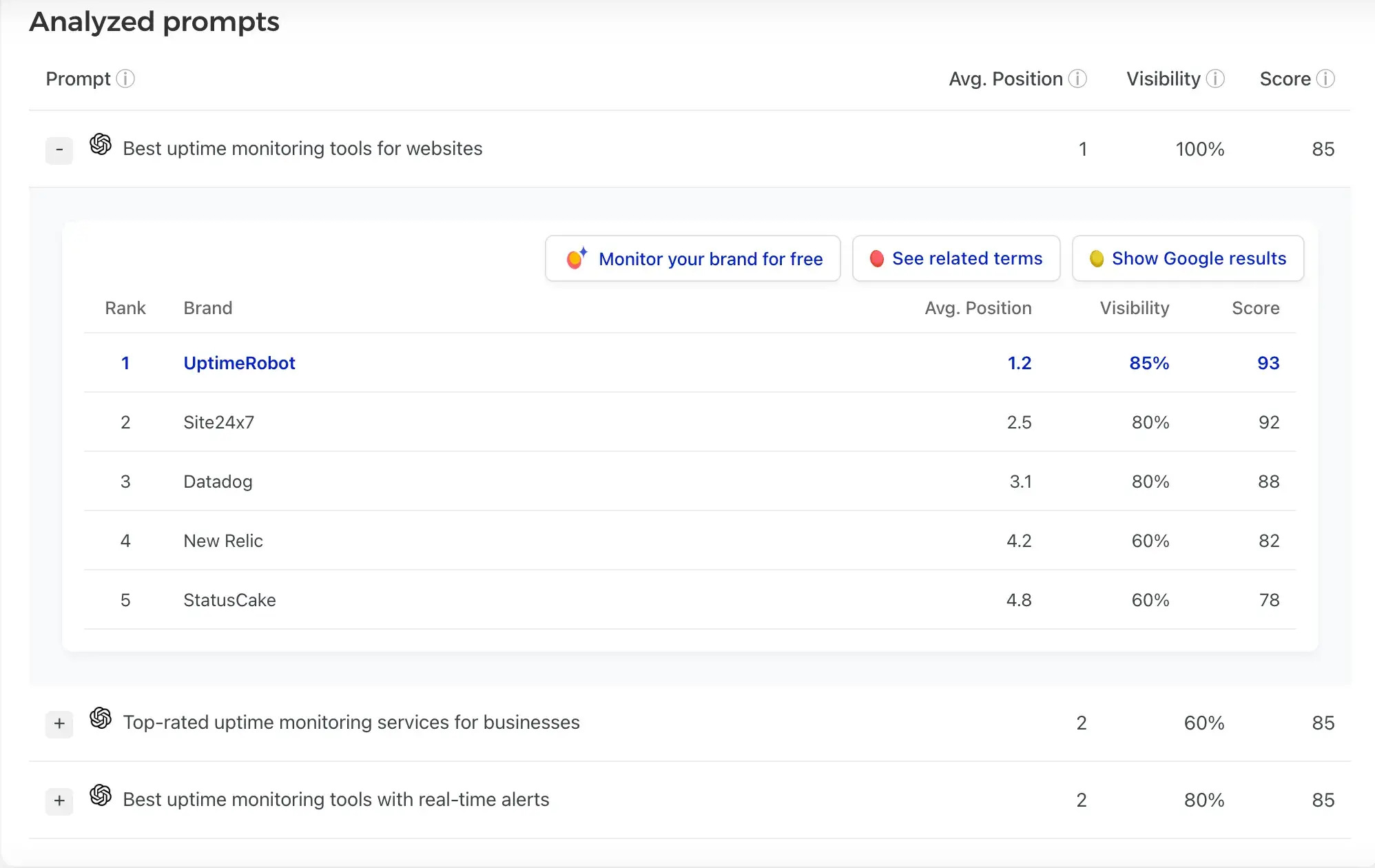
Mangools AI Search Grader is a complimentary diagnostic utility designed to measure brand performance across multiple AI-search models. By synthesizing visibility and ranking metrics into a unified AI Search Score, the tool illustrates how a brand stacks up against competitors for automatically generated queries.
Key Operational Features:
- Composite AI Search Score: Condenses complex visibility signals into a single, digestible benchmark.
- Model-Level Inspection: Allows users to review underlying performance across up to seven supported AI models.
- Low-Barrier Access: Free to use without requiring an immediate account creation for baseline checks.
Pricing: The AI Search Grader is entirely free. For ongoing, continuous monitoring, Mangools provides a separate subscription product named AI Search Watcher.
- Morningscore ChatGPT Rank Tracker
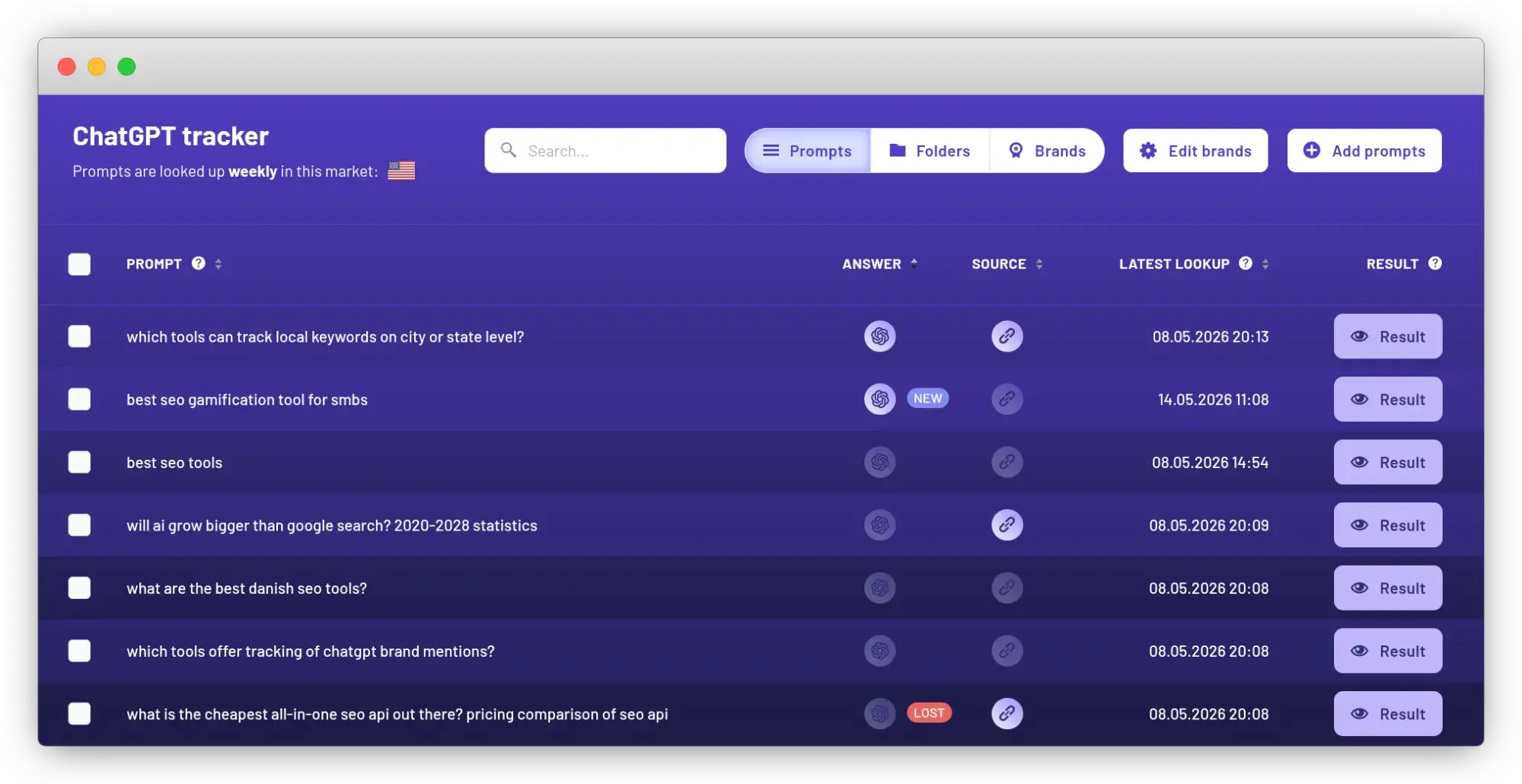
Morningscore integrates a dedicated ChatGPT visibility tracker directly into its broader SEO analytics suite. This tool monitors whether ChatGPT mentions or recommends a brand for targeted prompts, while providing complete transparency by displaying the underlying conversational response and source citations.
Key Operational Features:
- ChatGPT-Specific Monitoring: Focuses explicitly on OpenAI’s ecosystem for targeted prompt tracking.
- Source Evidence Transparency: Exposes the exact web citations and text snippets generated by the model.
- Unified SEO Dashboard: Combines traditional search metrics and AI visibility within a single interface.
Pricing: Morningscore pricing begins at $69 per month for the Lite plan. Business, Pro, and Premium tiers range from $99 to $299 per month, backed by a 14-day free trial.
Key Evaluation Criteria for AI Visibility Tools
When selecting an AI visibility platform, marketing organizations must look beyond superficial branding and evaluate core architectural capabilities.
AI Model Coverage and Data Freshness
Because modern buyers utilize diverse conversational platforms, relying on a single engine can create significant blind spots. Comprehensive multi-model tracking provides a holistic view of market presence, whereas single-engine tools may suffice if one specific platform dominates a target audience. Furthermore, data freshness dictates operational agility. Daily tracking enables rapid iteration and response to algorithmic shifts, while weekly or monthly reporting is generally sufficient for executive trend analysis.
Persona and Journey Segmentation
Aggregated visibility scores can easily obscure critical audience gaps. According to G2’s 2026 research, 71 percent of B2B buyers engage with AI chatbots at multiple junctures in their research. Therefore, marketing teams should utilize tools that allow prompt segmentation by buyer persona and journey stage. For example, high visibility among software developers evaluating technical APIs does not guarantee equal visibility among enterprise procurement officers controlling budgetary allocations.
Integration Capabilities and Marketing Analytics
AI search insights must not remain siloed within an isolated dashboard. The strongest platforms integrate visibility data with web analytics, business intelligence dashboards, and CRM systems. According to HubSpot’s 2026 State of Marketing Report, 12.4 percent of marketers cite difficulty sharing data across organizational silos as a primary operational hurdle. Connecting AI visibility data with pipeline, lead generation, and revenue reporting ensures that AEO initiatives align directly with overarching business outcomes.
Implementing an AEO Measurement Program
Deploying an AI visibility tool requires a structured, multi-step rollout to ensure data integrity and actionable insights:
- Establish Foundations and Integrations: Determine where visibility data will reside and how it will be correlated with existing CRM and revenue metrics.
- Implement Prompt Governance: Standardize a core library of brand, category, and competitor prompts categorized by buyer intent and funnel stage.
- Conduct Quality Assurance: Run priority prompts multiple times across supported models to account for the dynamic, non-deterministic nature of generative AI responses.
- Maintain an Evidence Repository: Preserve underlying conversational text, timestamps, and citation URLs to ensure results remain auditable and verifiable.
- Pilot and Scale: Test the measurement workflow on a limited scope before expanding tracking across global regions, product portfolios, and audience segments.
Conclusion
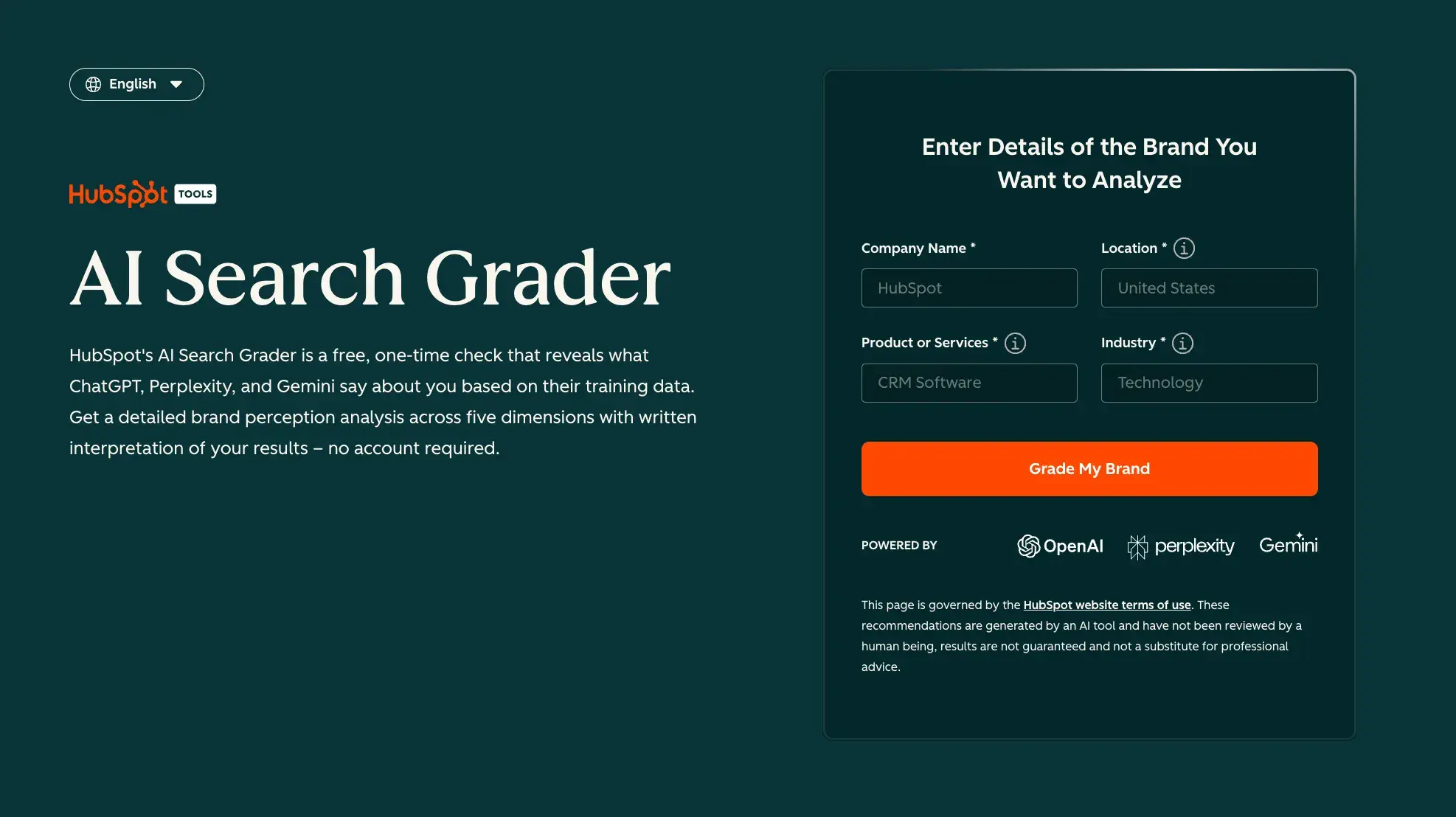
The rise of generative search engines has permanently altered how brands discover audiences and how buyers evaluate solutions. While traditional SEO tools remain essential for measuring technical health, backlinks, and organic rankings, they must be augmented with dedicated Answer Engine Optimization platforms. Whether an organization opts for a free diagnostic like HubSpot’s AI Search Grader, an integrated CRM-connected solution like HubSpot AEO, or an enterprise multi-model platform like Profound or Peec AI, the ultimate objective remains unchanged. Marketing leaders must select tools that not only answer whether a brand is visible in the age of AI, but also illuminate why those results occur and what strategic actions must be taken next to drive measurable business growth.