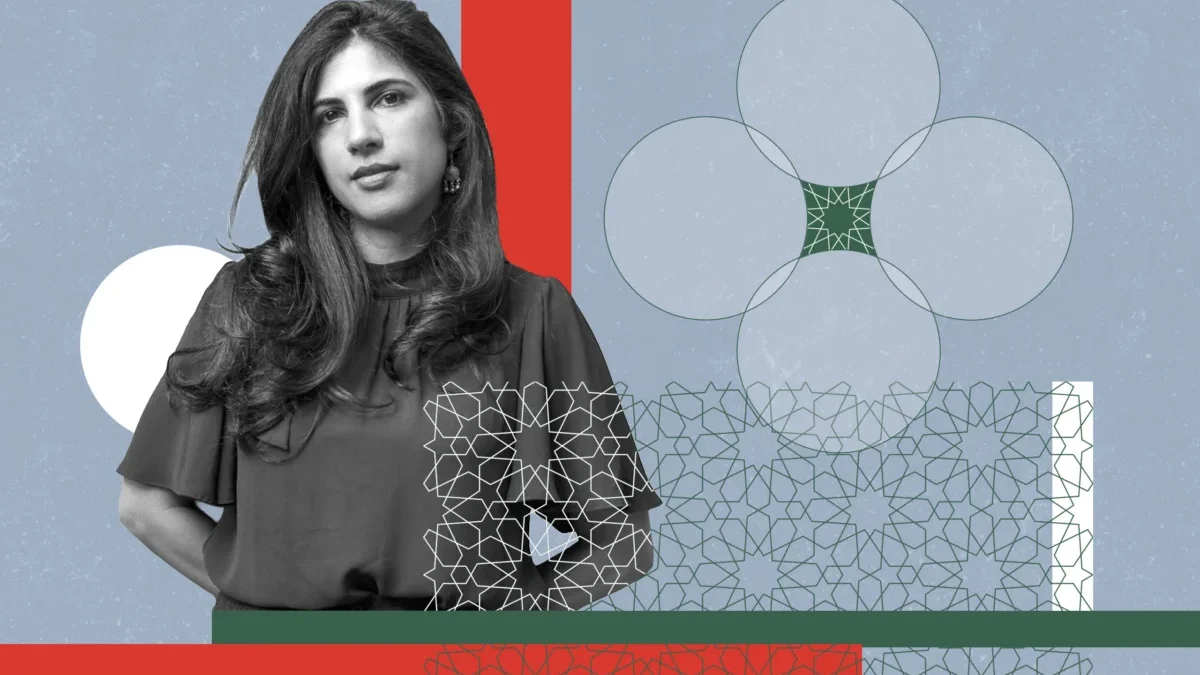
The legacy of the post-September 11 era extends far beyond heightened airport security, mass federal surveillance, and sweeping geopolitical interventions. According to a growing body of literary and journalistic critique, it fundamentally institutionalized an enduring domestic racism that casts Islam as fundamentally incompatible with Western civilization. In her newly published book, Seasons of Fury, journalist and National Magazine Award winner Rozina Ali explores the deep-rooted architecture of American Islamophobia. Through exhaustive reporting and intimate multi-generational portraits, the book contends that the modern media apparatus did not merely report on the War on Terror—it actively co-authored the ideological framework that defined Muslims as an inherent threat to the state.
This critical examination arrives at a time when scholars, media critics, and civil rights advocates are increasingly scrutinizing the collective amnesia surrounding political and media rhetoric directed at Muslim communities. By tracing the historical trajectory of surveillance, immigration policy, and pop-culture narratives, analysts argue that the securitization of American Muslim life is not a recent aberration under any single political administration, but a systemic byproduct of decades-old journalistic and political orthodoxies.
Main Facts of the Systemic Press-State Alliance
At the core of Ali’s thesis is the assertion that major news organizations treated the Bush administration’s War on Terror not as a debatable political strategy, but as an inevitable and permanent world order. Rather than acting as an objective watchdog, the mainstream press frequently adopted the terminology, framing, and national security paradigms of the state.
This symbiotic relationship manifested across multiple fronts, including:
- The normalization of preemptive federal surveillance targeting civil rights activists and religious organizations long before the turn of the century.
- The amplification of unverified national security claims and the platforming of bad-faith experts.
- A disproportionate newsroom focus on violent crime and extremism within Muslim communities, coupled with the systematic exclusion of Muslim experts and journalists from authoritative commentary roles.
- The pervasive deployment of orientalist tropes that render millions of citizens and residents as perpetual foreigners.
A Chronology of Manufactured Suspicion
To understand how contemporary media discourse frames Muslim Americans, historians and media researchers look to a long timeline of coverage that spans the late twentieth century to the present day.
- April 1995: In the immediate aftermath of the Oklahoma City bombing, before any investigative evidence had been gathered, prominent news networks and commentators publicly speculated that the attack bore the "earmarks" of Middle Eastern terrorism. The actual perpetrators, Timothy McVeigh and Terry Nichols, were white American extremists radicalized by domestic antigovernment literature.
- September 2001: Following the terrorist attacks on the World Trade Center and the Pentagon, American Muslims faced immediate waves of institutional surveillance, public harassment, and political scrutiny. For many teenagers at the time—including Ali, then living in Central California—the national tragedy was compounded by an enforced silence and a mandate to hide their religious identities.
- The 2000s and 2010s: Federal counterterrorism initiatives increasingly relied on controversial sting operations, often facilitated by paid informants, ensnaring young men in conspiracies to commit acts of domestic terror. Concurrently, political rhetoric weaponized religious affiliation against high-profile candidates and public servants.
- Recent Years: Contemporary Muslim politicians, such as New York figures and Michigan electoral candidates, continue to face invasive lines of questioning regarding foreign policy conflicts, domestic extremism, and foundational national loyalties—scrutiny rarely demanded of their non-Muslim peers.
Supporting Data and Quantitative Media Analysis
Quantitative studies underscore the stark disparities in how violence and terrorism are reported based on the perceived religious or ethnic background of the perpetrators.
Academic research examining American news coverage of terrorist incidents between 2006 and 2015 revealed profound statistical imbalances. According to the data, violent acts committed by Muslim individuals received approximately 357 percent more media attention than equivalent attacks committed by non-Muslim actors. This disproportionate coverage reinforced public misperceptions regarding the statistical prevalence of domestic terrorism, cementing a cultural association between the Islamic faith and systemic violence.
Furthermore, cultural exports—spanning Hollywood cinema, television dramas, and prestige journalism—have historically relied on reductive characterizations. From cinematic tropes depicting foreign villains to journalistic subgenres that demand marginalized individuals constantly "perform" their humanity or moderation for an imagined majority audience, the cultural ecosystem has consistently positioned Muslims as objects of suspicion requiring continuous rehabilitation.
Official Responses and Societal Implications
Civil rights organizations, media watchdogs, and affected communities have long called for a structural overhaul in how newsrooms approach diversity, representation, and accountability. While various media outlets have attempted to rectify historical blind spots by introducing humanizing human-interest profiles—often critiqued as the "look at this Muslim eating a cookie" genre of journalism—critics argue that true reform requires deeper systemic change.
Rather than alternating between the polarized tropes of the menacing terrorist and the hyper-vetted model citizen, media analysts suggest that journalism must afford Muslims the right to ordinary individualism. This entails covering public figures and private citizens based on their political platforms, professional merits, and civic actions without imposing an unfair burden of collective responsibility or religious interrogation.
As public discourse continues to navigate the complexities of representation in politics and culture, works like Seasons of Fury and ongoing media critiques serve as a vital reminder. The path forward requires newsrooms to recognize their historical complicity in manufacturing division and to commit to a standard of reporting that treats all citizens not as perpetual outsiders, but as foundational members of the American fabric.