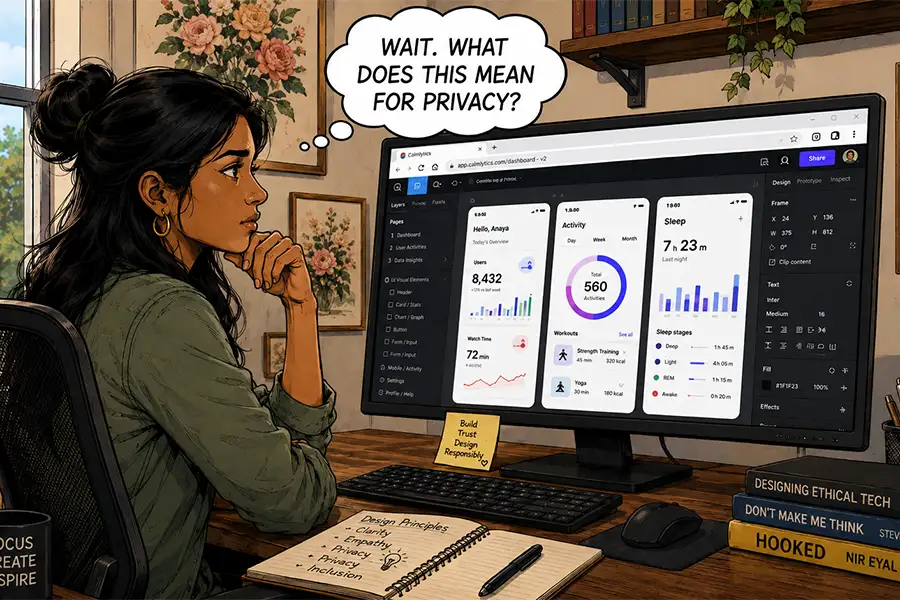
The ritual of commissioning a new workstation has historically been defined by the systematic installation of an extensive software library. For decades, the professional landscape for web designers, developers, and creative directors necessitated a localized "stack": a collection of resource-heavy desktop applications ranging from Adobe Creative Cloud and Microsoft Office to complex FTP clients and localized server environments. However, a seismic shift in computing architecture is currently challenging the necessity of this localized approach. As web standards evolve and cloud-based infrastructure matures, the reliance on traditional desktop-installed software is diminishing, forcing a critical re-evaluation of professional workflows, data security, and the future of creative output.
The Evolution of the Web Browser as an Operating System
The transition from desktop-centric to cloud-centric computing represents a departure from the software models that dominated the late 1990s and early 2000s. During the emergence of the commercial internet, the browser was a rudimentary window—a static viewer for documents. Applications like Netscape Navigator lacked the computational overhead to perform complex tasks, relegating high-performance design and data manipulation to the desktop.
This paradigm began to shift significantly between 2010 and 2020. The introduction of WebAssembly (Wasm) allowed developers to run high-performance code in browsers at near-native speeds. Concurrently, the proliferation of high-speed broadband and the maturation of Content Delivery Networks (CDNs) removed the latency barriers that once hindered cloud-based workflows. Today, platforms such as Figma for UI/UX design, Canva for graphic production, and Google Workspace for administrative tasks demonstrate that the browser is no longer a peripheral tool, but a primary engine for professional labor.
Supporting Data and Market Trends
Industry data underscores this migration. According to recent reports from cloud infrastructure analysts, global spending on Software as a Service (SaaS) continues to grow at an annual rate exceeding 15%. This growth is mirrored by the declining market share of traditional perpetual-license software. The shift is not merely one of preference but of accessibility. Browser-based tools operate on a cross-platform basis, effectively rendering the traditional divide between macOS, Windows, and Linux irrelevant.

For the modern enterprise, this offers substantial hardware cost savings. Because the heavy computational lifting—such as rendering video or compiling code—is increasingly offloaded to the provider’s server-side hardware, the requirements for the end-user’s local device are reduced. A professional today can often achieve parity in output with a mid-range laptop that would have required a high-end workstation a decade ago, provided they have a stable internet connection.
The Security and Ownership Paradox
While the transition to web-based tools offers efficiency, it introduces complex variables regarding data sovereignty and cybersecurity. The "trust model" of modern computing has shifted from the user’s hard drive to the vendor’s cloud vault. This change is not without significant risk.
In the past 24 months, several high-profile incidents have highlighted the vulnerabilities inherent in cloud-based storage. Organizations that rely exclusively on third-party platforms face the risk of "vendor lock-in" and potential data loss if a provider undergoes a catastrophic server failure or ceases operations without providing data migration pathways. Furthermore, the integration of Artificial Intelligence (AI) into these platforms introduces a new layer of ambiguity. Many SaaS providers now utilize user-generated content to train their proprietary machine learning models. This raises significant intellectual property concerns for design firms and corporate entities that must maintain strict confidentiality.
Cybersecurity experts argue that while desktop apps are not inherently more secure, they provide the user with a "local perimeter." When an application lives on a local disk, the user retains physical control over the data. In a browser-based environment, the user is subject to the security protocols, privacy policies, and tracking mechanisms of the service provider. As third-party cookies and tracking scripts become more sophisticated, the risk of data leakage—both intentional and accidental—increases significantly.
Comparative Analysis: When Desktop Still Reigns
Despite the overwhelming advantages of cloud collaboration, certain professional sectors maintain that desktop-native software remains non-negotiable. The distinction lies in the requirement for total system control and offline availability.

In industries such as high-end film post-production, architectural 3D rendering, and enterprise-level software engineering, the latency inherent in cloud environments remains a bottleneck. Professional workflows often require the ability to manipulate massive, uncompressed files that are impractical to sync over standard network connections. Furthermore, the ability to customize an application’s environment—through local scripts, plugins, and deep system integrations—is often curtailed in a browser-based environment.
A survey of creative directors indicates that while 70% of design tasks have moved to browser-based tools for the sake of collaboration, 90% still maintain "heavy" desktop software for final output, long-term archival, and complex project management. The conclusion is not that the browser has replaced the desktop, but that the two now occupy different tiers of the production pipeline.
Future Implications and Conclusion
The trajectory of the next decade suggests a hybrid environment. As web technologies continue to advance, we are likely to see the browser become the primary interface for communication, ideation, and collaborative iteration. However, the "master copy" of professional work will likely remain tethered to local or private-cloud environments to ensure ownership and security.
For the individual professional, the ritual of setting up a new computer is evolving. The focus is shifting from "what software must I install?" to "how can I best secure my access to the cloud?" The efficiency gains of browser-based tools are undeniable, providing a level of speed and accessibility that was unimaginable at the turn of the millennium. Yet, the responsibility for data integrity remains with the user.
As we look toward the future, the primary challenge for developers and designers will not be the lack of tools, but the management of the trade-off between the convenience of the cloud and the autonomy of the desktop. The most successful professionals will be those who curate their workflows to utilize the browser for its collaborative strengths, while reserving the desktop for its unrivaled power and control. The era of the "all-in-browser" professional is approaching, but for those who demand precision and security, the desktop computer remains an essential fortress in an increasingly ethereal digital world.