After thirteen years of maintaining an almost exclusive footprint on Sand Hill Road, the legendary Menlo Park venture capital firm Khosla Ventures is preparing to establish its first-ever physical presence outside of Northern California. The firm, a titan in the venture capital landscape known for backing high-stakes, technology-forward companies, has confirmed it will open a new office in New York City’s West Village this fall. The expansion, located on 14th Street, signals a strategic shift for the firm and highlights the growing gravitational pull of the East Coast for the venture capital industry.
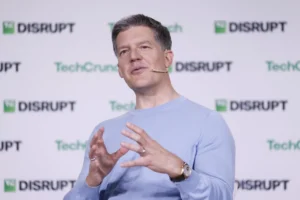
The announcement was made by long-time partner Keith Rabois during TechCrunch’s StrictlyVC event held in Manhattan. The move serves as a watershed moment for Khosla Ventures, which has historically resisted regional diversification even within California. Rabois noted that the firm does not even maintain a satellite office in San Francisco, emphasizing that this expansion is a significant departure from the firm’s long-standing operational model.
A Strategic Pivot in Operational Geography
For Khosla Ventures, this expansion is not merely about adding a new physical mailing address. The design of the space includes an unconventional "executive briefing center," which will function as a hub for cross-pollination between the firm’s portfolio companies and major Fortune 500 enterprises. According to Rabois, the facility is designed to host 10 to 12 portfolio companies simultaneously, facilitating direct introductions to potential customers and pilot partners four days a week.
This model is intended to solve a perennial problem for early-stage startups: the difficulty of securing institutional buyers. By positioning these companies directly in front of corporate decision-makers, Khosla aims to accelerate the growth cycle of its portfolio, leveraging the density and corporate access inherent to the New York City market. Rabois indicated that while construction timelines for the new office are subject to the realities of urban development, the firm is optimistic about an autumn launch.
The move also mirrors the personal evolution of Rabois himself. Having recently relocated to the East Coast to be closer to his family, including his husband, Jacob Helberg, who serves as the Under Secretary of State for Economic Growth, Energy, and the Environment in Washington, D.C., Rabois is now a central figure in bridging the gap between Silicon Valley’s venture ecosystem and the East Coast’s regulatory and corporate hubs.
The Debate Over Talent Density
The expansion into New York raises fundamental questions about the shifting landscape of tech talent. For over a decade, Silicon Valley has been the undisputed global capital for engineering and executive talent. However, recent data suggests the narrative is becoming more nuanced. A report published last month by commercial real estate services firm CBRE revealed that New York has, for the first time in 13 years of tracking, narrowly overtaken the San Francisco Bay Area in total tech talent headcount.
This shift is partly attributed to aggressive hiring by financial institutions and professional service firms that are rapidly scaling their internal AI capabilities, even as traditional technology employers in the Bay Area have undergone rounds of workforce reductions.
However, the quality and type of talent available in the two regions remain a subject of debate. Rabois offered a layered perspective on the geographic talent divide. At the junior and mid-level, particularly for individual contributors fresh out of university, Rabois believes New York is exceptionally well-positioned. He cited his experience with Ramp, a fintech company he has consistently backed, noting that the company has successfully built a high-density, high-performing team by tapping into local graduates and talent pools.
Conversely, the recruitment of senior technical talent and experienced executives remains a hurdle. "Senior engineers, architect-level — no, I think that’s a challenge," Rabois remarked. He suggests that the modern tech stack may require fewer of these high-level architects than in previous decades, which helps mitigate the scarcity, but the difficulty in recruiting top-tier executive leadership remains acute.
The Commuter Conundrum and Executive Recruitment
A significant barrier to hiring senior executives in New York is the city’s unique geography and the lifestyle challenges associated with commuting. Rabois, who grew up in the New York metropolitan area, noted that senior talent often resides in suburban areas far from the city center. For an organization committed to an "in-office" culture, the friction of a long commute acts as a deterrent for high-level candidates who prioritize family life and the space afforded by the suburbs.
"If you have an in-office culture, most of the more senior people that live and reside in the New York area live outside the city, and the commute in and out of the city for an office environment can be very painful," Rabois explained. This creates a bottleneck for firms looking to hire a CFO or a Senior Vice President of Sales—roles that traditionally require a significant amount of gravitas and face-to-face interaction.
Ramp’s approach, according to Rabois, has been to circumvent this issue by focusing on internal promotion and bottom-up talent development. By building from the ground up, the company avoids the reliance on external senior hires who may find the demands of a five-day-a-week in-office mandate prohibitive unless they possess significant independent wealth to sustain a lifestyle in the city’s core.
Broader Industry Implications
The decision by Khosla Ventures to plant a flag in New York places the firm in a growing, albeit still small, cohort of major Bay Area venture firms expanding their geographic reach. Firms like Sequoia Capital and Andreessen Horowitz have maintained East Coast presences for years, though their operations have historically been modest compared to their West Coast headquarters.
The trend reflects a broader maturation of the global tech economy. As artificial intelligence and cloud computing lower the barriers to entry for startups across various industries, the necessity of being physically present in Menlo Park or Palo Alto has diminished. Furthermore, the convergence of technology and traditional sectors—such as finance, media, and healthcare, all of which are highly concentrated in New York—makes the East Coast an increasingly attractive base for venture capital firms seeking to invest in the "real world" applications of emerging tech.
Despite the data from CBRE, skepticism remains among the venture community. During the StrictlyVC event, many attendees expressed doubt regarding the narrative that New York has officially surpassed the Bay Area in tech prominence. This skepticism underscores the deep-seated cultural and economic ties that Silicon Valley maintains, even as firms begin to acknowledge the strategic advantages of a bi-coastal or distributed presence.
Looking Ahead
As Khosla Ventures moves toward the opening of its 14th Street office, the industry will be watching closely to see how this transition influences the firm’s investment strategy and the success of its portfolio companies. If the executive briefing center succeeds in creating a repeatable model for customer acquisition, other top-tier venture firms may be pressured to follow suit, further decentralizing the venture capital industry.
The challenge for Khosla, and for New York as a tech hub, will be sustaining this growth. While the influx of AI-focused talent and the presence of major institutional investors provide a strong foundation, the city must address the infrastructure and lifestyle barriers that continue to make executive recruitment a "painful" endeavor for the firms looking to call it home. Whether this shift represents a permanent realignment of the tech industry or a temporary adjustment to a changing economic cycle remains to be seen. However, for now, the opening of a Khosla Ventures office in Manhattan serves as a clear indicator that the geography of innovation is becoming increasingly fluid.