The landscape of modern corporate communications is increasingly defined by its unpredictability, as evidenced by a series of recent events involving major brands ranging from casual dining chains to Silicon Valley tech giants and pharmaceutical titans. In an era where a restaurant promotion can become a legislative talking point and AI-generated content threatens the foundational business models of digital publishers, companies are finding that their internal policies are no longer confined to the boardroom. Instead, these policies are being scrutinized through the lenses of national politics, technological ethics, and legal accountability.
The Weaponization of Hospitality: Olive Garden and the SAVE America Act
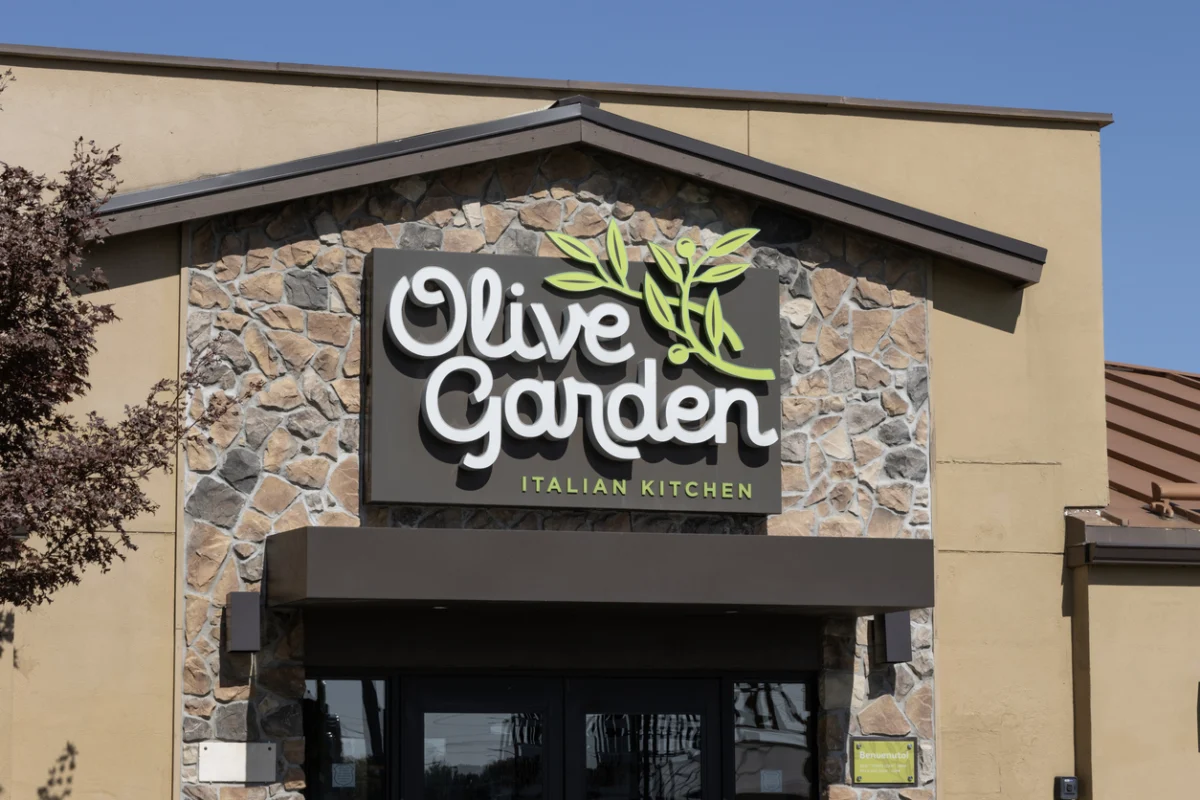
In an unexpected turn of events, Olive Garden’s "Never-Ending Pasta Pass" has transitioned from a popular marketing promotion into a central figure in the debate over United States voting laws. The promotion, which the restaurant recently revived, offers 10,000 customers the opportunity to enjoy unlimited pasta, soup, salad, and breadsticks for a duration of 13 weeks. To ensure the integrity of the promotion and prevent the unauthorized resale of the passes, Olive Garden implemented a strict policy: the passes are nontransferable, and holders must present a valid photo ID that matches the name on the pass at the time of use.
While this requirement was intended as a standard anti-fraud measure, it caught the attention of Republican lawmakers currently advocating for the SAVE America Act. This proposed legislation aims to tighten federal voting requirements by mandating that individuals provide proof of U.S. citizenship and photo identification to register and vote in federal elections. The juxtaposition of a restaurant’s security measures with the nation’s electoral process has become a potent rhetorical tool.
Senator Mike Lee (R-UT) recently amplified this comparison on the social media platform X, stating, “American elections should not be less secure than Olive Garden’s endless pasta.” The sentiment suggests that if a casual dining establishment can verify the identity of a customer for a bowl of fettuccine, the federal government should be held to an equal or higher standard regarding the democratic process.
Olive Garden, a subsidiary of Darden Restaurants, has notably maintained a stance of total silence regarding the political discourse. This strategy reflects a growing trend in crisis management where brands avoid engaging in "culture war" debates that do not directly involve their core business operations. By remaining silent, Olive Garden avoids alienating segments of its diverse customer base while preventing the brand from becoming further entrenched in a polarizing legislative battle.
Substack and the Fight Against "Claudefishing"
As the restaurant industry grapples with political appropriation, the digital publishing world is facing an existential crisis brought about by generative artificial intelligence. Substack, a platform that has built its reputation on direct-to-consumer newsletters and human-centric journalism, recently announced the launch of an AI-detection tool. The initiative is a direct response to a phenomenon dubbed "Claudefishing" by Substack CEO and co-founder Chris Best.
The term "Claudefishing"—a play on "catfishing" and Anthropic’s AI model, Claude—refers to the practice of creators publishing AI-generated content while leading readers to believe it was written by a human. According to Best, the problem is not necessarily the use of AI itself, but the "mismatch between a reader’s expectation and reality." He argues that readers invest their time and attention in Substack creators under the assumption of a human-to-human connection. When that connection is facilitated by an algorithm without disclosure, it erodes the trust that the platform’s business model depends on.
The new tool allows readers to scan posts to receive an estimate of AI involvement. However, acknowledging the inherent flaws in current AI-detection technology, Substack has included features that allow creators to scan their own drafts, explain their creative process, and challenge inaccurate results. This move toward transparency is a strategic attempt to preserve the "humanity" of the platform in an increasingly automated digital landscape. Industry analysts note that Substack’s approach contrasts with other social media platforms that have struggled to curb the influx of "AI slop"—low-quality, algorithmically generated content designed to game engagement metrics.
The Great Decoupling: Publishers vs. Google Search
The tension between human creators and AI extends beyond individual platforms to the very infrastructure of the internet. For decades, a symbiotic, if fraught, relationship existed between digital publishers and Google. Publishers allowed Google’s web crawlers to index their content in exchange for referral traffic—the "clicks" that drive advertising revenue and subscriptions.
However, the introduction of Google’s AI Overviews has fundamentally altered this dynamic. By providing comprehensive AI-generated summaries at the top of search results, Google often satisfies a user’s query without requiring them to click through to the original source. This "zero-click" search environment has led to a significant decline in referral traffic for news organizations and niche publishers alike.
Recent reports indicate that major publishers are now weighing the economic trade-offs of remaining indexed by Google. Paul Bascobert, President of Reuters, recently stated that the organization is evaluating whether the benefits of search visibility still outweigh the costs of having their proprietary reporting used to train and power AI summaries that bypass their websites.
This potential "decoupling" represents a landmark shift in the digital economy. If major publishers begin to block Google’s crawlers via robots.txt or seek legal injunctions, the quality of search results could diminish, while publishers would be forced to rely more heavily on direct distribution channels such as email newsletters, proprietary apps, and live events. This shift highlights a broader move toward "walled gardens" as content creators seek to protect their intellectual property from being commodified by Big Tech.
Pharmaceutical Giants Clash Over Clinical Data
While tech and media companies navigate the AI revolution, the pharmaceutical sector is embroiled in a high-stakes legal battle over the marketing of weight-loss drugs. Novo Nordisk, the manufacturer of the blockbuster drugs Wegovy and Ozempic, has filed a lawsuit against Eli Lilly, the maker of Zepbound and Mounjaro.
The core of the dispute lies in Eli Lilly’s advertising campaigns, which Novo Nordisk alleges utilize "outdated and misleading" clinical trial data to suggest that Lilly’s products are more effective than Novo’s. In the competitive landscape of GLP-1 receptor agonists—a market projected to reach $100 billion by 2030—advertising claims regarding efficacy and safety are paramount.
Novo Nordisk is seeking a court order to have the advertisements withdrawn, alongside corrective advertising and monetary damages. In a departure from the standard "no comment on pending litigation" approach, Eli Lilly has chosen to publicly defend its marketing. A spokesperson for Lilly asserted that the comparisons are grounded in scientific trials and accused Novo Nordisk of attempting to stifle communication rather than competing on the merits of the products.
This aggressive PR stance by Eli Lilly is indicative of a "defensive-offensive" strategy. By publicly framing the lawsuit as an attempt to suppress science, Lilly aims to maintain the confidence of healthcare providers and patients while the legal process unfolds. For communicators, this case serves as a reminder that in highly regulated and competitive industries, the court of public opinion is often as influential as a court of law.
Analysis: The Future of Brand Integrity and Transparency
The common thread linking these disparate events is the fragility of brand reputation in a hyper-connected world. Whether it is a pasta promotion being used to argue for voting integrity or a pharmaceutical company defending its data, the modern corporation must operate with the understanding that its actions will be interpreted through various social and political prisms.
- Strategic Silence vs. Active Defense: The contrast between Olive Garden’s silence and Eli Lilly’s vocal defense illustrates that there is no "one-size-fits-all" approach to crisis communications. Silence is effective when the issue is tangential to the brand’s purpose, whereas active defense is necessary when the brand’s core credibility—such as scientific accuracy—is under fire.
- The Transparency Mandate: Substack’s AI-detection tool reflects a growing consumer demand for transparency. As AI becomes ubiquitous, brands that can prove the "provenance" of their products—whether those products are news articles or physical goods—will likely command a premium in trust.
- Platform Independence: The conflict between publishers and Google underscores the danger of over-reliance on third-party platforms. Companies are increasingly recognizing that "rented" audiences on search engines or social media can be taken away by an algorithm update. Strengthening direct-to-consumer relationships is no longer an option; it is a necessity for survival.
As we move further into the decade, the intersection of technology, politics, and commerce will only become more complex. Organizations that succeed will be those that not only anticipate these shifts but also remain steadfast in their core values, ensuring that their brand narrative remains under their control, even when it is being discussed in the halls of Congress or generated by a machine.