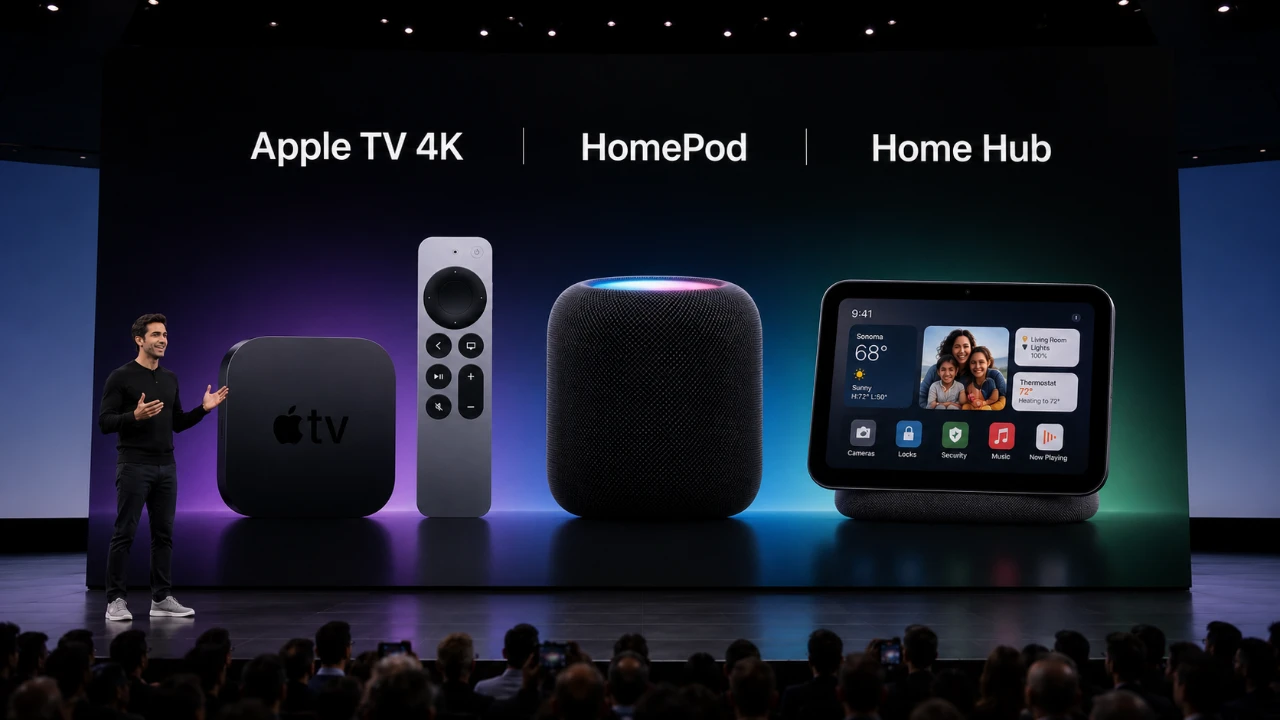
Apple is reportedly poised to significantly bolster its smart home ambitions with a suite of new hardware, all underscored by a revitalized Siri AI powered by the forthcoming iOS 27. This strategic push, anticipated to culminate in a dedicated fall event, suggests a concerted effort to elevate its presence in the increasingly competitive connected home market. The lineup is rumored to include an updated Apple TV 4K, refreshed HomePod models, and a long-awaited, dedicated smart home hub. Industry observers are speculating that these announcements could be strategically placed in October or November, diverging from Apple’s traditional September iPhone and Apple Watch showcases to provide a focused platform for its smart home ecosystem.
The Nexus of the Connected Home: Apple’s New Smart Home Hub
At the vanguard of Apple’s rumored smart home expansion is a highly anticipated smart home hub, envisioned as the central nervous system for the modern Apple-enabled household. This device is expected to transcend mere device control, aiming to provide a seamless and intuitive command center for an ever-growing array of connected technologies. Early reports suggest that this hub will operate on a novel operating system, tentatively dubbed "Charismatic OS." This proprietary software is expected to come pre-loaded with essential Apple applications, including Safari for web browsing, Music for audio streaming, and the Home app for smart device management. A key differentiator, however, may be the apparent absence of a traditional app store, indicating a deliberate focus on core functionality and a curated user experience, rather than an open-ended platform.
The envisioned capabilities of this smart home hub point towards a sophisticated level of integration and automation. Features such as proximity detection are expected to enable proactive device responses, anticipating user needs before they are explicitly stated. For instance, as a user enters a room, lights could automatically adjust to their preferred settings, or music could begin playing. Furthermore, the integration of Face ID technology could usher in a new era of personalized smart home experiences. This would allow the hub to recognize individual users, tailoring device access, media playback, and even environmental controls to their specific preferences and security needs. This level of personalization could significantly enhance both convenience and security within the home.
The strategic positioning of this hub within the Apple ecosystem is crucial. By centralizing control, it aims to simplify the often complex landscape of smart home management. The reported price point of $350 suggests a premium product, aligning with Apple’s typical market strategy, and indicating a commitment to delivering a robust and feature-rich experience that justifies the investment. This device could represent Apple’s most significant step yet in establishing a dominant and cohesive smart home platform, challenging existing market leaders and setting a new benchmark for integrated home automation. The implications of such a device are far-reaching, potentially accelerating mainstream adoption of smart home technology by simplifying its implementation and enhancing its appeal through Apple’s renowned user-friendly interface and design philosophy.
Apple TV 4K: Subtle Yet Significant Enhancements to a Core Entertainment Hub
The perennial favorite, Apple TV 4K, is slated to receive a generation of upgrades that, while perhaps not revolutionary in outward appearance, are poised to deliver meaningful performance improvements and deeper integration into the smart home fabric. While the familiar aesthetic is expected to be retained, the internal architecture is reportedly undergoing a significant overhaul. These enhancements are anticipated to include a more powerful processor, likely a chip from Apple’s A-series or potentially a new M-series silicon variant, to handle increasingly demanding media playback, advanced gaming capabilities, and more sophisticated AI-driven features. Enhanced Wi-Fi and Bluetooth connectivity are also expected, ensuring more stable and faster streaming, as well as more reliable connections with a wider range of accessories.
A redesigned Siri remote is also a strong possibility, aiming to refine the user experience with improved ergonomics and potentially more intuitive controls. This could involve the incorporation of haptic feedback or even gesture-based navigation, further streamlining interactions with both entertainment content and smart home devices. The integration of the Apple TV with the Home app is expected to deepen considerably. This would position the Apple TV not just as a media consumption device, but as a vital component of the smart home infrastructure, enabling users to view security camera feeds, adjust thermostat settings, and manage other connected devices directly from their television interface. This convergence of entertainment and home control is a key aspect of Apple’s strategy to make its devices indispensable in the modern home.
The implications of these upgrades extend beyond mere convenience. A more powerful Apple TV 4K could unlock new possibilities for interactive entertainment, augmented reality experiences, and even more sophisticated smart home dashboards. By solidifying its role as a central hub, Apple is aiming to ensure that its television platform remains a cornerstone of the digital living room, offering a compelling reason for users to invest in and remain within the Apple ecosystem. This strategic enhancement of a well-established product reinforces Apple’s commitment to its existing user base while simultaneously attracting new adopters seeking a unified and intelligent home entertainment and control solution.
HomePod Mini: Refreshed Internals and a Splash of New Color
The compact yet powerful HomePod Mini is also reportedly on the cusp of an update, focusing on internal refinements to maintain its competitive edge in the burgeoning smart speaker market. While its iconic spherical design is expected to remain unchanged, the internal components are slated for an upgrade. These improvements are likely to include a more efficient and capable chipset, enhancing its responsiveness and audio processing capabilities. Improved microphone arrays could also be a key feature, leading to more accurate voice command recognition, even in noisy environments. Furthermore, enhanced connectivity options, potentially including support for newer Wi-Fi standards, could improve its overall performance and integration with other smart home devices.
Beyond the internal enhancements, the HomePod Mini is rumored to be expanding its aesthetic appeal with the introduction of new color options. While the current palette has been well-received, the addition of colors like red could cater to a broader range of user preferences and interior design aesthetics. This move, while seemingly minor, can have a significant impact on market appeal, offering consumers more choice and making the HomePod Mini a more attractive proposition for those seeking to personalize their living spaces.
These updates signal Apple’s continued dedication to its smart speaker offerings. By refreshing the HomePod Mini, Apple aims to keep pace with evolving consumer expectations and technological advancements. The goal is to ensure that the HomePod Mini remains a compelling entry point into Apple’s smart home ecosystem, offering a balance of affordability, performance, and design. The incremental nature of these upgrades suggests a strategy of continuous improvement rather than a radical redesign, reflecting Apple’s approach to iterating on successful products to refine and enhance their capabilities over time.
Full-Size HomePod: Subtle Refinements for Enhanced Integration
The larger, full-size HomePod, while having undergone a recent refresh, is also expected to receive minor updates, primarily focused on its integration with the new Siri AI and the broader smart home ecosystem. While major hardware changes are not anticipated, these incremental enhancements are crucial for maintaining parity and ensuring a consistent user experience across Apple’s smart speaker lineup. The primary focus will likely be on software optimizations that leverage the advancements in iOS 27 and the new Siri AI, leading to improved voice command processing, more nuanced responses, and a deeper understanding of user context.
These updates will ensure that the full-size HomePod remains a premium audio device with enhanced smart home capabilities. The emphasis on software and AI integration signifies Apple’s strategy of evolving its hardware through intelligent software updates, extending the lifespan and utility of its products. This approach not only benefits consumers by providing ongoing improvements but also reinforces Apple’s commitment to a seamlessly connected and intelligent home environment. The consistent functionality and improved user experience across both HomePod models will be key to solidifying Apple’s position as a provider of premium smart home audio solutions.
Indoor Security Camera: A Potential New Frontier in Home Protection
Adding a new dimension to its smart home portfolio, Apple is reportedly exploring the development of an indoor security camera. While details remain speculative, this move would mark Apple’s entry into a rapidly growing and highly competitive market segment. The company’s established reputation for prioritizing user privacy suggests that any such device would be engineered with robust security measures at its core. This could include end-to-end encryption for video feeds, ensuring that only authorized users can access footage, and advanced AI-powered monitoring that can intelligently distinguish between normal activity and potential security events, minimizing false alarms.
The integration of such a camera into the Apple ecosystem would be seamless, likely allowing for direct streaming to iPhones, iPads, and the new smart home hub, as well as integration with the Home app for easy management and notification settings. The potential launch of this product in late 2026, as rumored, indicates a longer-term development cycle, underscoring Apple’s meticulous approach to product design and integration. The introduction of an indoor security camera would significantly broaden Apple’s smart home offerings, providing users with a comprehensive suite of devices for a more secure and connected living experience, further solidifying its position as a holistic provider of smart home solutions.
Strategic Event Timing: A Dedicated Fall Showcase for Smart Home Innovations
The sheer breadth of rumored product refreshes and introductions strongly suggests that Apple will deviate from its usual September event schedule, which typically focuses on the iPhone and Apple Watch. Instead, a dedicated event in October or November is becoming increasingly likely. This strategic timing would allow Apple to give its smart home initiatives the focused attention they deserve, without being overshadowed by its flagship product launches. Such a separate event would enable a deeper dive into the features and benefits of the new smart home hub, the updated Apple TV 4K, the refreshed HomePods, and potentially the new security camera.
This approach would allow Apple to clearly articulate its vision for the connected home, highlighting the interoperability and synergistic capabilities of its new hardware and software. It would also provide a distinct narrative for these products, distinguishing them from the annual iPhone cycle and allowing for a more targeted marketing and communication strategy. The anticipation for these smart home announcements is considerable, and a dedicated event would serve as the ideal platform to unveil these innovations and solidify Apple’s commitment to shaping the future of intelligent living spaces.
Apple’s Evolving Vision for the Connected Home
The confluence of these rumored product updates and the significant role of an enhanced Siri AI signifies a pivotal moment for Apple in the smart home arena. The company’s strategy appears to be centered on deepening integration, elevating performance, and maintaining its signature user-centric design philosophy. From the foundational smart home hub to the entertainment prowess of the Apple TV 4K and the audio excellence of the HomePod line, these devices are engineered to work in concert, creating a cohesive and intuitive smart home experience.
This comprehensive approach aims to solidify Apple’s position in a market that is increasingly defined by interconnectedness and intelligent automation. By leveraging the power of its proprietary software and hardware, Apple is not merely introducing new products but is actively shaping a more connected, convenient, and secure future for the home. The success of these initiatives will depend on their ability to deliver on the promise of seamless integration and unparalleled user experience, reinforcing Apple’s reputation for innovation and its commitment to enhancing the lives of its users through technology. The forthcoming fall events are poised to reveal the full scope of this ambitious vision, offering a glimpse into the next generation of smart living, powered by a smarter Siri.