The modern digital landscape demands unprecedented content velocity, yet accelerating production schedules frequently introduce severe operational risks, from minor typographical errors and broken links to catastrophic off-brand messaging and regulatory compliance failures. Recent data from the 2025 B2B Content Survey conducted by Forrester underscores this tension, revealing that inefficient content creation and review processes remain the primary bottleneck facing content decision-makers globally. To combat this friction, modern marketing departments across industries are increasingly turning to structured content approval workflows. By establishing clear oversight mechanisms, organizations can preserve brand integrity, mitigate legal liabilities, and dramatically streamline their path from ideation to final publication.

Defining the Content Approval Process
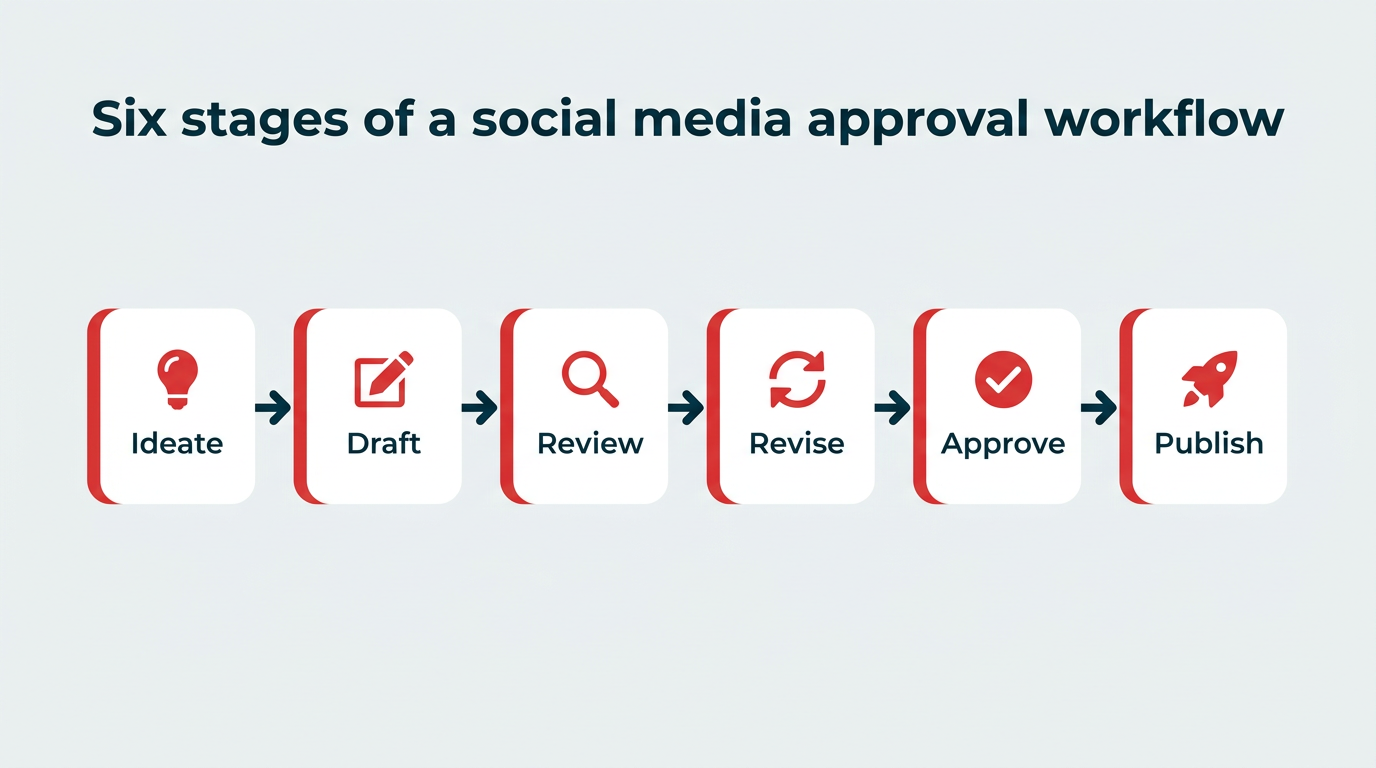
At its core, a content approval process is the systematic review and sign-off procedure applied to any digital asset before public distribution. By introducing operational structure into creative environments, these workflows prevent flawed copy, formatting errors, and unverified claims from reaching target audiences. Typically, a standard workflow traces a logical path beginning with an initial draft by a creator or strategist, moving through iterative internal reviews and feedback loops, and concluding with final executive authorization.

While the fundamental trajectory remains consistent across various media types, executing these workflows within fast-paced social media environments presents unique operational challenges. Unlike long-form editorial pieces or annual whitepapers, social media managers routinely evaluate dozens of short-form assets weekly. Reviewers must assess platform-specific constraints—such as strict character limits, image cropping parameters, and real-time interactive tones—prior to authorization rather than addressing them retroactively.
Beyond social media, similar approval paradigms govern corporate websites, blog posts, email marketing campaigns, product landing pages, and complex digital multimedia assets. Although the foundational stages remain identical, scaling these processes to encompass broader enterprise ecosystems typically alters the volume of reviewers, shortens required turnaround times, and elevates the necessity for technical or legal compliance validation.
Anatomical Breakdown of Effective Workflows
Constructing a reliable content approval framework requires a careful equilibrium among three foundational pillars: people, process, and tools. Establishing clear ownership of roles within the personnel structure is paramount. Common designations within a mature workflow include content creators, subject matter experts, compliance or legal officers, brand managers, and final publishing approvers.
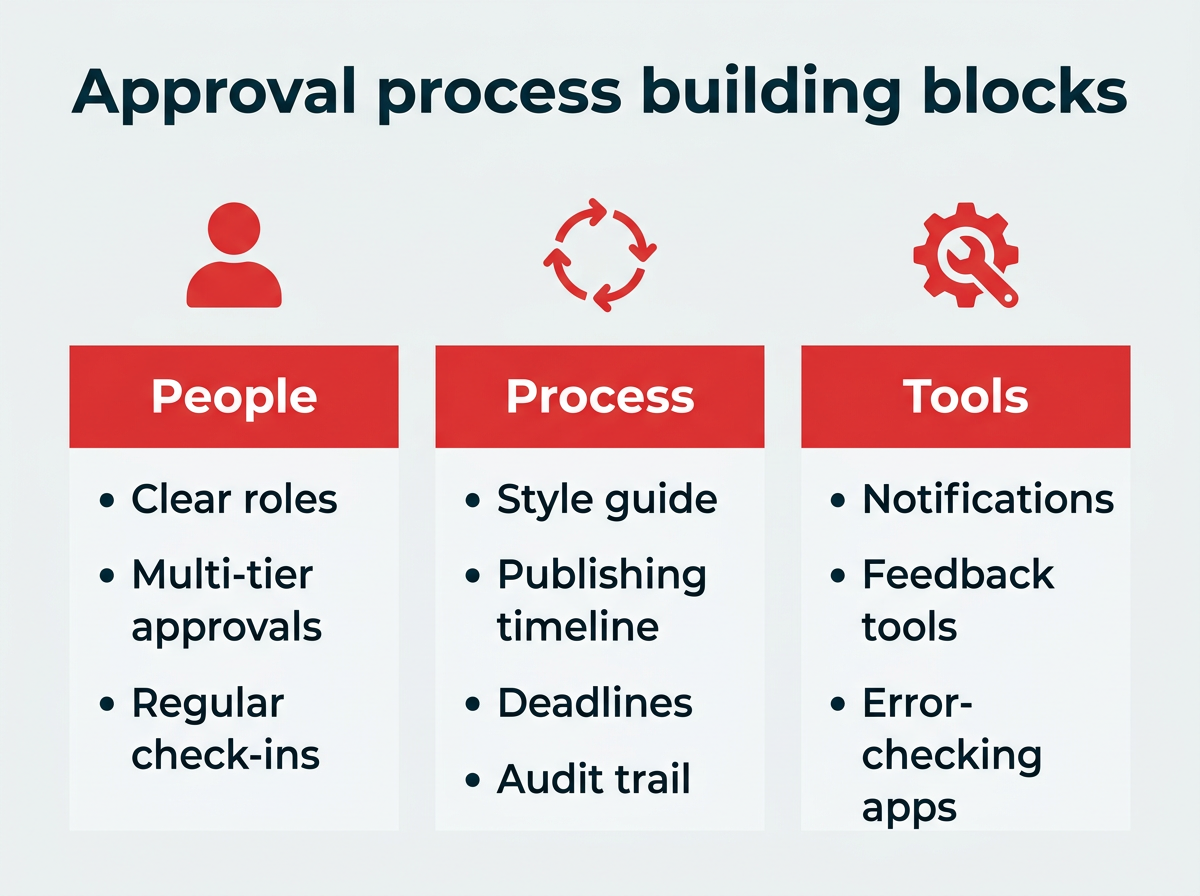
From a procedural standpoint, defining distinct entry and exit criteria for each stage eliminates ambiguous handoffs and reduces back-and-forth friction. For instance, a draft must not transition into the review phase unless it features an approved headline, verified links, and correctly formatted visual assets. Furthermore, selecting centralized technological infrastructure—such as robust social media management platforms or integrated project management suites—allows teams to consolidate scattered feedback threads, assign role-based permissions, and maintain comprehensive audit trails.
Categorizing Content Approval Workflows
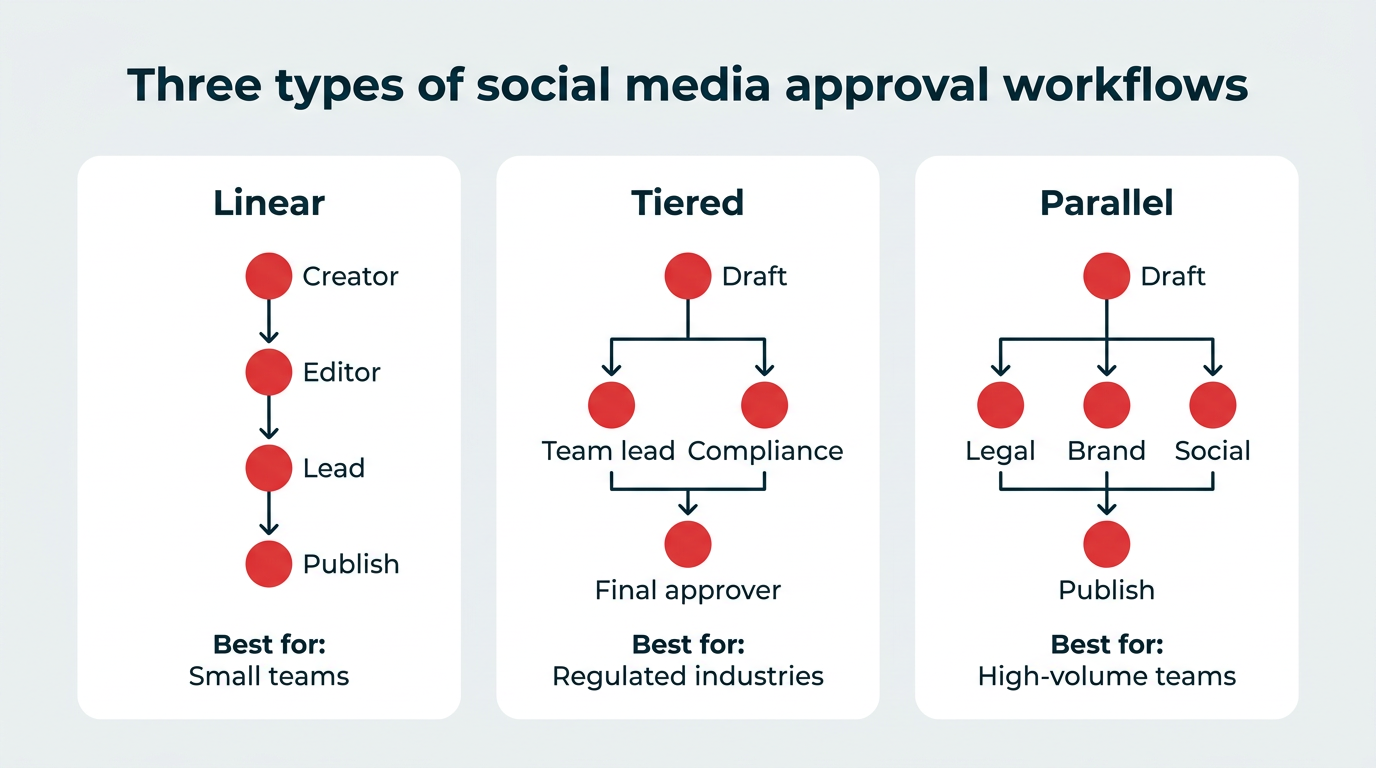
Organizations vary significantly in size, regulatory burdens, and publishing volume; consequently, no single approval structure suits every enterprise. Industry leaders generally categorize content workflows into five distinct models:
- Linear Approval: A sequential model where content flows through one reviewer at a time in a fixed order (e.g., Creator to Editor to Brand Lead to Publisher). This model is ideal for small teams with low publishing volumes.
- Tiered (Multi-Level) Approval: Incorporates multiple layers of authorization, frequently utilized in highly regulated sectors like finance and healthcare where legal or compliance sign-off is mandatory before publication.
- Parallel Approval: Permits multiple stakeholders—such as legal counsel, regional directors, and brand managers—to evaluate drafts simultaneously. This structure drastically accelerates turnaround times for large teams, provided a designated final decision-maker resolves conflicting feedback.
- Conditional (Exception-Based) Approval: Automatically routes content through varying review paths determined by pre-established criteria, including risk level, geographical region, or campaign type. Routine organic posts may require only a single sign-off, whereas crisis communications or paid advertisements trigger multi-tier executive reviews.
- Hybrid Approval: Combines elements of the aforementioned structures, deploying linear paths for everyday updates, parallel reviews for major campaign rollouts, and conditional routing for sensitive compliance materials.
Common Causes of Workflow Breakdown
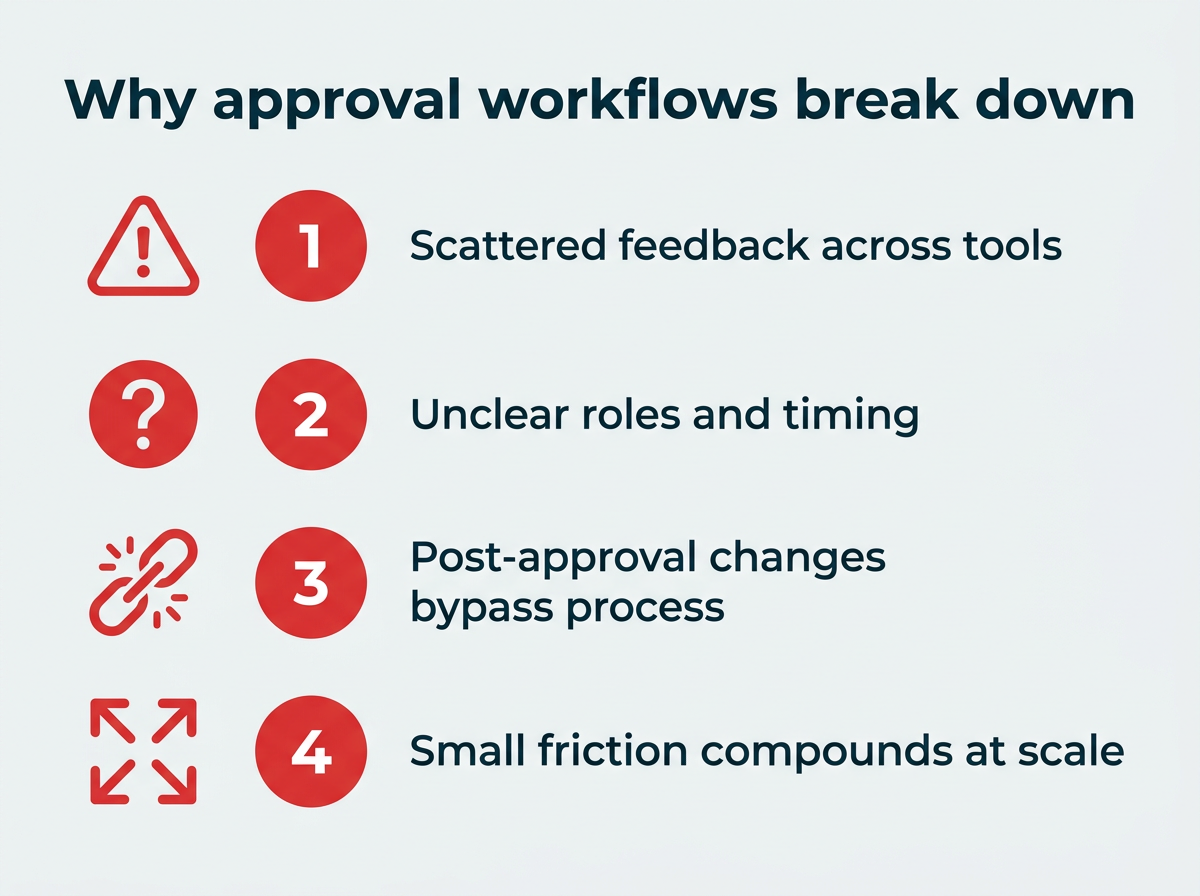
Despite sound initial intentions, many organizational content workflows degrade over time due to specific operational pitfalls. Chief among these is the scattering of feedback across disparate communication channels, including email chains, instant messaging applications, and unversioned document comments. This fragmentation routinely results in missed edits, duplicate work, and administrative confusion.
Additionally, undefined operational roles and ambiguous timing create severe internal bottlenecks. When team members remain uncertain of their review obligations or deadlines, content languishes in queues. The introduction of post-approval alterations—often executed hastily under deadline pressure—represents another critical vulnerability. Bypassing established review chains to insert last-minute changes frequently reintroduces the exact errors and compliance risks the approval process was engineered to intercept. As enterprise operations scale across multiple regional accounts, these localized friction points compound exponentially, ultimately resulting in systemic workflow failure unless mitigated by automated tools and bulk-approval capabilities.
Step-by-Step Implementation Guide
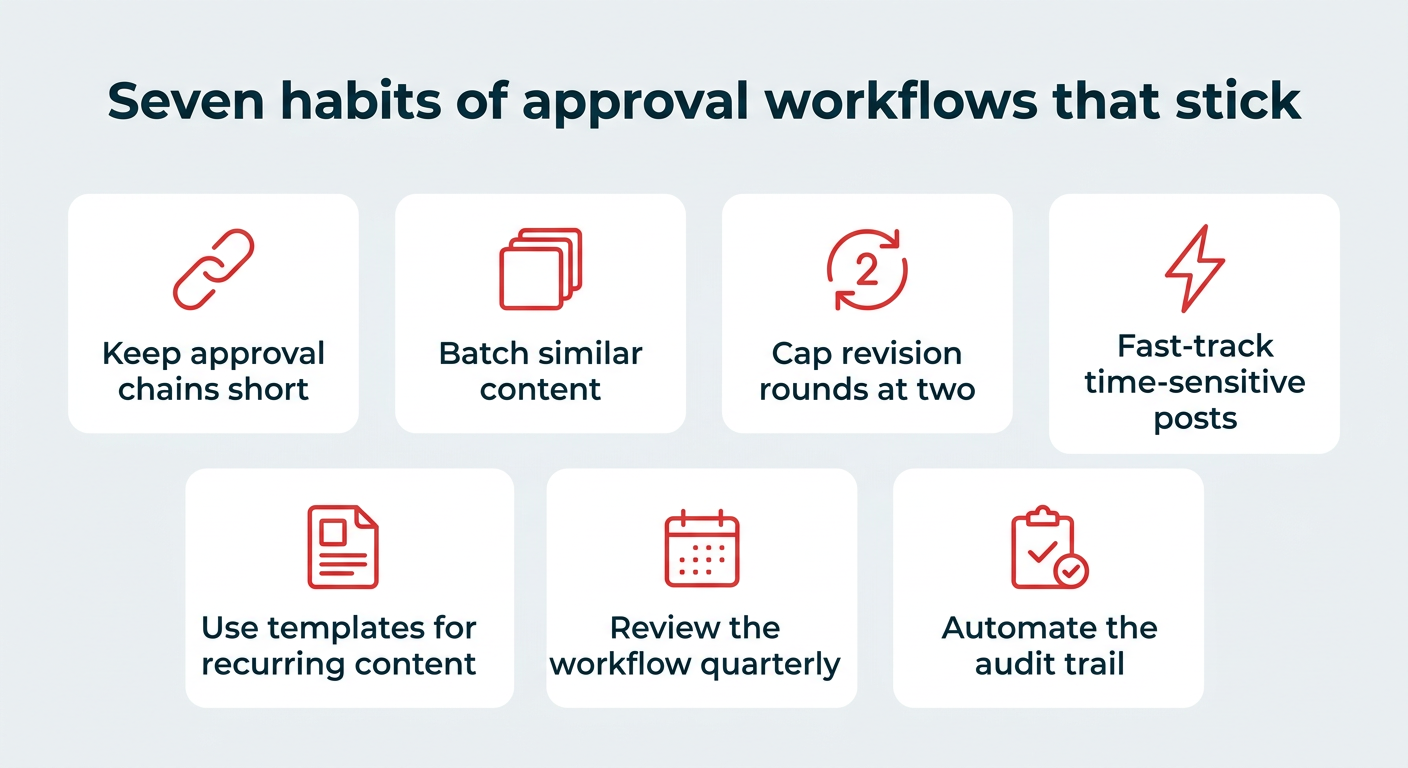
Deploying a resilient content approval workflow requires a methodical, six-step implementation strategy designed to withstand real-world publishing pressures:
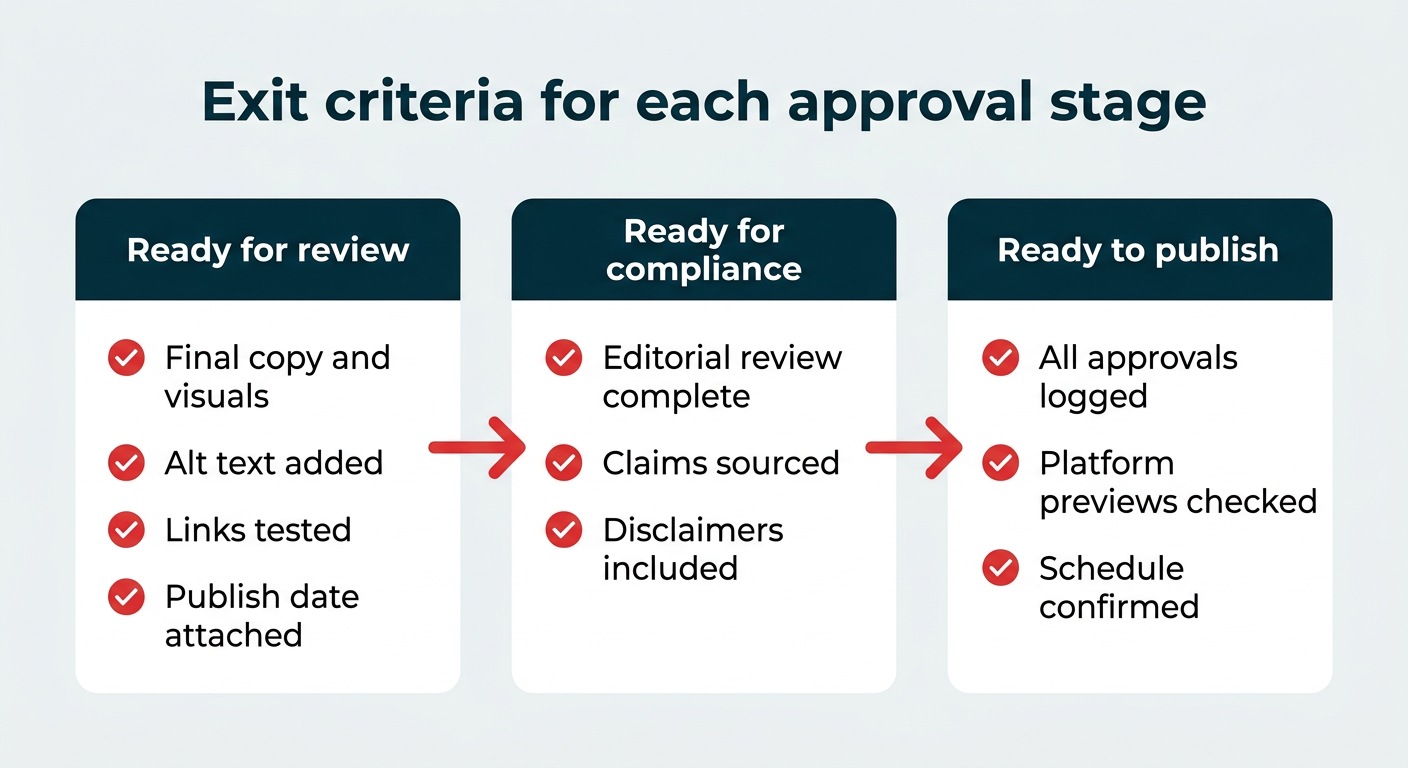
First, organizations must formally define roles and responsibilities, eliminating ambiguity regarding task ownership. Establishing role-based permissions within management software ensures that only authorized personnel can advance or publish materials.
Second, teams must map their specific content workflow stages, tailoring the ideation-to-publication continuum to match internal capacity. Establishing explicit Service Level Agreements (SLAs) for each stage—such as mandating a 24-hour maximum turnaround for editorial reviews—maintains necessary publishing velocity.

Third, leadership must select an appropriate approval structure based on organizational complexity and regulatory obligations.
Fourth, centralizing operations within a unified software platform is critical. Modern social media management platforms enable configurable approval chains, automated notification triggers, and strict post-locking mechanisms that prevent unverified modifications after final sign-off.
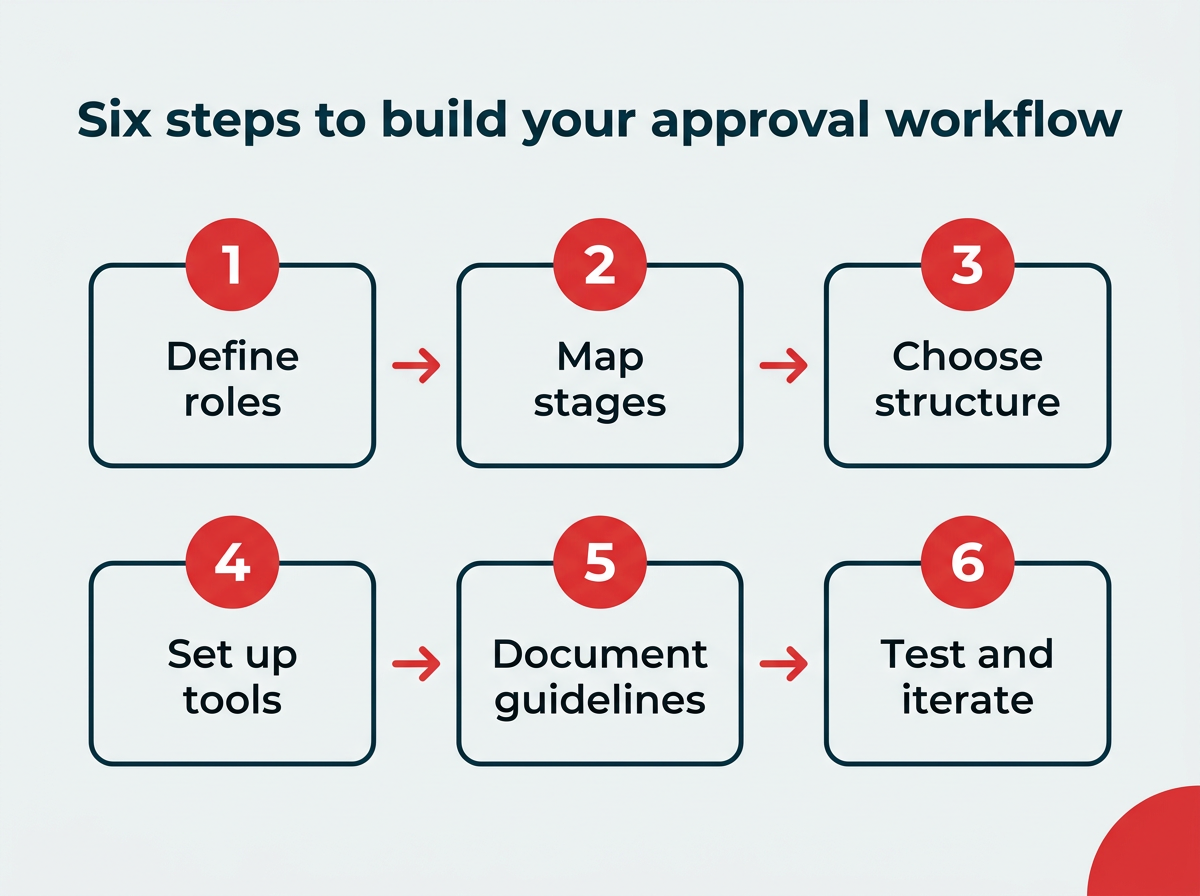
Fifth, comprehensive documentation outlining brand guidelines, turnaround SLAs, and escalation protocols must be shared across the organization during onboarding. Designating backup approvers for every reviewer ensures continuity during absences or emergencies.
Sixth, organizations must continuously test, measure, and iterate. Monitoring metrics such as average time-to-publish and revision frequency highlights persistent bottlenecks, allowing managers to dynamically refine roles and timelines.
Managing AI-Generated Content Within Workflows
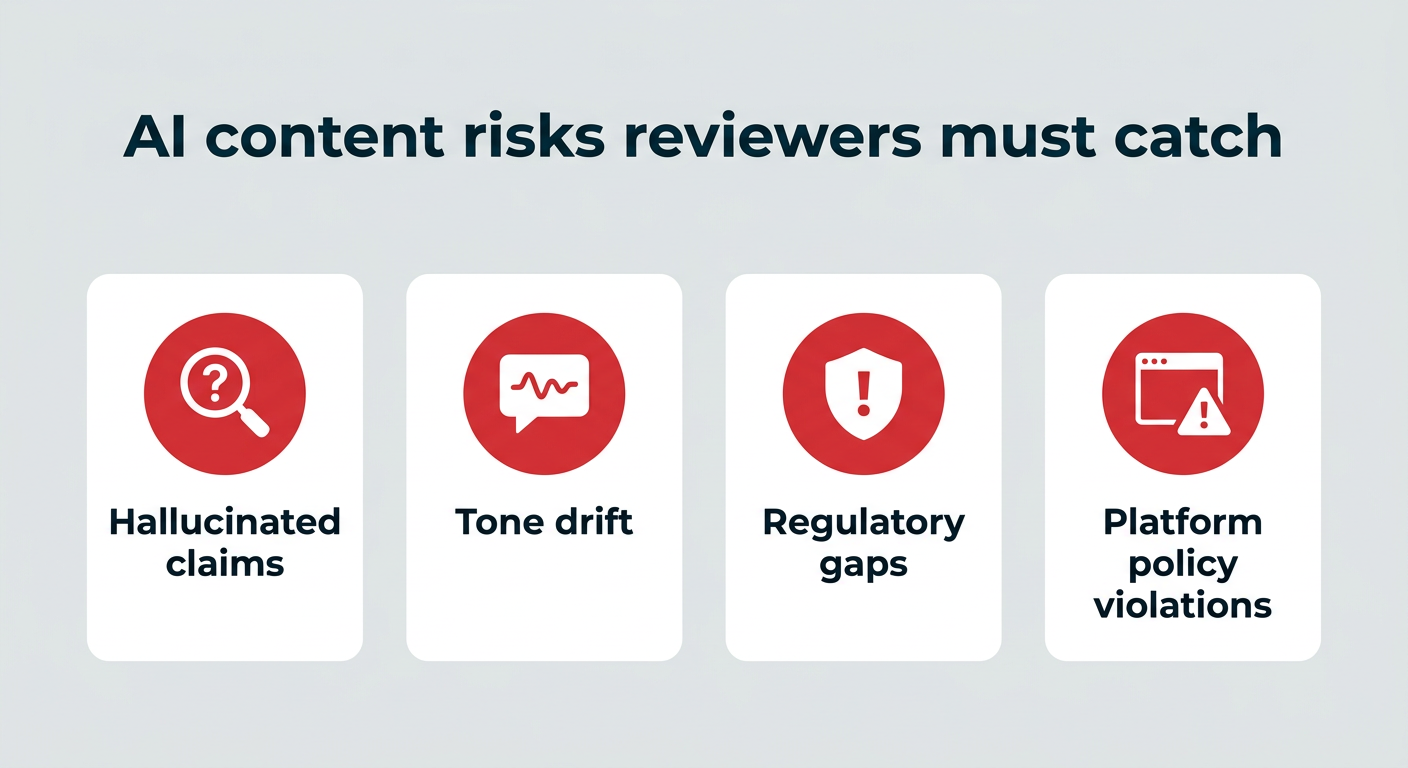
The rapid integration of artificial intelligence into content operations has profoundly altered content generation velocity. With over half of marketing technology leaders actively engaging in AI-assisted production, approval workflows face a surge in output volume. However, AI-generated assets carry distinct operational risks, including algorithmic hallucinations, subtle tone drift, regulatory non-compliance, and inadvertent platform policy violations.
To safeguard brand equity, forward-thinking organizations mandate that AI-assisted drafts undergo rigorous fact-checking and compliance screening prior to editorial review. Explicitly flagging drafts as AI-generated within centralized management tools prompts reviewers to prioritize accuracy and sourcing verification over mere stylistic polish. Advanced platforms seamlessly route these AI-assisted materials through established governance chains, ensuring speed in drafting does not supersede necessary human oversight.
Industry Implications and Future Outlook

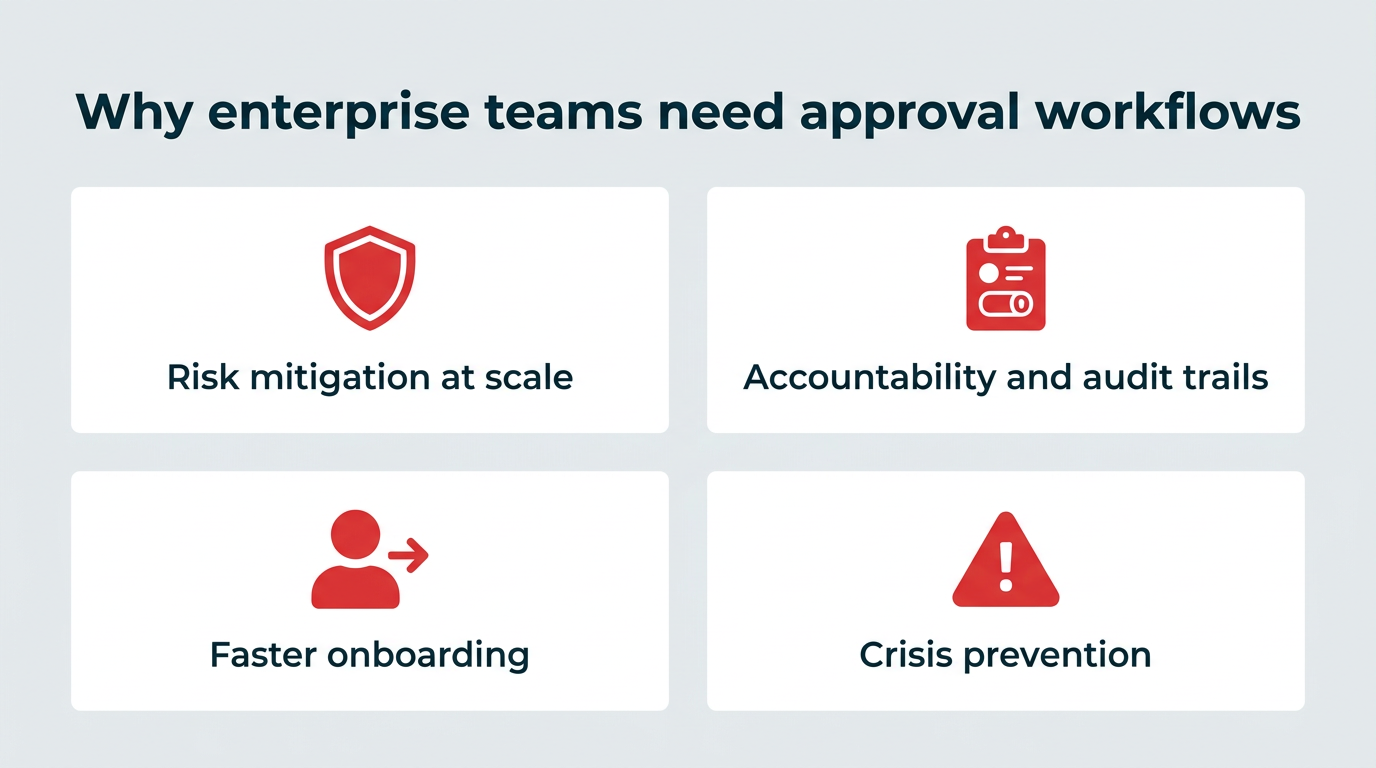
The strategic implementation of content approval workflows extends far beyond operational efficiency; it serves as a critical enterprise risk-mitigation framework. In an era defined by instantaneous digital communication and heightened regulatory scrutiny, the ability to maintain consistent brand voice, ensure legal compliance, and protect corporate reputation at scale is paramount. Organizations that successfully transition from ad hoc reviews to structured, technologically supported approval ecosystems are uniquely positioned to navigate the complexities of modern digital marketing, safeguarding both their brand equity and their bottom line.