Congress Voices Mixed Opinions on Roe Ruling
Members of congress voice mixed opinions on the roe ruling – Congress Voices Mixed Opinions on Roe Ruling, the landmark decision overturning Roe v. Wade has ignited a firestorm of debate within the halls of power. With the future of abortion rights hanging in the balance, members of Congress are grappling with the ramifications of this monumental ruling, expressing a spectrum of viewpoints on the issue.
From passionate pleas for the protection of women’s reproductive rights to fervent calls for the safeguarding of the unborn, the political landscape has been transformed. The ruling has triggered a wave of legislative activity, with lawmakers on both sides of the aisle seeking to solidify their positions and shape the course of abortion policy in the United States.
Political Reactions to the Roe Ruling
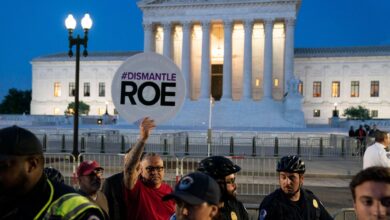
The Supreme Court’s decision to overturn Roe v. Wade in June 2022 sparked intense reactions from members of Congress, reflecting the deeply divided nature of the issue in American politics. Reactions ranged from celebratory statements affirming the right of states to regulate abortion to expressions of outrage and calls for legislative action to protect abortion access.
Statements from Representatives and Senators
The decision to overturn Roe v. Wade prompted a wave of statements from members of Congress on both sides of the issue. Many Republicans expressed support for the ruling, emphasizing the return of authority to individual states to regulate abortion.
For example, Senator Lindsey Graham (R-SC) stated, “The Supreme Court has returned the issue of abortion to the states where it belongs.”
“The Supreme Court has returned the issue of abortion to the states where it belongs.”
Senator Lindsey Graham (R-SC)
Conversely, Democrats expressed strong condemnation of the ruling, viewing it as a significant setback for women’s rights and access to healthcare. Senator Elizabeth Warren (D-MA) tweeted, “This decision is a devastating blow to women’s rights and will have a devastating impact on women’s health and lives.”
“This decision is a devastating blow to women’s rights and will have a devastating impact on women’s health and lives.”
The recent Supreme Court ruling on Roe v. Wade has sparked heated debates and divided opinions, with members of Congress expressing a wide range of perspectives. While the political landscape shifts, it’s important to remember that our personal financial well-being also requires attention.
Take a moment to assess your financial standing with this insightful quiz, where do you stand financially get a score on this quiz and our advice , and get tailored advice to navigate the ever-changing economic landscape. As the political debate continues, it’s essential to maintain a strong financial foundation to weather any storm, regardless of where you stand on the Roe ruling.
Senator Elizabeth Warren (D-MA)
Proposed Legislative Actions
In response to the ruling, members of Congress on both sides of the aisle have proposed various legislative actions. Democrats have introduced several bills aimed at codifying Roe v. Wade into federal law and protecting abortion access nationwide. For instance, the “Women’s Health Protection Act” seeks to protect a woman’s right to access abortion services.
“The Women’s Health Protection Act”
Republicans, on the other hand, have proposed legislation that would restrict abortion access at the federal level. The “Pain-Capable Unborn Child Protection Act” seeks to ban abortions after 20 weeks of pregnancy.
It’s fascinating to see the wide range of opinions on the Roe ruling, with members of Congress expressing everything from fervent support to outright condemnation. It makes you wonder if this is a testament to the power of free speech, which is essential for a functioning democracy, or if it’s a sign of how easily our society can become fractured by differing viewpoints.
After all, as the article free speech is essential for democracy could it also be democracys downfall points out, free speech can be a double-edged sword. While it allows for open debate, it can also fuel division and extremism.
Perhaps the real challenge lies in finding a balance, allowing for the free expression of diverse opinions while also promoting respectful dialogue and understanding.
“Pain-Capable Unborn Child Protection Act”
Legal and Constitutional Implications
The Supreme Court’s decision in Dobbs v. Jackson Women’s Health Organization, overturning Roe v. Wade, has ignited a firestorm of debate regarding its legal and constitutional implications. This ruling has brought to the forefront the complex interplay of individual rights, state sovereignty, and the interpretation of the Constitution.
Arguments Presented by Both Sides, Members of congress voice mixed opinions on the roe ruling
The legal arguments presented by both sides of the Roe ruling debate revolve around the interpretation of the Constitution and its application to the issue of abortion.
- Proponents of the Dobbs decision argue that the Constitution does not explicitly guarantee a right to abortion and that this issue should be left to individual states to decide. They emphasize the Tenth Amendment, which reserves powers not delegated to the federal government to the states, and argue that abortion regulation falls within the scope of state police powers.
They also contend that Roe v. Wade was wrongly decided, as it created a right to abortion not rooted in the Constitution.
- Opponents of the Dobbs decision argue that the Constitution’s guarantee of liberty and privacy, as recognized in cases like Griswold v. Connecticut and Roe v. Wade, encompasses a woman’s right to make decisions about her own body, including the right to terminate a pregnancy.
They contend that the Dobbs decision undermines the fundamental right to privacy and autonomy, and that it disproportionately affects marginalized communities.
Potential Future Legal Challenges
The Dobbs decision has opened the door to a range of potential legal challenges, with implications for both abortion rights and the broader landscape of constitutional law.
- One area of potential litigation concerns the constitutionality of state abortion bans. Some states have enacted near-total bans on abortion, which could face legal challenges based on arguments that they violate the Fourteenth Amendment’s Equal Protection Clause, which prohibits states from denying any person within their jurisdiction the equal protection of the laws.
- Another potential legal challenge relates to the right to travel. The Dobbs decision could lead to legal battles over the ability of individuals to travel to other states for abortion care, particularly in states where abortion is banned or severely restricted.
This issue could raise questions about the limits of state sovereignty and the right to travel freely across state lines.
- The Dobbs decision could also trigger litigation over the application of the Comstock Act, a federal law that prohibits the mailing of obscene material, including materials related to abortion. This law could be used to restrict access to abortion information and medication, potentially creating a new front in the legal battle over abortion rights.
Constitutional Principles at Play
The Roe v. Wade case and its aftermath have highlighted several key constitutional principles, including:
- The right to privacy, as established in cases like Griswold v. Connecticut, is a fundamental right protected by the Constitution. While the Court has recognized that this right is not absolute, it has consistently held that it encompasses a woman’s right to make decisions about her own body and reproductive health.
The Roe v. Wade ruling continues to be a hot topic in Congress, with some members voicing strong support for the decision while others are equally vocal in their opposition. It’s a stark contrast to the unified front seen in the international arena, where countries like Ukraine are relying on a well-organized “commando network” commando network coordinates flow of weapons in ukraine officials say to ensure the flow of crucial military aid.
While the political landscape in the US remains divided on the Roe ruling, the global response to the Ukraine conflict showcases a sense of solidarity and urgency.
- The Fourteenth Amendment’s Due Process Clause prohibits states from depriving any person of life, liberty, or property without due process of law. This principle has been invoked to protect a woman’s right to an abortion, arguing that state restrictions on abortion violate her right to bodily autonomy and privacy.
- The Tenth Amendment reserves powers not delegated to the federal government to the states. This principle has been invoked to support the right of states to regulate abortion, arguing that the Constitution does not explicitly grant the federal government the power to regulate abortion.
State-Level Responses to the Roe Ruling

The overturning of Roe v. Wade has triggered a wave of legal and political activity across the United States. The decision has given individual states the power to regulate or ban abortion, leading to a patchwork of laws and policies.
State Responses to the Roe Ruling
The decision has sparked a variety of responses from states, with some enacting new restrictions on abortion access, while others are working to protect reproductive rights. The following table provides an overview of some of the key state-level responses:
| State | Legislation | Policy Changes |
|---|---|---|
| Alabama | Alabama Human Life Protection Act (HB 314) | Criminalizes all abortions, except in cases of a medical emergency to save the life of the mother. |
| Texas | Texas Heartbeat Act (SB 8) | Bans abortions after a fetal heartbeat is detected, which can be as early as six weeks into pregnancy. |
| California | Reproductive Freedom, Rights, and Choice Act (SB 134) | Codifies the right to abortion and contraception into state law. |
| New York | Reproductive Health Act (RHA) | Enacts a comprehensive reproductive health law that includes protections for abortion access. |
The Future of Abortion Rights
The Supreme Court’s decision to overturn Roe v. Wade has sent shockwaves across the country, leaving many to wonder about the future of abortion rights. The decision has unleashed a wave of uncertainty, with far-reaching consequences for women’s reproductive healthcare and the political landscape.
Potential Long-Term Consequences of the Roe Ruling
The overturning of Roe v. Wade has ushered in a new era of legal uncertainty and has the potential to significantly impact abortion access across the United States. The decision has empowered states to enact stricter abortion laws, with many states quickly moving to ban or severely restrict abortion access.
- Increased Restrictions and Bans:The most immediate consequence of the Roe ruling is the implementation of restrictive abortion laws in numerous states. States with trigger laws have already banned abortion, while others have enacted bans at various stages of pregnancy. These restrictions create significant barriers to access, forcing many individuals to travel long distances or seek unsafe alternatives.
- Disproportionate Impact on Marginalized Communities:The impact of the Roe ruling is expected to disproportionately affect marginalized communities, including low-income individuals, people of color, and those living in rural areas. These communities often face greater obstacles to accessing healthcare, including transportation, childcare, and financial resources, making it even more challenging to obtain an abortion.
- Rise in Unsafe Abortions:The overturning of Roe v. Wade has raised concerns about a potential increase in unsafe abortions. Individuals who are unable to access safe and legal abortion services may resort to dangerous methods, putting their health and lives at risk.
Expert Opinions and Predictions
Experts across various fields have offered their insights and predictions about the future of abortion rights in the United States. Many believe that the overturning of Roe v. Wade will lead to a continued erosion of abortion access and rights, with significant implications for women’s health and well-being.
- Ongoing Legal Challenges:Legal experts predict that the overturning of Roe v. Wade will trigger a wave of legal challenges, with advocates for abortion rights seeking to overturn state-level restrictions and protect access to abortion services. These challenges may take years to resolve, leaving the future of abortion rights in a state of flux.
- Political Polarization and Activism:The Roe ruling has further intensified political polarization around the issue of abortion. The decision has galvanized pro-choice advocates, who are organizing protests and rallies, demanding legislative action to protect abortion rights. Anti-abortion groups are also energized, seeking to further restrict abortion access at the state and federal levels.
- Impact on Women’s Health and Well-being:Public health experts warn that the overturning of Roe v. Wade will have a detrimental impact on women’s health and well-being. They argue that restricting access to safe and legal abortion services will lead to increased unintended pregnancies, maternal mortality rates, and economic hardship for women.
Conclusion: Members Of Congress Voice Mixed Opinions On The Roe Ruling
The reverberations of the Roe ruling are far from over. The ongoing debate within Congress is a testament to the deep-seated divisions within American society regarding abortion rights. As the nation navigates this uncharted territory, the voices of lawmakers will undoubtedly continue to shape the narrative and influence the future of reproductive healthcare in the United States.