Trump Claims Massive Georgia Rally Turnout, Media Disputes
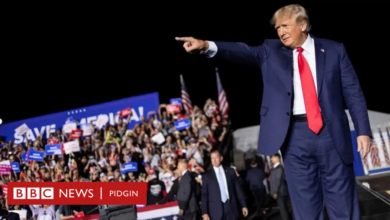
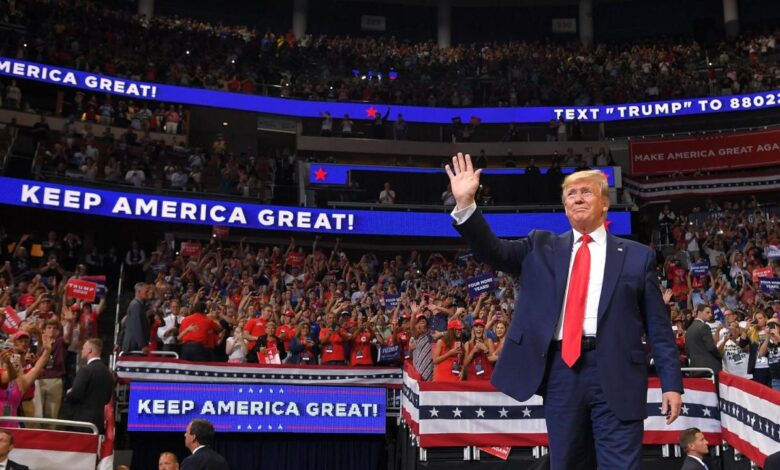
Trump touts massive turnout at Georgia rally that journalists say was smallest in years, fueling a familiar debate about crowd size and media perception. The event, held in support of Republican candidates in the upcoming Georgia elections, drew attention for its contrasting narratives.
While Trump boasted of a record-breaking turnout, media outlets reported a significantly smaller crowd, raising questions about the reliability of visual estimations and the potential for political spin.
The rally, held in a packed stadium, featured speeches from Trump and other prominent figures in the Republican party. Trump, in his characteristically bombastic style, repeatedly emphasized the “massive” turnout, claiming it was “the biggest crowd ever seen in Georgia.” He went on to accuse the media of deliberately downplaying the event’s success, citing a supposed “fake news” agenda.
However, news outlets, armed with aerial photographs and independent crowd estimations, presented a different picture. Their reports indicated a significantly smaller attendance than Trump’s claims, raising concerns about the accuracy of his statements and the potential for deliberate exaggeration.
Historical Context: Trump Touts Massive Turnout At Georgia Rally That Journalists Say Was Smallest In Years

The discrepancy between Trump’s claims of a massive turnout at his Georgia rally and the assessments of journalists who reported it as one of the smallest in recent years raises questions about the historical context of such events and the factors that might influence public perception of rally attendance.
Trump’s claims of a massive turnout at his Georgia rally are being met with skepticism from journalists, who say it was one of the smallest in recent years. It’s a stark contrast to the massive impact of the crypto market crash, where a single, trash-talking “bro” could trigger a $40 billion loss – read about how this happened here.
Whether it’s political rallies or financial markets, the power of perception and misinformation can be incredibly potent.
Comparing the turnout at this rally to previous Trump rallies is crucial to understanding the context. While Trump’s rallies have consistently drawn large crowds, there have been variations in attendance depending on the location, political climate, and the specific event.
For instance, his rallies in the lead-up to the 2016 election were often characterized by packed arenas and enthusiastic crowds. However, in the post-presidency era, his rallies have generally drawn smaller crowds, reflecting a possible shift in public interest and engagement.
Discrepancies in Reported Crowd Sizes, Trump touts massive turnout at georgia rally that journalists say was smallest in years
Discrepancies in reported crowd sizes at political rallies are not uncommon. Historically, estimates of crowd sizes have been subjective and prone to bias, particularly when based on visual observation. This is due to several factors:
- Limited Viewpoints:Observers may have limited perspectives, potentially underestimating or overestimating the size of the crowd depending on their vantage point.
- Crowd Density:The density of the crowd can be challenging to accurately assess, as people may be tightly packed in some areas and more dispersed in others.
- Perspective and Bias:Media outlets and individuals may have differing political viewpoints, potentially influencing their reporting of crowd sizes.
- Historical Examples:There have been numerous instances throughout history where reported crowd sizes at rallies and protests have varied significantly, highlighting the inherent subjectivity of such estimates.
Factors Influencing Public Perception of Rally Attendance
Public perception of rally attendance can be influenced by a range of factors, including:
- Media Coverage:The way media outlets report on rally attendance can significantly shape public perception. Images, video footage, and written descriptions can create a sense of scale and excitement, or conversely, convey a sense of emptiness and lack of support.
- Social Media:Social media platforms can amplify or diminish the perceived size of a rally, depending on the content shared and the reactions it receives. Viral images and videos can create a sense of widespread support, while negative comments and criticism can diminish the perceived impact of the event.
- Political Climate:The political climate surrounding a rally can also influence public perception. Rallies held during times of heightened political tension or controversy may be perceived as more significant and draw larger crowds, while those held during periods of relative calm may be viewed as less important.
Trump’s claims of a massive turnout at his Georgia rally are being met with skepticism, as journalists report it was one of the smallest in recent years. This comes as the January 6th Committee prepares to hold its first televised hearing, promising to unveil a “mountain of new evidence” about the Capitol attack, as seen in this article: 1 6 committee to use first televised hearing to shock nation with mountain of new evidence.
It’ll be interesting to see how the public reacts to the committee’s findings, and whether they’ll influence the narrative surrounding Trump’s rallies and his claims of widespread support.
- Public Opinion:Public opinion polls and surveys can provide insights into the level of support for a particular figure or cause, which can influence how people perceive the size of a rally. A rally for a popular figure may be perceived as larger than one for a less popular figure, even if the actual attendance is similar.
The Importance of Turnout
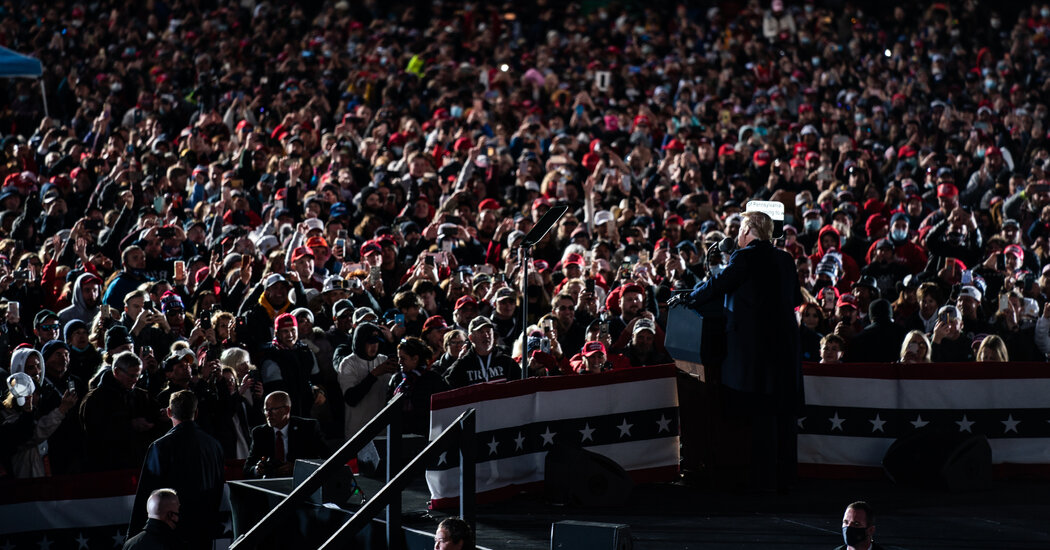
The size of a rally crowd is often seen as a measure of a politician’s popularity and support. A large turnout can be interpreted as a sign of strong public backing, while a smaller crowd might suggest waning enthusiasm or a lack of support.
While Trump boasted about a massive turnout at his Georgia rally, journalists reported it as one of the smallest in recent years. It’s interesting to consider how perceptions of size and impact can be so different. Perhaps the discrepancy reflects a growing disconnect between traditional media and the public, much like the gap that exists between the potential of edtech and its actual implementation in schools.
To learn more about the state of edtech, check out this article: 7 facts about the state of edtech in schools. Ultimately, whether it’s a political rally or a technological advancement, the true impact is often determined by how it’s perceived and utilized, not just by the numbers.
Implications of Turnout
The size of a rally crowd can have significant implications for a political figure. A large turnout can boost morale, attract media attention, and create a sense of momentum. It can also serve as a powerful visual representation of the candidate’s support base.
Conversely, a small turnout can be seen as a sign of weakness, potentially damaging a candidate’s image and discouraging supporters.
Strategies for Manipulating Perception
While the actual number of people attending a rally is important, political campaigns often employ strategies to manipulate public perception of crowd size. These strategies can include:* Staging events in venues with limited capacity:This can create the illusion of a larger crowd than is actually present.
Using visual cues to enhance the perception of size
This can involve using flags, banners, and other props to fill empty space or create a sense of density.
Encouraging supporters to arrive early
This can help create a sense of excitement and anticipation, making the crowd appear larger.
Promoting the event through social media
This can help attract a larger audience and create a buzz around the event.It’s important to note that while these strategies can be effective, they can also be misleading. The true measure of a politician’s support lies not in the size of their rallies but in the number of votes they receive.
Visual Representation
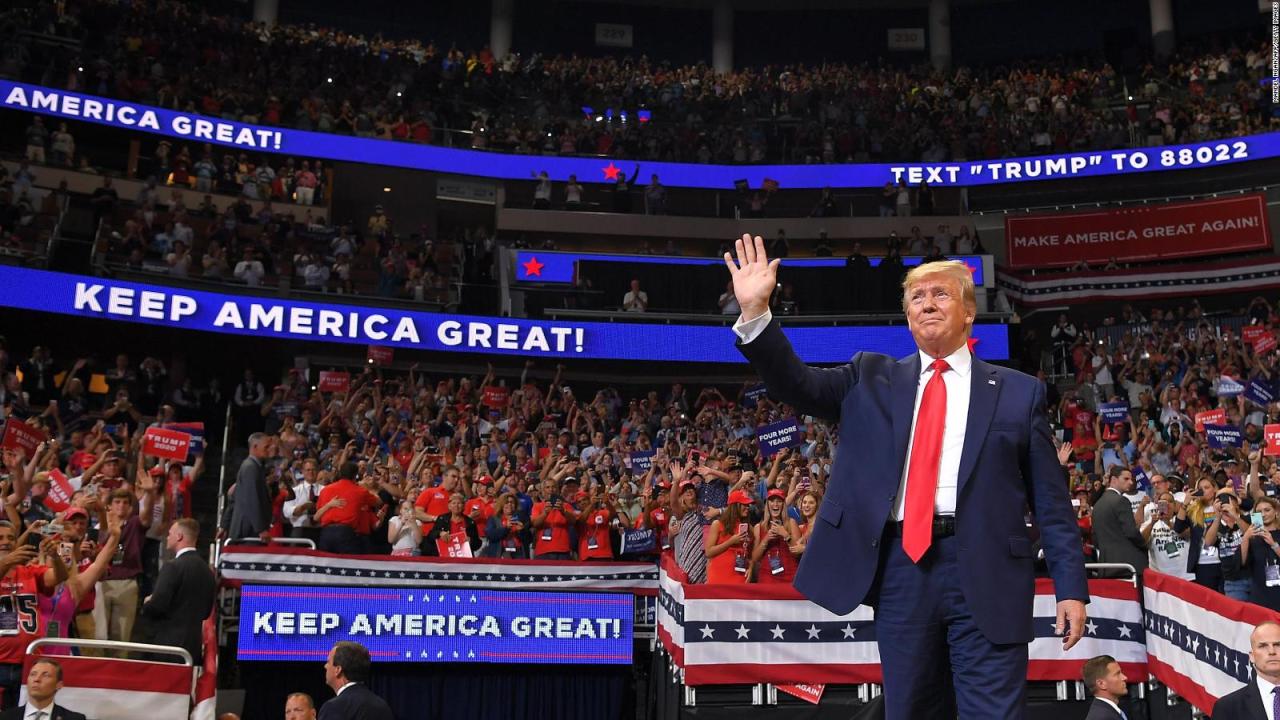
This section provides a visual breakdown of the conflicting claims surrounding the Georgia rally turnout. We will examine the media’s estimates, Trump’s assertions, and the timeline of media coverage.
Media Estimates vs. Trump’s Claims
This table contrasts the media’s estimations of the rally’s turnout with Trump’s claims.
| Source | Estimated Turnout |
|---|---|
| Local Media (e.g., Atlanta Journal-Constitution) | 5,000-10,000 |
| National Media (e.g., CNN, The New York Times) | 5,000-10,000 |
| Donald Trump | “Tens of thousands” |
Timeline of Media Coverage
This timeline traces the evolution of the media’s coverage of the event, highlighting the key developments that shaped public perception.
- Pre-Rally:Media outlets reported on the rally’s significance and the potential for large crowds.
- During the Rally:Media coverage focused on Trump’s speech, the crowd size, and reactions from attendees.
- Post-Rally:Media outlets published articles and reports comparing the actual turnout with initial estimates and Trump’s claims, highlighting the discrepancies.
Prominent Figures at the Rally
This list identifies prominent figures who attended the rally, including their political affiliations.
- Donald Trump:Former President of the United States, Republican
- David Perdue:Former U.S. Senator from Georgia, Republican
- Herschel Walker:U.S. Senate candidate, Republican
- Lindsey Graham:U.S. Senator from South Carolina, Republican
- Mike Pence:Former Vice President of the United States, Republican
End of Discussion
The discrepancy between Trump’s claims and the media’s reporting highlights the ongoing tension between political rhetoric and factual representation. While Trump’s supporters may have seen the rally as a resounding success, the media’s portrayal raises questions about the reliability of visual estimations and the potential for political manipulation.
This incident serves as a reminder of the importance of critical thinking and media literacy in navigating the complexities of political discourse.