Despite a sustained period of largely negative public opinion towards China over the past decade, a recent Pew Research Center survey indicates a subtle but significant shift in American sentiment. Conducted in March 2026, the survey reveals a noticeable uptick in the percentage of U.S. adults holding a favorable view of China, suggesting a modest softening in what has been a predominantly adversarial perception. While the majority of Americans continue to harbor unfavorable views, the latest figures show 27% now express a positive opinion, marking a 6 percentage point increase from last year and nearly a doubling since 2023. This evolving outlook is not uniform across the U.S. population, with distinct trends emerging along partisan and generational lines, and also impacting confidence in both American and Chinese leadership on global affairs.
A Decades-Long Trajectory: From Partner to Competitor to Cautious Reassessment
The relationship between the United States and China, often characterized by a delicate balance of cooperation and competition, has seen significant fluctuations in public perception over the past two decades. The Pew Research Center’s extensive data, spanning from 2005, provides a crucial timeline for understanding these shifts.
In the mid-2000s, American views of China were notably more sanguine. In Spring 2006, for instance, a significant 52% of U.S. adults held a favorable opinion of China, compared to just 29% who viewed it unfavorably. This period, characterized by China’s accession to the WTO and its rapid economic integration into the global system, saw many Americans perceive the nation as a rising economic partner. Even as late as Spring 2011, 52% still expressed a favorable view, underscoring a period of relative optimism regarding bilateral ties.
However, a distinct turning point began to emerge around 2012-2013. By Spring 2013, favorable views had plummeted to 36%, while unfavorable opinions surged to 51%, marking the first time in many years that negative sentiment clearly outweighed positive. This shift coincided with increasing concerns over China’s human rights record, its growing military assertiveness in the South China Sea, allegations of cyber espionage, and widening trade imbalances. The trend of escalating unfavorable views continued steadily, reaching 55% in 2014 and 2016.
The latter half of the 2010s saw a dramatic acceleration in negative perceptions. During the Trump administration, characterized by the initiation of a trade war and heightened rhetoric against Beijing, favorable views of China dropped sharply. In Spring 2019, only 26% of Americans held a positive opinion, while 60% held a negative one. This decline intensified further with the onset of the COVID-19 pandemic, which originated in Wuhan, China. By Summer 2020, coinciding with widespread lockdowns and a global health crisis, favorable views reached a nadir of 22%, with an overwhelming 73% expressing unfavorable opinions. This period was marked by accusations regarding China’s handling of the initial outbreak and its lack of transparency.
The subsequent years saw a sustained period of low favorability, with the American Trends Panel (ATP) data showing a mere 19% favorable in March 2020, dipping further to 16% in Spring 2022 and reaching its lowest point of 14% in Spring 2023. This consistent negativity reflected ongoing geopolitical tensions, concerns over China’s human rights abuses in Xinjiang and Hong Kong, its increasingly aggressive stance towards Taiwan, and its growing technological rivalry with the U.S.
The recent rebound to 27% favorable in March 2026, while still representing a minority view, suggests a potential inflection point. This increase of 6 percentage points from the previous year and a near doubling since 2023 indicates a complex evolution in American public opinion, moving away from the extreme negativity observed just a few years prior. This shift could be attributed to a combination of factors, including evolving U.S. foreign policy rhetoric, a renewed focus on diplomatic engagements, or perhaps a slight recalibration of public perception as the initial shock of past events fades.
The Partisan Divide: Democrats Drive the Recent Warming
The aggregate shift in American views towards China masks significant differences between the two major political parties. The Pew Research Center’s data consistently highlights a partisan divergence, with Democrats and Democratic-leaning independents generally holding more favorable views than Republicans and Republican leaners.
In the latest March 2026 survey, the increase in favorability towards China is predominantly driven by Democrats. The share of Democrats expressing a positive opinion has risen by 8 percentage points since last year, reaching 34%. In contrast, opinion among Republicans and Republican leaners has remained largely unchanged at 18%. This disparity reinforces a long-standing trend where Democrats are more inclined to view China through a less hostile lens.

Historically, this partisan gap has varied in intensity. In the mid-2000s, both parties showed relatively high favorability, with Democrats often slightly ahead (e.g., Spring 2006: 53% Dem, 54% Rep; Spring 2009: 55% Dem, 43% Rep). However, as overall American sentiment towards China soured, the partisan divide widened considerably. During the peak of anti-China sentiment in the late 2010s and early 2020s, Republican views became particularly negative. For instance, in Spring 2019, only 20% of Republicans had a favorable view compared to 30% of Democrats. By Spring 2024, Republican favorability had dropped to a mere 9%, while Democrats stood at 21%.
Despite the persistent gap, it is noteworthy that both parties have seen a modest increase in favorability since the low point in 2023. While Democrats experienced a more substantial rebound, the slight warming trend is evident across the political spectrum. This suggests that while partisan lenses continue to shape perceptions, broader factors may also be influencing a general, albeit cautious, reassessment of the U.S.-China relationship. The Biden administration’s emphasis on "managed competition" and strategic alliances, rather than outright confrontation, might have resonated differently across partisan lines, contributing to this nuanced shift.
Redefining the Relationship: From "Enemy" to "Competitor"
Beyond general favorability, Americans’ understanding of the fundamental nature of the U.S.-China relationship is also undergoing a significant recalibration. A separate Pew Research Center survey conducted in January 2026 sheds light on how Americans categorize China: as an "enemy," a "competitor," or a "partner."
The latest findings reveal a notable decline in the proportion of Americans who label China as an outright "enemy" of the U.S. In January 2026, 28% considered China an enemy, a decrease from 33% in 2025 and a more substantial drop from 42% in 2024. Concurrently, the perception of China as a "competitor" has gained ground, rising to 60% in 2026 from 56% in 2025. The proportion viewing China as a "partner" has remained relatively stable, hovering around one-in-ten in both years.
This shift away from the "enemy" designation towards "competitor" is particularly pronounced among Democrats. In January 2026, only 14% of Democrats viewed China as an enemy, a considerable reduction from 22% in 2025 and 28% in 2024. A large majority of Democrats (72%) now firmly categorize China as a competitor. This suggests that while Democrats acknowledge the rivalry, they are less inclined to see the relationship as one of pure antagonism, potentially favoring a strategy that balances rivalry with avenues for engagement or de-escalation.

For Republicans, the shift is less dramatic but still evident. While a higher percentage of Republicans continue to view China as an enemy (44% in 2026), this figure is down from 45% in 2025 and 59% in 2024. This indicates a slight softening even within the more hawkish Republican base, though the "enemy" perception remains significantly stronger than among Democrats.
The overarching dominance of the "competitor" label for China reflects a mature understanding of the complex global landscape. It suggests that most Americans recognize China’s economic and geopolitical challenge to the U.S. without necessarily advocating for a zero-sum conflict. This framing allows for strategic rivalry in areas like technology and trade, while theoretically leaving room for cooperation on shared global challenges such as climate change, pandemic preparedness, or nuclear non-proliferation. Such a nuanced public perception could provide a mandate for policymakers to pursue a strategy of "managed competition" that seeks to protect U.S. interests and values while avoiding unnecessary confrontation.
Generational Divides: Younger Americans More Open to China
Beyond partisan lines, age proves to be another significant factor shaping American attitudes toward China. The Pew Research Center’s analysis consistently shows that younger Americans tend to hold more positive views of China compared to their older counterparts.
In the March 2026 survey, approximately one-third of adults under 50 (34%) expressed a favorable opinion of China. This stands in stark contrast to adults aged 50 and older, among whom only 19% hold a positive view. This generational gap suggests differing experiences, influences, and priorities that shape perceptions of the rising global power. Younger generations, often more exposed to globalized cultures, diverse media, and perhaps more nuanced educational narratives about international relations, may be less likely to hold entrenched negative stereotypes.
This generational divide is even more pronounced when considering the "enemy" versus "competitor" dichotomy. Americans under 50 are considerably less likely than those 50 and older to identify China as an "enemy" of the U.S. (20% vs. 38%). This gap is particularly striking within the Republican party. While Republicans generally lean towards viewing China as an enemy, younger Republicans (ages 18-49) diverge significantly from their older party members. Only 32% of Republicans under 50 consider China an enemy, compared to a substantial 55% of Republicans aged 50 and older. Conversely, 57% of younger Republicans see China as a competitor, whereas only 41% of older Republicans share this view.

Among Democrats, generational differences regarding the "enemy" label are also present but less dramatic (10% of under 50s vs. 18% of 50+). Both younger and older Democrats overwhelmingly view China as a competitor (73% and 71% respectively), with a higher proportion of younger Democrats also seeing China as a partner (15% vs. 9% for older Democrats).
These generational differences carry important implications for the future of U.S.-China relations. As younger cohorts constitute a larger portion of the electorate, their more nuanced and less antagonistic views could gradually influence the broader national discourse and potentially lead to different policy approaches in the long term. This demographic shift might pave the way for policies that emphasize engagement and cooperation alongside competition, reflecting the evolving attitudes of a new generation of American leaders and voters.
Leadership Confidence: Trump, Xi, and the Future of U.S.-China Policy
The Pew Research Center surveys also delve into public confidence regarding the ability of both U.S. President Donald Trump and Chinese President Xi Jinping to navigate the complexities of international affairs, particularly concerning U.S.-China policy. These perceptions are critical, especially with a high-stakes May summit between Trump and Xi on the horizon.
Confidence in President Trump’s Handling of China Policy:
The March 2026 survey reveals a slipping confidence in President Trump’s ability to make sound policy decisions concerning China. Approximately four-in-ten Americans (39%) express confidence in Trump on this issue, a decline from 45% in August 2025 and 48% in July 2024 (when he was a presidential candidate). This downward trend suggests a growing skepticism among the public regarding his approach to one of America’s most critical foreign policy challenges.
The partisan divide on this question is stark, mirroring other findings. A significant 71% of Republicans express confidence in Trump’s handling of China policy. However, this figure itself represents a 7-point drop from previous surveys, indicating some erosion of confidence even within his own party. Among Democrats, confidence is exceedingly low, with only 11% believing Trump can make good decisions about China, a figure that has remained largely unchanged.

Age also plays a role among Republicans: 64% of those under 50 express confidence in Trump on China policy, compared to a more robust 78% of those 50 and older. This suggests that while older Republicans are highly confident in their leader’s foreign policy acumen, younger Republicans harbor slightly more reservations. This aligns with the broader pattern of younger adults holding less hostile views of China and, perhaps, desiring a different approach than the more confrontational stance often associated with Trump.
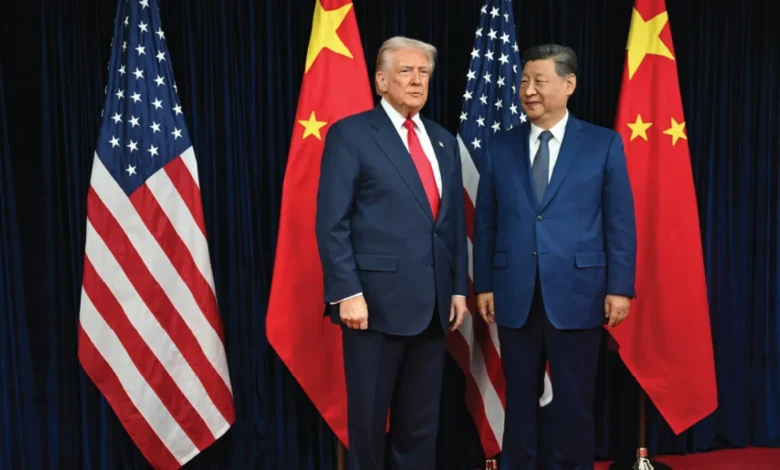
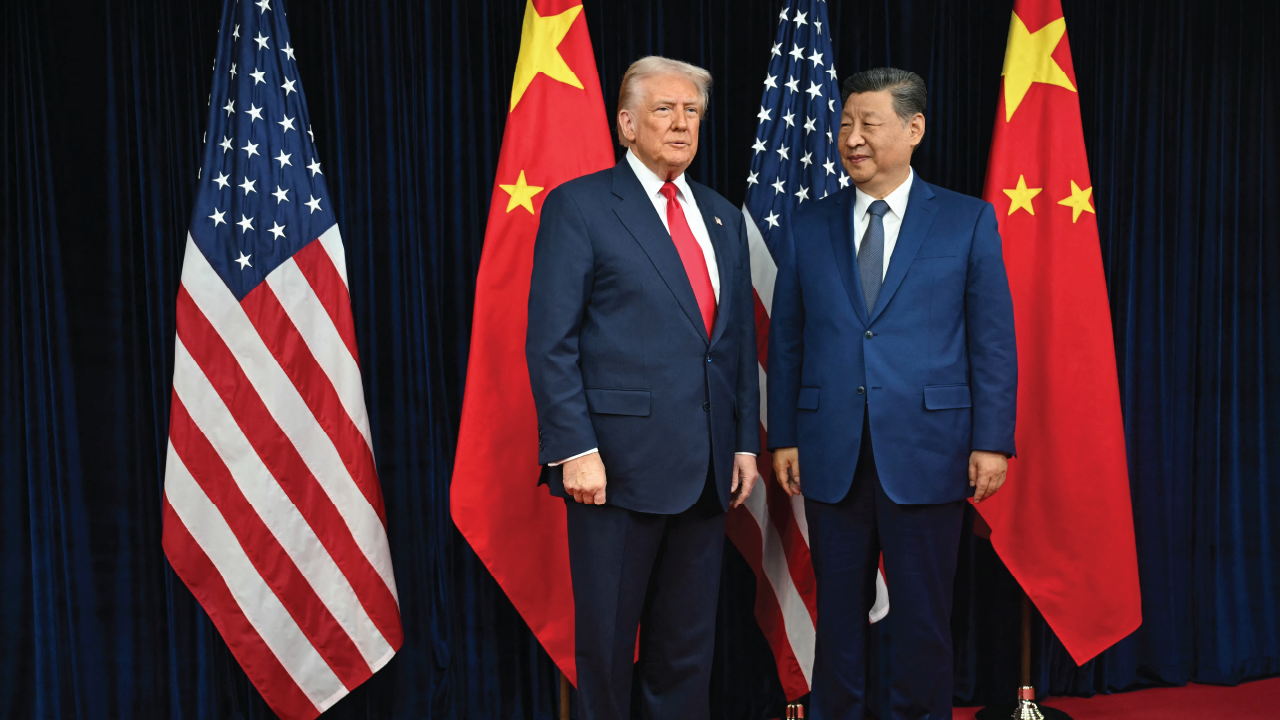
The upcoming May summit between President Trump and President Xi Jinping, highlighted by news reports of an impending meeting at Gimhae Air Base near Busan, South Korea, in October 2025 (as depicted in the featured image, indicating the context of the survey being conducted in 2026), will be closely watched. Public confidence levels, particularly the declining trend and partisan splits, could influence the domestic reception of any outcomes from such high-level engagements. Trump’s perceived ability to manage the complex trade, security, and diplomatic challenges with China will undoubtedly be a key factor in his political standing.
Confidence in President Xi Jinping’s Handling of World Affairs:
Americans broadly lack confidence in President Xi Jinping to "do the right thing regarding world affairs." In the March 2026 survey, only 17% express "a lot" or "some" confidence in Xi, while 71% express "not too much" or "no confidence at all." This reflects the deep-seated mistrust and unfavorable views that many Americans hold towards China’s leadership and its global intentions.
However, it is notable that confidence in Xi has shown a slight, consistent increase over the past two years, rising by 4 percentage points annually. This figure was 8% in Spring 2023, 9% in Spring 2024, and 13% in Spring 2025, before reaching 17% in 2026. While still a minority, this incremental growth suggests that a small but increasing segment of the American public might perceive Xi as a more predictable or pragmatic global actor, or perhaps acknowledge China’s undeniable role on the world stage.
As with overall views of China, Democrats and younger adults continue to exhibit more confidence in Xi than their counterparts. This aligns with their generally more favorable views of China and less antagonistic perception of the bilateral relationship. This nuanced confidence in Xi, though low, suggests that even amidst intense competition, a portion of the American public is open to recognizing China’s leadership in certain global domains or at least acknowledges its capacity to influence world affairs.
Broader Implications for U.S. Foreign Policy and Geopolitics

The evolving American public opinion on China carries significant implications for U.S. foreign policy, domestic politics, and the future trajectory of global geopolitics. The shift, however modest, from deeply entrenched negative views towards a slight moderation, particularly the reclassification from "enemy" to "competitor," offers policymakers a complex landscape to navigate.
For U.S. foreign policy, the predominant view of China as a "competitor" suggests public support for a strategy that balances rivalry with pragmatic engagement. This aligns with the "managed competition" framework often articulated by experts, which seeks to contain China’s assertiveness where necessary while identifying areas for cooperation on issues of mutual interest. A public less inclined to see China as an outright "enemy" might be more receptive to diplomatic overtures, multilateral initiatives, and de-escalation efforts, provided they are framed within the context of protecting U.S. interests and values. This could offer greater flexibility to administrations in crafting nuanced strategies, moving beyond purely confrontational stances.
Domestically, the partisan and generational divides highlight challenges and opportunities. The Democratic-led softening of views suggests that a future Democratic administration might find greater public resonance for policies that emphasize cooperation and multilateralism with China, particularly among its base. Conversely, Republican policymakers, while also showing a slight shift, still face a base that largely views China with suspicion and antagonism, especially among older voters. This could perpetuate a bifurcated political discourse on China, making it difficult to forge bipartisan consensus on comprehensive strategies. The more open views of younger Americans, irrespective of party, could gradually shape future policy debates, pushing for more integrated and less isolationist approaches to global challenges involving China.
The decline in confidence in President Trump’s handling of China policy, even within his own party, could exert pressure on his administration to demonstrate tangible successes in managing the relationship. The upcoming summit with Xi Jinping will be a crucial test, with public perception potentially hinging on outcomes related to trade, regional stability, or global issues. Any perceived missteps or concessions could further erode public trust, while demonstrable progress could bolster his standing.
Conversely, the slight increase in confidence in President Xi, though from a low base, could subtly influence international perceptions of China’s leadership. If this trend continues, it might indicate a growing, albeit reluctant, acknowledgment of China’s unavoidable role in addressing global challenges, potentially facilitating future multilateral dialogues where China’s participation is essential.
Ultimately, the Pew Research Center’s findings paint a picture of a U.S. public grappling with a complex and evolving relationship with China. While deep-seated concerns remain, particularly regarding human rights and geopolitical ambitions, the recent data suggests a move away from peak antagonism towards a more pragmatic, albeit still competitive, outlook. This evolving public sentiment will undoubtedly be a critical factor shaping U.S. foreign policy and global dynamics in the years to come.