Analyzing Putins Possible Endgames in Ukraine
Analysis putins possible endgames in ukraine – Analyzing Putin’s possible endgames in Ukraine is a complex and crucial task, as the conflict’s trajectory could have far-reaching implications for global security. This analysis explores Putin’s strategic objectives, his available military and diplomatic options, and the domestic and international contexts shaping his decision-making.
We delve into potential scenarios for the future, examining the risks and consequences for both Russia and Ukraine, as well as the broader regional and global landscape.
The war in Ukraine is not just a regional conflict; it’s a pivotal moment in global geopolitics, raising questions about the future of Europe’s security architecture and the potential for a new Cold War. Understanding Putin’s motivations and possible endgames is essential for navigating this turbulent period and mitigating the risks of further escalation.
Putin’s Strategic Objectives: Analysis Putins Possible Endgames In Ukraine
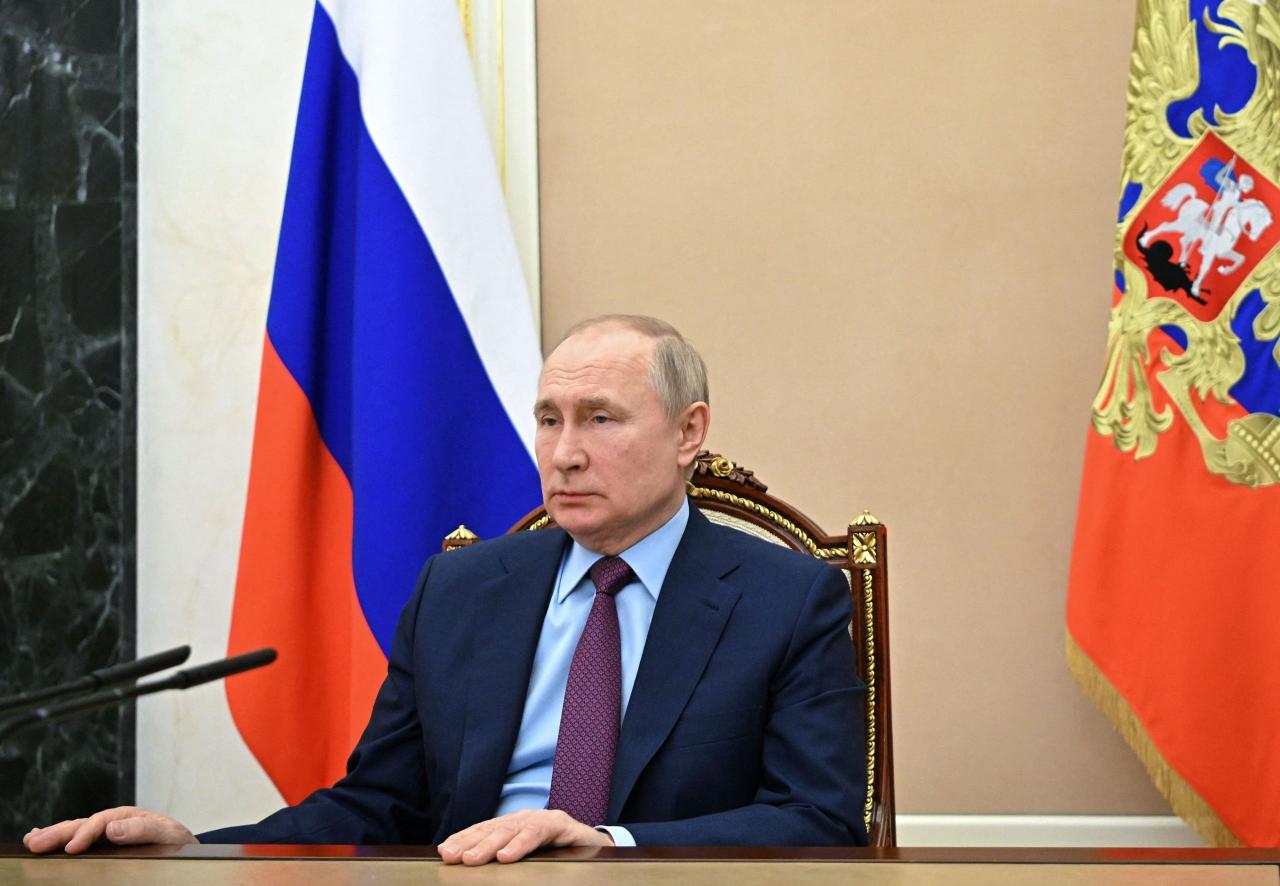
Understanding Putin’s motivations behind the invasion of Ukraine is crucial to analyzing the conflict’s trajectory. His stated and likely underlying goals reveal a complex web of political, historical, and security concerns.
Putin’s Stated and Underlying Goals
Putin has publicly articulated a range of justifications for the invasion, including the need to “de-Nazify” Ukraine and protect Russian-speaking populations. However, these claims have been widely disputed by the international community, and many analysts believe they mask deeper strategic ambitions.
Trying to understand Putin’s motivations in Ukraine is like trying to solve a Rubik’s Cube while blindfolded. There are so many potential outcomes, each with its own set of risks and rewards. It’s a complex geopolitical chess game, and the stakes are high.
But while we’re trying to decipher Putin’s next move, the rest of us are facing our own challenges, like the rising cost of education. It’s about to get more expensive to take out federal student loans, as explained in this article: its about to get more expensive to take out federal student loans heres why.
The financial burden of student loans adds another layer of complexity to the already challenging situation in Ukraine, forcing people to grapple with both international conflicts and personal economic realities.
- Preventing Ukraine’s NATO Membership:A key driver of Putin’s actions is the perceived threat of Ukraine joining NATO. He views NATO expansion as a direct threat to Russia’s security, particularly after the US and its allies supported the overthrow of Ukraine’s pro-Russian government in 2014.
Putin’s stated aim is to prevent Ukraine from becoming a bridgehead for Western influence on Russia’s borders.
- Reasserting Russia’s Influence:Putin has long sought to restore Russia’s status as a major power on the world stage. He views Ukraine as a vital part of the historical “Russian World” and believes its integration into the West undermines Russia’s regional dominance. The invasion represents an attempt to reassert Russian influence over Ukraine and demonstrate Russia’s power to the world.
- Strengthening Internal Unity:Some analysts argue that Putin’s invasion is also a means of consolidating his own power and suppressing domestic dissent. By invoking the threat of external enemies and presenting himself as a strong leader, Putin aims to rally support within Russia and deflect attention from internal challenges.
Putin’s Perception of the Conflict
Putin perceives the conflict as an existential struggle for Russia’s survival and identity. He believes that the West is attempting to encircle and weaken Russia, and the invasion is a necessary defensive measure to protect Russian interests. He sees the conflict as a battle against the “neo-Nazi” regime in Kyiv, which he claims is a puppet of the West.
“The actions of the West are pushing us towards a conflict that they have been preparing for a long time. We are not going to allow them to dictate to us how we should live.”
Vladimir Putin, February 2022.
Analyzing Putin’s potential endgames in Ukraine is a complex endeavor, requiring consideration of numerous factors. One aspect to consider is the potential impact of global economic sanctions on Russia’s financial system, which could influence the value of the Ruble.
It’s interesting to note that the volatility of the cryptocurrency market, as described in this article on which factors affect the value of bitcoins note these points , could also play a role in the larger geopolitical picture. Ultimately, the outcome of the conflict will depend on a complex interplay of political, economic, and social factors.
Initial Objectives vs. Current Objectives
While Putin’s initial objectives focused on securing control over eastern Ukraine and establishing a pro-Russian government in Kyiv, his current objectives appear more limited. The failure to quickly capture Kyiv and the unexpected resilience of Ukrainian resistance have forced Putin to adjust his strategy.
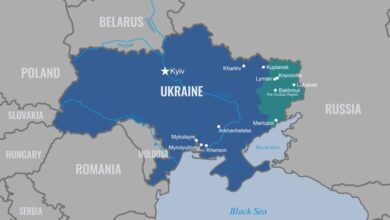
- Shift from Full-Scale Invasion to Limited Objectives:Instead of attempting to conquer all of Ukraine, Putin has shifted his focus to consolidating control over the Donbas region and securing a land bridge to Crimea. This shift reflects a recognition of the difficulty of achieving his initial goals and a desire to secure some tangible gains from the war.
- Focus on Military and Economic Pressure:Putin has increasingly relied on military and economic pressure to achieve his objectives. This includes using long-range missiles to target Ukrainian infrastructure and launching economic sanctions against Western countries. The goal is to weaken Ukraine’s resolve and force it to accept Russia’s demands.
- Exploiting Internal Divisions:Putin has also sought to exploit internal divisions within Ukraine, attempting to sow discord and undermine the Ukrainian government’s legitimacy. This includes supporting separatist movements in eastern Ukraine and promoting narratives that portray Ukraine as a failed state.
Military and Diplomatic Options
Putin’s potential endgames in Ukraine are intricately tied to his available military and diplomatic options. Understanding these options is crucial for analyzing the trajectory of the conflict and its potential outcomes.
Military Options
Putin’s military options are constrained by the current battlefield situation, the potential for escalation, and the need to maintain a semblance of control over the Russian military. The following are some of the military options available to Putin:
- Escalation of the conflict: Putin could choose to escalate the conflict by deploying more troops, using heavier weaponry, or targeting civilian infrastructure. This would likely lead to increased civilian casualties and further regional instability. The potential for a wider conflict with NATO is also a real concern, as the alliance has pledged to defend its members from Russian aggression.
- A prolonged stalemate: Putin could choose to maintain the current stalemate, hoping to wear down Ukrainian defenses and eventually achieve his objectives through attrition. This would likely result in continued fighting, further civilian casualties, and a frozen conflict in Ukraine.
- A negotiated settlement: Putin could choose to negotiate a settlement with Ukraine, potentially involving concessions on both sides. This would be the most likely path to de-escalation and a return to peace, but it would require significant political will and a willingness to compromise on both sides.
Diplomatic Options
Putin’s diplomatic options are limited by his own stated goals and the international community’s condemnation of the invasion. However, there are still some avenues for de-escalation and conflict resolution.
- Direct negotiations: Putin could engage in direct negotiations with Ukraine, potentially mediated by international actors. This would require a willingness to compromise on both sides and a shared commitment to finding a peaceful resolution.
- International pressure: Putin could be pressured by the international community to withdraw his forces from Ukraine and end the conflict. This would require sustained pressure from key actors, including the United States, the European Union, and other international organizations.
- A negotiated settlement: Putin could seek a negotiated settlement with Ukraine, potentially involving concessions on both sides. This would require a willingness to compromise on both sides and a shared commitment to finding a peaceful resolution.
Domestic and International Context
Putin’s decision-making in the Ukraine conflict is significantly influenced by both the domestic political landscape in Russia and the international pressure he faces. Understanding these factors is crucial to analyzing his potential endgames.
Trying to decipher Putin’s endgame in Ukraine is a complex puzzle, with so many moving pieces and potential outcomes. It’s fascinating to see how global events, like Elon Musk’s serious bid for Twitter, signaling his commitment with a $46.5 billion offer , can impact the broader geopolitical landscape, even as the Ukraine conflict unfolds.
Will Putin’s actions be influenced by the changing information landscape, or will he remain steadfast in his pursuit of strategic goals? Only time will tell.
Domestic Political Landscape
The domestic political landscape in Russia plays a significant role in Putin’s decision-making. Putin has consolidated power over the years, suppressing dissent and maintaining control through a combination of propaganda, repression, and a carefully curated image of strength and stability.
- Public Opinion:While there is evidence of growing public dissent against the war, Putin has successfully used state-controlled media to cultivate a narrative of Russian victimhood and justify the invasion. This narrative, combined with the fear of reprisal, has muted public opposition.
However, the economic consequences of the war, including rising inflation and shortages, could erode public support for the conflict over time.
- Elite Cohesion:Putin’s inner circle of allies, known as the “siloviki,” are largely supportive of the war effort. These figures, drawn from the security services and military, have benefited from the conflict and are unlikely to challenge Putin’s leadership. However, internal disagreements among elites, particularly regarding the war’s strategy and objectives, could emerge if the conflict drags on or becomes increasingly costly.
- Nationalist Sentiment:The war in Ukraine has tapped into a deep-seated sense of Russian nationalism and a belief in the country’s historical right to reclaim its “lost territories.” This sentiment has been amplified by state propaganda and provides Putin with a powerful tool for mobilizing support for the conflict.
However, the nationalist rhetoric could also backfire if the war proves to be unwinnable or leads to significant Russian casualties.
International Sanctions and Diplomatic Pressure, Analysis putins possible endgames in ukraine
The international community has responded to Russia’s invasion of Ukraine with a series of unprecedented sanctions, targeting the Russian economy, financial institutions, and key individuals. These sanctions have had a significant impact on Russia’s ability to finance the war effort and have contributed to a decline in the value of the ruble.
- Economic Impact:Sanctions have disrupted global supply chains, hampered Russia’s access to technology, and reduced foreign investment. These measures have had a significant impact on the Russian economy, leading to inflation, unemployment, and shortages. While the Russian government has taken steps to mitigate the effects of sanctions, the long-term economic damage could be substantial.
- Diplomatic Isolation:Russia has been increasingly isolated diplomatically, with many countries condemning the invasion and imposing sanctions. This isolation has limited Russia’s ability to engage in international negotiations and has made it more difficult to secure support for its war effort. The isolation could also lead to a decline in Russia’s global influence and prestige.
- Military Implications:Sanctions have also impacted Russia’s military capabilities. The sanctions have restricted Russia’s access to critical components and technologies, making it more difficult to maintain and upgrade its military equipment. This could have a significant impact on Russia’s ability to sustain its war effort in the long term.
Potential for Internal Dissent and Opposition
Despite the risks of repression, there is growing dissent within Russia against the war in Ukraine. This dissent is fueled by a combination of factors, including the economic consequences of the war, the increasing number of Russian casualties, and the growing awareness of the atrocities committed by Russian forces in Ukraine.
- Anti-War Protests:While protests against the war have been met with a swift and brutal crackdown, they have continued to occur, albeit on a smaller scale. These protests demonstrate that there is a significant segment of the Russian population that opposes the war and is willing to risk arrest and imprisonment to express their views.
- Economic Hardship:The economic consequences of the war, including rising prices and shortages, have created hardship for many Russians. This hardship could fuel resentment towards the government and lead to increased opposition to the war. The economic impact could also erode Putin’s legitimacy and weaken his hold on power.
- Information Leakage:Despite the government’s attempts to control the flow of information, there is growing awareness within Russia of the true nature of the war in Ukraine. This awareness, fueled by independent media outlets and social media, is contributing to a growing sense of disillusionment with the war and the government’s narrative.
Potential Scenarios for the Future
Predicting the future of the conflict in Ukraine is a complex endeavor, fraught with uncertainty and influenced by numerous factors. However, by analyzing current trends and potential developments, we can construct three distinct scenarios that offer insights into the potential trajectories of the conflict.
These scenarios are not exhaustive, but they represent plausible outcomes based on the available information and expert analysis.
Scenario 1: Stalemate and Frozen Conflict
This scenario envisions a prolonged stalemate, with neither side able to achieve a decisive victory. The front lines remain largely unchanged, with sporadic clashes and artillery bombardments. The conflict enters a state of “frozen conflict,” characterized by a lack of significant military advances and a protracted stalemate.
This scenario is often seen as a potential outcome in protracted conflicts where neither side possesses the overwhelming military advantage necessary to achieve a decisive victory. Here are the key features, potential outcomes, and risks associated with this scenario:| Feature | Outcome | Risk ||—|—|—|| Military Situation | Continued stalemate with no major breakthroughs.
| Increased civilian casualties, potential for escalation, and the risk of a wider conflict. || Diplomatic Negotiations | Stalled or limited negotiations, with both sides unwilling to make significant concessions. | The possibility of a permanent division of Ukraine and a frozen conflict that could potentially reignite in the future.
|| Domestic Responses | Growing fatigue and war weariness among the populations of both Russia and Ukraine, leading to internal political instability and potentially impacting the leadership of both countries. | Increased political polarization and social unrest in both countries, with the potential for political upheaval.
|
Detailed Description:
This scenario would likely see a continuation of the current military situation, with both sides resorting to attrition warfare and seeking to gain a tactical advantage. Negotiations would likely be stalled or limited, with neither side willing to make significant concessions.
The conflict could become a “frozen conflict,” with a stalemate that could potentially last for years or even decades. The risk of escalation, however, remains a concern. Both sides possess significant military capabilities, and a miscalculation or an unforeseen event could lead to a major escalation of hostilities.
The potential for a wider conflict, involving NATO or other regional powers, also remains a possibility.
Scenario 2: Russian Victory and Territorial Gains
This scenario envisions a Russian victory, resulting in significant territorial gains in Ukraine. This outcome could be achieved through a combination of military advances, diplomatic pressure, and economic sanctions. | Feature | Outcome | Risk ||—|—|—|| Military Situation | Russia achieves significant military gains, potentially capturing key cities and territories.
| The possibility of a protracted insurgency in Ukraine, with continued resistance from Ukrainian forces and civilians. || Diplomatic Negotiations | Russia dictates the terms of a peace agreement, likely involving significant concessions from Ukraine. | The risk of international condemnation and isolation of Russia, with potential for further sanctions and diplomatic repercussions.
|| Domestic Responses | A surge of nationalist sentiment in Russia, with the government consolidating its power and suppressing dissent. | The potential for a backlash from within Russia, with growing opposition to the war and the government’s actions. |
Detailed Description:
This scenario would likely involve a significant military offensive by Russia, with the goal of achieving decisive victories on the battlefield. Russia would likely seek to capture key cities and territories, including the Donbas region and potentially other strategic areas.
The outcome would likely be a negotiated peace agreement, but one that would be highly favorable to Russia.However, this scenario also presents significant risks for Russia. A protracted insurgency in Ukraine, with continued resistance from Ukrainian forces and civilians, would be a significant challenge.
International condemnation and isolation of Russia would also be a major concern, with potential for further sanctions and diplomatic repercussions. Domestically, Russia could face a backlash from within, with growing opposition to the war and the government’s actions.
Scenario 3: Ukrainian Victory and Russian Retreat
This scenario envisions a Ukrainian victory, with Russia ultimately withdrawing from Ukrainian territory. This outcome could be achieved through a combination of military successes, international support, and diplomatic pressure. | Feature | Outcome | Risk ||—|—|—|| Military Situation | Ukraine achieves significant military gains, pushing back Russian forces and liberating occupied territories.
| The possibility of a prolonged war of attrition, with heavy casualties on both sides. || Diplomatic Negotiations | Ukraine negotiates a favorable peace agreement, with Russia agreeing to withdraw from Ukrainian territory. | The risk of a protracted and costly conflict, with the potential for a wider regional conflict.
|| Domestic Responses | A surge of national unity and resilience in Ukraine, with the government strengthening its hold on power. | The potential for political instability and economic hardship in Ukraine, as the country rebuilds from the war. |
Detailed Description:
This scenario would likely involve a successful counteroffensive by Ukrainian forces, with significant military gains and the liberation of occupied territories. International support, including military aid and economic assistance, would be crucial for Ukraine’s success. A negotiated peace agreement would likely follow, with Russia agreeing to withdraw from Ukrainian territory.However, this scenario also presents significant risks for Ukraine.
A prolonged war of attrition, with heavy casualties on both sides, would be a major challenge. The potential for a wider regional conflict, involving NATO or other regional powers, also remains a possibility. Domestically, Ukraine would face the challenge of rebuilding from the war, with the potential for political instability and economic hardship.
Ultimate Conclusion
Putin’s possible endgames in Ukraine remain shrouded in uncertainty, but analyzing his strategic objectives, options, and the broader context helps us understand the potential paths the conflict could take. The future of Ukraine, the stability of Europe, and the global geopolitical landscape are all at stake.
As we navigate this complex situation, it’s crucial to stay informed, critically assess the available information, and advocate for peaceful resolution.