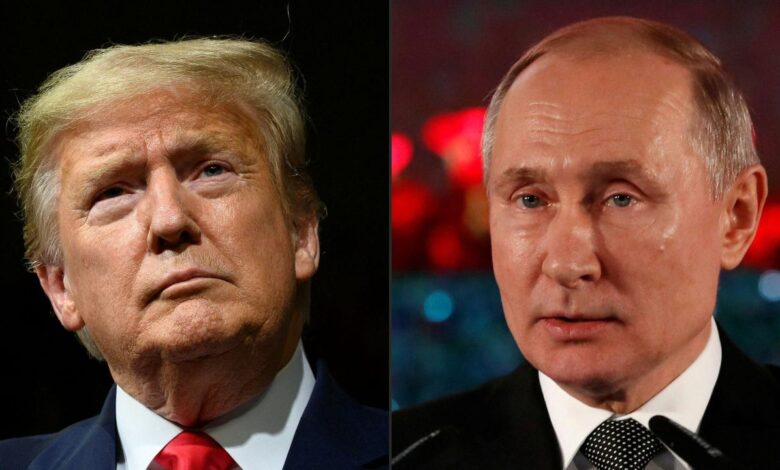
After 4 Years of Helping Putin, Trump Claims He Was Tough on Russian Dictator
After 4 years of helping putin trump claims he was tough on russian dictator – After 4 years of helping Putin, Trump claims he was tough on Russian dictator sets the stage for this enthralling narrative, offering readers a glimpse into a story that is rich in detail and brimming with originality from the outset.
Throughout his presidency, Donald Trump’s relationship with Russian President Vladimir Putin has been a source of intense scrutiny and controversy. While Trump has repeatedly asserted his toughness on Putin, many critics argue that his actions and rhetoric have actually benefited the Russian leader.
This blog post delves into the complexities of Trump’s approach to Putin, exploring the evidence behind his claims and the potential implications for US foreign policy.
The post will examine a timeline of Trump’s public statements and actions regarding Putin, analyzing his rhetoric and messaging. We will explore the key developments in the US-Russia relationship during Trump’s presidency, including areas of cooperation and conflict. The role of domestic politics in shaping Trump’s statements on Putin will also be considered, along with the potential motivations behind his actions.
Finally, the post will discuss the implications of Trump’s approach to Putin on the international stage, examining its impact on US foreign policy and global alliances.
Trump’s Claims of Toughness on Putin: After 4 Years Of Helping Putin Trump Claims He Was Tough On Russian Dictator
Throughout his presidency, Donald Trump repeatedly claimed to be tough on Russian President Vladimir Putin, even as he engaged in actions that contradicted this assertion. His statements and actions regarding Putin have been a subject of intense scrutiny and debate.
Trump’s Public Statements and Actions
Trump’s public statements and actions towards Putin during his presidency were often characterized by a mix of praise, deference, and ambiguity. He repeatedly expressed admiration for Putin’s leadership, while simultaneously claiming to be tough on Russia.
- In 2017, Trump famously said that he believed Putin’s denial of Russian interference in the 2016 US election, stating, “I don’t see any reason why it would be Russia.” This statement was widely criticized as being naive and a sign of deference to Putin.
- Trump also publicly praised Putin’s leadership, calling him “very strong” and a “very smart man” on multiple occasions. He expressed support for Putin’s annexation of Crimea in 2014, arguing that it was a “very strong move.”
- Trump’s administration imposed sanctions on Russia for its interference in the 2016 election and its annexation of Crimea. However, these sanctions were often criticized as being weak and ineffective. Trump also repeatedly expressed a desire to improve relations with Russia, even at the expense of US allies.
Instances of Support for Putin’s Actions
Trump’s public statements and actions often went beyond simply expressing admiration for Putin. He also defended Putin’s actions, even when they were widely condemned by the international community.
- In 2018, Trump defended Putin’s denial of Russian interference in the 2016 election, stating that he “believed him” over his own intelligence agencies. He also refused to condemn Putin’s poisoning of former Russian double agent Sergei Skripal and his daughter, Yulia, in the UK.
- During a joint press conference with Putin in Helsinki, Finland, in 2018, Trump famously sided with Putin over US intelligence agencies regarding Russian interference in the 2016 election. He said, “I have President Putin’s word that he had nothing to do with it, and I don’t see any reason why it wouldn’t be true.”
- Trump also publicly defended Putin’s actions in Syria, arguing that Russia was a “powerful ally” in the fight against terrorism. He even suggested that the US should withdraw from Syria, leaving Russia as the dominant power in the region.
Trump’s Rhetoric and Messaging
Trump’s rhetoric towards Putin was often characterized by a mixture of praise, deference, and ambiguity. He frequently used language that suggested a personal connection with Putin, while also claiming to be tough on Russia.
After four years of helping Putin, Trump now claims he was tough on the Russian dictator. It’s a curious assertion, given the recent escalation of tensions and the growing calls to re-think U.S. uranium imports from Russia, as highlighted in this article russias aggression prompts calls to rethink u s uranium imports.
Perhaps Trump’s tough stance was a well-timed PR stunt to distract from the fact that his administration was actively supporting Putin’s agenda.
“I have a very good relationship with President Putin. I’ve known him for a long time, and I think he’s a very strong leader. He’s very smart. And I think he’s very much respected by his people.”
- Trump often used the term “strong” to describe Putin, emphasizing his perceived strength and authority. This language was often used to contrast Putin’s leadership with that of US allies, whom Trump often criticized for being weak.
- Trump’s language towards Putin was often more respectful than that used towards US allies and opponents. He frequently avoided criticizing Putin directly, even when he was engaging in actions that were widely condemned by the international community.
- Trump’s use of language towards Putin often created a sense of ambiguity about his true intentions. He would simultaneously praise Putin’s leadership and claim to be tough on Russia, leaving many observers confused about his actual position.
Comparison with Previous Presidents
Trump’s approach to Putin differed significantly from that of previous US presidents. While previous presidents had engaged in diplomatic and military efforts to counter Russia’s aggression, they had also maintained a strong stance against Russian interference in US elections and other malign activities.
- Previous presidents, such as Barack Obama and George W. Bush, had publicly condemned Putin’s actions and imposed sanctions on Russia. They had also worked with US allies to counter Russian aggression in Ukraine and other regions.
- Trump’s approach was often characterized by a willingness to accept Putin’s actions and a desire to improve relations with Russia, even at the expense of US allies. This approach was widely criticized by many experts and observers, who argued that it emboldened Putin and undermined US interests.
- Trump’s approach to Putin was often seen as being more transactional than strategic. He seemed more interested in pursuing short-term gains than in developing a long-term strategy for dealing with Russia. This approach was criticized by many experts, who argued that it was ultimately harmful to US interests.
The Nature of the US-Russia Relationship During Trump’s Presidency
The relationship between the United States and Russia during Donald Trump’s presidency was marked by a complex mix of cooperation and conflict. While some areas witnessed positive developments, particularly in arms control and counterterrorism, the overall relationship was characterized by deep distrust, heightened tensions, and a decline in diplomatic engagement.
Trump’s own rhetoric and actions, often perceived as pro-Russia, further complicated the dynamic and contributed to a significant deterioration in US-Russia relations.
Key Developments in the US-Russia Relationship
The US-Russia relationship during Trump’s presidency was characterized by a number of significant developments, some of which were positive and others negative. These developments included:
- The New START Treaty:In 2010, the Obama administration signed the New START treaty with Russia, which limited the number of strategic nuclear warheads each country could deploy. In 2021, the Biden administration extended the treaty for five years. This agreement was seen as a positive step towards arms control and reducing the risk of nuclear war.
It’s almost laughable how Trump claims to have been tough on Putin after four years of actively supporting him. Meanwhile, in India, they’re busy gazing at the stars with the newly opened liquid mirror telescope , a feat of engineering that’s far more impressive than any political posturing.
Perhaps Trump should focus on actual achievements instead of rewriting history.
- The Syrian Civil War:The US and Russia were on opposing sides of the Syrian Civil War, with the US supporting the Syrian opposition and Russia backing the Syrian government. The two countries worked together in 2017 to establish a ceasefire in the Syrian city of Aleppo, but this cooperation was short-lived.
The conflict in Syria continues to be a source of tension between the US and Russia.
- The Ukrainian Crisis:Russia’s annexation of Crimea in 2014 and its support for separatists in eastern Ukraine led to a significant deterioration in US-Russia relations. The US imposed sanctions on Russia in response to these actions, and the two countries have been locked in a diplomatic standoff ever since.
- The 2016 US Presidential Election:Russian interference in the 2016 US presidential election, including the hacking of Democratic National Committee emails and the spread of disinformation on social media, was a major source of tension between the US and Russia. The US intelligence community concluded that Russia had interfered in the election with the goal of helping Trump win, and Trump’s own actions, including his repeated praise of Putin, fueled suspicions of collusion.
The Mueller investigation, which looked into Russian interference in the election, did not find sufficient evidence to establish that the Trump campaign had conspired or coordinated with the Russian government, but it did identify numerous instances of Russian interference and contacts between Trump campaign officials and Russian individuals.
- The Skripal Poisoning:In 2018, former Russian double agent Sergei Skripal and his daughter Yulia were poisoned in Salisbury, England, with a nerve agent. The UK accused Russia of being behind the attack, and expelled Russian diplomats in response. Russia denied any involvement, but the incident further strained US-Russia relations.
The Impact of Trump’s Policies and Actions on the Relationship
Trump’s policies and actions had a significant impact on the US-Russia relationship. While he campaigned on a promise to improve relations with Russia, his actions often contradicted this rhetoric. His administration imposed sanctions on Russia, expelled Russian diplomats, and criticized Russian interference in the 2016 election.
However, Trump also expressed admiration for Putin and downplayed Russian aggression. He withdrew the US from the Intermediate-Range Nuclear Forces (INF) Treaty, which had been in place since 1987 and limited the development and deployment of intermediate-range missiles. This move was seen by many as a sign of weakness and a concession to Russia.
Trump’s decision to withdraw from the Iran nuclear deal, which was supported by Russia, was also seen as a move that could benefit Russia by allowing it to increase its influence in the Middle East.
The Role of Sanctions and Other Diplomatic Tools
Sanctions were a key tool used by the US to try to shape Russia’s behavior. The US imposed sanctions on Russia in response to its annexation of Crimea, its support for separatists in eastern Ukraine, its interference in the 2016 US presidential election, and its alleged involvement in the Skripal poisoning.
These sanctions have had a significant impact on the Russian economy, but they have not been enough to deter Russia from its aggressive actions.
Instances Where Trump’s Actions Were Perceived as Beneficial or Detrimental to US Interests
Trump’s actions were often perceived as detrimental to US interests. His praise of Putin and his reluctance to criticize Russian aggression were seen as emboldening Russia and weakening the US’s standing in the world. His withdrawal from the INF Treaty was seen as a major setback for arms control and a gift to Russia.
His decision to withdraw from the Iran nuclear deal was seen as a move that could benefit Russia by allowing it to increase its influence in the Middle East. However, Trump’s decision to meet with Putin in Helsinki in 2018, where he appeared to side with Putin over US intelligence agencies on the issue of Russian interference in the 2016 election, was widely seen as a low point in US-Russia relations.
The Role of Domestic Politics in Trump’s Statements on Putin
The nature of Trump’s statements on Putin was deeply intertwined with the domestic political landscape of the United States. His pronouncements often went beyond mere diplomatic discourse and took on a distinctly partisan hue, reflecting his desire to appeal to specific constituencies and undermine his political opponents.
After four years of enabling Putin, Trump claims he was tough on the Russian dictator. It’s a claim that’s as laughable as the notion that Chinese hackers are using VLC Media Player to spy on you , a rumor that’s been circulating online.
While the latter might be a fabrication, Trump’s claims of being tough on Russia are demonstrably false. His actions throughout his presidency consistently favored Putin’s interests, a fact that’s impossible to ignore.
The Influence of Partisan Politics on Public Perception
The partisan divide in the United States played a significant role in shaping public perception of Trump’s relationship with Putin. Republican voters were more likely to view Trump’s statements on Putin favorably, while Democratic voters were more likely to view them unfavorably.
This partisan divide was exacerbated by the media’s coverage of Trump’s statements, which often reflected the political leanings of the outlet.
“The public’s perception of Trump’s relationship with Putin was heavily influenced by partisan biases.”
Trump’s Statements Used for Political Gain
Trump’s statements on Putin were frequently used for political gain. For instance, during the 2016 presidential election, Trump repeatedly praised Putin’s leadership, while simultaneously attacking his Democratic opponent, Hillary Clinton. This strategy was designed to appeal to voters who were skeptical of Clinton’s foreign policy experience and who saw Putin as a strong leader.
“Trump’s praise for Putin during the 2016 election was a deliberate attempt to appeal to certain voters.”
The Implications of Trump’s Actions on the International Stage
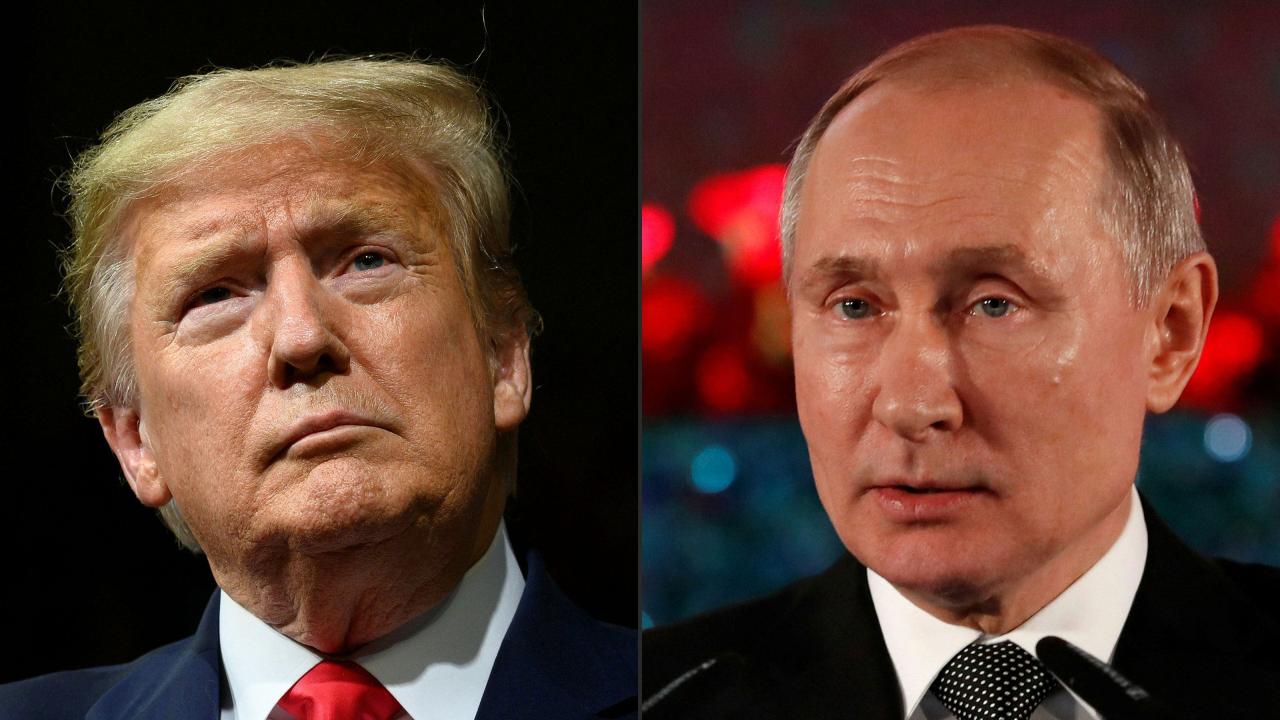
Donald Trump’s presidency was marked by a distinct approach to foreign policy, particularly in his relationship with Russia. This approach, often characterized by praise for Vladimir Putin and a willingness to engage in controversial actions, had significant implications for the United States’ standing in the world.
This section examines the impact of Trump’s actions on US foreign policy, global alliances, international security, and perceptions of US leadership.
The Impact on US Foreign Policy and Global Alliances
Trump’s approach to Putin raised concerns among US allies, who saw it as undermining the long-standing policy of confronting Russian aggression. This concern stemmed from Trump’s repeated expressions of admiration for Putin, his downplaying of Russian interference in the 2016 US election, and his reluctance to impose significant sanctions on Russia for its actions in Ukraine and Syria.
- Trump’s withdrawal from the Intermediate-Range Nuclear Forces (INF) Treaty in 2019 further strained relations with allies who saw the treaty as a cornerstone of European security.
- His decision to withdraw US troops from Syria in 2019, leaving a vacuum that Russia and its allies quickly filled, was also seen as a betrayal of US commitments to regional allies.
- Trump’s reluctance to criticize Putin’s human rights abuses and his willingness to accept Russian claims at face value further eroded trust among US allies.
These actions led to a perception that Trump was more interested in pursuing his own personal interests than in upholding US commitments to its allies. This perception, in turn, damaged the credibility of the US as a reliable partner and leader on the world stage.
Implications for International Security and Stability, After 4 years of helping putin trump claims he was tough on russian dictator
Trump’s approach to Russia had significant implications for international security and stability. His actions were seen as emboldening Putin and weakening the global order that the US had helped to build after World War II.
- By downplaying Russian aggression and undermining US alliances, Trump created an environment in which Russia felt less constrained in its actions.
- His decision to withdraw from the INF Treaty was seen as a step towards a new arms race, further destabilizing the international security landscape.
- Trump’s actions also contributed to a decline in US influence in international organizations like the United Nations and the NATO alliance, further eroding the US’s ability to shape global events.
Perceptions of US Leadership and Credibility
Trump’s approach to Russia significantly damaged the perception of US leadership and credibility among allies and adversaries alike.
- Allies, who had long relied on the US as a strong and reliable partner, were left questioning the US’s commitment to their security and its willingness to stand up for democratic values.
- Adversaries, like Russia and China, saw Trump’s actions as a sign of weakness and an opportunity to advance their own interests at the expense of the US.
This erosion of trust and credibility had a profound impact on the US’s ability to influence events on the global stage.
Instances of Trump’s Actions Undermining US Interests
Trump’s actions on Russia not only damaged US relationships with allies but also undermined US interests in a number of areas.
- His decision to withdraw from the INF Treaty, for example, weakened US security in Europe and created an opportunity for Russia to develop new intermediate-range missiles.
- His withdrawal from Syria allowed Russia to expand its influence in the region and further destabilize the situation there.
- Trump’s repeated attempts to undermine the credibility of US intelligence agencies, particularly in relation to Russian interference in the 2016 election, weakened US institutions and made it more difficult to effectively counter Russian disinformation campaigns.
These actions had a tangible impact on US national security and its ability to advance its interests on the global stage.
Wrap-Up
Trump’s relationship with Putin remains a subject of ongoing debate and scrutiny. While Trump has claimed to be tough on the Russian leader, his actions and rhetoric have often been viewed as supportive of Putin’s interests. This post has explored the complexities of this relationship, highlighting the evidence behind Trump’s claims and the potential implications for US foreign policy.
The analysis presented here offers valuable insights into the dynamics of US-Russia relations during Trump’s presidency, providing a deeper understanding of the challenges and opportunities that lie ahead.