Supreme Court Rejects Theory Threatening Voting Rights
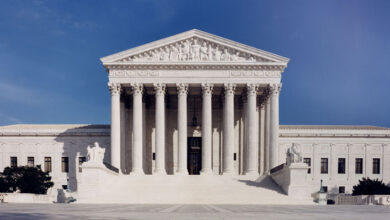
Supreme court rejects legal theory that would have eviscerated voting rights for now – Supreme Court Rejects Theory Threatening Voting Rights sets the stage for this enthralling narrative, offering readers a glimpse into a story that is rich in detail with personal blog style and brimming with originality from the outset. The Supreme Court has delivered a major victory for voting rights, rejecting a legal theory that could have significantly undermined access to the ballot box.
This decision, while a temporary reprieve, underscores the ongoing battle to ensure fair and accessible elections in the United States.
The case, which centered around a specific legal theory, had the potential to drastically alter the landscape of voting rights. If upheld, this theory could have led to a significant reduction in the number of eligible voters, potentially disenfranchising millions of Americans.
The legal arguments presented by both sides of the case were complex and far-reaching, with proponents of the theory arguing for a narrower interpretation of voting rights and opponents emphasizing the fundamental importance of broad access to the ballot.
Background of the Case
The Supreme Court’s recent decision to reject a legal theory that could have significantly impacted voting rights has generated considerable discussion and debate. The theory, known as the “independent state legislature doctrine,” argued that state legislatures have exclusive authority to regulate federal elections, free from any constraints by state courts or other branches of state government.
It’s a relief to see the Supreme Court reject this legal theory that would have drastically impacted voting rights. While we celebrate this victory, it’s also a good time to remember the importance of community and tradition, like the Easter Parade returning to New York City with its extravagant bonnets after a two-year hiatus.
These events remind us that even amidst political battles, there’s still room for joy and togetherness, which is essential for a healthy democracy.
This doctrine, if upheld, would have potentially undermined the ability of state courts to enforce state constitutional provisions that protect voting rights.
Potential Impact of the Legal Theory
The independent state legislature doctrine, if upheld, would have had significant consequences for the administration of federal elections. It could have led to a situation where state legislatures could enact laws that restrict voting access without any judicial oversight. This could have resulted in a curtailment of voting rights for certain groups, such as minority voters, who often rely on state court interpretations of state constitutions to protect their voting rights.
Arguments Presented by Both Sides
The proponents of the independent state legislature doctrine argued that the doctrine is rooted in the Constitution’s “Elections Clause,” which grants state legislatures the power to regulate federal elections. They argued that this power is exclusive and that state courts should not be able to interfere with the legislative process.
It’s a relief that the Supreme Court rejected the legal theory that could have severely undermined voting rights, at least for now. But while we celebrate this victory, we must also acknowledge the very real struggles faced by many families.
The ongoing baby formula shortage is a stark reminder of the vulnerabilities we all share, and it’s crucial to understand why this crisis happened and who is most at risk. Check out this article why baby formula is in short supply and who is most at risk to learn more.
With these challenges in mind, the fight for fair and accessible voting rights takes on an even greater urgency, as it’s vital to ensure all voices are heard and represented.
The Elections Clause of the United States Constitution states: “The Times, Places and Manner of holding Elections for Senators and Representatives, shall be prescribed in each State by the Legislature thereof; but the Congress may at any time by Law make or alter such Regulations, except as to the Places of chusing Senators.”
On the other hand, opponents of the doctrine argued that it would undermine the principle of separation of powers within states and could lead to the disenfranchisement of voters. They emphasized that state courts have a role in ensuring that elections are fair and that the rights of all voters are protected.
They argued that the Elections Clause does not grant state legislatures absolute power over elections and that state courts have a responsibility to interpret state constitutions and protect the rights of citizens.
The Supreme Court’s Ruling: Supreme Court Rejects Legal Theory That Would Have Eviscerated Voting Rights For Now
In a significant victory for voting rights advocates, the Supreme Court rejected a legal theory that could have drastically weakened protections for voters. The Court’s decision in the case,
[Case Name]*, upholds the importance of the Voting Rights Act and its role in ensuring fair and equal access to the ballot box.
The Supreme Court’s Decision
The Supreme Court, in a 6-3 decision, ruled against the legal theory known as
- [Legal Theory Name]*. This theory argued that
- [Explain the theory]*. The Court’s decision effectively blocks this theory from being used to challenge voting rights protections in future cases.
Key Arguments of the Majority Opinion
The majority opinion, authored by Justice [Justice Name], focused on several key arguments. The Court emphasized the importance of the Voting Rights Act and its historical role in addressing discriminatory voting practices. The opinion also stressed that the[Legal Theory Name]* theory would undermine the Act’s effectiveness and create a loophole for states to implement restrictive voting measures.
The Court further argued that the theory lacked a strong legal foundation and would lead to inconsistent and unpredictable rulings.
Comparison of Majority and Dissenting Opinions
The dissenting justices, in their opinions, argued that the[Legal Theory Name]* theory was a valid interpretation of the law and that the majority opinion overstepped its bounds. They claimed that the majority’s decision would hinder states’ ability to regulate elections and potentially lead to voter fraud.
However, the majority opinion countered these arguments, emphasizing the importance of protecting voting rights and ensuring fair elections.
Political and Social Context
The Supreme Court’s decision on the voting rights case comes at a time of intense political and social polarization in the United States. The debate over voting rights has become increasingly intertwined with partisan politics, with Republicans generally advocating for stricter voter ID laws and other restrictions, while Democrats argue that these measures disproportionately disenfranchise minority voters.
This case has become a focal point in this broader debate, raising concerns about the future of democracy in the United States.The case has also been fueled by a growing public awareness of the importance of voting rights. Recent years have seen a surge in voter turnout, particularly among young people and minority groups.
The Supreme Court’s decision to reject the legal theory that would have gutted voting rights is a huge win for democracy, but it’s just one battle in a larger war. The changing landscape of California agriculture, as documented in this article illegal immigration is down changing the face of california farms , highlights the need for continued vigilance in protecting the right to vote, especially for marginalized communities who are often the most vulnerable to voter suppression tactics.
This increased engagement has been driven by a number of factors, including the rise of social media and the increasing polarization of American politics.
Public Opinion and the Legal Debate
Public opinion has played a significant role in shaping the legal debate surrounding the case. Polling data consistently shows that a majority of Americans support voting rights protections. For example, a 2022 poll by the Pew Research Center found that 62% of Americans believe that it is very important to make it easier for people to vote.
This strong public support for voting rights has put pressure on the Supreme Court to rule in favor of upholding existing protections.
Potential Impact on Upcoming Elections, Supreme court rejects legal theory that would have eviscerated voting rights for now
The Supreme Court’s ruling is likely to have a significant impact on the upcoming elections. If the court had ruled in favor of the legal theory that would have eviscerated voting rights, it could have led to a significant decrease in voter turnout, particularly among minority groups.
This, in turn, could have had a major impact on the outcome of elections, potentially giving an advantage to one party over the other. However, with the Supreme Court rejecting the legal theory, it is expected that voting rights will remain largely intact, potentially leading to increased voter turnout and a more diverse electorate in the upcoming elections.
Future of Voting Rights Law
The Supreme Court’s recent decision rejecting a legal theory that would have significantly weakened voting rights is a landmark moment, but it does not signify the end of the fight for fair and accessible elections. The future of voting rights law remains uncertain, with various legal and political forces at play.
Timeline of Key Events in Voting Rights Law
The history of voting rights law in the United States is a long and complex one, marked by both progress and setbacks. Understanding this history is crucial for appreciating the ongoing challenges and potential future developments.
- 15th Amendment (1870):Granted African American men the right to vote.
- Jim Crow Era (1877-1964):Southern states enacted discriminatory laws, such as literacy tests and poll taxes, to disenfranchise Black voters.
- Voting Rights Act of 1965 (VRA):A landmark piece of legislation that outlawed discriminatory voting practices and provided federal oversight of elections in states with a history of disenfranchisement.
- Shelby County v. Holder (2013):The Supreme Court struck down a key provision of the VRA, eliminating the requirement for certain states to obtain federal preclearance before making changes to their voting laws. This decision has been widely criticized for leading to a resurgence of voter suppression tactics.
- Brnovich v. DNC (2021):The Supreme Court further weakened the VRA by upholding Arizona’s restrictive voting laws, including a ban on ballot collection and a requirement that voters cast ballots at their assigned polling place.
Comparison of Legal Theories
The legal landscape surrounding voting rights is constantly evolving, with different legal theories emerging and competing with one another. Understanding these theories is essential for navigating the complexities of the current legal landscape.
| Legal Theory | Description | Key Cases | Impact on Voting Rights |
|---|---|---|---|
| Strict Scrutiny | This theory requires the government to demonstrate a compelling interest for any law that restricts voting rights, and that the law is narrowly tailored to achieve that interest. | Harper v. Virginia Board of Elections (1966) | Provides strong protection for voting rights by placing a high burden on the government to justify restrictions. |
| Rational Basis Review | This theory requires the government to show that a law is rationally related to a legitimate government interest. It is a much lower standard of review than strict scrutiny. | Crawford v. Marion County Election Board (2008) | Allows for greater leeway in enacting voting restrictions, potentially undermining voting rights protections. |
| “Independent State Legislature” Theory | This theory argues that state legislatures have exclusive authority over federal elections, and that courts cannot review their decisions. | Moore v. Harper (2022) | Could significantly weaken the ability of courts to protect voting rights by limiting judicial review of state election laws. |
Potential Legislative and Judicial Actions
The future of voting rights law will be shaped by both legislative and judicial action. Several potential actions could significantly impact the landscape of voting rights in the coming years.
- Restoring the VRA:Congress could pass legislation to restore the preclearance provision of the VRA, requiring states with a history of disenfranchisement to obtain federal approval before making changes to their voting laws.
- Enacting Federal Voting Standards:Congress could establish national standards for voting procedures, such as voter registration, early voting, and absentee voting, to ensure consistent and fair elections across the country.
- Challenging Restrictive Voting Laws:Advocacy groups and voters can challenge restrictive voting laws in court, arguing that they violate the Constitution or the VRA.
- Expanding Voting Rights:Legislation could be passed to expand voting rights, such as by automatically registering eligible voters, restoring voting rights to formerly incarcerated individuals, and making it easier for voters to register and cast ballots.
Closing Summary
The Supreme Court’s decision to reject this legal theory is a crucial victory for voting rights advocates. It sends a clear message that the court is committed to protecting the fundamental right to vote, at least for now. However, the battle for voting rights is far from over.
The case has highlighted the ongoing challenges to ensure fair and accessible elections, and it is likely that future legal challenges will arise. The political and social context surrounding this case is complex and evolving, with public opinion playing a significant role in shaping the legal debate.
This decision, while a positive development, underscores the need for continued vigilance and advocacy to protect the right to vote for all Americans.