Biden Faces Problems He Cant Solve: CNN Politics
Biden confronts a host of problems he cant do much to solve cnn politics – Biden Faces Problems He Can’t Solve: CNN Politics explores the multifaceted challenges President Biden confronts, ranging from economic woes to global uncertainty and domestic divisions. The article delves into the complexities of these issues, highlighting the limitations of presidential power and the political climate that often hinders progress.
Despite his best efforts, Biden finds himself navigating a turbulent landscape where inflation, stagnant growth, and international conflicts intertwine, creating a perfect storm of difficulties. The article examines the impact of these challenges on American households, businesses, and the nation’s overall stability.
Economic Headwinds
The US economy faces a complex set of challenges, with inflation remaining stubbornly high and economic growth showing signs of slowing. This combination of economic headwinds presents a formidable challenge for President Biden, who is under pressure to deliver tangible results.
Inflation and Its Impact
Inflation, as measured by the Consumer Price Index (CPI), has remained elevated, although it has shown signs of cooling in recent months. The Federal Reserve’s aggressive interest rate hikes have aimed to curb inflation, but this strategy carries risks of slowing economic growth too sharply.
The impact of inflation on American households has been significant, eroding purchasing power and squeezing household budgets. The rising cost of essentials like food, energy, and housing has forced many families to make difficult choices. Businesses, too, have been grappling with higher input costs, which have eroded profit margins and contributed to price increases.
Stagnant Growth and Its Implications
Economic growth, as measured by GDP, has slowed in recent quarters, reflecting a combination of factors, including the Federal Reserve’s tightening monetary policy, supply chain disruptions, and waning consumer confidence. The slowdown in growth has raised concerns about the potential for a recession, which would have a significant negative impact on the economy and the labor market.
Policy Options to Address Economic Headwinds
President Biden has a range of policy options at his disposal to address the economic headwinds facing the US. These include:
- Continued Tightening of Monetary Policy:The Federal Reserve is expected to continue raising interest rates in the coming months, aiming to bring inflation under control. However, this approach carries the risk of slowing economic growth too sharply, potentially triggering a recession.
- Fiscal Policy Measures:The Biden administration could consider targeted fiscal policy measures, such as tax cuts or spending programs, to stimulate economic growth. However, such measures would need to be carefully designed to avoid exacerbating inflation.
- Addressing Supply Chain Disruptions:The Biden administration has taken steps to address supply chain disruptions, such as investing in infrastructure and working with businesses to improve supply chain resilience. These efforts are likely to take time to yield results.
- Energy Policy:The Biden administration is pursuing policies to address energy prices, including promoting clean energy and increasing domestic oil production. These efforts are aimed at reducing dependence on foreign oil and lowering energy costs for consumers.
Global Uncertainty
President Biden faces a world fraught with geopolitical tensions and uncertainty. The war in Ukraine, the rise of China, and instability in the Middle East present formidable challenges that impact the US economy, national security, and global stability. These conflicts strain America’s resources, influence its global standing, and necessitate difficult choices.
The War in Ukraine and Its Global Impact
The ongoing conflict in Ukraine has triggered a complex web of repercussions. The war has disrupted global energy markets, driving up prices for oil and natural gas, impacting inflation and consumer spending worldwide. The conflict has also exposed vulnerabilities in global supply chains, particularly for wheat and other commodities.
The war’s geopolitical implications are far-reaching, as it has intensified tensions between Russia and the West, leading to sanctions and counter-sanctions, and a re-alignment of global alliances.
Navigating China’s Rise
The rise of China as a global power presents a unique set of challenges for the US. China’s growing economic and military might, its assertive foreign policy, and its rivalry with the US over technology, trade, and influence in the Indo-Pacific region, have created a complex and dynamic relationship.
Biden’s facing a lot of tough issues, from the economy to international crises, and it’s easy to feel overwhelmed by the news cycle. But sometimes, it’s helpful to look at things from a different angle, like the health check newsletter’s parallels between vaping and COVID-19 debates , which highlights how public health anxieties can play out in unexpected ways.
Ultimately, even when the news is full of problems, it’s important to remember that there are always people working to find solutions.
The US is navigating this challenge by seeking to maintain a strong military presence in the region, engaging in strategic dialogue with China, and working with allies to counter China’s growing influence.
Middle East Instability and its Impact
The Middle East remains a volatile region with ongoing conflicts, political instability, and economic challenges. The US has been deeply involved in the region for decades, seeking to promote stability and counter terrorism. The withdrawal of US troops from Afghanistan in 2021, the ongoing civil war in Yemen, and the resurgence of Iran’s influence have complicated the US’s role in the region.
The US is seeking to maintain its strategic partnerships in the Middle East, promote peace and security, and counter Iranian influence.
Biden’s Approach to Global Challenges
President Biden has adopted a multifaceted approach to navigating these global challenges. He has sought to strengthen alliances, rebuild trust with international partners, and reassert America’s leadership on the global stage. He has also emphasized the need to address global challenges through diplomacy, economic engagement, and multilateral cooperation.
Potential Risks and Opportunities
The global landscape is characterized by both risks and opportunities. The US faces the risk of escalating tensions with Russia and China, the potential for regional conflicts to spread, and the possibility of economic instability. However, there are also opportunities for the US to strengthen its alliances, promote global cooperation, and address shared challenges.
Watching Biden navigate a world of seemingly insurmountable problems, I can’t help but wonder if he’s tapping into the same mindset traits that propel successful entrepreneurs. After all, they face their own share of challenges, navigating complex markets and unpredictable situations.
Perhaps taking a page from their playbook, as outlined in this insightful article on 11 mindset traits of successful entrepreneurs , could offer some valuable insights for our current political landscape. It’s a tough job, and it’s clear that President Biden is facing some incredibly difficult situations, but maybe a dose of entrepreneurial spirit could help him find some creative solutions.
The Role of Congress

The current state of Congress, characterized by intense partisan polarization, presents significant challenges for President Biden’s agenda. The deep divide between Democrats and Republicans has led to legislative gridlock, making it difficult for the administration to pass its priorities. This gridlock has significant implications for the effectiveness of the Biden presidency, impacting its ability to address pressing issues like climate change, healthcare, and economic inequality.
Biden faces a daunting array of challenges, from a fractured economy to a volatile geopolitical landscape. Many of these problems are rooted in complex global systems, leaving him with limited room for unilateral action. The situation with Turkey and NATO, as explored in this insightful analysis analysis turkey and nato prove the anna karenina principle of alliances , highlights the delicate balancing act required for international cooperation, a challenge that Biden must constantly navigate as he seeks to address the multitude of issues facing the nation.
Partisan Gridlock and Its Impact on Biden’s Agenda
The current political climate in Congress is marked by intense partisanship, with both Democrats and Republicans holding firm to their respective ideologies. This has made it extremely difficult to find common ground on key issues, leading to legislative gridlock. This gridlock has hampered Biden’s ability to advance his agenda, with many of his key initiatives facing significant obstacles in Congress.
For example, the Build Back Better Act, a comprehensive social spending package aimed at addressing climate change, expanding healthcare access, and tackling economic inequality, faced significant opposition from Republicans in the Senate. The bill ultimately failed to pass due to a lack of support from both parties, highlighting the challenges Biden faces in securing legislative victories in a deeply divided Congress.
Challenges Biden Faces in Working with Congress
President Biden faces several challenges in working with Congress, including:
- The Narrow Democratic Majority in the House and Senate:With a narrow majority in both chambers, Biden has limited room for error. Even a small number of defections from within his own party can derail his legislative priorities.
- The Rise of Partisanship:The increasing polarization of American politics has made it difficult to find common ground on even the most basic issues. This has made it nearly impossible to pass legislation that requires bipartisan support.
- The Filibuster:The Senate filibuster, a procedural rule that requires 60 votes to overcome a minority blockade, gives a significant amount of power to the minority party. This makes it extremely difficult for the majority party to pass legislation, even with a narrow majority.
Strategies Biden Can Employ to Overcome the Challenges
Despite the challenges, President Biden can employ several strategies to work with Congress and advance his agenda:
- Focus on Bipartisan Issues:Identifying areas of common ground with Republicans can help build consensus and increase the chances of passing legislation. For example, Biden could focus on issues like infrastructure investment, where there is bipartisan support.
- Utilize Executive Orders:While executive orders have limitations, they can be used to implement certain policies without Congressional approval. However, this strategy is often controversial and can lead to legal challenges.
- Engage in Public Diplomacy:Building public pressure on Congress can help sway lawmakers to support Biden’s agenda. This can be achieved through public speeches, media appearances, and outreach to grassroots organizations.
- Negotiate and Compromise:While finding common ground with Republicans can be difficult, Biden can attempt to negotiate and compromise to secure support for his priorities. This may involve making concessions on certain issues in exchange for support on others.
Public Perception: Biden Confronts A Host Of Problems He Cant Do Much To Solve Cnn Politics
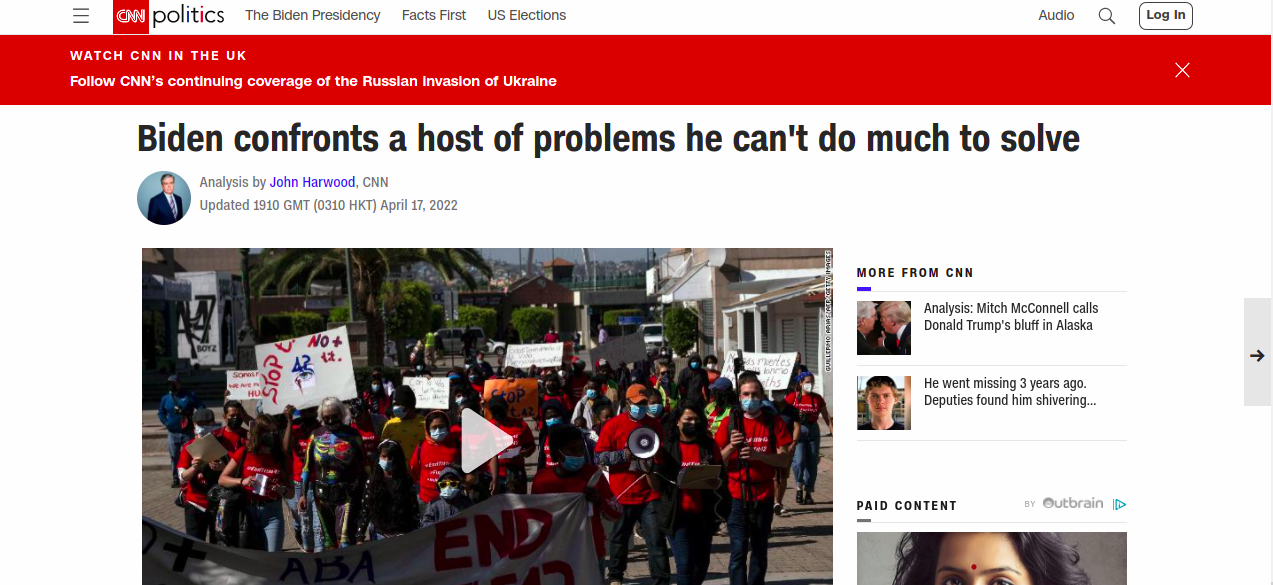
President Biden’s approval ratings have been a consistent source of concern for his administration. While his presidency has been marked by significant achievements, including the passage of major legislation and the successful rollout of COVID-19 vaccines, his approval ratings have remained stubbornly low throughout his tenure.
This persistent lack of public support poses a significant challenge to his ability to govern effectively and achieve his policy goals.
Factors Influencing Public Opinion, Biden confronts a host of problems he cant do much to solve cnn politics
Public opinion is shaped by a complex interplay of factors, including the economy, foreign policy, social issues, and the president’s own performance. Biden’s approval ratings have been particularly sensitive to the state of the economy, which has been characterized by high inflation and rising prices.
While the unemployment rate has remained low, many Americans feel that their wages are not keeping pace with the rising cost of living, which has contributed to a sense of economic anxiety.
Public Perception of Biden’s Leadership
The public’s perception of Biden’s handling of the challenges he faces is mixed. While some Americans appreciate his efforts to address issues such as climate change and gun violence, others criticize his approach to issues such as immigration and the withdrawal from Afghanistan.
Biden’s age and perceived cognitive decline have also been subject to scrutiny, with some questioning his ability to effectively lead the country.
Impact of Public Opinion on Biden’s Governance
Public opinion has a significant impact on Biden’s ability to govern effectively and achieve his policy goals. Low approval ratings can make it difficult for a president to build support for his agenda, both within Congress and among the public.
They can also embolden opponents and make it more difficult to negotiate compromises.
Outcome Summary
The CNN Politics article paints a sobering picture of the challenges facing President Biden. While he strives to address these issues, the limitations of presidential power and the deeply divided political landscape create significant hurdles. The article serves as a reminder of the complex realities of governing in the 21st century, where finding solutions to multifaceted problems requires navigating a delicate balance of political will, public opinion, and international pressures.