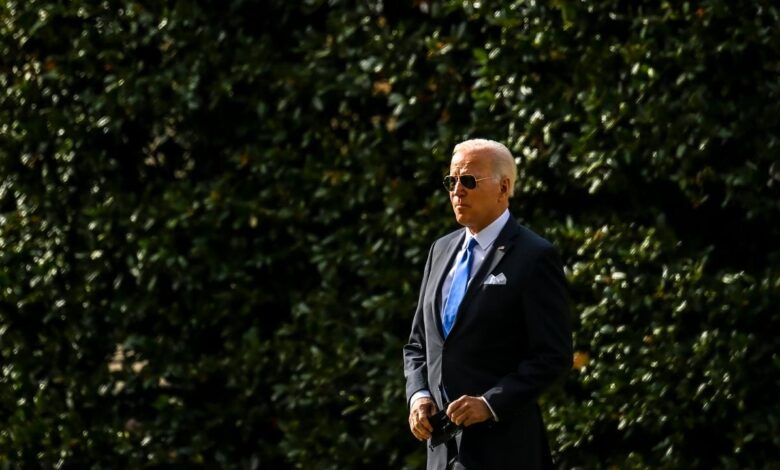
Biden Calls Putin a War Criminal
Biden Calls Putin a War Criminal, a statement that has sent shockwaves through the international community. This isn’t the first time a US president has used strong language towards a Russian leader, but the current context, with the ongoing war in Ukraine, adds a layer of complexity and potential consequences.
Biden’s statement, made during a visit to Poland, was a direct response to the escalating violence in Ukraine and the mounting evidence of war crimes committed by Russian forces. It raises questions about the future of US-Russia relations, the potential for escalation, and the impact on global alliances.
Historical Context
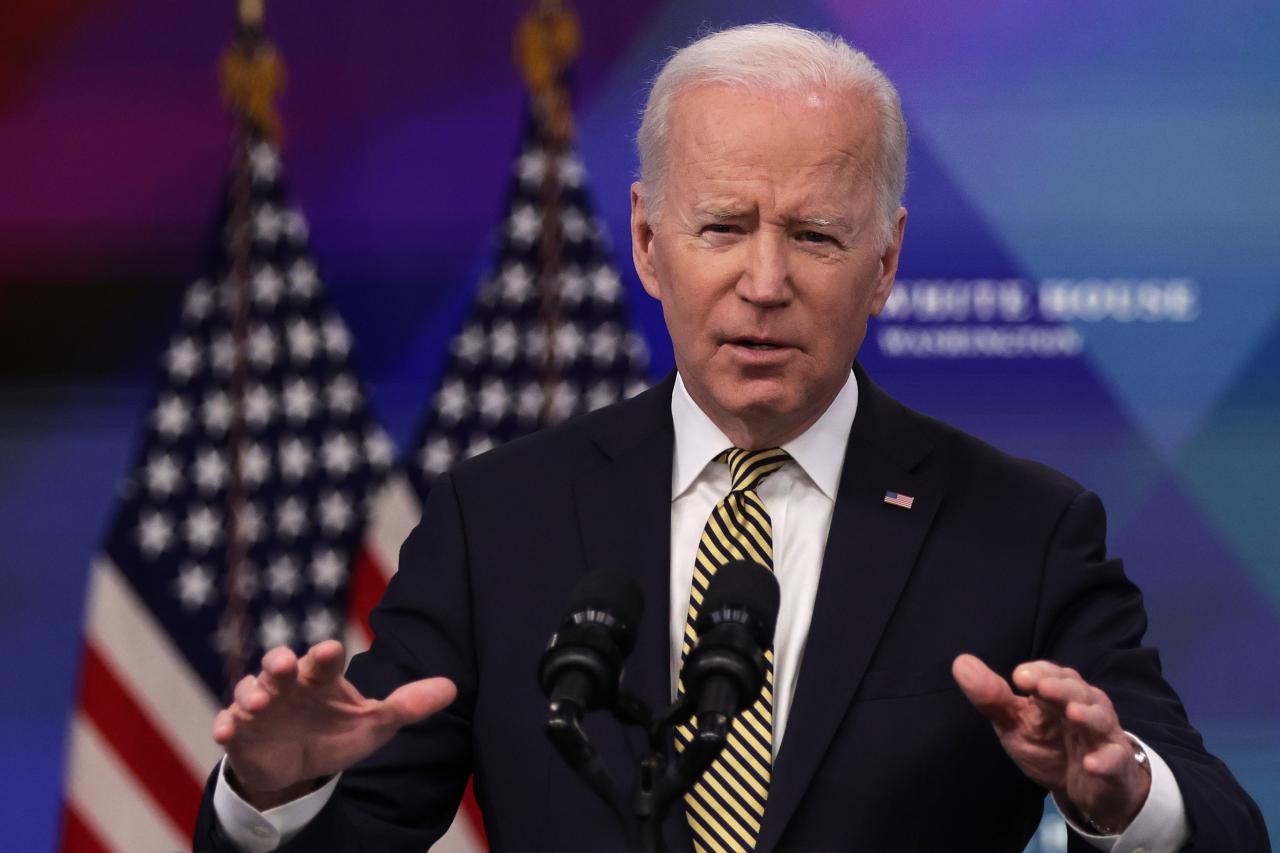
The relationship between the United States and Russia has been marked by both periods of cooperation and intense rivalry, spanning over two centuries. Understanding this historical context is crucial to appreciating the current state of affairs and the implications of Biden’s recent rhetoric.
A Timeline of US-Russia Relations
The history of US-Russia relations is a complex tapestry woven with threads of cooperation, conflict, and shifting alliances. Here’s a brief timeline highlighting some of the most significant events:
- Early 19th Century:The US and Russia established diplomatic relations in 1803. Early interactions were largely focused on trade and exploration. The two nations even cooperated in the Alaska Purchase of 1867.
- World War I and the Russian Revolution:The US and Russia initially fought together in World War I, but the Russian Revolution in 1917 led to the collapse of the Tsarist regime and the rise of the Soviet Union. The US, initially hesitant to recognize the new Soviet government, eventually established diplomatic relations in 1933.
- World War II:During World War II, the US and the Soviet Union were allies against Nazi Germany. The alliance was forged out of necessity but was often strained by ideological differences and mutual distrust. The war ended with the US emerging as a superpower and the Soviet Union as a formidable adversary.
- The Cold War (1947-1991):The post-war period was dominated by the Cold War, a period of intense ideological and geopolitical rivalry between the US and the Soviet Union. This era saw the development of nuclear weapons, the space race, and numerous proxy conflicts around the world.
- The End of the Cold War:The collapse of the Soviet Union in 1991 marked a significant turning point in US-Russia relations. The US hoped for a new era of cooperation, but this was complicated by the emergence of Russia as a new power and the challenges of transition in post-Soviet Russia.
- The 21st Century:The early 2000s saw a period of relative cooperation between the US and Russia, particularly in the aftermath of the 9/11 attacks. However, tensions resurfaced in recent years over issues such as Ukraine, Syria, and Russia’s interference in US elections.
US Presidents and Strong Language Towards Russia
Throughout history, US presidents have frequently used strong language to criticize Russian leaders, reflecting the complex and often fraught relationship between the two countries. Here are some notable examples:
- President Ronald Reagan:Reagan famously called the Soviet Union an “evil empire” during his 1983 speech. This rhetoric, while controversial, was intended to rally public support for a tough stance against Soviet expansionism and communist ideology.
- President George W. Bush:Following the 9/11 attacks, Bush identified Russia as a “rogue state” and a potential threat to US security. This rhetoric was partly driven by concerns about Russia’s actions in the Chechen War and its potential support for terrorism.
- President Barack Obama:Obama, while advocating for a “reset” in US-Russia relations, also criticized Russia’s human rights record and its annexation of Crimea in 2014. He described Russia’s actions in Ukraine as a violation of international law and a threat to European security.
The Impact of Rhetoric on Diplomacy
The use of strong language by US presidents towards Russia has often had a significant impact on diplomatic relations. While such rhetoric can be effective in rallying public opinion and demonstrating a firm stance, it can also escalate tensions and make it more difficult to find common ground.
For example, Reagan’s “evil empire” rhetoric, while popular with some, was criticized by others for being too confrontational and unhelpful in fostering dialogue.
“Words have power, and the words we choose can shape the world we live in.”
Nelson Mandela
The Current Situation
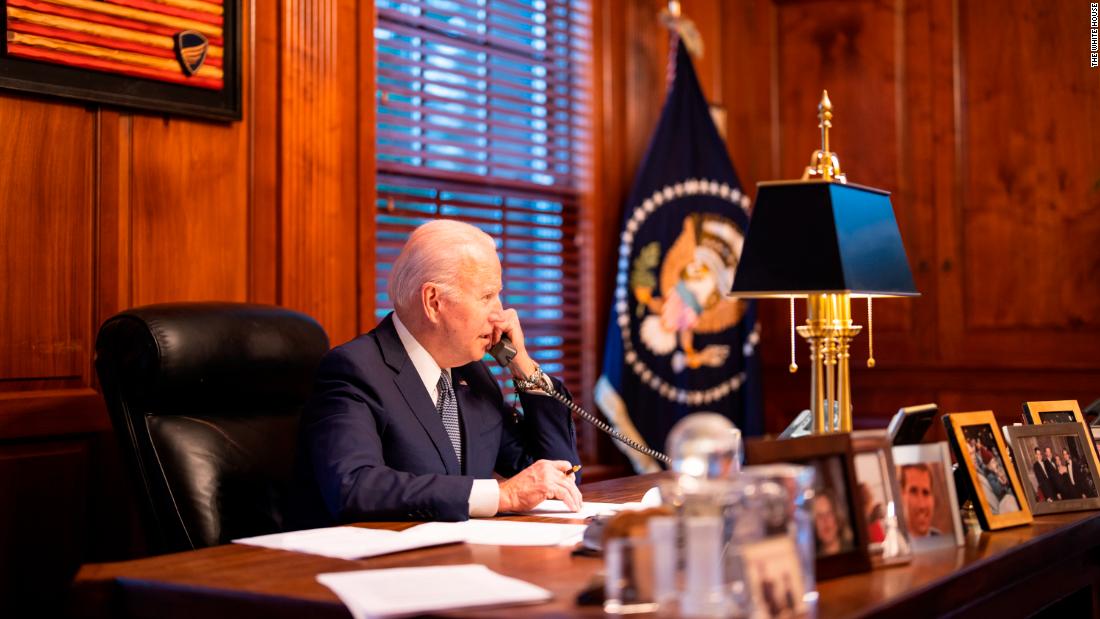
Biden’s statement about Putin being a “war criminal” came at a time of heightened tensions between the United States and Russia, fueled by the ongoing war in Ukraine. This conflict has sparked a significant shift in the global geopolitical landscape, with countries aligning themselves either with Russia or the West.
The war has also raised concerns about the potential for wider conflict and the use of nuclear weapons.
Biden’s Motivations
Biden’s use of the term “war criminal” was likely motivated by several factors. First, it aimed to express the gravity of the situation and the severity of the crimes committed by Russia in Ukraine. Second, it was a direct challenge to Putin’s authority and a condemnation of his actions.
Third, it sought to rally international support for Ukraine and isolate Russia further on the world stage.
Consequences of Biden’s Statement
Biden’s statement has the potential to further escalate tensions between the US and Russia. It could also complicate efforts to find a diplomatic solution to the conflict. However, it could also serve to strengthen international condemnation of Russia’s actions and provide further support for Ukraine.
Biden’s recent statement calling Putin a “war criminal” has certainly sparked global conversation. While the political landscape is in flux, it’s a good time to refocus on what we can control: our marketing strategies. Check out this insightful article on 3 data driven marketing ideas to boost performance this quarter , which can help us navigate the uncertainty and achieve success.
Even amidst geopolitical tensions, strong marketing can be a powerful tool to connect with audiences and drive results.
The long-term consequences of Biden’s statement remain to be seen.
International Reactions
Biden’s labeling of Putin as a “war criminal” sparked a wide range of reactions across the globe. While some nations and international organizations condemned the Russian invasion of Ukraine and expressed support for Ukraine’s sovereignty, others remained neutral or even voiced support for Russia’s actions.
Reactions of Various Countries and International Organizations
The following table compares and contrasts the reactions of various countries and international organizations to Biden’s statement:| Country/Organization | Stance | Key Figures ||—|—|—|| United States| Strongly condemns Russia’s invasion, supports Ukraine’s sovereignty, and labels Putin a “war criminal.” | President Joe Biden, Secretary of State Antony Blinken || European Union| Condemns Russia’s invasion, imposes sanctions on Russia, and provides military and humanitarian aid to Ukraine.
| President of the European Commission Ursula von der Leyen, President of the European Council Charles Michel || United Kingdom| Condemns Russia’s invasion, imposes sanctions on Russia, and provides military and humanitarian aid to Ukraine. | Prime Minister Boris Johnson, Foreign Secretary Liz Truss || NATO| Condemns Russia’s invasion, reinforces its presence in Eastern Europe, and provides military support to Ukraine.
| Secretary General Jens Stoltenberg || Germany| Condemns Russia’s invasion, imposes sanctions on Russia, and provides military and humanitarian aid to Ukraine. | Chancellor Olaf Scholz || France| Condemns Russia’s invasion, imposes sanctions on Russia, and provides military and humanitarian aid to Ukraine.
| President Emmanuel Macron || China| Calls for a ceasefire and a diplomatic solution to the conflict, but does not condemn Russia’s invasion. | President Xi Jinping || India| Remains neutral in the conflict, but has called for an end to violence and a peaceful resolution.
| Prime Minister Narendra Modi || Russia| Denies any wrongdoing and claims that its actions are necessary to protect its national security. | President Vladimir Putin, Foreign Minister Sergei Lavrov |
Potential Impact on Global Alliances and Partnerships
Biden’s statement has the potential to further strain US-Russia relations and impact global alliances and partnerships. It could lead to:* Increased tensions between the US and Russia:Biden’s strong condemnation of Putin could further escalate tensions between the two countries, making it difficult to find common ground on other issues.
Strengthening of US-led alliances
Biden’s statement could strengthen US alliances with countries that share its view on Russia’s actions, such as NATO members and other European countries.
Shifting alliances
Some countries, such as India and China, may choose to distance themselves from the US-Russia conflict, potentially leading to new alliances and partnerships.
International Community’s View of US-Russia Relations
The international community is largely divided in its views on US-Russia relations. * Western countries:Many Western countries, particularly those in Europe and North America, view Russia as a threat to international security and have called for stronger measures to counter its aggressive actions.
Biden’s recent call for Putin to be held accountable for war crimes has sparked a lot of debate. While the world grapples with the implications of such a statement, it’s important to remember that even in times of global conflict, there’s still room for creativity and learning.
For example, if you’re looking for fun ways to engage children in learning, check out this awesome list of 45 cool ways to use plastic easter eggs for learning. From alphabet games to science experiments, these ideas are sure to keep kids entertained and engaged, even as we navigate the complexities of the current global situation.
Other countries
Some countries, particularly in Asia and Africa, have adopted a more neutral stance, seeking to avoid taking sides in the conflict.
Russia’s allies
Russia’s allies, such as Belarus and Syria, continue to support its actions and have condemned the West’s response.
Domestic Reactions
Biden’s statement calling Putin a “war criminal” sparked a wave of reactions across the US political landscape, with varying degrees of support and criticism.
Reactions from US Political Parties
The statement elicited distinct responses from different political parties. The Democratic Party largely supported Biden’s statement, viewing it as a necessary condemnation of Putin’s actions in Ukraine. Many Democratic lawmakers echoed Biden’s sentiment, calling for stronger sanctions against Russia and increased military aid to Ukraine.
“Putin is a war criminal and must be held accountable for his actions,” said Senator Elizabeth Warren (D-MA).
The Republican Party, however, exhibited a more divided response. Some Republicans, particularly those aligned with former President Donald Trump, criticized Biden’s statement as overly aggressive and counterproductive. They argued that such rhetoric could escalate tensions with Russia and hinder diplomatic efforts.
“Biden’s reckless language is dangerous and unhelpful,” said Senator Rand Paul (R-KY).
Others, however, supported Biden’s stance, emphasizing the need for a strong response to Putin’s aggression.
Reactions from US Media Outlets
US media outlets also displayed a spectrum of reactions to Biden’s statement. Liberal outlets like The New York Times and CNN generally applauded Biden’s condemnation of Putin, viewing it as a necessary step in holding Russia accountable for its actions.
They argued that Putin’s invasion of Ukraine constituted a clear violation of international law and that strong language was required to deter further aggression.Conservative outlets like Fox News and The Wall Street Journal, however, were more critical of Biden’s statement.
They argued that calling Putin a “war criminal” was premature and could hinder diplomatic efforts. They also questioned the effectiveness of sanctions in deterring Russia’s aggression.
Reactions from Public Figures
Biden’s statement also elicited reactions from various public figures, including celebrities, business leaders, and religious figures. Many celebrities and public figures expressed support for Biden’s statement, condemning Putin’s actions and calling for international action to hold Russia accountable.
“Putin is a war criminal and must be stopped,” tweeted actor and activist George Clooney.
Some business leaders also condemned Putin’s actions and called for stronger sanctions against Russia.
“We must hold Putin accountable for his actions,” said CEO of Apple Tim Cook.
Biden’s recent condemnation of Putin as a “war criminal” has certainly raised eyebrows, and it’s hard to ignore the growing international pressure on Russia. But while the world focuses on the conflict in Ukraine, it seems the 1/6 committee is gearing up to shock the nation with a mountain of new evidence about the events of January 6th.
It’s a reminder that even as we face global crises, we must also confront the challenges within our own country. And as the committee’s findings unfold, it’s possible that Biden’s words about Putin will take on a new meaning, highlighting the importance of holding leaders accountable for their actions, both domestically and internationally.
However, some public figures, particularly those with ties to Russia, expressed reservations about Biden’s statement, arguing that it could escalate tensions and hinder diplomatic efforts.
Potential Impact of Biden’s Statement on Public Opinion
Biden’s statement calling Putin a “war criminal” has the potential to influence public opinion in the United States in various ways. It could increase public support for stronger sanctions against Russia and increased military aid to Ukraine. It could also further polarize public opinion along partisan lines, with Democrats expressing stronger support for Biden’s statement and Republicans exhibiting more divided opinions.However, it is also possible that Biden’s statement could have a limited impact on public opinion, with many Americans already holding strong views on the conflict in Ukraine.
The Implications of Language: Biden Calls Putin A
In the realm of international relations, the power of words cannot be underestimated. Language, particularly in moments of crisis, can be a potent tool for shaping perceptions, influencing actions, and ultimately determining the course of events. The choice of language, whether it be measured and diplomatic or harsh and confrontational, carries significant weight, impacting both the immediate situation and the long-term trajectory of relationships between nations.
The Impact of Strong Language on Diplomacy and Conflict Resolution
Strong language, often characterized by accusatory statements, threats, or belittling remarks, can have a detrimental effect on diplomatic negotiations and conflict resolution. While it may be intended to convey strength or deter aggression, it can also escalate tensions, damage trust, and create obstacles to finding common ground.
The use of such language can be seen as a form of verbal aggression, potentially leading to a cycle of retaliation and further escalation.
“The use of inflammatory language can create a climate of fear and mistrust, making it more difficult to find solutions that are mutually beneficial.”
[Source
International Crisis Group]
Examples of Language Use in International Disputes, Biden calls putin a
- The Cuban Missile Crisis (1962):The language used by both the United States and the Soviet Union during this tense standoff was characterized by strong rhetoric and threats. While this contributed to the heightened tension, it also ultimately led to a negotiated solution through a series of diplomatic channels.
- The Iraq War (2003):The use of language by the United States government, particularly the assertion that Iraq possessed weapons of mass destruction, was later found to be inaccurate and contributed to the decision to go to war. This example illustrates how language can be used to justify actions that are ultimately based on false information.
- The North Korea Nuclear Crisis:The ongoing nuclear crisis involving North Korea has been marked by both strong rhetoric and periods of diplomatic engagement. The use of language, including threats and pronouncements of strength, has often overshadowed efforts to find a peaceful resolution.
End of Discussion
The impact of Biden’s statement is far-reaching, with implications for international diplomacy, the ongoing war in Ukraine, and the global political landscape. While it’s difficult to predict the immediate consequences, one thing is certain: the use of such strong language will undoubtedly shape the narrative surrounding the conflict for years to come.